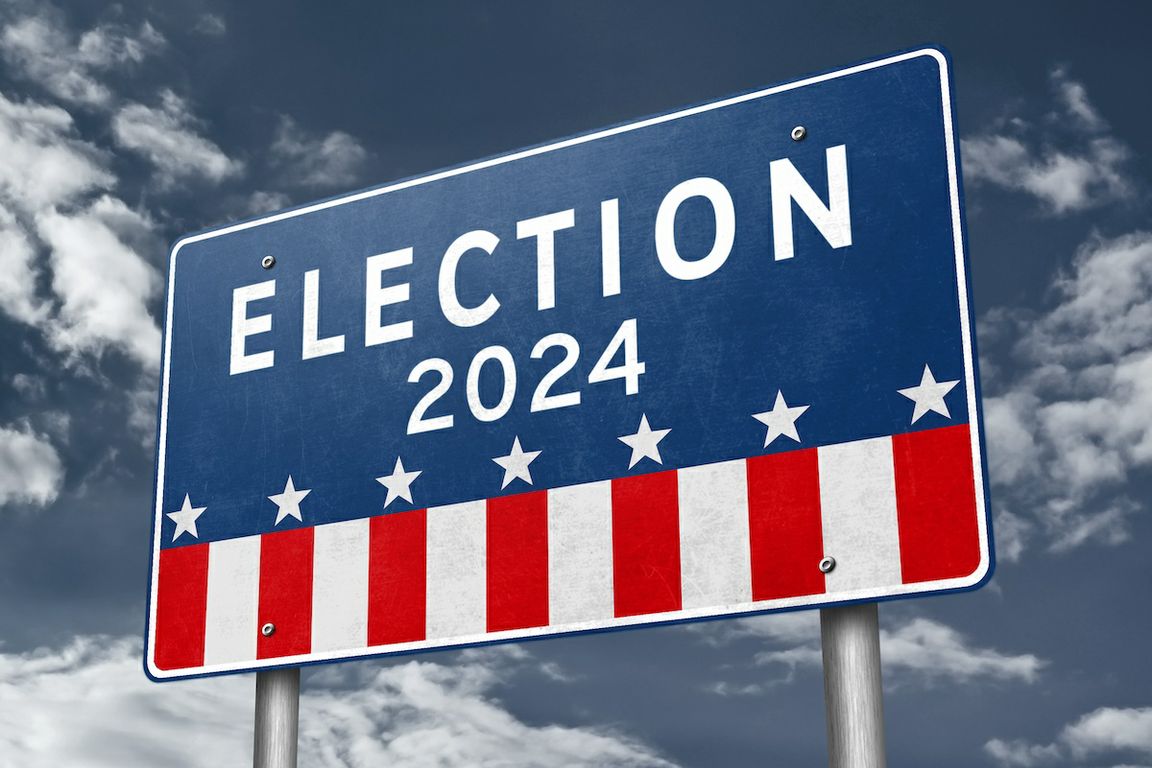
Election Day is nearly upon us! It’s the last lap of the 2024 campaign, and voters are in the final sprint, wading through a barrage of advertisements, conflicting information (and disinformation) and some rather bizarre speeches.
As we near Nov. 5, UCLA experts are available to help explain America’s diverse electorate, how to have conversations across differences, media bias, free and fair elections, the economy, and other vital election-related issues. See the topic links below for a list of experts.
Click an expert’s name for a more detailed biography.
David Myers
Myers is a professor of history and faculty director of the Dialogue across Difference initiative, which aims to model and promote the values of intellectual engagement, curiosity, empathy, active listening and critical thinking on campus. He also directs the Bedari Kindness Institute, the Initiative to Study Hate and the UCLA Luskin Center for History and Policy. He is an expert on modern Jewish history and Jewish-Arab relations.
To request an interview with Myers, please call or email the media contacts in the right-hand column.
Maia Ferdman
Ferdman is the staff director of the Dialogue across Difference initiative and the deputy director of the Bedari Kindness Institute and Initiative to Study Hate at UCLA. She is the founder and principal of Bridges Intergroup Relations Consulting, which supports organizations and communities in building vibrant spaces of belonging. Throughout her career, she has developed numerous interfaith programs, trained government and nonprofit groups in cultural competency, and facilitated conversations across differences on matters of policing, homelessness, racial equity and more.
To request an interview with Ferdman, please call or email the media contacts in the right-hand column.
Click an expert’s name for a more detailed biography.
Jim Newton
Longtime Los Angeles journalist Newton is a lecturer, author and founding editor in chief of UCLA Blueprint, a magazine covering the latest public policy research. He is an expert on Los Angeles and California government and politics, as well as policing and the U.S. Supreme Court. His most recent book, “Man of Tomorrow: The Relentless Life of Jerry Brown,” explored the career of the former California governor.
Email: jnewton100@ucla.edu
Zev Yaroslavsky
Yaroslavsky, who served as an elected official in Los Angeles for decades, leads the Los Angeles Initiative at the UCLA Luskin School of Public Affairs. An expert on government and politics, especially in California and Los Angeles, he can comment on local and state elections and ballot measures — particularly Measure G — and offer historical perspective on Los Angeles voters and local and presidential elections.
Email: zev@yaroslavskyinstitute.org
Click an expert’s name for a more detailed biography.
Chris Tausanovitch
Tausanovitch is an assistant professor of political science and an expert on government, American politics, Congress and public opinion. In addition to studying the federal government, he has examined and published articles on the functioning of state legislatures and city governments.
Click an expert’s name for a more detailed biography.
Lynn Vavreck
Vavreck, UCLA’s Marvin Hoffenberg Professor of American Politics and Public Policy, is an expert on presidential campaigns, elections and public opinion. She is available to address the changing dynamics of the race and the impact on voting shifts. She is the author of “The Bitter End: The 2020 Presidential Campaign and the Challenge to American Democracy,” co-authored with John Sides and Chris Tausanovitch; “Identity Crisis: The 2016 Presidential Campaign and the Battle for the Meaning of America”; “The Gamble: Choice and Chance in the 2012 Presidential Election”; and “The Message Matters: The Economy and Presidential Campaigns.”
Email: vavreck@mac.com
Click an expert’s name for a more detailed biography.
Veronica Terriquez
Terriquez, who directs the Chicano Studies Research Center, is an expert on the role of civic engagement in racially diverse communities, particularly on youth and leadership development in Latino communities, as well as policy advocacy and education. A professor of Chicana/o and Central American studies and urban planning, she has launched initiatives such as the California Freedom Summer Participatory Action Research Project and the Thriving Youth Survey, and co-founded the Latina Futures 2050 Lab.
Email: terriquez@luskin.ucla.edu
Rodrigo Dominguez-Villegas
Dominguez-Villegas serves as director of research at UCLA's Latino Policy and Politics Institute. He is the lead researcher for Election 2024: Key Facts About Latino Voters, a series of briefs that sheds light on the demographics and diversity of the growing Latino electorate in key battleground states. He has a strong interest in immigrants’ rights and is involved in initiatives to strengthen public policies that support deported migrants in Mexico and Central America. He has testified as an expert witness before the Canadian Parliament and as an expert in deportation cases in the United States.
Email: rodrigodv@luskin.ucla.edu
Gary Segura
Segura is an expert on the political representation of Latinos and the politics of this growing minority population. Formerly the dean of the UCLA Luskin School of Public Affairs, he has co-authored several books on political behavior and policy preferences and has directed nationwide polling research.
Disclosure: Segura is an advisor to Kamala Harris’ 2024 presidential campaign.
Email: segura@luskin.ucla.edu
Matt Baretto
Barreto is an expert on the political behavior, voting patterns and potential electoral impact of Latino voters. He managed Latino polling for the 2016 Hillary Clinton presidential campaign and the 2020 and 2024 Biden campaigns, performed consulting work for high-profile political advocacy groups and currently serves as the faculty director of the UCLA Voting Rights Project.
Disclosure: Barreto is an advisor to Kamala Harris’ 2024 presidential campaign.
Email: barretom@ucla.edu
Efrén Pérez
Pérez is a full professor of political science and psychology who directs the Race, Ethnicity, Politics and Society Lab at UCLA. Pérez’s scholarship centers on political psychology, drawing on psychological insights to better understand the political attitudes of racial and ethnic groups in the United States, language and political thinking, implicit political attitudes, and the measurement of political concepts. He is the author of fourl books, including “Voicing Politics: How Language Shapes Public Opinion” and "Diversity’s Child: People of Color and the Politics of Identity."
Email: perezeo@ucla.edu
Natalie Masuoka
Natalie Masuoka is an associate professor of political science and Asian American studies, faculty director of the UCLA Asian American Studies Center’s AAPI Policy Initiative, and an expert on racial and ethnic politics, immigration, political behavior, and public opinion. She most recently co-authored “Women Voters: Race, Gender and Dynamism in American Elections” about the intersections and impact of gender and race on the 2016 presidential election. Her other books include “The Politics of Belonging: Race, Public Opinion and Immigration” and “Multiracial Identity and Racial Politics in the United States.”
Email: nmasuoka@ucla.edu
Lorrie Frasure
Frasure, a professor of political science and African American studies, is an expert in racial and ethnic politics and data, state and local governance, and the political economy of metropolitan areas. Since 2008, she has been the principal investigator for the Collaborative Multiracial Post-Election Survey, a study of racial and political preferences and behavior among registered voters in presidential elections. The inaugural Ralph J. Bunche Professor and the director of the Ralph J. Bunche Center for African American Studies, she authored the book “Racial and Ethnic Politics in American Suburbs,” which examines international and domestic migration to American suburbs and the responsiveness of state and local institutions to the political and policy concerns of immigrant and ethnic minority groups.
Email: lfrasure@polisci.ucla.edu
Brenda Stevenson
Stevenson is the Nickoll Family Endowed Chair in the department of history and a professor of African American studies. Her work centers on the intersections of race and gender, with a particular interest in the comparative, historical experiences of women, family, and community across racial and ethnic lines. She is the author of “What Sorrows Labour in My Parents’ Breast?: A History of the Enslaved Black Family.”
Email: stevenso@history.ucla.edu
Click an expert’s name for a more detailed biography.
Yalda Uhls
Uhls is an assistant adjunct professor of psychology at UCLA and CEO and founder of the Center for Scholars & Storytellers. Her research focuses on how a variety of media impact the social and emotional well-being of young people. Uhls is the author of the 2017 book “Media Moms and Digital Dads: A Fact-Not-Fear Approach to Parenting in the Digital Age” and serves on both the NAACP entertainment council and the YouTube Kids and Family advisory council.
Click an expert’s name for a more detailed biography.
Naomi Sugie
Sugie is an associate professor of sociology. Sugie studies the relationship between criminal legal contact and inequality across various domains, including crime, health, families, employment, welfare, and voting. Across these areas, I use diverse methodological approaches for data collection and analysis. Alongside research, one of her primary projects is creating PrisonPandemic, a digital archive of personal stories contributed by people incarcerated in California prisons, jails, and immigration detention facilities during the COVID-19 pandemic.
Email: nsugie@soc.ucla.edu
Click an expert’s name for a more detailed biography.
Cara Horowitz
Horowitz, the executive director of the Emmett Institute on Climate Change and the Environment at UCLA School of Law, is an environmental law expert who studies California and federal climate policy. She can address plans for protecting state-level climate policies, especially in California, in the event of a win by Donald Trump; political environmental appointments to government agencies and the Cabinet; the impact of a Democratic- or Republican-controlled Congress on federal climate policy; and the fate of U.S. climate agreements at the COP29 U.N. climate conference, which she is attending this November.
Email: horowitz@law.ucla.edu
Ann Carlson
Carlson, the Shirley Shapiro Professor of Environmental Law at UCLA School of Law, is an environmental law expert and a leading scholar on air pollution and climate change law and policy. She can address plans for protecting state-level climate policies, especially in California, in the event of a win by Donald Trump; the potential rollback or expansion of the Inflation Reduction Act, other environmental regulations and the Environmental Protection Agency; Project 2025 policies, including the Schedule F plan to replace career civil servants; the path forward for renewables and electric vehicles; the fate of U.S. climate agreements at the COP29 U.N. climate conference; political environmental appointments to government agencies and the Cabinet; and the impact of a Democratic- or Republican-controlled Congress on presidential climate policy.
Carlson helped set federal fuel economy standards as President Biden’s acting administrator and chief counsel for the National Highway Traffic Safety Administration.
Email: carlson@law.ucla.edu
Swain, a climate scientist with the UCLA Institute of the Environment and Sustainability, can discuss the risks and likely consequences of the conservative proposal to break up the National Oceanic and Atmospheric Administration, which includes the National Weather Service. Video of his comments is available online from a recent live briefing discussing the National Weather Service as “a lifesaving and economy-boosting public service.”
To request an interview with Myers, please call or email Alison Hewitt at ahewitt@stratcomm.ucla.edu or 310-206-5461.
Megan Mullin
Mullin is faculty director of the UCLA Luskin Center for Innovation and a political scientist focused on environmental politics. She studies public opinion on climate change and the local politics of climate adaptation. In a fall 2023 paper, Mullin explained how vulnerability to climate change could inspire Republican climate investment in infrastructure. She has also studied how strong local journalism can boost support for climate-resilient infrastructure.
Email: mullin@luskin.ucla.edu
Julia Stein
Stein, deputy director of the Emmett Institute on Climate Change and the Environment at UCLA School of Law, is an expert on environmental litigation, regulations and legislation. She can address plans for protecting state-level climate policies, especially in California, in the event of a win by Donald Trump; potential new environmental regulations under a Harris administration; and how the Supreme Court factors into policymaking. She can also weigh in on the climate-oriented Proposition 4 on Californians’ ballots.
Email: steinj@law.ucla.edu
Ted Parson
Parson, a professor of environmental law and faculty director of the Emmett Institute on Climate Change and the Environment at UCLA School of Law, studies international environmental law and policy, solar engineering, climate intervention, and weather modification. He can discuss how a Trump win could accelerate climate overshoot, as well as the potential of a Trump administration withdrawing the U.S. from the global Paris Accords, next month’s COP29 U.N. climate conference and the overall U.N. Framework Convention on Climate Change.
Email: parson@law.ucla.edu
Alex Wang
Wang, professor and faculty co-director of the Emmett Institute on Climate Change and the Environment at UCLA School of Law, is an expert on Chinese environmental policies and U.S.–China cooperation and competition. He can address renewables competition and international diplomacy with China, the fate of electric vehicles under a Trump administration and how a Harris win might influence the future of the Inflation Reduction Act and green technology.
Email: wang@law.ucla.edu
Kimberly Clausing
Clausing, the Eric M. Zolt Professor of Tax Law and Policy at UCLA School of Law, was previously a top tax official at the U.S. Treasury for the Biden administration. She studies the influence of government and corporate behavior on the global economy and can discuss tariffs and trade; climate policy and the tax code, especially the Inflation Reduction Act; tax policy, including Carbon Border Adjustment Mechanism; and projected emissions if the country ends up with an all-Republican House, Senate and White House, which could result in hundreds to thousands of metric tons of CO2 by 2024.
Email: clausing@law.ucla.edu
Mary Nichols
Nichols, former chair of California Air Resources Board and distinguished counsel for the Emmett Institute on Climate Change and the Environment at UCLA school of Law, is an expert in clean air and climate policy. She can discuss the future of state-level climate policies and California policies that can be adopted in other states; political environmental appointments to government agencies and the Cabinet; the path forward for electric vehicles; and the fate of U.S. climate agreements at the COP29 U.N. climate conference under Harris or Trump — including the potential of a Trump administration withdrawing from the conference, the global Paris Accords and the overall U.N. Framework Convention on Climate Change.
Email: nichols@law.ucla.edu
Denise Grab
Grab, energy law and policy project director at the Emmett Institute on Climate Change and the Environment at UCLA School of Law, can discuss the Inflation Reduction Act, from the anticipated repeal efforts a Trump administration and the impact on renewables, to the future of the legislation under a Harris administration and the response of the green technology sector.
Email: grab@law.ucla.edu
Click an expert’s name for a more detailed biography.
Michael Lens
Lens, an associate professor of urban planning and public policy at the UCLA Luskin School of Public Affairs, is an expert on poverty, socioeconomic class, equity and housing. He has studied the U.S. housing voucher program, job accessibility among housing subsidy recipients, the relationship between land use regulations and income segregation, and the effect of negative housing equity on mental health outcomes.
Email: mlens@ucla.edu
Click an expert’s name for a more detailed biography.
Kimberly Clausing
Clausing is an economist and professor of tax law and policy at the UCLA School of Law. She serves on the faculty of the law school’s Milken Institute for Business Law and Policy and is affiliated with the school's Emmett Institute on Climate Change and the Environment. She is an expert on tax policy, budget proposals, international taxation, public finance, trade and climate policy. She is a former Biden administration Treasury official, having served as deputy assistant secretary for tax analysis in the Office of Tax Policy from 2021–22. She is the author of “Open: The Progressive Case for Free Trade, Immigration, and Global Capital” as well as dozens of articles on corporate and international tax issues.
Email: clausing@law.ucla.edu
Click an expert’s name for a more detailed biography.
Melissa Goodman
Goodman is executive director of the UCLA Center on Reproductive Health, Law and Policy, which engages with community organizations, scholars, lawmakers, practitioners and advocates on reproductive health, law and policy. She can answer questions on reproductive law and policy, LGBTQ rights, sex education, paid family leave and sick leave for parents, marriage equality, workplace discrimination, and harassment and gender-based violence in workplaces and schools.
Email: goodmanm@law.ucla.edu
Click an expert’s name for a more detailed biography.
Juliet Williams
Williams is a professor of gender studies and an expert in gender and the law, single-gender classrooms and feminist theory. Williams has published widely on the cultural politics of privacy, exploring topics ranging from political sex scandals to reality TV, and she has researched masculinity studies and feminist cultural studies, as well. Her most recent book, “The Separation Solution? Single-Sex Education and the New Politics of Gender Equality,” is a socio-legal analysis of conflicting conceptions of gender difference in the public education reform debates.
Email: jawilliams@gender.ucla.edu
Click an expert’s name for a more detailed biography.
Richard Hasen
Hasen is an internationally recognized expert on election law, legislation and statutory interpretation, remedies and torts. He is a professor at UCLA School of Law, where he directs the Safeguarding Democracy Project, a cross-disciplinary and bipartisan group of scholars and activists working to ensure that elections in the U.S. remain free and fair, and He has written about accusations that this slate change is anti-democratic and can address concerns of legality and procedure around the ballot, including legal issues surrounding the Democrats’ change from Biden to Harris. His most recent book is “A Real Right to Vote.”
Email: hasen@law.ucla.edu
Click an expert’s name for a more detailed biography.
Tim Groeling
Groeling, a professor of communication studies, is an expert on political communications and new media. He is interested in media bias, polarization, campaign strategies, and political messaging. He is author of “When Politicians Attack: Party Discipline and the Media” and “War Stories: The Causes and Consequences of Public Views of War.”
Email: groeling@ucla.edu
Click an expert’s name for a more detailed biography.
Norma Mendoza-Denton
Professor of anthropology and author of the book “Language in the Trump Era: Scandals and Emergencies,” Mendoza-Denton studies languages used by politicians, and works to equip us to understand the language of our current political moment. She can comment on speech tactics and how they can manipulate reality
Email: nmd@anthro.ucla.edu
Daniel Treisman
Political science professor Treisman, along with a graduate student, helped analyze transcripts of 99 Trump speeches from April 2015 to June 2024 and published results in “Donald Trump’s Words.” They found that the use of violent vocabulary in Trump’s speeches has increased over time, reaching an average level this year that is higher than any other major party presidential candidate since 2008.
To request an interview with Myers, please call or email the media contacts in the right-hand column.