October is Cybersecurity Awareness Month, during which people and organizations highlight the risks of online threats and offer techniques and tools to help web users stay vigilant.
UCLA has scholars with deep expertise in cybersecurity, artificial intelligence, government policy and the technology industry, as well as useful information on how to stay safe online.
Navigating complex landscapes related to AI privacy, ethics and security
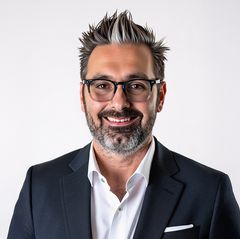
Mattmann, a globally recognized expert in artificial intelligence, data science and open-source innovation, is UCLA’s inaugural chief data and artificial intelligence officer, responsible for leading transformative AI and data science initiatives across campus. Prior to joining UCLA, Mattmann worked at NASA’s Jet Propulsion Lab for 24 years, where he created the next-generation data processing systems used in NASA’s Orbiting Carbon Observatory and other Earth science missions. Additionally, he is a co-inventor of an Apache Tika framework that can extract data from any file type and simplify it into a common vocabulary, which was critical to the investigative reporting behind the Panama Papers.
Mattmann can comment on artificial intelligence, data science, cybersecurity, public policy and how to stay safe online.
Email: chris.mattmann@ucla.edu
Digital technology, artificial intelligence and government regulation
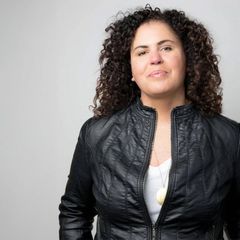
Noble is the holder of the David O. Sears Presidential Endowed Chair of Social Sciences, director of the Center on Resilience & Digital Justice at UCLA and co-director of the Minderoo Initiative on Tech and Power at the UCLA Center for Critical Internet Inquiry. Additionally, Noble serves as the director of the UCLA DataX Initiative, focusing on the social and ethical implications of data. Noble’s research focuses on digital media platforms and the internet and their impact on society; as well as how data, technology and artificial intelligence intersect with race, gender, culture and power. She is the author of the bestselling book “Algorithms of Oppression: How Search Engines Reinforce Racism.”
Noble can comment on government regulation of Big Tech, AI, predictive analytics and scoring systems, online bias, social media, ChatGPT, deepfakes and non-consensual pornography, algorithmic discrimination and more.
Email: snoble@g.ucla.edu
Tech companies using books, music and films for AI
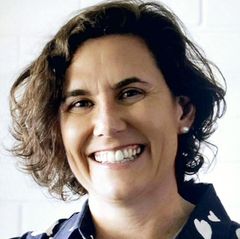
Powles is a legal scholar, executive director of the UCLA Institute for Technology, Law & Policy at the School of Law and Samueli School of Engineering and tech policy lead for UCLA DataX. Powles can comment on technology regulation, the digital economy, social media, Big Tech, privacy, intellectual property, internet governance and the law and politics of data, automation and artificial intelligence.
Powles has led major research projects on tech in the city (autonomous vehicles, delivery drones and robots, urban platformization), data rights in health and sport, Big Tech crimes, regulating cyber and emerging technologies, and artificial intelligence and power.
Email: powles@law.ucla.edu
Safeguarding privacy and responsible interaction with technology
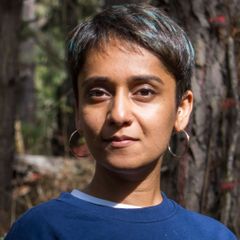
Raval is a social computing scholar and an assistant professor in the department of information studies. She is affiliated with the Center for the Study of Women, DataX, the UCLA International Institute and the Center for India and South Asia. Previously, she worked at the Wikimedia Foundation and at Microsoft Research.
Raval studies how emerging technologies are impacting global communities, especially in the Global South and in the United States. In the classroom, she teaches user experience design, responsible interaction with technology and the safeguarding of privacy and rights of immigrant students and others who are at a higher risk of internet-based harms. She can comment on the social impact of algorithms, artificial intelligence in education, jobs, literacy, libraries, creative work and the climate crisis in the Global South.
Email: raval@seis.ucla.edu
Government regulation and the global workforce in the age Big Tech

Roberts is a UCLA scholar in internet culture, politics and society, and digital labor studies. She is the faculty director and co-founder of the UCLA Center for Critical Internet Inquiry (C2i2), co-director of the Minderoo Initiative on Technology & Power and a research associate of the Oxford Internet Institute. Her book, "Behind the Screen: Content Moderation in the Shadows of Social Media," is a study of the global workforce of commercial content moderators, from Silicon Valley to the Philippines, whose job it is to shield against hateful language, violent videos and online cruelty uploaded by social media users.
She can comment on content moderation on social media, AI and work/workers, online bias, the internet economy, social media, Big Tech, regulation and more.
Email: sarah.roberts@ucla.edu
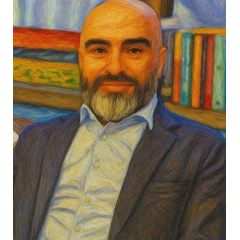
Panagia is Professor of Political Science at UCLA, where he teaches courses in political theory. His work explores how politics intersects with culture, art, and technology—looking at topics like film, digital media, affect, and the ways people experience democratic life in multicultural societies.
He works in the area of critical algorithm studies and specifically how liberal democratic political philosophies are ill-equipped to deal with algorithmic governance.
Email: davidepanagia@ucla.edu
"Side channels" — where unintentional physical signals can create security vulnerabilities
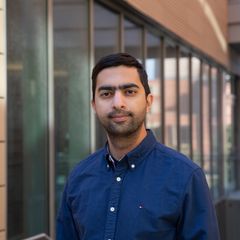
Sehatbakhsh is an assistant professor of electrical and computer engineering. His research covers topics in computer security and privacy with a focus on hardware support. His specific interests in these areas include computer architecture, internet-of-things devices, embedded and cyber-physical systems, unintentional physical signals or “side channels” such as subtle changes in power consumption or electromagnetic radiation, as well as trustworthy computing and machine learning.
Email: nsehat@ee.ucla.edu
Security breaches, technology companies and artificial intelligence
Srinivasan, an internet studies scholar at UCLA, is director of the UC Center for Global Digital Cultures. He is the author of "Beyond the Valley: How Innovators Around the World Are Overcoming Inequality and Creating the Technologies of Tomorrow" and “Whose Global Village? Rethinking How Technology Impacts Our World,” among other books.
He can com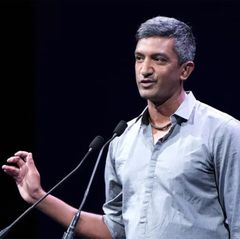 ment on misinformation and AI’s impact on democracy, Big Tech, data breaches, the future of work, online bias, social media and politics, among other topics.
Email: ramesh@rameshsrinivasan.org
Large language models and analyzing computer system security
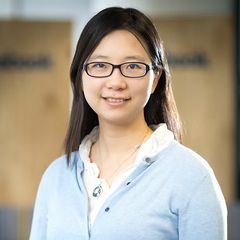
Tian is an associate professor of electrical and computer engineering and of computer science. She is also a faculty member with the UCLA Institute for Technology, Law & Policy.
Her interests cover security and privacy programs and their interactions with computer systems, machine learning and human-computer interaction. Her recent research has looked at using large language models (LLMs) to analyze computer system security, as well as building trustworthy AI systems, and securing emerging systems such as the internet of things, smart health and virtual reality devices. Solutions from her research have been implemented by companies such as Meta, Google and Microsoft to protect billions of users.
Email: yuant@ucla.edu
Working with parents and industry to keep adolescents safe online
An assistant adjunct professor of psychology at UCLA and CEO and founder of the Center for Scholars & Storytellers, Uhls has developed calls to action for t ech companies, entertainment companies and content creators. She is the author of the book "Media Moms and Digital Dads: A Fact-Not-Fear Approach to Parenting in the Digital Age."
Uhls specializes in the digital online lives of adolescents — what content adolescents want to view, their habits and preferences — and can comment on how parents can help their children lead healthy digital lives.
Email: yalda@scholarsandstorytellers.com
Cybersecurity, critical infrastructure and emerging threats
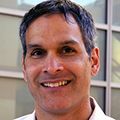
Villasenor is a professor of electrical and computer engineering, law, public policy and management at UCLA, and is the faculty co-director of the UCLA Institute for Technology, Law & Policy. He is also a nonresident senior fellow at the Brookings Institution and a member of the Council on Foreign Relations. Villasenor studies a broad array of topics in communications and information technologies and their intersection with law and public policy. With regards to cybersecurity challenges, Villasenor has looked at vulnerabilities in the internet of things or edge devices, enterprise systems, critical infrastructure, autonomous vehicles and supply chains.
Email: villa@ee.ucla.edu
Surveillance, immigration and border policy
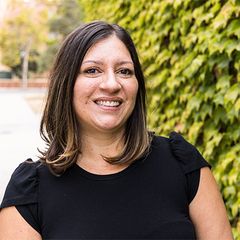
Villa Nicholas is an associate professor in UCLA’s department of information studies and an affiliate of the Chicano Studies Research Center, DataX and the Latino Policy & Politics Institute. Her work focuses on the information and technology histories and practices of Latinxs, immigrant information rights and critical approaches to information science.
Her first book, “Latinas on the Line: Invisible Information Workers in Telecommunications,” received an honorable mention for the Labor Tech Network book award for 2022. Her second book, “Data Borders: How Silicon Valley is Building an Industry Around Immigrants,” was released in 2023.
Email: villanicholas@seis.ucla.edu



