Three new books by UCLA School of Law faculty shine a light on nontraditional forms of practice in order to create greater access to legal services and to help lawyers master alternatives to litigation.
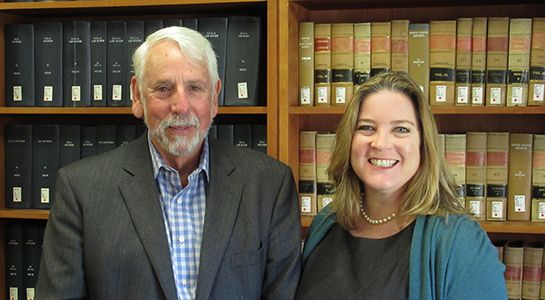
Adjunct professor Forrest Mosten, a member of the UCLA Law faculty since 2002, and lecturer Elizabeth Scully are co-authors of "The Complete Guide to Mediation" (2015) and "The Family Lawyer’s Guide to Unbundled Legal Services" (2017). Mosten also is co-author, with Florida practitioner Adam Cordover, of a third book, "Developing a Collaborative Practice" (2017), to which Scully is contributing a chapter. All three books are published by the American Bar Association.
"We believe that lawyers should not be gladiators," said Mosten. "They can be teachers, and their offices should be classrooms of client education. That’s a theme that runs through all of these books and my UCLA courses."
"Traditional litigation pushes people to the extremity of their position, it polarizes and entrenches so that the other person’s point of view is invisible," Scully says. "Mediation is different. Engaging with the other person’s point of view is actually a primary focus and purpose of mediation."
"The Family Lawyer’s Guide to Unbundled Legal Services," co-published by the ABA Family Law and Practice Management sections, describes an approach to practice that Mosten says is increasingly favored among family law courts and practitioners. Unbundled legal services, in which clients hire counsel for an a la carte selection of legal tasks, are offered to save the client money and preserve client
"Building a Successful Collaborative Law Practice" is an anthology from experts in collaborative law, where couples who are seeking to divorce or separate work with lawyers, financial professionals and others to reach binding agreements without going to court.
"There are a lot of mediators and collaborative professionals who are dedicated, they are trained, and they are starving," said Mosten, who says that his practice has thrived though he hasn’t gone to court for years. "They are afraid to practice collaborative law. So they keep doing stuff they hate, and they don’t really hone the skills we talk about in the book."
Scully says the new books help to rethink and broaden the concept of zealous advocacy. "You could define zealous advocacy as doing everything that you ethically can to further a client’s stated position on a litigated issue," she says. "But maybe that’s a mistake if the client has broader interests in the long game that litigation will not address. You can be a zealous advocate and still encourage clients to look for solutions outside of court."