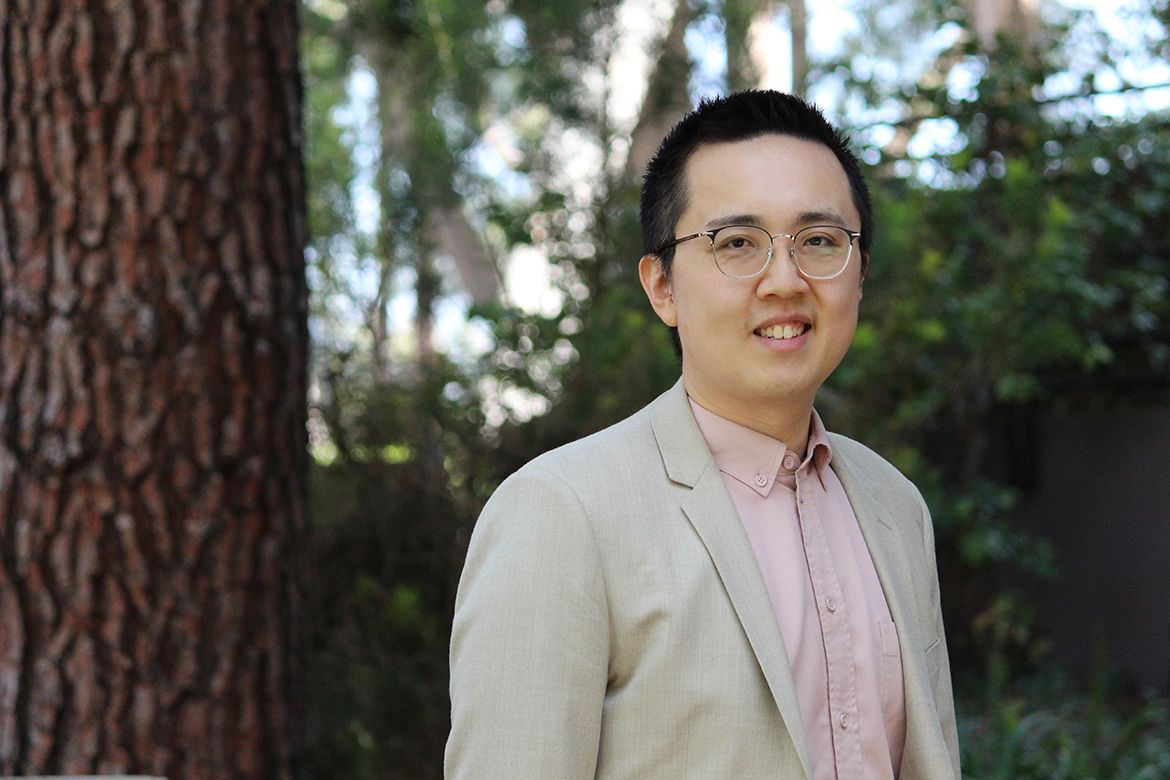
Eric Min, assistant professor of political science and global studies at UCLA, spoke about his book, “Words of War: Negotiation as a Tool of Conflict,” at a talk in early May sponsored by the Burkle Center for International Relations. Maggie Peters, associate professor and vice chair for graduate studies in the political science department and faculty member in the global studies program of the International Institute, moderated the talk.
Using both quantitative and qualitative analysis (in the form of case studies), Min addressed how nations use negotiations to achieve different goals in war and how their success is influenced by such factors as battlefield results and the prevailing belief in the value of negotiations within the international system.
One of the main empirical contributions of the book, he said, are two datasets that he created and used to test his arguments. The datasets catalog over 1,700 battles and 189 periods of negotiation across 92 interstate wars between 1823 and 2003, allowing for a granular analysis of intra-war dynamics.
“Negotiations have to be understood as not only a tool that helps to settle wars, but also as an instrument that’s sometimes used to manage fighting and potentially win wars as well,” Min said. As a result, “diplomacy during a war is not some sort of side process, but a central process to understanding conflict.”
Read more about the book talk at the International Institute’s website.