The UCLA Asian American Studies Center was recently awarded a $154,960 grant from the Department of the Interior’s National Park Service to help it preserve decades of research and primary materials involving the WWII incarceration of Japanese Americans.The award will support the center’s processing, cataloging, and preservation of the Jack and Aiko Herzig papers.
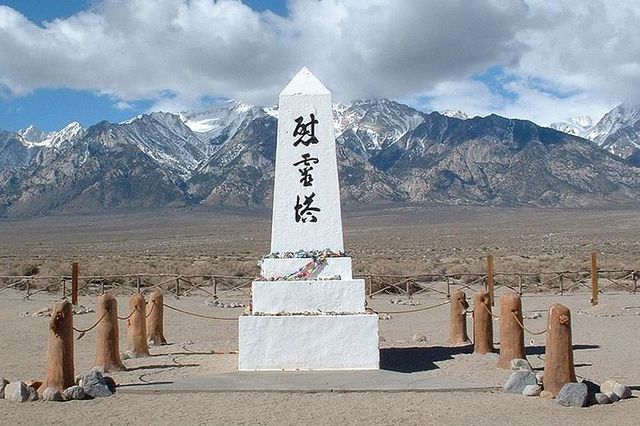
The grant was awarded as a part of the department’s Japanese American Confinement Sites Grant Program, which supports projects in seven states to help preserve and interpret confinement sites of Japanese Americans imprisoned during World War II.
“The generous funding from the National Park Service will allow us to preserve more than four decades of research and primary materials pertaining to the WWII incarceration of Japanese Americans,” said David K. Yoo, professor and director of the Asian American Studies Center (AASC).
Once the preservation process is completed, the Herzig Collection will be transferred to the UCLA Charles E. Young Library Special Collections for permanent archival storage and research access. Community workshops and outreach programs will be held to disseminate information about the collection and how it may be accessed.
“The collection will not only enhance public knowledge about the unjust mass removal and incarceration of 120,000 Japanese Americans during World War II, but also offer invaluable lessons to anyone vitally concerned with issues of social justice in America,” stated Marjorie Lee, librarian and archivist for the AASC.
Congress established the JACS Grants program in 2006, authorizing up to $38 million in grants to be administered by the National Park Service. The program’s goal is to spread knowledge of the injustice of World War II's confinement history and inspire a commitment to equal justice under the law.
Since 1969, the UCLA Asian American Studies Center has been engaged in research and documentation of Asian American and Pacific Islander communities — past and present. Continuing into its 45th year at UCLA, the center forges community partnerships through its students, staff, and faculty, supports innovation in education and research, and advocates for archival preservation of its cultural heritage and neglected histories.