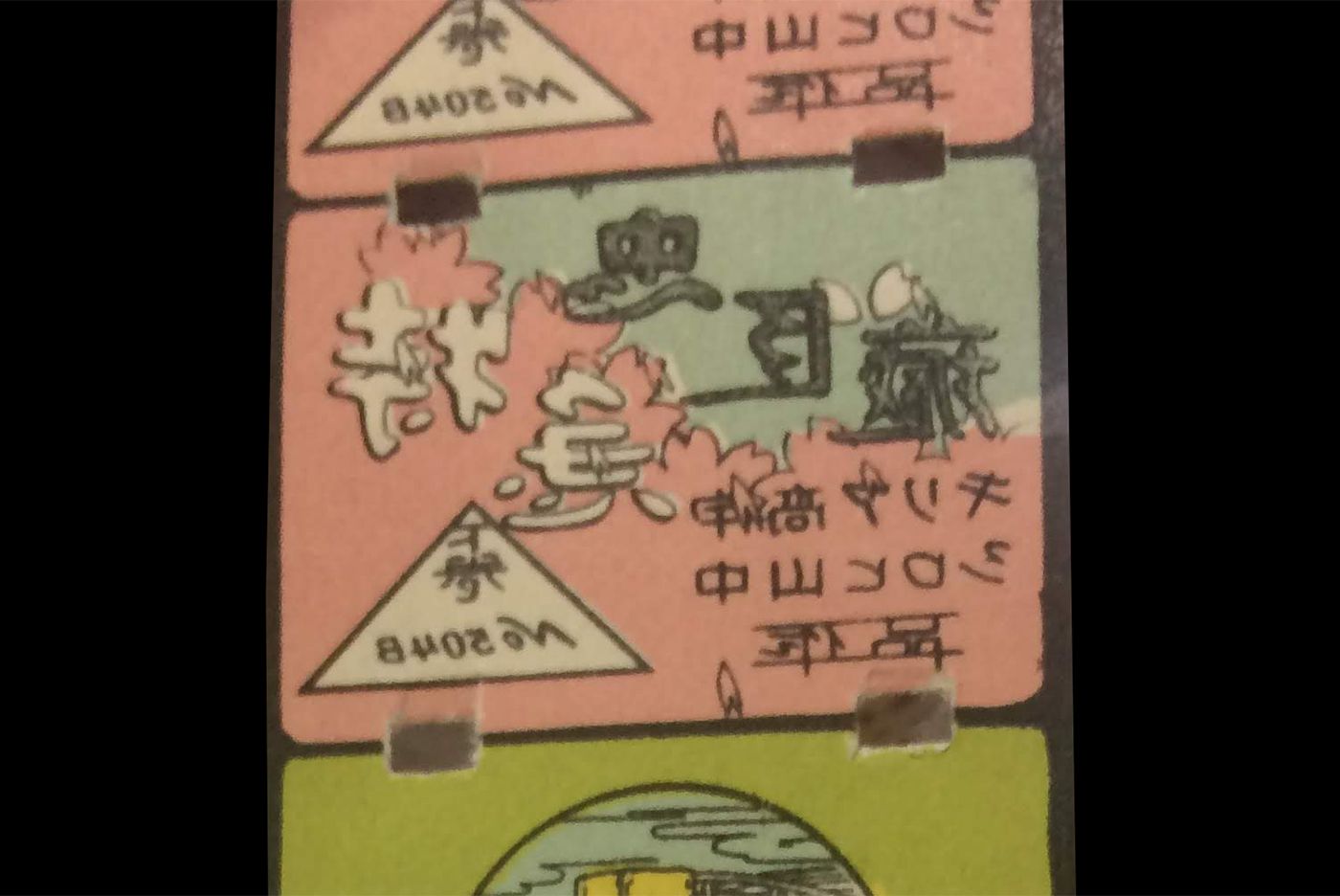
In the 1930s, amid mounting competition from an influx of foreign cartoons, Japan’s animation industry began searching for cheaper and faster modes of production.
Enter kami firumu, or paper films. These short films, both animated and live-action, were printed onto paper strips and glued together by hand. Initially, kami firumu were exhibited using hand-crank projectors that operated without a fixed framerate; despite this, they were often paired with intentionally synchronized soundtracks pressed onto 78 rpm records.
As was the case for Japanese nitrate films of the era, few paper films managed to survive the destruction wrought by World War II.
Now, some 90 years after the height of the medium’s popularity, a selection of kami firumu will be presented by the Yanai Initiative for Globalizing Japanese Humanities — a partnership between UCLA and Tokyo’s Waseda University — and the UCLA Film & Television Archive. “Japanese Paper Films” will be screened April 13 at 7 p.m., at the Billy Wilder Theater at the Hammer Museum at UCLA.
Silent films will be projected alongside live musical accompaniment, and the event will also feature a discussion with Bucknell University professor Eric Faden, who is leading an international effort to digitally preserve about 200 of the films. The Yanai Initiative is planning to work with Faden to develop a public database of the films.
Admission to the April 13 screening is free, and there are no advance reservations. Seats will be assigned as tickets are picked up from the box office, which opens one hour before the event.
“Japanese Paper Films” was programmed by UCLA Film & Television Archive senior programmer Paul Malcolm in collaboration with the Yanai Initiative. This story is adapted from program notes written by Noah Brockman. Read an extended version of this article on the UCLA Humanities Division website.



