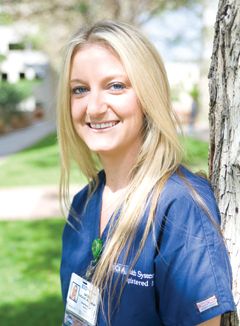
Natalie Bjelajac, a nurse practicioner at Ronald Reagan UCLA Medical Center, is spearheading a project to make iPads, DVDs and other forms of entertainment available to patients on Unit 7E/5E, the general medicine unit where she works.
What inspired you to launch this project?
About a year ago, I had the opportunity to take care of a 29-year-old woman who had an extremely rare disease and came to UCLA to be evaluated and treated. She lived five hours away, her husband had to work almost every day and her parents were busy taking care of their two young children. As a result, she had no one with her and was emotionally distressed. The nurses on 7E collaborated with the Palliative Care team, Urban Zen, massage therapy and People-Animal Connection to help her cope, but none of that really helped. So we contacted the Office of the Patient Experience and asked if we could let her use a laptop to Skype with her family. After spending time with her family through the computer, she began to tolerate her treatments, participate in her own care and eventually was discharged with all her symptoms adequately managed.
How does the project work?
The project is still in its early stages. We are collecting iPads and other forms of entertainment to loan out to adult patients experiencing hard times in the hospital. We will have volunteers ask patients if they would be interested in borrowing an iPad, which they can use to access Skype to connect with their family members, to play games or to surf the Internet. We also want to offer books and DVDs. People who have helped get this project going include Maryann Sullivan-Ruda, Cait Walsh, Edith O’Neil-Page and all the incredible 7E/5E staff.
Where have you collected iPads for this project? My mom, Susan Bjelajac, is a teacher and the assistant principal at St. Paul the Apostle School in Westwood. She inspired a group of students to raise the money needed to donate two iPads to UCLA Health to get things started.
Why should the hospital provide iPads and other forms of entertainment?
While some patients have their own computers or iPads, many come from limited means and don’t have access to electronics. Letting them borrow an iPad provides a way for them to connect with their families and the outside world during prolonged hospital stays, improving their mental and emotional status and quality of life.
What do you enjoy most about your job?
Medicine is always changing, which means you constantly have to be learning and making adjustments. That is what I really love about UCLA. We (doctors, nurses, all staff) are always learning and teaching each other new techniques, disease processes and emerging treatments. I also enjoy the patients. You meet incredible people from extremely interesting backgrounds and get to know them and their families at their most vulnerable moments. They are truly inspiring, and it is a blessing to work with them.
What do you find most challenging about your job?
Everyone comes from different backgrounds, cultures and religions so you need to learn how to adapt, to make sure you know what’s appropriate for different patients. You constantly have to change how you do your work to make sure patients feel respected and are comfortable.
This story was originally published in UCLA Health Systems Employee News.



