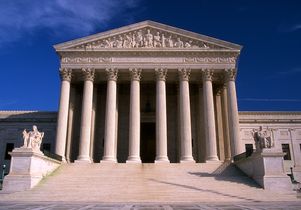
Law professor Adam Winkler says when the Supreme Court expands rights for corporations it becomes harder for elected representatives to regulate business for the public good.
Economics professor Adriana Lleras-Muney writes about how a welfare experiment from 100 years ago offers a dramatic lesson in what really helps poor children.
Zev Yaroslavsky writes that the large studio complex at the corner of Fairfax and Beverly should be designated a historic site to preserve part of the L.A. history.
James Gelvin writes that based on recent developments, Saudi Arabian officials assume that they can no longer depend on their traditional security safeguards of oil and U.S. might.
Law professor Adam Winkler notes that we can’t eliminate shootings so the proper question is what can be done to lower the number of incidents and reduce the harm from each one.
Ivo Welch notes that the energy consumption to fuel the digital currency is equivalent to the consumption of just fewer than 2 million average U.S. households.
Political scientist Margaret Peters says historically trade barriers meant more open immigration policies, while free trade meant more immigration restrictions.
Dr. Jonathan Fielding summarizes a host of recent findings showing how a healthful diet, regular physical activity and proper amounts of sleep affect cognitive health.
James Gelvin suggests volunteers are drawn to a value system that asserts aggressive machismo, disparages work, and sustains the impulse for immediate gratification.
Economist Jerry Nickelsburg advocates long-term planning that accounts for transportation and housing policy, as well as for creating incentives for more mass transit use.
On International Day of the World’s Indigenous Peoples, Ulia Gosart takes stock of how far indigenous people have come on the world stage and how far they have to go.
Three urban planning professors note that L.A. has more land, and land value, than development, so a small land tax could raise more money for affordable housing.
Law professor Adam Winkler notes that justices appointed by Republicans and Democrats have tended to side with business interests in cases before the court.