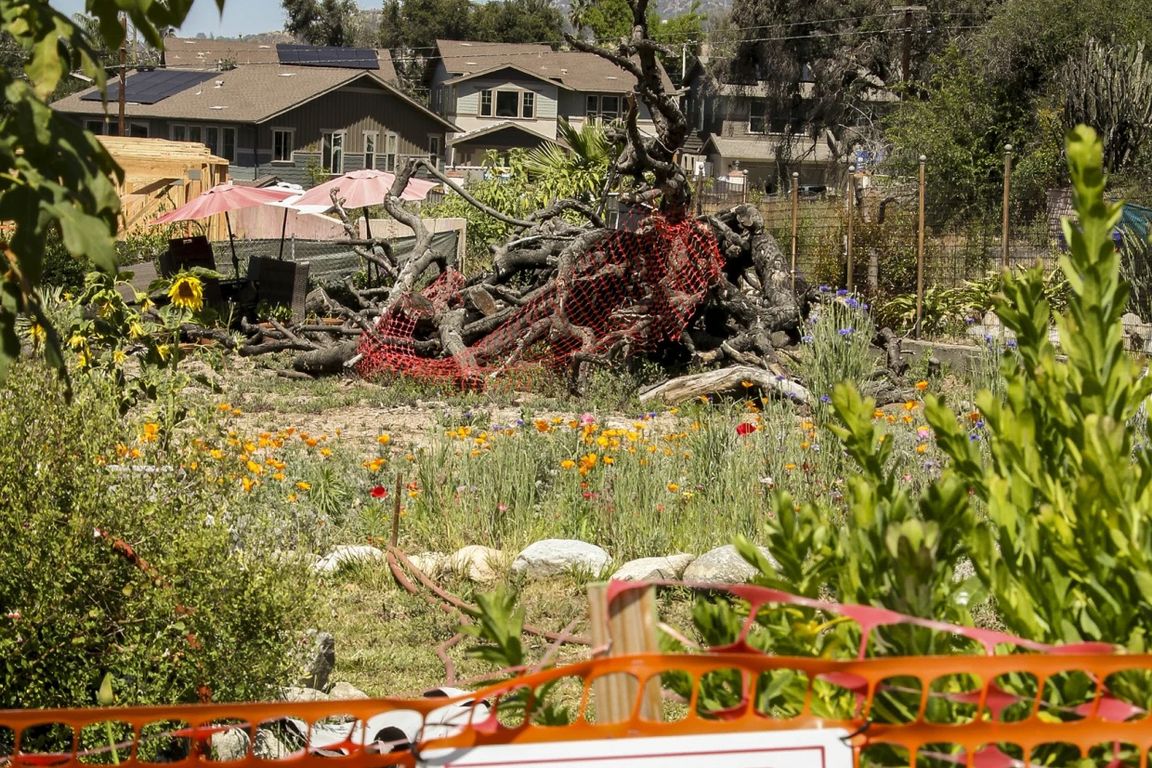
NBC News examined the lingering contamination concerns Altadena residents are facing more than a year after the Eaton Fire, including elevated levels of lead and other hazardous materials found in homes and soil. UCLA civil and environmental engineering professor Sanjay Mohanty said testing from roughly 1,300 affected properties found that many homes and burned lots still exceeded California safety thresholds for lead contamination even after cleanup efforts. Mohanty also criticized the lack of soil testing requirements during debris removal, saying the policy left subcontractors “unaccountable.” Read more about UCLA in today’s Bloomberg Law and PBS.
More highlights from UCLA in the News: May 14, 2026
UCLA considers new tactics to combat antisemitism | New York Times
UCLA, one of the nation’s best-regarded public schools, had already taken some steps, such as reviewing protest policies and strengthening training programs … UCLA’s chancellor, Julio Frenk, said in a campuswide message on Thursday that he had assigned working groups to carry out the new recommendations. “There is much more to be done,” the chancellor wrote, “and we remain committed to advancing these efforts with care, accountability and resolve.”
Free relationship counseling now available for LA County couples | KTLA-TV
UCLA is now offering free relationship counseling to all couples in Los Angeles County. The program is called OurRelationship, and it’s available for heterosexual, LGBTQ and military/veteran couples in English and Spanish. It is supported by a grant from the Administration for Children and Families. (Also: KABC-TV.)
A dire ‘math problem’ on the Colorado River | Los Angeles Times
During the webinar organized by the UCLA Luskin Center for Innovation, other experts and state officials agreed that the responses to date are insufficient to deal with the river’s long-term “math problem.” The 1922 agreement that divided the water among the states doled out more than was actually flowing, and since 2000, the river has shrunk dramatically as climate change intensifies dry conditions in the Rocky Mountains.
How is climate change impacting the nation’s largest food producer? | PBS
“San Luis Obispo and Ventura are Central Coast counties; those two counties have a large agricultural industry, but actually food insecurity in those two counties is higher than the state average — 4.7% for the state,” said UCLA’s Ninez Ponce (approx. 3:30 mark).
New study finds decline in student learning | KABC-TV
“We’ve made a rebound with mostly one-time federal money, but that one-time band-aid is being removed. And we’re seeing the previous inequities in our country, frankly, for generations, are resurfacing,” said UCLA’s Joseph Bishop (approx. 1:05 mark).
Justices sidestep principle of avoiding election eve changes | Bloomberg Law
“Apparently the rule that federal courts should not make rulings that lead to last minute changes in election rules applies to every federal court but the Supreme Court itself,” said Rick Hasen, an election law professor at the University of California, Los Angeles.
Spencer Pratt residency controversy | KCAL-TV
“If somebody is working with their insurance company to get reimbursed for the rebuild of their house, and they’re planning to come back and live at their house, they’re entitled to vote in that election, in that district, and they’re entitled to run for office,” said UCLA’s Zev Yaroslavsky (approx. 1:50 mark).
Has Trump’s failed Iran war destroyed the unipolar world? | Common Dreams
(Commentary by UCLA’s Aamir Mufti) The war launched by Israel and the United States on Iran on February 28 has already proven a turning point in world history. So many elements of geopolitics have coalesced in it that we won’t understand its full significance for some time to come. A ceasefire, especially one as chaotic and fragile as this one, is not the end of war, so the new realities may soon be replaced by others.