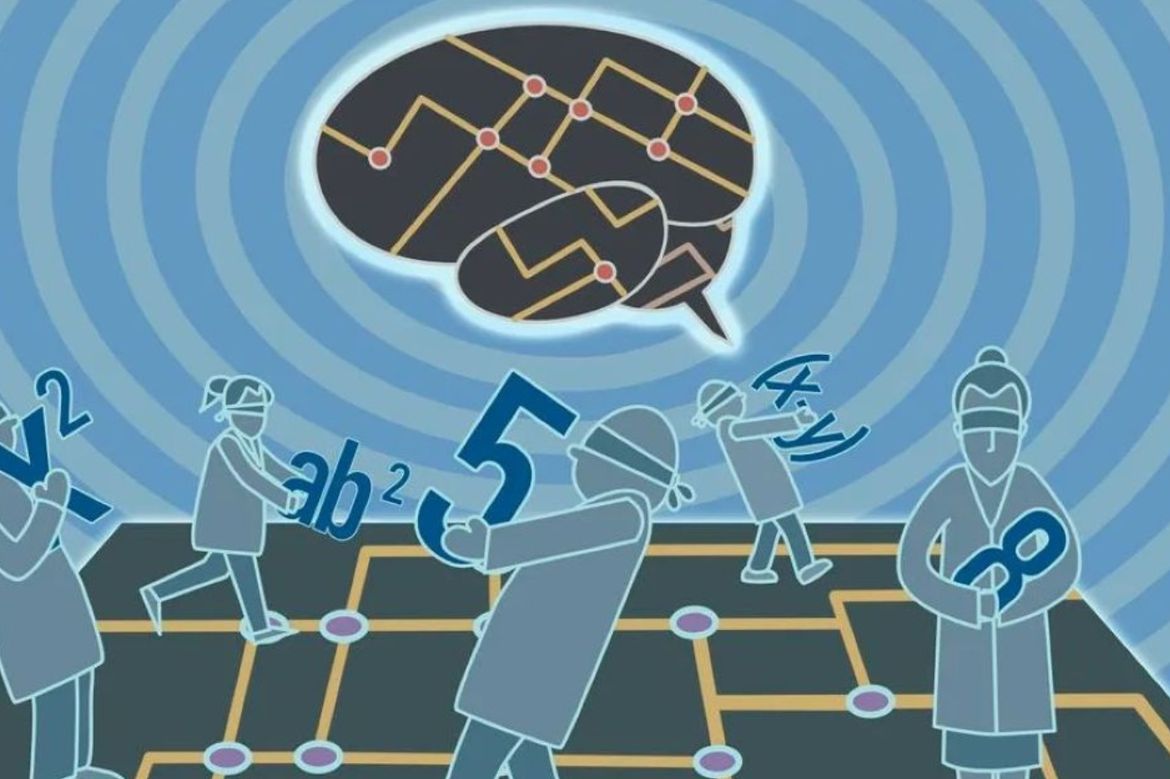
Live Science spoke with UCLA mathematician Terence Tao about how AI models are becoming increasingly proficient at generating convincing mathematical proofs, raising concerns about the potential for accepting incorrect proofs without full understanding. “If you were a terrible mathematician, you would also be a terrible mathematical writer, and you would emphasize the wrong things,” said Tao, who is the 2006 winner of the prestigious Fields Medal. “But AI has broken that signal.” See more about UCLA in today’s CNN, New York Times and other outlets.
More highlights from UCLA in the News: Feb. 23, 2026
Trump climate rollback likely to hit poor, minority areas hardest | AP
Julia Silver, a senior research analyst at the UCLA Latino Policy and Politics Institute, found in her own research that California Latino communities had 23 more days of extreme heat annually than non-Latino white neighborhoods. Her team also found those areas have poor air quality at about double the rate, with twice as many asthma-related emergency room visits. Other research shows that Latino children are 40% more likely to die from asthma than white children, in part because many lack consistent health care access.
RFK Jr.’s focus on viral nonsense puts children’s lives at risk | LA Times
(Commentary by UCLA’s Dr. Robert Shpiner) This week, Secretary of Health and Human Services Robert F. Kennedy Jr. — the individual entrusted with safeguarding the health of 330 million Americans — posted a 90-second video of himself and Kid Rock doing shirtless calisthenics in blue jeans, riding a stationary bike in the sauna, doing a slow-motion cold plunge and toasting glasses of whole milk in the pool. The internet responded with memes and mockery. I sat in my office at UCLA, where I’ve practiced pulmonary and critical care medicine for more than 40 years, and I did not laugh.
Trump calls Supreme Court justices ‘fools,’ unveils new tariffs | LA Times
“This means that Trump’s tariffs will continue to burden the U.S. economy, even if alternative instruments are not as agile or broad as the IEEPA tariffs,” UCLA economist Kimberly Clausing said in a statement. (Clausing was also interviewed by CNN.)
Bill of Rights tested in Trump’s immigration crackdown in Minnesota | NBC
Beth Colgan, a law professor at UCLA, acknowledged this amendment comes up so rarely that it’s essentially become “a trivia question as ‘What is the Third Amendment?’” Looking at the constitutional fights stemming from the Twin Cities in totality, Colgan said it’s unclear what the long-term impact will be. “I think that’s something people should be very worried about,” she said.
EPA emissions rollback may damage public health | KCRW 89.9-FM
UCLA professor and air quality researcher Michael Jerrett says less regulation could lead to more pollution, more extreme heat events and higher wildfire risks. “It will take some time for the emissions to work their way through the system and begin to make those conditions worse,” he says. “But what we know is that many of these effects are already being experienced, so anything that even tilts them a little bit further in an adverse direction can have fairly immediate public health impacts.”
Why the Sixth Street Viaduct has been so hard to protect | Daily Breeze
“It’s been a hundred years since we actually made a bridge into a great public work,” Dana Cuff, a professor at UCLA and director of cityLAB, an urban research and design center, said Thursday.
Crochet instead of doomscrolling. Here are the benefits | USA Today
According to the University of California, Los Angeles, people 65 and older who have hobbies, such as golfing, gardening, crafting, and fishing, report higher levels of happiness and greater life satisfaction. A 2025 study on the impact hobbies have on mental health found that hobbies can also “contribute to personal growth, reduce stress and foster social connections through community involvement and active participation.”
An inside look at the Athlete Village at UCLA | KNBC-TV
As preparations for the 2028 Olympic and Paralympic Games get underway throughout Los Angeles, UCLA is getting ready to transition its campus into the Athlete Village. LA28 officials expect 15,000 athletes to compete in the Games, participating in 800 events in more than 40 sports. The university, which spans over 400 acres in Westwood, served as the residential site for athletes and coaches during the 1984 Olympics. (UCLA’s Joey Martin was featured.)
Concern about weight loss drugs: What if they work too well? | New York Times
Dr. Sahib Khalsa, a psychiatrist at UCLA Health, coauthored a paper in 2024 about these medications titled: “Highway to the Danger Zone?” In it, the authors warn that people who take these drugs need to be strictly monitored to ensure that they eat and hydrate sufficiently and do not lose too much weight. The paper also notes that the medications are particularly risky for people with histories of disordered eating. Since that paper was published, Dr. Khalsa said he has only grown more concerned.
Texas whooping cough cases are highest in decades | Fort Worth Star-Telegram
But outbreaks have become larger and more common as vaccination coverage has dropped in the U.S. and in Texas, said Frenck and Dr. James Cherry, a professor of pediatrics at UCLA. “If we use the vaccines properly, the way they’re recommended, and in particular, see that pregnant women get vaccinated, you can prevent virtually all deaths [from pertussis],” Cherry said.
Mounjaro, Zepbound may lower risk of diabetic retinopathy | Healthline
Dr. Adrian Au, an ophthalmologist at UCLA Health in Los Angeles who wasn’t involved in the study, agreed that reduced blood sugar levels are a key factor in diabetic retinopathy. However, he noted there may be short-term risks. “The concern with semaglutide largely relates to drops in blood sugar, which can temporarily worsen retinopathy in people who already have advanced disease,” Au told Healthline. “This phenomenon has been observed with intensive glucose control even before [the] popularization of GLP-1 medications.”
Kansas officials begin interpreting ‘poorly drafted’ bathroom law | Reflector
Kansas’ bathroom law is “staggeringly broad” in scope, said Elana Redfield, federal policy director at the Williams Institute, a University of California, Los Angeles, think tank that tracks gender identity law and public policy. Redfield said the combination in SB 244 of both restricting bathroom access and requiring gender markers on driver’s licenses and birth certificates to match sex at birth is “interesting.”
Families urge increased access to early autism diagnoses, interventions | NPR
Connie Kasari is a psychologist and founder of UCLA Center for Autism Research and Treatment. “One of the things I often think about is, how do we help children with disabilities go into the workforce or go to college or whatever? So we need that development in the public schools,” [Kasari said.]
The Supreme Court rules on tariffs | CNN
“One of the things that struck me is that this feels unusual. What an odd day, when the president is getting sort of sat down. But if you think historically, the Constitution gives presidents very little power,” said UCLA’s Lynn Vavreck (approx. 1:40 mark).



