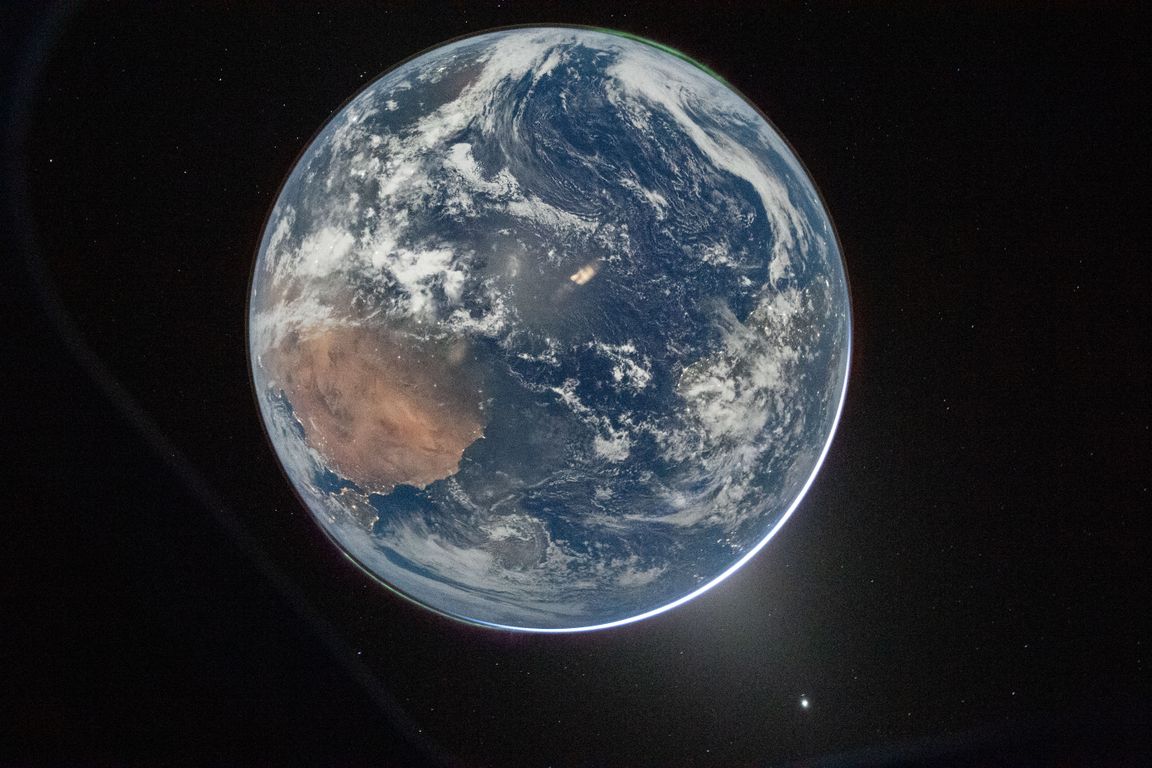
UCLA planetary science professor David Paige spoke on CBS LA about the Artemis II mission after the four-person crew got the go-ahead to push out of Earth’s orbit, and broke down what the mission goal is. “If you look at the history of the Apollo program, they also did similar moon fly-by missions before they attempted to do the [moon] landing. There’s a huge number of moving parts involved in doing a mission like this and keeping the astronauts safe.” Read more about UCLA in today’s San Francisco Chronicle, Salon and others.
More highlights from UCLA in the News: April 3, 2026
Rethinking aging on college campuses | Inside Higher Ed
As colleges nationwide focus on artificial intelligence and workforce readiness initiatives to prepare students for their careers, UCLA is expanding its attention to a different population: older adults. Through an age-friendly university initiative, UCLA is redefining what aging looks like on campus — vibrant, inclusive and rooted in lifelong learning. Ayesha Dixon, a gerontologist and senior director of the Emeriti/Retirees Relations Center at UCLA, said the initiative at its core is about cultivating a positive social environment for older adults, in addition to creating more opportunities for intergenerational learning and exchange.
Executive order gives USPS unprecedented control over mail voting | Salon
Rick Hasen, a professor of election law at the University of California Los Angeles, said the executive order is “pretty mild, given what could have been, but it’s still unconstitutional and not something that could really be implemented in time.” Asked whether the U.S. Postal Service and Department of Homeland Security could realistically implement the changes in time for the November election, Hasen was blunt: “No way.” He added that if the administration attempted to move forward anyway, “courts would stop it.”
Diesel fuel prices reach all-time highs in California | KNBC-TV
“That's about to really hit consumers in Southern California,” said UCLA professor Michael Ross, who studies the intersection between politics and fossil fuels. "Especially for things that are perishable. Like fresh vegetables that come in from the Central Valley that have to be refrigerated the whole journey. Or, meat that needs to come in from other parts of California … It has to make a long journey. It has to be in a refrigerated truck. All of that takes diesel fuel.”
How the Supreme Court birthright case could affect Bexar babies | Axios
According to a 2025 report by UCLA's Latino Policy and Politics Institute, the order would disproportionately affect immigrants of color: About 75% of children born to noncitizens are Latino, 12% are Asian American, 6% are white and 5% are Black.
‘Bean club’ trademark roils gourmet bean market | San Francisco Chronicle
Mark McKenna, a UCLA law professor, called the Rancho Gordo bean club listing “a classic case of trademark overreaching” and compared it to a winery trying to trademark the term “wine club” as an example. “A lot of other wineries would be upset, legitimately, if they weren’t allowed to call their program a wine club,” he said. “It takes the most natural way of talking about what they’re doing and prevents other people from saying it.”
Are insiders profiting from the Iran war? | ABC News Daily (Australia)
“This is a president who became famous for his early days as a candidate, for his willingness to go on Twitter or X and directly make comments that people paid attention to. Other presidents have had teams manage their Twitter accounts or their media so that things came out in a way that was predictable and measured, often times opaque,” said UCLA’s Andrew Verstein (approx. 1:20 mark).
‘It’s a lot more than just a library’ | KCBS-TV
In West Adams, there is a century-old library that by some accounts is one of the most important libraries in the world. The Williams Andrews Clark Memorial Library was passed to the administration of UCLA in 1934; it holds a collection of more than 110,000 rare books and 22,000 manuscripts. It has been considered a global destination by some literary scholars as it houses one of the largest collections of British literature and history between the 1640s and 1760s — including huge volumes of first editions from Shakespeare, Chaucer, Dickens and the preeminent collection of works by and about Oscar Wilde.