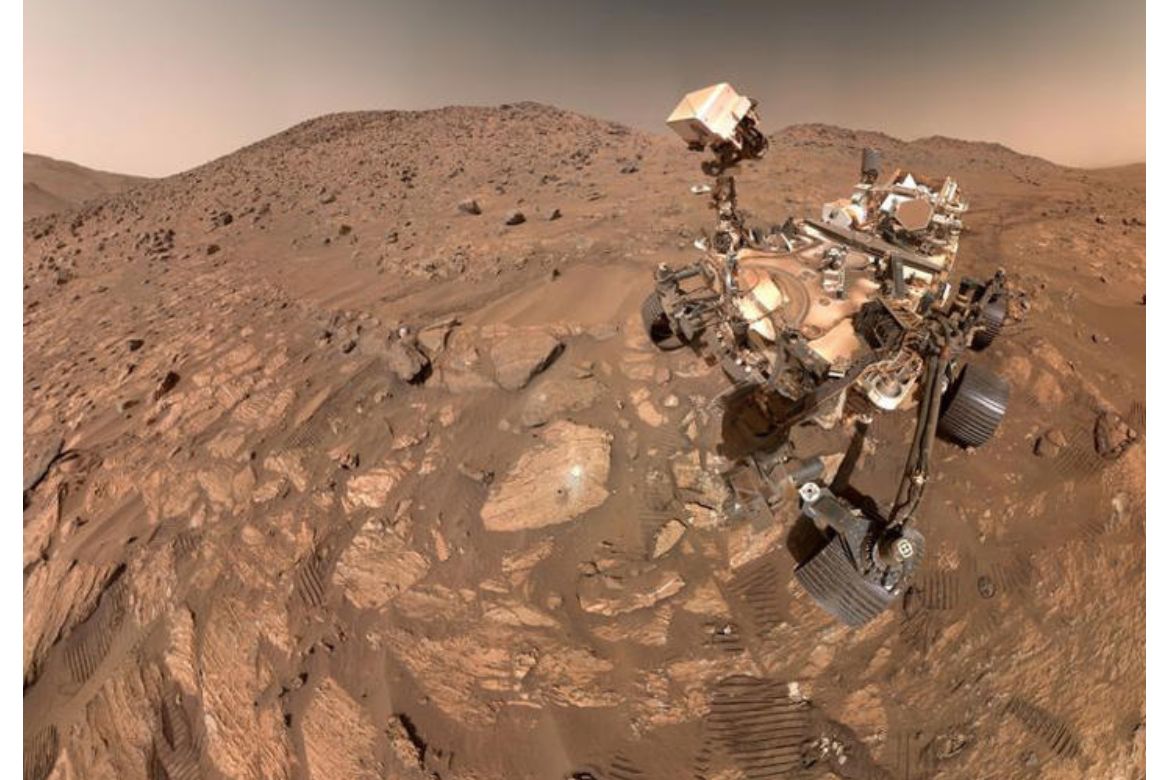
Reuters interviewed UCLA planetary scientist Emily Cardarelli about the detection of underground remains of an ancient river delta on Mars. The discovery represents some of the oldest evidence yet showing how water once flowed on the surface of Earth’s planetary neighbor. “Over time, we’ve seen more and more evidence for liquid water on the Martian surface at various rover landing sites,” Cardarelli said. Read more about UCLA in the news in today’s CalMatters, Gizmodo and other outlets.
More highlights from UCLA in the News: March 18, 2026
Colorectal cancer is the deadliest cancer for people under 50 | KTTV-TV
“I think this is the disease that no one really wants to talk about. It’s your rectum, it’s your butt, it’s poop. So, you know, unfortunately it goes unmentioned in many households and many dinner tables when often, it’s even running in families,” said UCLA’s Dr. Fola May (approx. 1:45 mark).
Satellite images reveal mega-leaks of potent greenhouse gas | Gizmodo
Researchers with the Stop Methane Project at the University of California, Los Angeles, used data from Carbon Mapper — a non-profit that uses remote sensing technology to pinpoint and quantify methane emissions — to rank these mega-leaks. They’re spread across a small handful of countries, including the U.S., with the majority in Turkmenistan. A whopping 15 of the 25 largest leaks are concentrated in this authoritarian state.
California extreme heat response falls short for the vulnerable | CalMatters
Dr. David Eisenman, a professor at the UCLA Fielding School of Public Health, said too much heat response work is run by emergency management. “This is really a well-known public health emergency that should be thought of under public health, and they should be the prime movers on this.” (V. Kelly Turner, associate director of the UCLA Luskin Center for Innovation, was also quoted.)
Turing Award goes to inventors of quantum cryptography | New York Times
“They introduced a totally new way of thinking about encryption,” said Prineha Narang, a professor of physical sciences and electrical and computer engineering at the University of California, Los Angeles. “The fundamental laws of physics can make it unhackable.”
How individual brain activity drives collective behavior | Medical Xpress
People may think of survival as an individual act — every animal (and person) for themselves. But a new study from UCLA suggests that when it comes to facing hardship together, social groups may function more like a unified system than a collection of separate individuals. (UCLA’s Tara Raam and Weizhe Hong were quoted.)