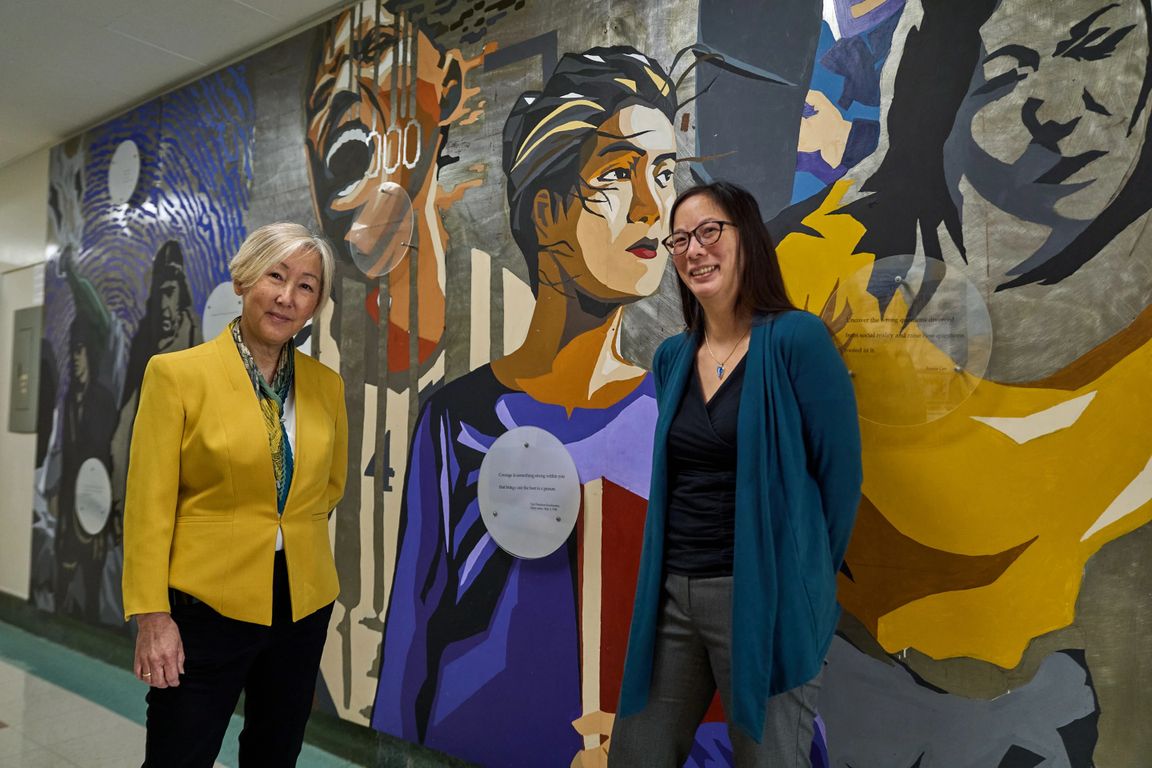
The Associated Press featured an article about the launch of a free digital textbook overseen by the UCLA Asian American Studies Center that aims to be a high-caliber guide to help high school and college educators nationwide teach more effectively about AAPI experiences. “Foundations and Futures: Asian American and Pacific Islander Multimedia Textbook” is the culmination of years of work by 100 contributors, from curriculum developers to illustrators. (UCLA’s Karen Umemoto, Kelly Fong and Melany De La Cruz-Viesca were quoted.) Read more about UCLA in today’s Time, New Yorker and others.
More highlights from UCLA in the News: May 11, 2026
UCLA students build wild soapbox race car | KTLA-TV
Rich DeMuro meets up with the UCLA Racing team as they transform an old off-road race car into a wild downhill soapbox racer for the 2026 Red Bull Soapbox Race in Los Angeles.
Health officials tracking cruise ship passengers for hantavirus | ABC News
“What they’re going to do is they’re really going to assess the risk and the exposures that these people have had. They’ll check people for symptoms. There’s probably going to be some testing to see if anybody has had any evidence of being infected at that point,” said UCLA’s Anne Rimoin. (Rimoin was also interviewed by KNBC-TV, CNN, MS NOW, ABC’s “Good Morning America,” and Deutsche Welle.)
How to manage your health anxiety about hantavirus | Time
That tracks with what Dana Rose Garfin, a psychologist and professor at University of California, Los Angeles, who studies collective trauma, sees in her data. Major events like COVID-19, she says, rewire people. “Those types of events do tend to sensitize people to respond more negatively to future events,” Garfin says. “And this is happening on the backdrop of intense political polarization and geopolitical instability — people are really inundated with bad news about these escalating threats.”
Hantavirus vaccines and treatments are in the pipeline | New York Times
“It’s kind of a wake-up call,” said Dr. Vaithi Arumugaswami, an infectious disease researcher at the University of California, Los Angeles. “Our tool kit is almost empty.”
Is Los Angeles finally ready to take the subway? | The New Yorker
A study of university students from 2020 found that nearly half of the students who used the Metro Rail network, and three out of four students who rode the bus, had been sexually harassed. “You’re talking about the majority of passengers in either part of the system,” Madeline Brozen, the deputy director of the Lewis Center for Regional Policy Studies at UCLA’s Luskin School of Public Affairs, told me. (UCLA’s Ethan Elkind and Eric Avila were also quoted.)
LA hopes new subway stations will be a ‘game changer’ | The Guardian
The world-class entertainment, cultural and economic draws here provide a civic corridor “where the benefits of transit in London, Tokyo and Paris can be felt”, said Brian Taylor, a professor of urban planning and public policy at the UCLA Institute of Transportation Studies. But the factors that make it optimal also make it “the most expensive and complicated place to build a new subway”, Taylor explained, adding: “Subway builder’s dilemma.”
This is the most compelling governor’s race in ages. Really | Los Angeles Times
“Look at the resumes of these people. There’s nothing embarrassing,” said Jim Newton, a UCLA historian who’s written a shelf-load of biographies of Californians as disparate as Earl Warren and Jerry Garcia. The contenders, he noted, include a former state attorney general and Biden Cabinet member, a high-profile ex-congresswoman, the aforementioned hedge-fund billionaire and men with experience running two of the state’s most populous cities. “That’s a pretty good range of backgrounds in candidates for governor.”
New U.S. fire service prepares for extreme fire season | NPR’s “All Things Considered”
Some wildfire experts, like Park Williams at the University of California, Los Angeles, say they want the government to do more preventative work that could stop a major fire instead of narrowly focusing on suppressing those that ignite. “If we don’t want fires to be growing so large that they have catastrophic consequences for people and ecosystems, then the best tool we have at our disposal is large prescribed fires,” Williams said.
California homelessness goal pledged by Newsom lapses in failure today | Fresno Bee
California taxpayers have poured more than $37 billion into anti-homelessness programs since 2019, not including the money that has been spent in the last year. That’s “about $245,000 per each of the 151,000 homeless people counted in 2019,” says UCLA economics professor and Hoover Institution senior fellow Lee Ohanian.