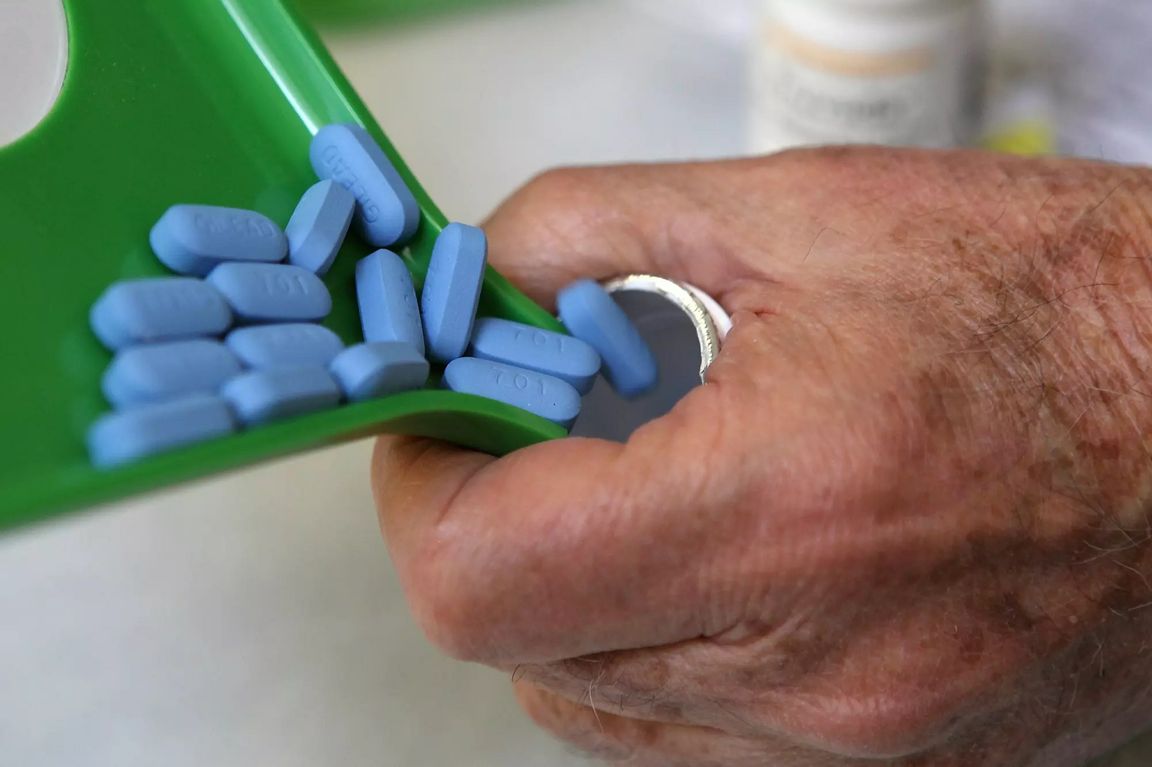
The Los Angeles Times published a commentary by UCLA emergency medicine physician Dr. Hashem Zikry arguing that artificial intelligence could expand access to care for patients facing doctor shortages, high costs and long wait times. Zikry wrote that many Americans are already turning to AI tools for medical guidance and said the technology has the potential to help manage routine needs such as prescription refills and common conditions. He also called for clear federal standards and accountability measures to ensure clinical AI is safe and effective before wider adoption. Read and hear more about UCLA in today’s New York Times, Bloomberg and others.
More highlights from UCLA in the News: April 27, 2026
What you need to know as Elon Musk’s lawsuit against Sam Altman begins | Engadget
“At the heart of this trial is that OpenAI began as a non-profit organization, and then decided that it needed to be a for-profit organization in order to raise the enormous sums of money it needed to develop the technology it wanted to create,” explains Professor Michael Dorff, executive director of the Lowell Milken Institute for Business Law and Policy at UCLA. “That is a very troublesome transition under the law.”
California’s voter ID initiative | KCAL-TV
“On your vote-by-mail ballot, you have to write down either your driver’s license or your social security number. You have to remember which one you put down your registration certificate twenty years ago. If you put your driver’s license number down, they can say ‘nope, you actually registered with a social,’ your ballot will be held, and you’ll have to correct it. So there are a lot of things in here that don’t make voting safer; they make voting harder,” said UCLA’s Matt Baretto (approx. 1:20 mark).
Voter ID proposal makes the ballot in deep blue California | New York Times
Richard Hasen, an election law expert at the University of California, Los Angeles, said most people who wish to vote have some form of identification, but that the proof-of-citizenship provisions could put a significant new burden on election officials.
In SCOTUS fight against deportation shield, Trump says judges have no role | Reuters
The administration’s actions overall do not reflect a federal agency’s reasoned decision-making but rather a concerted effort to end TPS entirely, [Ahilan] Arulanantham, co-director of the UCLA School of Law’s Center for Immigration Law and Policy, told reporters during a conference call. “This really is about a war on this congressional statute,” Arulanantham added.
Could AB 2624 infringe on First Amendment rights? | Southern California News Group
Eugene Volokh, a retired UCLA law school professor with expertise in First Amendment law and doxxing, said, based on his reading of the bill’s application, “(Section) 6218.19(a) does say that there’s got to be intent to incite or threaten, but 6218.19(b) does not limit itself to people who are intentionally inciting or threatening.”
Limits on gender-affirming Medicaid coverage could have national impacts | Stateline
“This gives states leeway to enact laws that would potentially restrict access to gender-affirming care for trans youth and adults,” said Elana Redfield, federal policy director at the Williams Institute, a think tank at the UCLA School of Law. “It could encourage states to adopt more, broader bans, including Medicaid bans, even for adults.”
Insider trading cases threaten reckoning for prediction markets | Bloomberg
“There’s a huge amount of attention right now that somebody has to do something,” said Andrew Verstein, a law professor at UCLA who testified on the issue last week at a congressional hearing on fraud and exploitation in capital markets. “Polymarket saw that this story was not going to go away, and the DOJ saw that this story was worth doing and was not going to go away.”
Michael Jackson biopic is on track to break box office records | Los Angeles Times
Tiffany Naiman, the director of music industry programs at UCLA, said the sustained interest in the pop icon speaks to his loyal fan base and place in American cultural history. “He represents not only extraordinary artistic achievement, but also the contradictions of fame at its most amplified,” Naiman said in a statement. “That tension — between brilliance and controversy, innovation and scrutiny — is precisely what continues to draw audiences back, and what will likely shape both the film’s reception and its broader cultural impact.”
Waymos aren’t going to solve traffic deaths | The New Republic
“There’s no magic bullet,” said Ann Carlson, the Shirley Shapiro professor of environmental law at the UCLA School of Law, who served as acting administrator of the National Highway Traffic Safety Administration, or NHTSA, during the Biden administration. “Increasingly, Waymos’ safety data seem impressive,” she told me. “But we’re talking about a scale that is tiny compared to what you would actually need if you were going to drive down traffic fatalities and traffic crashes. I take the maximalist safety claims with a big grain of salt.”
Climate disaster victims are rebuilding using prefab homes from boxy to bespoke | NPR
The Warneskys are among the dozens of families in the immediate neighborhood who have opted to rebuild with manufactured homes. They were swayed by a local program launched by city-LAB UCLA, a center founded by the UCLA Architecture and Urban Design Department, which included a showcase of six prefab housing options and a guide to help navigate the process and secure financing.



