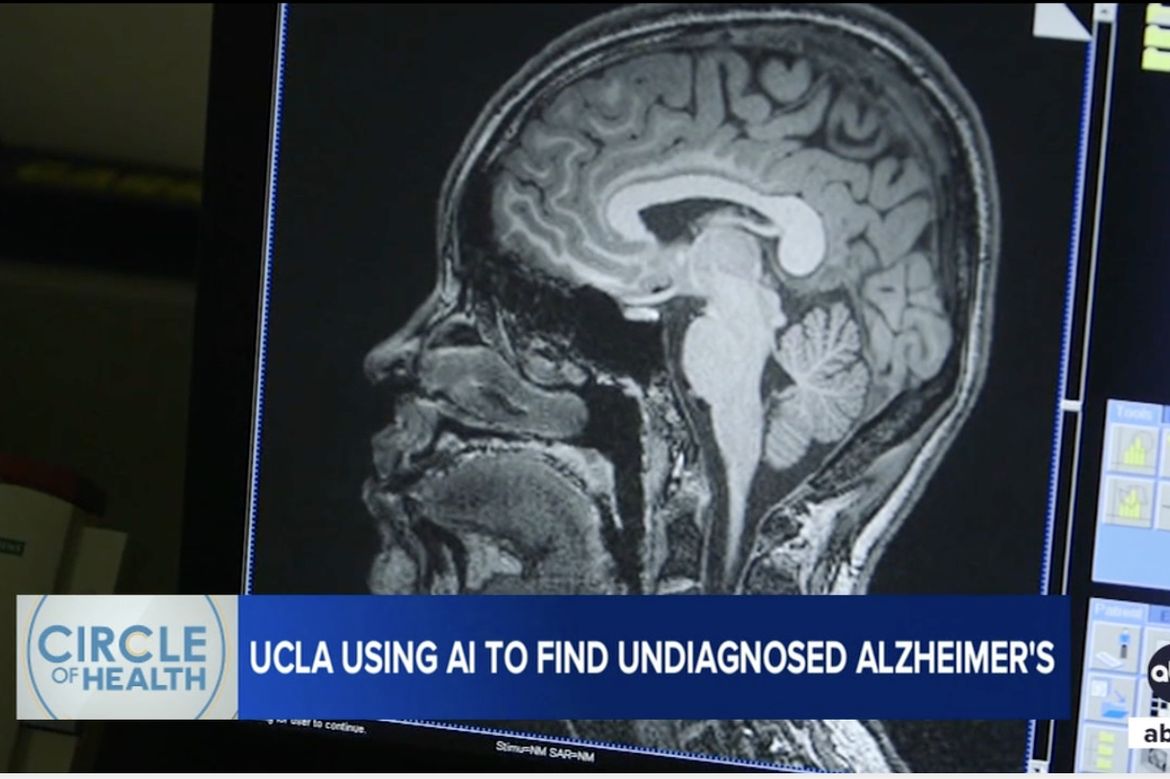
ABC News cited a new study by UCLA researchers using artificial intelligence to detect early signs of Alzheimer’s disease solely from an individual’s medical history. By using an algorithm that examines patient medical records for prior diagnoses, age and neurological indicators, the UCLA team was able to detect up to 80% of people who would have otherwise slipped through the cracks — an accuracy that’s more than double that of other detection models. Read more about UCLA in today’s New York Times, ABC News and other outlets.
More highlights from UCLA in the News: Jan. 26, 2026
UCLA report finds increase in ICE detentions of Latinos without convictions | KTLA-TV
A new UCLA report says immigration enforcement has increasingly targeted Latino immigrants without criminal convictions, marking a sharp shift in detention patterns over the past two years. The analysis, released by UCLA’s Luskin School of Public Affairs’ Center for Neighborhood Knowledge and the advocacy group Unseen, draws on data from the Deportation Data Project at UCLA and UC Berkeley Law. (Also: KABC-TV, KTTV-TV, KCRW 89.9-FM and LAist 89.3-FM.)
Immigration operations: What are your rights in U.S.? | KNBC-TV
Ahilan Arulanantham, professor and co-director of the Center for Immigration Law and Policy at UCLA School of Law, said in an interview with NBC that if you are arrested, do not sign anything, even if you feel pressured. If you are a citizen and believe your detention is unlawful, do not resist orders.
Researchers say LA’s ‘mansion tax’ hurts new housing | LAist
Mott Smith, a reform proponent and the co-author of a UCLA study that found the tax had sharply reduced high-end real estate sales, said this is shaping up to be a tough political fight. “I commend Councilmember Raman for doing her best to turn Measure ULA into something that might actually work before it goes away,” Smith said.
Trump wants to block California’s election map, uphold Texas’ | Los Angeles Times
Election law experts have been skeptical of the Republican arguments in the California case. “I don’t think Republicans are likely to prevail here,” UCLA law professor Rick Hasen wrote on his Election Law Blog. He said the legal challenge “comes too late,” the proposed remedy is too broad, and it ignores the fact that the California’s voters were focused on partisanship, not race. It’s their intent that counts, he said.
Lifetime alcohol use linked to higher risk of colorectal cancer | ABC News
“We’re seeing an uptick in rectal cancers. If alcohol affects the lower part of the colon differently — we need to understand why,” Dr. Fola May, a GI specialist and associate director of the UCLA Kaiser Permanente Center for Health Equity, told ABC News.
‘The Pitt’ cast pays it forward with UCLA Hospital visit | TheWrap
Stars Patrick Ball, Katherine LaNasa, Fiona Dourif, Taylor Dearden, Isa Briones and Gerran Howell stopped by the UCLA Ronald Reagan Medical Center hospital on Wednesday to honor the local doctors, nurses and healthcare workers. Staffers were treated to multiple wellness experiences and pampering, in addition to an early sneak peek of this week’s episode and a surprise fireside chat with the cast.
China’s boba behemoth has landed in LA | Los Angeles Times
Mixue is able to keep costs low because it is vertically integrated, said UCLA business administration professor Christopher Tang, a supply chain management expert.
TikTok has finalized its U.S. joint venture, ending saga over its fate | Los Angeles Times
Ramesh Srinivasan, professor of information studies at UCLA, said he finds the deal to be “deeply concerning.” He said TikTok will become more similar to American-owned social media applications when it comes to access to data and how it’s monetized.
How bad are AI delusions? We asked people treating them | New York Times
“AI could really, on a mass scale, change how many people are impacted,” said Haley Wang, a graduate student at UCLA who assesses people showing symptoms of psychosis.
Why do we cringe at our selfies? Here’s the science behind it | KABC-TV
“All of us have a little bit of asymmetry in our faces. One eye is bigger than the other. When you smile one side tends to pull more than the other,” said UCLA Health child and adolescent psychiatrist Dr. Jena Lee. She said we’re accustomed to how our faces appear when we look in a mirror. “So when the asymmetry is flipped, we don’t like it because something that is not familiar in our brains is not good,” she said.