UCLA in the News lists selected mentions of UCLA in the world’s news media. Some articles may require registration or a subscription. See more UCLA in the News.
Wildlife is returning to the Altadena foothills after the Eaton Fire | LAist
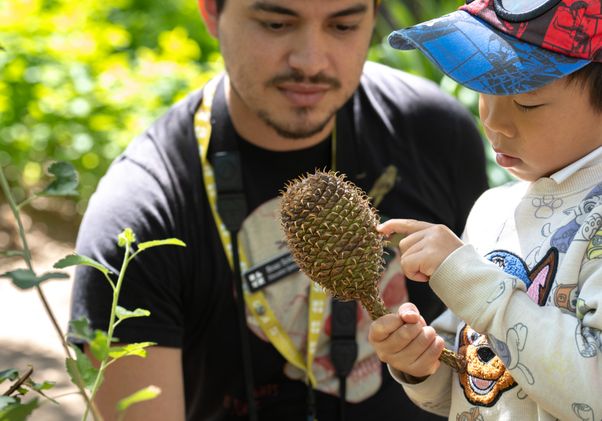
Since July 2024, Kristen Ochoa and a group of volunteers and a biologist have been documenting wildlife in the Chaney Trail corridor, a wilderness area northwest of Eaton Canyon, via a network of trail cameras and other methods. Ochoa, a UCLA psychiatry professor, founded the Chaney Trail Corridor Project after the famous Nuccio’s Nursery sold a 78-acre piece of land in the Altadena foothills. (Ochoa was quoted.)
Unnecessary cuts could destroy public health beyond repair | The Hill
(Commentary co-written by UCLA’s Dr. Jonathan Fielding and Dr. Peter Katona) The only thing worse than the painful death of a child is the easily preventable painful death of a child. Already, as a result of the Trump administration’s attack on the public health community, which includes defunding the U.S. Agency for International Development and Gavi, the Vaccine Alliance, many children are dying unnecessarily.
8% of Californians victims of hate acts in 2022-23 | NBC News Palm Springs
A new report released by the California Civil Rights Department, in collaboration with the UCLA Center for Health Policy Research, reveals that an estimated 2.6 million Californians — or roughly 8% of the population — directly experienced at least one act of hate during a single year between 2022 and 2023. “This data can be an invaluable resource that helps make sure policies and programs are most effective,” said Ninez Ponce, director of the [UCLA center].
HIV patients react to DOGE’s cutting of research funding | KABC-TV
New data released this week shows the Department of Government Efficiency task force claims it cut $109 million dollars in federal grants from UCLA. A lot of that money was funding critical HIV research and care. One study that had enrolled more than 200 HIV-infected participants was forced to shut down midstream … “Keeping people with HIV, living in care means they don’t have viral load and that means they’re not able to transmit HIV,” said UCLA Professor of epidemiology and infectious diseases Pamina Gorbach.
Will we really know what causes autism by September? | Washington Post
Alice Kuo, an autism researcher at the University of California, Los Angeles, said the federal government’s last attempt to conduct a decades-long study that could better identify environmental causes of autism fell apart because of costs and complexity. (Kuo was also quoted by The New York Times.)
Temporary protections for Afghans, Cameroonians to end | New York Times
“We will closely examine the terminations to determine whether the government complied with the T.P.S. statute in determining Afghanistan and Cameroon are now safe to accept returns of their nationals as required by the T.P.S. statute,” said Ahilan Arulanantham, who runs the Center for Immigration Law and Policy at UCLA and is an attorney in the case challenging the Trump administration decision to end T.P.S. for Venezuelans.
Trade policy creates new problems for California | Los Angeles Times
“We have not seen the kind of changes in economic policy in Washington, either in intensity or rapidity, before,” said Jerry Nickelsburg, a senior economist for the UCLA Anderson Forecast. “It is difficult to predict, but predict the executive and the legislative branch must do, and so the appropriate way to approach this is to be more conservative than the objective data would tell you.”
Colombia’s capital ends drought-related water rationing | Associated Press
“A lot of the large cities globally developed or grew rapidly in the last 50 to 100 years, and kind of took all the easy water sources they could,” said Gregory Pierce, director of the Human Right to Water Solutions Lab at UCLA.
How much caffeine is too much as we age? | San Francisco Chronicle
“As we get older, people have higher sensitivity to caffeine, especially (its effects) on their sleep,” said Dr. Vijaya Surampudi, a clinical nutrition specialist at UCLA Health. “At the same time, we have more trouble metabolizing caffeine. They’ve seen in some studies that it takes 30% longer to metabolize caffeine for older individuals.”
Experts share 9 poisonous flowers that could be in your backyard | CNET
“Poisonous flowers such as oleander are not particularly dangerous to touch but should not be eaten. If a child were to put one into their mouth, I would suggest calling poison control at 800-222-1222,” says Michael Levine, emergency medicine physician at UCLA Health.
California showdown over Medicaid as GOP approves cuts | Capital & Main
The GOP budget calls for Medicaid cuts to offset tax cuts that would disproportionately benefit the wealthy. Gerald Kominski, senior fellow at UCLA’s Center for Health Policy Research, said voters will likely see that tradeoff as “blatant robbing from the poor to support the rich.”