In an article in the Los Angeles Times, UCLA law professor Rick Hasen speaks about the Supreme Court’s Wednesday decision to limit the Voting Rights Act — a ruling that will give states back the power to redraw their election maps and eliminate voting districts that favor Black or Latino candidates for Congress, state legislatures and county boards. Hasen, who is the founding director of the Safeguarding Democracy Project, was also featured by NPR’s “All Things Considered,” KABC-TV, KCRW 89.9-FM’s “Press Play,” Reuters, USA Today, Politico, Ohio Capital Journal and The Guardian. Read more about UCLA in today’s Vox and Imperial Valley Press.
More highlights from UCLA in the News: April 30, 2026
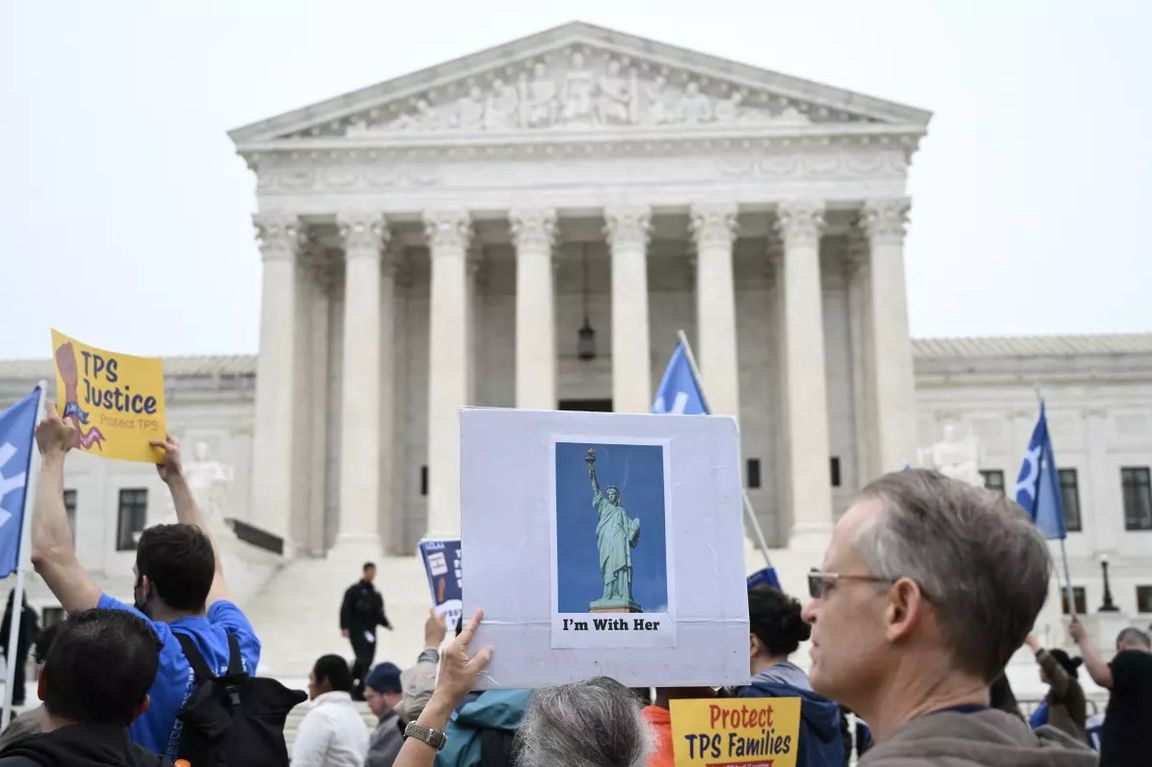
SCOTUS leans in favor of bid to end protections for migrants | Los Angeles Times
UCLA law professor Ahilan T. Arulanantham, representing several thousand Syrians, said the Homeland Security secretary had failed to consult the State Department, which says it is unsafe to travel there. He said the government “reads the statute like it’s a blank check ... to give the secretary the power to expel people who have done nothing wrong.”
The James Comey indictment looks like vindictive prosecution | Reason
“I think this prosecution is unjustified, and will get thrown out,” writes UCLA School of Law professor Eugene Volokh, who notes the case is likely doomed on First Amendment grounds. The Supreme Court’s ruling in Counterman v. Colorado (2023) established that to punish someone over a threatening statement, the government “must show that the defendant consciously disregarded a substantial risk that his communications would be viewed as threatening violence.”
Desert dust packs double the ‘heat punch’ previously thought | Imperial Valley Press
New research led by UCLA reveals that the heat-trapping effect of airborne desert dust is roughly twice as large as previously estimated in climate models. While scientists emphasize that this discovery doesn’t invalidate current climate projections, it provides a critical “missing piece” that could sharpen the accuracy of both weekly weather forecasts and century-long climate outlooks. (UCLA’s Jasper Kok was quoted.)
Western U.S. wildfires decrease in frequency but grow larger | Scienmag
In a groundbreaking study set to reshape our understanding of wildfire dynamics, researchers have revealed a paradoxical trend in the Western United States: the number of wildfires has declined by approximately 28% over the past thirty years, even as the total area burned and the damages caused by these fires have dramatically increased. (UCLA’s Gavin Madakumbura was cited.)
Psychedelics space is ‘evolving very rapidly’ | Healio
“I think this is a conversation that patients are already having with their physicians — asking about psychedelics, perhaps accessing some of them already. And there are varying degrees of understanding and awareness among internists/primary care doctors, so this was really designed to bring them up to speed in terms of where the field is and what we mean by psychedelics,” [said] UCLA’s Water Dunn. (Dunn was interviewed.)
We’re missing the economic fallout of the Iran war — just like we did with Covid | Vox
A 2025 paper in Science by UCLA’s Rachit Dubey and colleagues showed this formally: When information arrives in continuous form — fertilizer up 60 percent in Mississippi, propane queues in Dhaka, another flight canceled in Frankfurt — people fail to perceive a shift even when the shift is real. A binary headline (“the strait closed”) would register more sharply. But the closure of Hormuz, like the early spread of COVID-19, hasn’t been a headline. It’s been a process.



