UCLA in the News lists selected mentions of UCLA in the world’s news media. Some articles may require registration or a subscription. See more UCLA in the News.
The legacy of L.A.’s Jewish communities | LAist 89.3-FM’s ‘AirTalk’
“I’d say the Jewish community in L.A. remained relatively small, compared to that of Eastern capitals … But that was in part because L.A. was a pretty small town. The population reached about 100,000 at the turn of the 20th century and about 2,500 of those were Jewish,” said UCLA’s Carolyn Luce (approx. 7:55 mark).
Riding in a car with no one in the driver’s seat | KCRW 89.9-FM’s ‘Greater LA’
“I’ve been impressed with how safe it feels. The driving is very smooth. The vehicles take the safest routes that I wouldn’t take as a driver … They want to minimize the risk, they know the safest path between A and B,” said UCLA’s Juan Matute (approx. 2:45 mark).
‘Dooring’ can kill cyclists. How can it be prevented? | Los Angeles Times
However, Madeline Brozen, deputy director of the UCLA Lewis Center for Regional Policy Studies, points to “protective infrastructure” as a means for better bicycle safety. “You’re having some type of physical protection between where people are riding bikes and moving traffic,” she said, “but sometimes that can even go further in terms of using parked cars as the actual protection.”
The keto diet protects against epileptic seizures | Medical Xpress
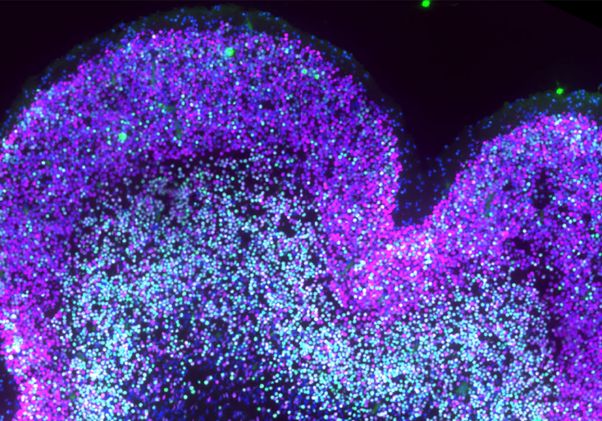
The high-fat, low-carbohydrate ketogenic diet is more than just a trendy weight-loss tactic. It has also been known to help control seizures in children with epilepsy, particularly those who don’t respond to first-line anti-seizure medications. In a new UCLA study published in the journal Cell Reports, researchers demonstrate that the changes the diet causes in the human gut microbiome — the trillions of bacteria and other microorganisms that live in the digestive tract — can confer protection against seizures in mice. (UCLA’s Gregory Lum was quoted.)
What’s your ‘biological age’? | New York Times
A major advance came in 2013 when Steve Horvath, a professor of human genetics and biostatistics at the University of California, Los Angeles, proposed using a “clock” based on the emerging field of epigenetics. Over the course of our lives, our DNA accumulates molecular changes that turn on and off various genes. Dr. Horvath analyzed these changes in thousands of people and developed an algorithm to determine how they correlate with age.
OC Supervisor faces conflict of interest allegations | LAist
The missing audits are “a really excellent example of the failure to monitor at the county level,” said Rose Chan Loui, a longtime attorney for nonprofits who now directs UCLA Law School’s program on philanthropy and nonprofits. “If they would have been required to comply with that, we probably would have a lot more transparency as to what is going on.”
Richard Hunt, renowned sculptor of public art, dies at 88 | Los Angeles Times
Richard Hunt, a prolific sculptor who was influenced by the civil rights movement and whose public art can be seen across the United States, has died … In Los Angeles, his 1975 work “Extended Forms” was acquired by the Los Angeles County Museum of Art in 1980, and his “Why” sits in the Hammer Museum’s Franklin D. Murphy Sculpture Garden on the UCLA campus.