UCLA in the News lists selected mentions of UCLA in the world’s news media. Some articles may require registration or a subscription. See more UCLA in the News.
Which animals like cities most? Slugs and snails top the list | Science Friday
Urbanization is directly linked to biodiversity loss, but researchers at UCLA, including Joey Curti and Morgan Tingley, wanted to find out specifically which animals thrive and which struggle in urban environments. So they turned to iNaturalist, a crowd-sourcing app where users upload photos of flora and fauna they see, along with information like location and date. (Also: KCRW-FM.)
Teaching Chinese culture with thousand-year old instrument | KCAL-TV
[Chi Li], a UCLA adjunct professor of ethnomusicology and master of the Erhu, a Chinese instrument dating back more than a thousand years, uses her talent and background to help teach more about Chinese history and culture. (Li was interviewed.)
Extreme heat forecast may kick off sweltering summer | Los Angeles Times
A powerful high-pressure ridge, or heat dome, will bring unusually hot temperatures to the Golden State by the middle of this week before spreading into the Pacific Northwest and Southwestern Canada, according to Daniel Swain, a climate scientist with UCLA. (Swain was also featured by NPR News.)
Upside-down American flag goes mainstream | National Public Radio
“You are seeing this spike [of the flipped U.S. flag] being used less by the left and more by the right who has had this Trumpian history of ‘Make America Great Again because [they believe] it hasn’t been great in some time,’” said Bethan Johnson, a postdoctoral scholar who researches political extremism with the Initiative to Study Hate at the University of California, Los Angeles.
One down, three to go, but unlikely before election | Agence France-Presse
Rick Hasen, a law professor at the University of California, Los Angeles, said the New York case, in which Trump was convicted of falsifying business records to cover up a payment to a porn star, was “relatively minor.” “Trump should have faced trial for trying to subvert the 2020 election,” Hasen said on X, formerly Twitter. “That hasn’t happened and likely won’t.” (Hasen was also quoted by Salon.)
AAPI Latino population in the U.S. has doubled since 2000 | De Los
Kandamby is one of the more than 886,000 individuals living in the United States who identify as Asian and Pacific Islander, and Latino — a figure that has increased twofold from 2000 to 2022, according to a new analysis by the UCLA Latino Policy and Politics Institute … Though the study highlights the rapid growth of the demographic, AAPI Latinos have existed for centuries, says UCLA professor Robert Chao Romero. He points out how Mexico and the Philippines were connected via the Manila Galleon trade routes, which were used by Spanish merchants from 1565 to 1815.
America’s richest immigrant is angry about immigration | Los Angeles Times
There’s a particular irony in [Elon] Musk attacking the program that allows limited arrivals for humanitarian reasons while simultaneously saying he favors legal immigration, said Ahilan Arulanantham, a lawyer, professor and co-director of the Center for Immigration Law and Policy at UCLA. The program offers would-be migrants a lawful pathway to reach the U.S. and reduced arrivals at the border from the beneficiary countries.
Why some wild animals are getting insomnia | Vox
Sleep “is essential for physical recovery and memory consolidation,” Daniel Blumstein, a behavioral ecologist at the University of California Los Angeles, who was not involved in Mortlock’s research, told Vox. “Thus, we should document those things that interfere with it.”
Science doesn’t support this pandemic-era precaution | Washington Post
“We never did the study about what works,” said Andrew Atkeson, a UCLA economist and co-author of the paper, lamenting the lack of evidence around the six-foot rule. He warned that persistent frustrations over social distancing and other measures might lead Americans to ignore public health advice during the next crisis.
Tumor heterogeneity with a high throughput pipeline | The Scientist
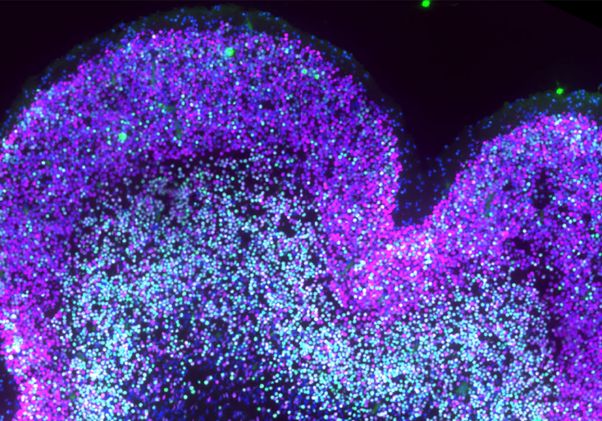
In a proof-of-concept Nature Communications paper, scientists developed an automated high throughput assay to monitor tumor organoid growth label-free. “3D screening in a high throughput manner is still very challenging,” said Alice Soragni, a cancer biologist at the University of California, Los Angeles and co-corresponding author of this study along with Michael Teitell at UCLA.
Microplastics are everywhere. Here’s how to avoid them | New York Times
“I emphasize that before putting much energy and resources into minimizing unknown risks, it is worth attending to reducing the risks we know about,” said Dr. Carlos Lerner, a pediatrician and professor of clinical pediatrics at UCLA Health. He cited following safe sleep recommendations for infants, avoiding secondhand smoke, and practicing good nutrition as examples.
Optical imager captures amplitude and phase information | Scienmag
A team of UCLA researchers introduced an all-optical complex field imaging technique that directly captures both the amplitude and phase information of optical fields using an intensity-based sensor array. This innovative approach, detailed in their publication in Light: Science & Applications, marks a significant departure from traditional methods, which often involve complex hardware and high computational load, often using iterative algorithms. (UCLA’s Aydogan Ozcan was quoted.)
Nudity is more controversial than violence? | Entertainment Weekly
As Hoffmann indicated, nudity and sex scenes remain a hot discussion topic even now. The conversation was recently reignited in 2023 when the UCLA’s “Teens and Screens” study concluded that Gen Z is more interested in platonic relationships than sex, when it comes to movies and television.