UCLA in the News lists selected mentions of UCLA in the world’s news media. Some articles may require registration or a subscription. See more UCLA in the News.
UCLA researchers have successfully cultivated meat | Spectrum News 1
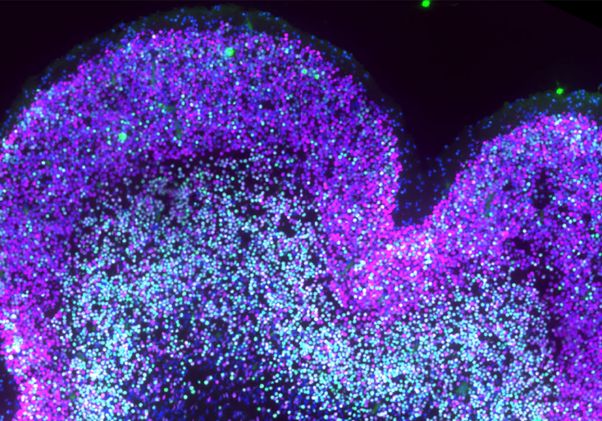
An all-female team of researchers at UCLA, led by professor Amy Rowat, is getting closer to cultivating meat and fat cells that more closely replicate the mouthfeel and texture of animal meat. Rowat said food access and food security are major drivers for this research. “In the face of pandemics or natural disasters, there’s a lot of demand on our food systems,” Rowat said. “If we can have an additional source of complementary proteins that doesn’t rely on traditional food supply chains, our vision is that can help keep delicious, proteinaceous foods available and accessible for everyone.”
Nobel tote board: University of California 5, Trump 0 | Los Angeles Times
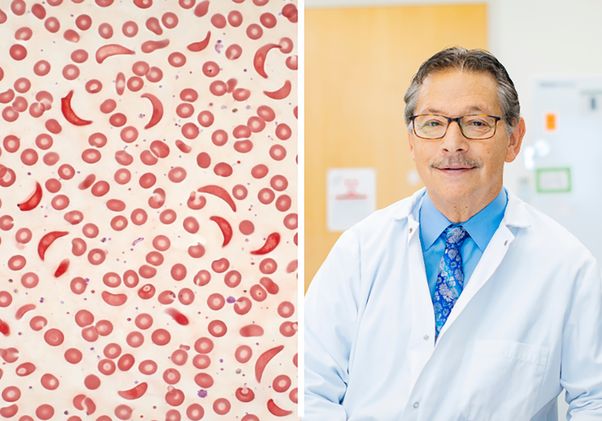
UC scored again in physiology and medicine, where Frederick J. Ramsdell won the Nobel. He’s a UCLA grad who got his doctorate at UC San Diego, before moving on to the private sector. He joined another American and a Japanese scientist, recognized for “groundbreaking work on the human immune system.”
What is Indigenous Peoples Day? | Associated Press
“This day is about reclaiming histories,” said Kyle Mays, an associate professor of American Indian Studies at the University of California, Los Angeles. “It’s acknowledging the history of dispossession and violence against Indigenous people.”
Costs of extreme weather damage are breaking U.S. records | Live Science
One event this winter caused much of 2025’s natural disaster damage — the Los Angeles wildfires. In January, wildfires burned through mostly “high-value single-family homes” in Pacific Palisades and Eaton Canyon, Zhiyun Li, a climate economist at UCLA, told Live Science in an email.
The financial cost of one of L.A.’s most devastating blazes | Fox Business
The UCLA Anderson Forecast projected in February that the Palisades and Eaton fires may have caused total property and capital losses ranging between $95 billion and $164 billion, with insured losses estimated at $75 billion.
Delays in water tendering came with cost in fire | Los Angeles Times
Researchers at UCLA’s Luskin Center for Innovation, working with DWP, held a workshop in June with more than 100 engineers, public officials and scientists to discuss ways of improving water and power infrastructure. In a report, the researchers recommended burying power lines underground so they can’t spark fires, building backup reservoirs or even laying new lines to draw water from the ocean.
L.A. should repeal, not pause, Measure ULA | Los Angeles Daily News
UCLA Lewis Center researchers found that since ULA took effect, “the odds of a Los Angeles property selling at a price above its tax threshold have fallen by as much as 50%,” with the steepest declines in non-single-family transactions (commercial, industrial, and multifamily) down 30% to 50%. Those are precisely the assets that fuel renovations, conversions, and new housing projects. When turnover stalls, projects stall … A second UCLA study, ”Taxing Tomorrow,” goes further.
Autopsy reports don’t show the full story in these heat deaths | Guardian
“No one dies from a heatwave,” Bharat Venkat, director of the UCLA Heat Lab, told me. “The way in which our society is structured makes some people vulnerable and others safer.”
How ACA subsidies became a sticking point in shutdown | ABC News
Naomi Zewde, a fellow at the UCLA Center for Health Policy Research and assistant professor of health policy and management at the UCLA Fielding School of Public Health, told ABC News that working low-income families and adults will be affected if the ACA subsidies are not approved.
Study offers good news for bacteria | NPR’s “Morning Edition”
Antibiotics are really good at killing bacteria, but they’re not perfect. In part, that’s because bacteria vary in their vulnerability to antibiotics. Out of the billions of bacteria causing an infection, some just so happen to be naturally resistant. Here’s Kevin Ikuta, an infectious disease physician at UCLA. “Antimicrobial resistance is just basic evolution,” [said Ikuta.]
World’s leading AI chipmaker is entangled in the U.S.-China trade war | CNN
“It’s really unusual to have somebody who can go from starting what was at the time a very small tech startup and grow it to the extraordinary level of success that Nvidia has grown to,” John Villasenor, a nonresident senior fellow at Brookings Institution and professor at the University of California, Los Angeles, said of Huang.
Is heart disease preventable? | USA Today
You can’t control your family history, sex, age and menopausal status. But in the world of prevention, there are a number of modifiable lifestyle and health factors where you make adjustments to reduce your risk for heart disease, says Dr. Karol Watson, the co-director of the UCLA Program in Preventive Cardiology and director of the UCLA Women’s Cardiovascular Health Center.
Trump gets COCID-19 vaccine, flu shot | NBC News
(Article co-written by UCLA’s Dr. Akshay Syal) The White House on Friday released a memo from President Donald Trump’s physician summarizing his visit to Walter Reed Army Medical Center earlier in the day, which included a COVID-19 vaccine booster and a flu shot.
What changes to expect after a breast cancer diagnosis | People
“Many say their partners think they should bounce back to normal after breast cancer treatment,” notes Valentina Ogaryan, psychologist and clinical director at UCLA Simms/Mann Center for Integrative Oncology. She stresses that going back to the old you is rarely possible, which is why it’s important to let your partner, family and friends know that your breast cancer journey is ongoing and fluid.
700 times, boy with autism who drowned ran from class | Washington Post
Catherine Lord, a professor at UCLA and clinical psychologist who specializes in autism research, said a diagnosis shouldn’t hinder families’ access to care, but it often does. “It’s really unfortunate that it’s become a ticket to get services,” Lord said, “because you don’t really need a diagnosis to at least start things like working with families about potential unsafe situations.”