UCLA in the News lists selected mentions of UCLA in the world’s news media. Some articles may require registration or a subscription. See more UCLA in the News.
War erupts between Israel and Hamas | KCAL-TV
“It’s hard to identify a specific trigger. This wasn’t something that anybody really expected. There was a general assessment within the Israeli intelligence agencies that Hamas would not try to carry out any major attacks against Israel, that it wanted to maintain calm and try to export Palestinian violence in the West Bank,” said UCLA’s Dov Waxman. (approx. 1:05 mark.) (Also: UCLA’s Steven Spiegel was interviewed by MSNBC.)
Hamas attack tears off Israel’s veneer of invincibility | Los Angeles Times
(Commentary by UCLA’s David Myers) And now in 2023, a major enemy of Israel, Hamas, launched a stunning attack on a day marked by the convergence of the Jewish sabbath and the holiday of Simchat Torah (one of the most celebratory days in the Jewish calendar). Unlike in 1973, this attack was directed against civilians, as well as the military, and the results have been devastating. The death toll from the massacre is rising by the hour. (Myers was also interviewed by KCAL-TV.)
Tribal leaders map ancient ‘lost suburbs’ of L.A. | Los Angeles Times
But now, Shevaanga is among hundreds of sites drawing new attention in the “Mapping Los Angeles Landscape History” project. The effort seeks to illustrate major settlements and the roads that connected them — a 2,500-mile network of paths that stretched across the Los Angeles Basin and beyond and were used to transport acorns, walnuts, pine nuts, elderberries, tar for waterproofing plank ships, shells worked into beads, and salt minerals used to preserve fish … “We had to dig deep for evidence of the great society buried under our modern empire of terraced and graded slopes, rivers sheathed in concrete, industrial development, freeways and sprawl,” said Travis Longcore, a professor at UCLA’s Institute of the Environment and Sustainability. (UCLA’s Benjamin Madley was cited.)
What is Indigenous Peoples Day? | Associated Press
“This day is about reclaiming histories,” said Kyle Mays, an associate professor of American Indian Studies at the University of California, Los Angeles. “It’s acknowledging the history of dispossession and violence against Indigenous people.”
Hammer challenges myth of ‘flexible’ museum space | Los Angeles Times
It’s a big week at the Hammer Museum: The sixth edition of the splashy “Made in L.A.” biennial has landed and it’s the first to be staged since the museum completed a two-decade, $90-million renovation and expansion that, over time, has added galleries at different scales, a state-of-the-art drawing center, a refreshed courtyard and renewed back-of-house spaces. (UCLA’s Ann Philbin was cited.)
Data shows how career correlates with odds of overdose | Washington Post
In 2015, less-educated women and men were seven and eight times as likely to overdose as their peers with bachelor’s degrees. By 2021, less-educated folks of both sexes were 13 times as likely to die from drugs, according to a recent preprint analysis of the same federal data for people age 25 to 64, from Jay Xu, Marissa Seamans and Joseph Friedman at the University of California at Los Angeles. (Joseph Friedman was quoted.)
The largest health care strike in history is over — for now | CNN
Gerald Kominski, a senior fellow at the UCLA Center for Health Policy Research, said he believes the health care industry and its workers have yet to rebound from the pandemic. “The fact that there’s burnout and problems with retention and recruiting because of the work environment is, in my opinion, probably one of the longer-term consequences of the pandemic,” he said. (UCLA’s Kent Wong was also quoted about the strike by Slate.)
What it will take for Americans to get the new COVID shot | KABC-TV
The mid-September poll from researchers at the nonprofit health policy group KFF paints a picture of what health officials are up against. “I think it reflects this fatigue that we all feel,” said infectious disease expert Dr. Otto Yang with UCLA Health. He said initial hurdles, such as insurance and supply problems, may give the people in the “probably” column a reason to delay. “If you feel that you don’t want to get vaccinated, it’s just one more excuse, one more reason not to do it,” he said.
CDC proposes using ‘morning after’ antibiotics to reduce STIs | Health
“There’s very compelling evidence this works,” infectious disease expert David Goodman, MD, an assistant clinical professor in the UCLA Department of Medicine and a physician-scientist at UCLA Health, told Health. “The idea is that, if you get medication onboard early enough after a sexual encounter, you treat that infection very early and can avoid complications of those infections.”
Gene therapies for rare diseases are under threat | Nature
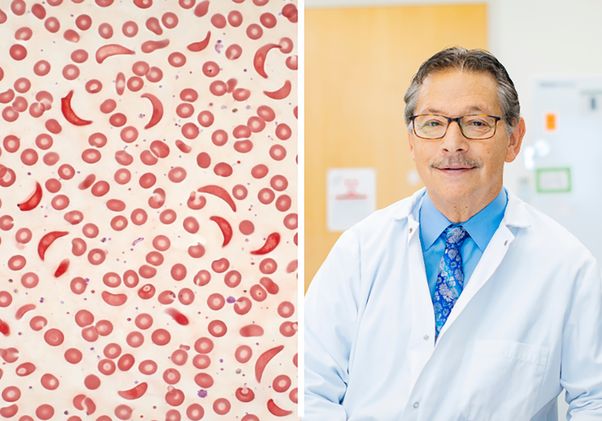
In 2021, the company returned the intellectual-property rights for this treatment to the academic investigators who first created it. One of those researchers, [pediatrician] Donald Kohn at the University of California, Los Angeles, is continuing trials with money from the California Institute of Regenerative Medicine in South San Francisco, a state agency that funds stem-cell research. He is also in discussions with the US Food and Drug Administration and companies that can produce the components of a gene therapy, searching for a way to lower the costs of producing the treatment and winning regulatory approval.
Impeachments, removals emerge as partisan weapons | Associated Press
Richard Hasen, a law professor at the University of California, Los Angeles, said impeachment and recall are intended for cases where there seems to be a clear abuse of power. “It’s important to have these powers because sometimes you don’t want to wait for a bad actor’s term to end before they’re removed from power,” he said. “But I think what we’ve seen is a greater willingness to play political hardball and that these devices that are meant to stop abuse could potentially be themselves abused.”
Could unions ‘sling-shot’ Butler’s Senate bid? | CalMatters
Compared to the three other Democrats, Butler would have several advantages, said Kent Wong, director of the University of California Los Angeles Labor Center. She could receive a boost in name recognition as the first Black and openly lesbian person to serve in the Senate, and the 44-year-old would appeal to voters who were frustrated at Feinstein, who did not give up her seat until she was 90, he argued.
It’s a new water year. What can we expect ahead? | LAist
Water conservation should still be a number one priority, said Pestrella, as well as Bruce Reznik, director of non-profit L.A. Waterkeeper, and Greg Pierce, the director of the Human Right to Water Solutions Lab at UCLA. “We may be right back in the situation we were before this last wet year in a year or two, but it does appear that we’re going to have another wet year, and that should set us up again to avoid desperation, for maybe, instead of one to two years, maybe three to five years,” Pierce said.