UCLA in the News lists selected mentions of UCLA in the world’s news media. Some articles may require registration or a subscription. See more UCLA in the News.
New primate study could shed light on infertility issues | Live Science
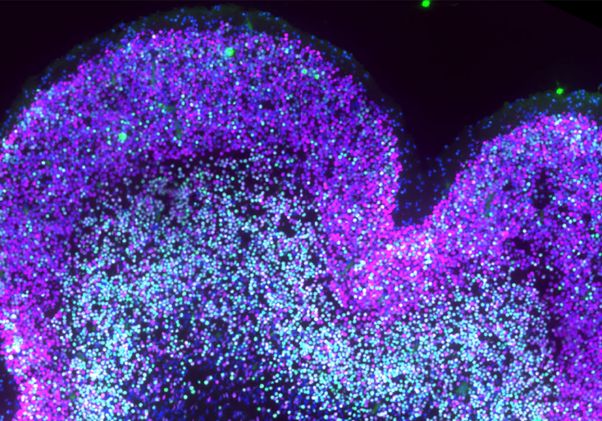
The new research, published Aug. 26 in the journal Nature Communications, mapped the emergence and progression of the cells and molecules that develop into the ovarian reserve in monkeys, from the early stages of ovarian development in an embryo to six months after birth. This map fills in some of the blanks in “really important areas of just unknown biology,” study co-author Amander Clark, a developmental biologist at UCLA, told Live Science.
Doctors may need to rethink beta blocker use for heart attacks | ABC News
“The major driver was a reduction in non-fatal heart attack at follow-up,” said Dr. Gregg Fonarow, professor of cardiovascular medicine at the University of California, Los Angeles, in an interview with ABC News.
Historians see autocratic playbook in attacks on science | New York Times
“Science is a source of social power,” said Daniel Treisman, a political scientist at the University of California, Los Angeles. “It always poses a potential threat.”
Trump axing Venezuelan relief likely illegal, 9th Circuit says | Bloomberg Law
“There are now two comprehensive decisions carefully explaining why the Venezuela vacatur is illegal, but neither has any effect because of the two paragraph unreasoned SCOTUS order,” said Ahilan Arulanantham, a UCLA law professor and counsel for plaintiffs. (Arulanantham was also quoted by La Opinión.)
Appeals court rejects challenge to mail ballot verification | Arizona Mirror
Election expert Rick Hasen, director of the Safeguarding Democracy Project and professor of political science at the University of California, Los Angeles, explained in a Aug. 18 blog post that the president doesn’t have the power to do that. ”The Constitution does not give the President any control over federal elections,” he wrote.
California pauses efforts to penalize oil companies | Associated Press
Julia Stein, deputy director of a climate institute at UCLA School of Law, said state officials are still intent on advancing their efforts to transition away from fossil fuels. “But I think there is also a sense at the state level that we’re entering a different phase of the transition where some of these problems are going to be presented more acutely,” she said. “And folks are kind of now trying to understand how they’re going to approach that in real time.”
‘Taylor Swift Tax’ on vacation homes of the wealthy is spreading | CNBC
Higher interest rates that hurt the housing market have played a role, experts say. Yet Michael Manville, professor of urban planning at the UCLA Luskin School of Public Affairs, said wealthy buyers and sellers also reduced transactions in response to the tax. “The lower revenue is a reason to be concerned because it suggests that the tax might actually be reducing transactions, which in turn can reduce housing production and property tax revenue,” he said.
Whatever happened to mpox? Is it still a threat? | National Public Radio
Anne Rimoin, a professor of epidemiology at the UCLA Fielding School of Public Health and an mpox researcher, says that so far in this mpox emergency, the U.S. has been largely spared — but that may not last. “Diseases we ignore abroad can quickly land on our doorstep,” she says. “We’ve been lucky so far. I don’t know how long our luck will hold out.”
Chemical sunscreen or mineral sunscreen? | USA Today
[UCLA’s Dr. Emily] Newsom says mineral sunscreen could be referred to as physical sunscreen because it’s a physical blocker. “They’re really, really, good because they reflect the UV rather than the chemical sunscreen that absorbs the UV,” she explains.
Protein is trending, but doctors warn against too much of it | BuzzFeed
Dr. Zhaoping Li, chief of the division of clinical nutrition at the David Geffen School of Medicine at UCLA, said protein provides the building blocks of our organs and body, and that it’s essential to improve the immune system. “It’s also used to make neurotransmitters, can function as hormones or can provide fuel through glucogenic or ketogenic pathways.”
14 proven methods for better sleep | U.S. News & World Report
If you tend to plan a lot in bed, it may help to journal your thoughts or make a to-do list in a different room before going to your bedroom to sleep, says Dr. Alon Avidan, a professor of neurology at the University of California, Los Angeles, and director of the UCLA Sleep Disorders Center. If you don’t get out of bed to record your thoughts, “the bed then becomes a place for planning and thinking. It’s a place for hypervigilance,” he explains.