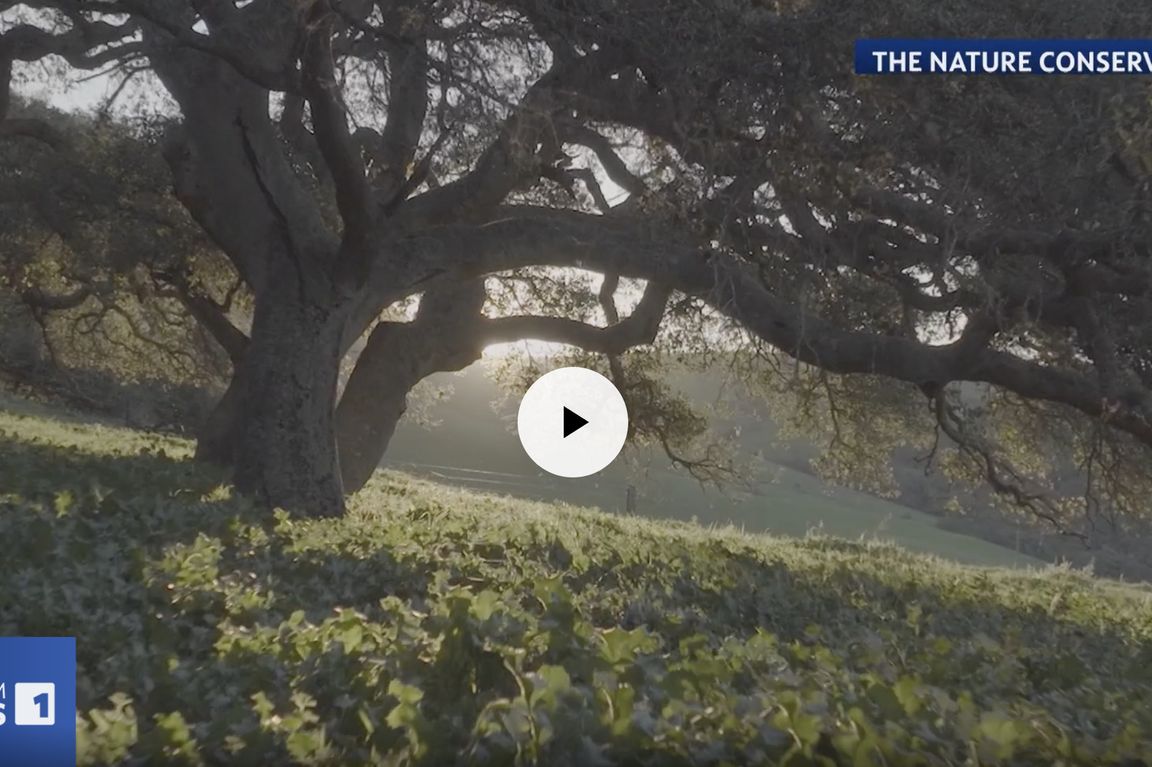
Spectrum News 1 reported that researchers at UCLA and the Nature Conservancy have pioneered a new gene sequencing research project with the goal of saving native oak trees and creating a more heat- and fire-resilient native landscape across California. Victoria Sork, a distinguished professor of ecology and evolutionary biology at UCLA, partnered with the Nature Conservancy on a research program to identify native oak tree populations that are more adapted to heat and climate change by studying their genetics. Read more about UCLA in today’s Fast Company and Popular Science.
More highlights from UCLA in the News: May 20, 2026
Scientists discover potatoes caused a genetic superpower | Popular Mechanics
In a new study in the journal Nature Communications, an international team of scientists led by researchers at University of California, Los Angeles, and the University of Buffalo focused on how diet can cause these differences, finding that the DNA of indigenous Andean populations included a remarkably high number of salivary amylase genes, or AMY1 — a perfect adaption for the region’s dietary staple: the starchy potato. (UCLA’s Abigail Bigham was quoted.)
Actress Eva Longoria announces new partnership with UCLA | Fast Company
The Eva Longoria Foundation announced a $1 million investment in UCLA’s Latino Policy and Politics Institute to support long-term, data-driven solutions that integrate leadership development and narrative change within Latino communities.
HIV criminalization among Black Americans | The Journal of Blacks in Higher Education
The Williams Institute at the UCLA School of Law has released a new study examining the intersection of the HIV epidemic and the over-policing of Black Americans. “Black people in the United States are more likely to be diagnosed and live with HIV while also having less access to HIV treatment and prevention. Black Americans also experience greater police surveillance and harsher punishment in the criminal legal system,” the authors write.
How AI could reshape political messaging | KTLA-TV
“I think that we’re through the Rubicon right now. You know, a couple of years ago, we were talking about an election about using three seconds of someone’s voice to make robocalls. And now we’re making Hollywood-style political ads, using intellectual property that most of the artificial intelligence models pre-the Chinese Seedance model that started to use Tom Cruise and Brad Pitt and everybody else wasn’t able to use. Now we have these political ads that use familiar characters, that evoke emotion,” said UCLA’s Chris Mattmann.
Even while courting moderates, GOP still pushes fraud narrative | CalMatters
If passed, as many as 1 million eligible voters could be kept from voting. Another 500,000 aren’t registered and don’t have the necessary documents it would require, according to UCLA Voting Rights Project director Matt Barreto. “There’s been a very consistent finding in almost any state, in any environment, that lower-income and working-class voters are less likely to have an updated, valid ID,” he said.
Legal experts raise concerns over Supreme Court election map rulings | Reuters
UCLA law professor Richard Hasen, who coined the term Purcell principle 10 years ago, said the timing of the Louisiana ruling suggests that the Supreme Court is not overly worried about avoiding electoral disruption under this legal concept.
President Trump’s influence in primary elections | CNN
“I think that that’s a pretty good first snapshot, a pretty narrow view,” said UCLA’s Lynn Vavreck. “But why not take a wider lens and a bigger view and think about not just how Donald Trump has a hold on the Republican party, but how he’s also changed the political fight that we’re having in America. And he’s changed the Democratic Party, too. So, it’s bigger than just tonight, demonstrating that he really has changed the right. He’s changed the landscape of American politics.”
Ebola outbreak declared a global public health emergency | Everyday Health
“This also reinforces why healthcare worker protection is so critical in Ebola outbreaks,” says Anne Rimoin, [professor in the UCLA Fielding School’s Department of Epidemiology and Gordon-Levin Endowed Chair in Infectious Diseases and Public Health]. “Ebola does not spread casually through the air, but healthcare settings can become high-risk environments if cases are not recognized quickly, if personal protection equipment is not used properly, or if infection prevention protocols break down,” she says. (Rimoin was also interviewed by The World.)
How do erasers actually work? It’s surprisingly complicated | Popular Science
“There’s this cloud of electrons on one layer of graphene, and another cloud of electrons on another layer of graphene,” Justin Caram, an associate professor of chemistry at the University of California, Los Angeles, tells Popular Science. The electrons on these sheets can “randomly fluctuate” to make one side a little positively charged, and the other a little negatively charged. (med high)