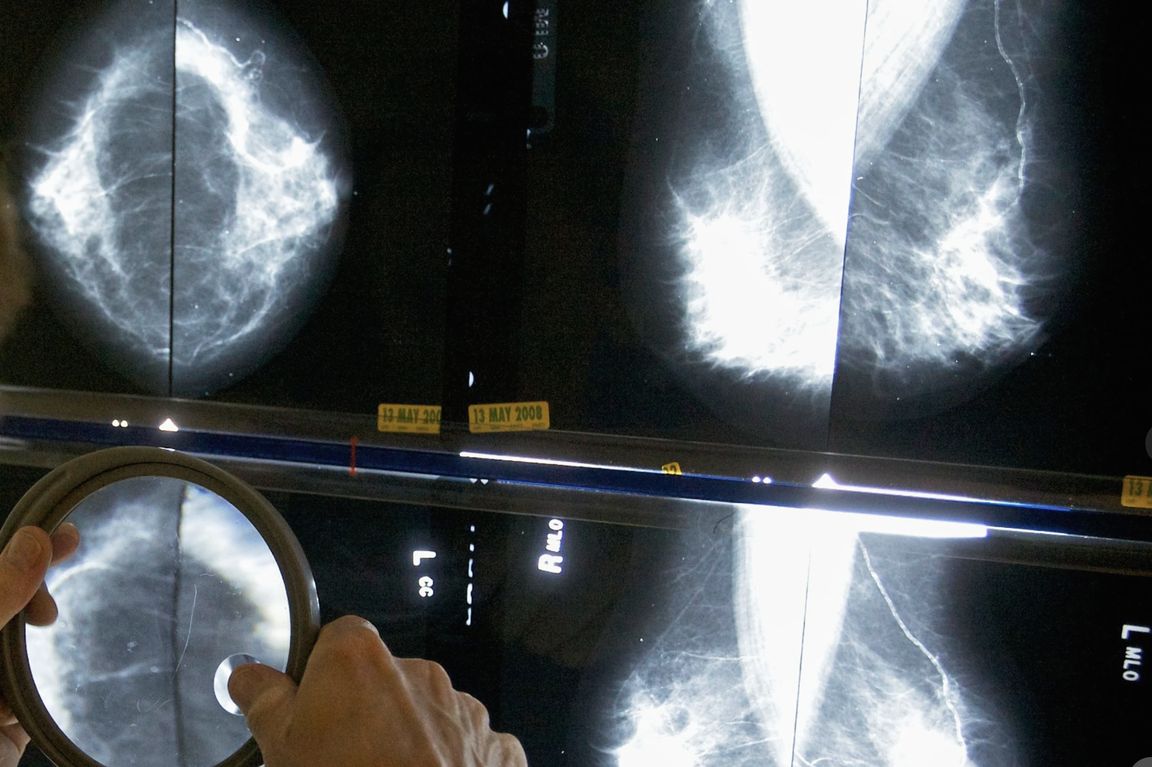
The Associated Press examined why medical groups continue to offer differing recommendations on when women should begin routine mammograms and how often they should be screened. UCLA Health’s Dr. Carolyn Crandall said there is a narrower balance between the benefits and risks from mammograms for women in their 40s, when false positives and unnecessary follow-up procedures are more common. The story also explored how genetics, breast density and emerging risk-based screening models may shape future guidelines. Read more about UCLA from today’s CNN and New York Times.
More highlights from UCLA in the News: May 18, 2026
UCLA launches free multimedia AAPI history textbook | LAist
A new multimedia textbook developed out of UCLA’s Asian American Studies Center is trying to change that. Called “Foundations and Futures,” the online platform combines written chapters, archival documents and artwork with videos and podcast clips, geared at students in high school and up, along with their teachers. “It’s the largest collection of Asian American and Pacific Islander histories in one location — free and open access for anyone with an Internet connection,” said Karen Umemoto, director of the UCLA center and one of the project’s co-editors. (UCLA’s Kelly Fong was cited. Also: KNBC-TV.)
UCLA: Stronger system-wide oversight, action against campus Jew-hatred | Jewish News Syndicate
UCLA’s Initiative to Combat Antisemitism called on the public university system to consider adopting the International Holocaust Remembrance Alliance’s working definition of antisemitism to help guide efforts to combat Jew-hatred on its campuses, according to a report released on Thursday … [UCLA Chancellor] Frenk stated that the report “reflects months of engagement and implementation and provides a clear path forward to continue this important work.” “We recognize that this work is ongoing,” he said. “There is much more to be done, and we remain committed to advancing these efforts with care, accountability and resolve.” (UCLA’s Dan Gold was also quoted.)
WHO declares major outbreak of rare Ebola virus species | Science
The rapid spread demands a rapid response, says Anne Rimoin, an epidemiologist at the University of California, Los Angeles, who has worked on disease outbreaks in the [Democratic Republic of the Congo] for many years. “You want to be able to get in there and extinguish that fire as soon as you possibly can,” she says. (Rimoin was also featured by The Washington Post, KTLA-TV, CNN, and BBC News.)
Hantavirus sparks fear, questions in a post-COVID world | Chicago Tribune
Social media can be a landscape of conflicting information during a new outbreak, which Dana Rose Garfin, an associate professor at the University of California, Los Angeles, called “a perfect storm of people’s fears and anxieties,” coming off the heels of the COVID-19 pandemic. “The more people are exposed to confusing or conflicting information, the more distressed they are and the less people trust the media, the more distressed they are,” said Garfin, who works at UCLA’s Fielding School of Public Health.
An asteroid discovered days ago will narrowly miss Earth | CNN
By contrast, during its closest approach, 2026JH2 will only be detectable with small telescopes at dark sites, but it will remain 100 times too faint to be seen by the human eye, according to Jean-Luc Margot, a professor of Earth, planetary and space sciences at the University of California, Los Angeles.
Los Angeles mayoral candidates vie for the crucial Latino vote | Los Angeles Times
In April, a UCLA Luskin School of Public Affairs poll also found Bass with a wide lead. “I think she has an opportunity to solidify the Latino vote with a strong primary performance,” said Matt Barreto, a professor of political science and Chicana/o studies at UCLA. “This is hers for the taking.”
With timing of voting rights decision, Supreme Court chose scramble | New York Times
Rick Hasen, a law professor at the University of California, Los Angeles, said the court’s recent actions seemed to be ignoring its own principle. “This is a court that is being quite aggressive in bringing changes to the American political system,” Hasen said.
Judge blocks law banning gender-transition treatments for youths | New York Times
An estimated 2.8 million people aged 13 and older in the United States identify as transgender, according to the Williams Institute, a demographics research center at the University of California, Los Angeles. That amounts to about 1 percent of the U.S. population in that age group. A small fraction of them seek medical transition.
America’s spite houses | CNN
“Hostile architecture is very American,” says Paavo Monkkonen, assistant professor in the UCLA Department of Urban Planning. “Your house represents more here than it does in other countries. It’s a more personal symbol because it’s a home ownership society. There’s more neighbor-to-neighbor conflict.”
The ‘fibermaxxing’ trend has health benefits worth the hype | NPR’s “Morning Edition”
Some social media influencers call for eating as many as 80 or more grams of fiber per day. While that’s actually not uncommon in some cultures with traditionally high-fiber and predominantly plant-based diets, “someone who is not really accustomed to consuming that high of a fiber intake and suddenly ramps up to 70 to 90 grams per day could along the way experience a lot of kind of adverse effects,” says Berkeley Limketkai, a gastroenterologist with UCLA Health.



