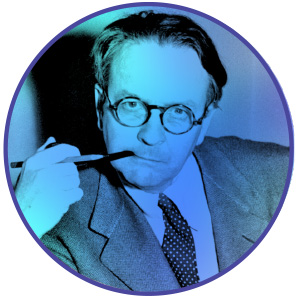
#1: Write a 400-word story set at UCLA in the voice of Raymond Chandler.
The sun was setting over the sprawl of UCLA, casting long shadows across the hallowed halls and manicured lawns. The campus, with its mix of Gothic and modern architecture, looked like a twisted fairy tale caught between the pages of a dime novel and the stark reality of academia. I was leaning against the weathered stone of Royce Hall, watching the students hurry by, faces buried in the glow of their screens, unaware of the world around them.
It was then that she walked by. She had the kind of beauty that made you forget about the papers you had to grade and the deadlines looming like storm clouds. Blonde curls framed her face, and her blue eyes had the depth of the Pacific. She was trouble, and trouble had a way of finding me.
“Excuse me,” she said, her voice a melody that cut through the noise of the campus. “Are you Marlowe?”
I nodded. “Depends on who’s asking.”
She gave me a smile that could melt steel. “I’m Caroline. Caroline Winslow. I need your help.”
Winslow. The name had money written all over it. Old money, the kind that could buy you out of any trouble — except the kind that required someone like me. I motioned for her to follow me to a bench under a gnarled oak tree. The leaves rustled like the whispers of secrets best left unspoken.
“So, what’s a nice girl like you doing in a place like this?” I asked.
“It’s my brother, Jimmy,” she said, her eyes darting nervously. “He’s disappeared.”
UCLA was a big place, easy to get lost in if you wanted to disappear — or if someone wanted to make you disappear. I lit a cigarette, taking a long drag, letting the smoke curl up into the twilight.
“Tell me more,” I said.
“He’s a sophomore. Good kid. But he got mixed up with some bad people. There’s a fraternity...Theta Sigma. They’ve got their hands in some nasty business.”
I nodded. Fraternities could be breeding grounds for all kinds of illicit activities, hidden behind the facade of brotherhood and tradition. I decided to start with the fraternity house. It was a sprawling mansion just off campus, where the parties were loud, and the secrets were buried deep.
Caroline’s hand trembled as she handed me a photo of Jimmy. I took it and slipped it into my pocket.
“Don’t worry, Miss Winslow,” I said, standing up. “I’ll find your brother. And when I do, we'll see just how deep this rabbit hole goes.”
As I walked away, I could feel her eyes on my back, a mixture of hope and fear. UCLA might have been a place of higher learning, but tonight, it was a labyrinth of shadows, and I was the only one who knew the way out.
It’s going to change life as we know it. Are you ready? Read about the AI Revolution here.
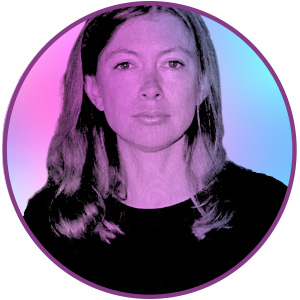
#2: Write a 400-word essay on UCLA in the voice of Joan Didion.
In the sepia-tinted haze of Southern California, there lies a campus where the sun perpetually lingers, casting long shadows across manicured lawns and red-brick facades. This is UCLA, an institution embedded within the sprawling metropolis of Los Angeles, a city perpetually in flux, where the lines between reality and fantasy blur, and the notion of “home” is as transient as the Santa Ana winds.
Walking through UCLA’s grounds, one might feel the echoes of a California that once promised limitless possibilities, a beacon for the young and hopeful. The architecture, a pastiche of Gothic Revival and modernist touches, mirrors the eclecticism of the city itself, where dreams converge and diverge in a cacophony of ambition. Here, among the jacaranda trees and sycamores, students hustle between classes, their faces a mixture of determination and distraction, much like the city they inhabit.
The university, established in 1919, is a microcosm of Los Angeles, embodying its paradoxes and contradictions. It stands as a testament to the state’s commitment to public education, offering a world-class education to a diverse student body. Yet, the very existence of such an institution within the heart of one of the world’s most image-conscious cities is a study in contrasts. UCLA is both a sanctuary of learning and a crucible of social dynamics, where the relentless pursuit of success often rubs against the idealism of youth.
One cannot speak of UCLA without acknowledging its symbiotic relationship with Los Angeles. The campus is a nexus, a point of convergence for myriad narratives. Students come from across the globe, drawn by the siren call of Hollywood, the tech boom of Silicon Beach, or simply the lure of the West Coast mythos. They arrive with stories, hopes, and sometimes, disillusionments, all of which are woven into the tapestry of the university.
In the classrooms and lecture halls, ideas are exchanged with a fervor that is both inspiring and daunting. Professors, luminaries in their fields, impart knowledge that can seem almost esoteric, yet profoundly connected to the real world just beyond the campus borders. It is in these interactions that UCLA’s true essence emerges — a place where intellectual rigor meets the palpable pulse of Los Angeles.
To write about UCLA is to write about California itself — a state perpetually on the brink of transformation, where the future is always just a breath away. It is a place of contradictions, where beauty and chaos coexist, and where the pursuit of knowledge is both a personal and collective endeavor. UCLA stands as a symbol of what it means to chase the American Dream, in all its complexity and nuance, under the ever-watchful gaze of the Southern California sun.
Read more from UCLA Magazine’s Fall 2024 issue.