Wouldn’t it be nice, thought top photographer Earl Leaf in the fall of 1963, if we relocated the Beach Boys away from their familiar habitat of surfboards and hot rods, and shot them somewhere that was also equally iconically Californian, but without the waves and bikinis?
The singing siblings and cousins from Hawthorne, who by that fall had become a pop radio sensation, had no real connection to the university, apart from having played a Friday Night sock hop at Dykstra Hall in June 1962. But they were about to ride a wave of massive musical renewal thanks to the creative genius of their lead singer and principal composer, Brian Wilson.
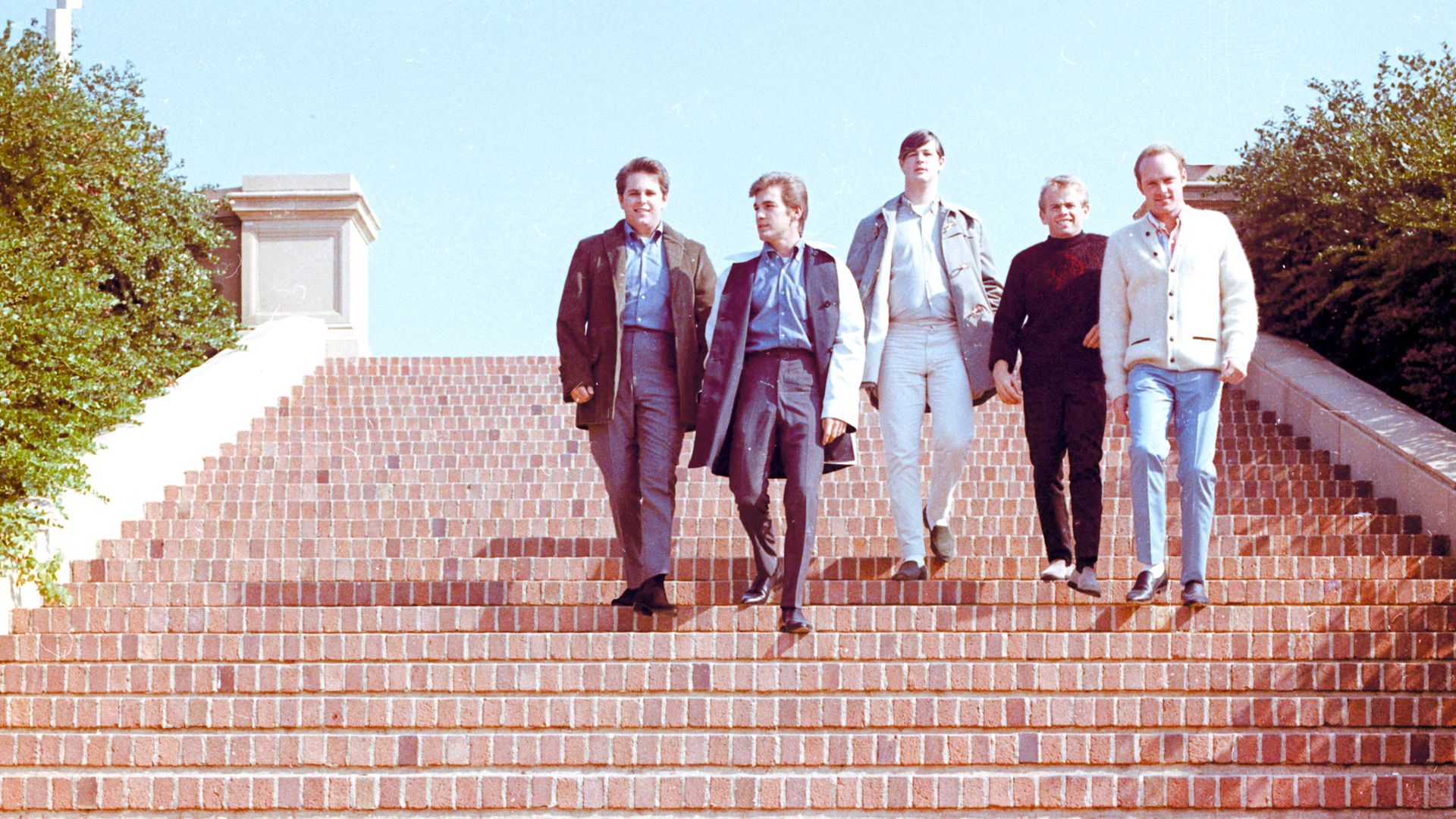
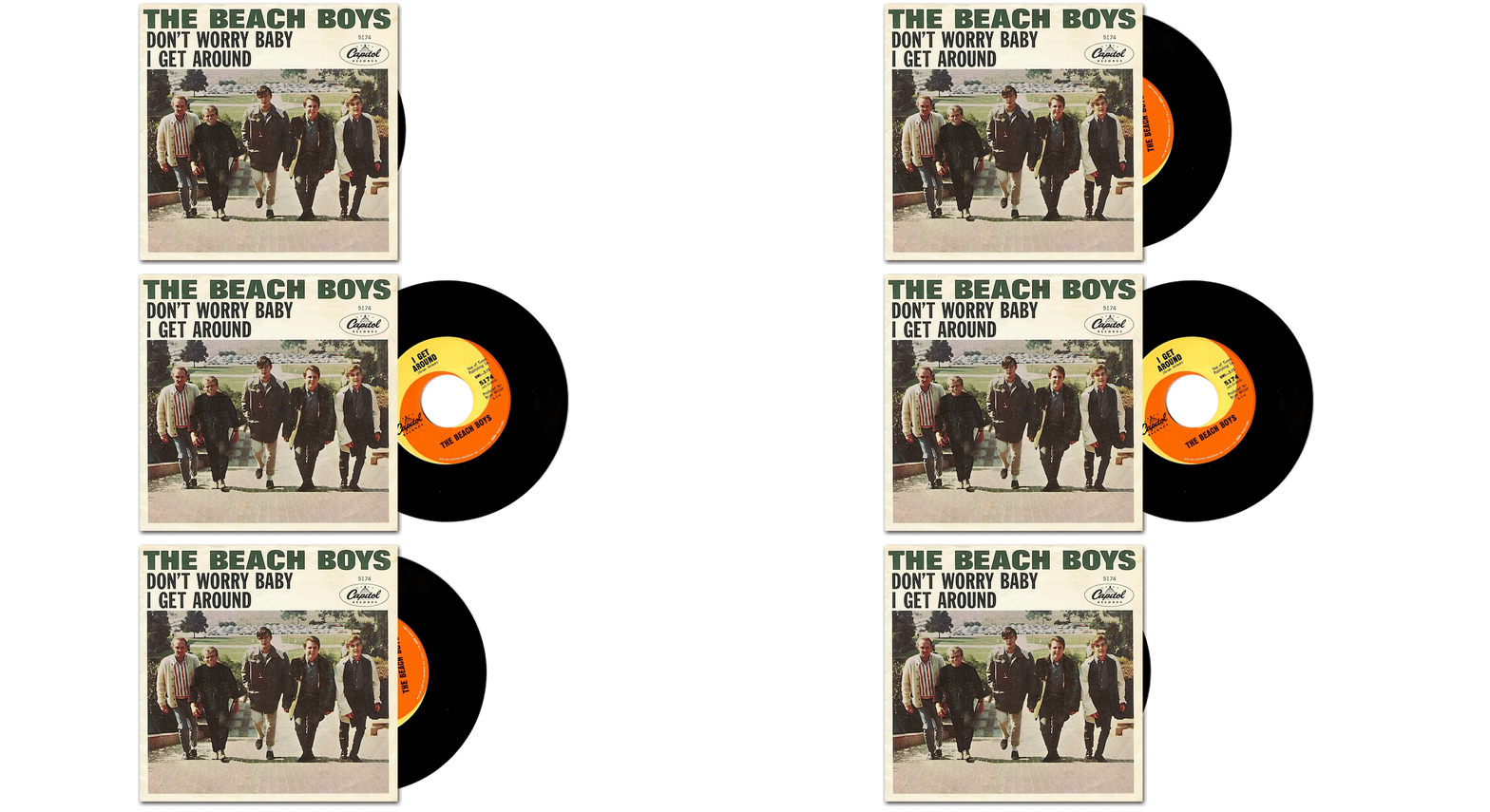
Leaf — who had already photographed such icons as Marilyn Monroe, Fred Astaire and future Chinese leader Mao Zedong — captured the teenagers on a bright day outside Royce Hall, just strolling down Janss Steps. Capitol Records would use the pictures, which were already a stylish leap from their early image in Pendleton wool shirts, for the cover of what would be the group’s first No. 1 single, “Don’t Worry Baby/I Get Around,” released in June 1964.
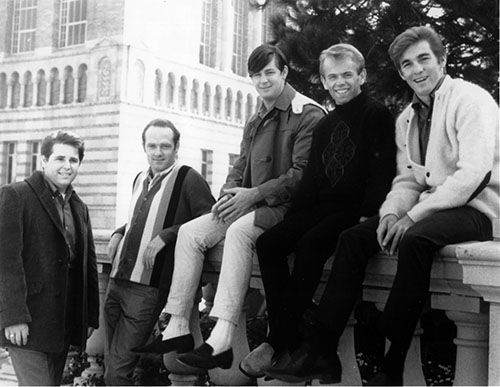
It wouldn’t be the Boys’ last visit to Janss Steps. Wilson returned to support the group’s seminal album Pet Sounds at Royce Hall in 2006; in 2019, he came back to celebrate the launch of the Brian Wilson Scholarship for Composition, Arrangement and Production of Popular Music.
“The Beach Boys were extraordinarily successful, but not as students,” says David Leaf (no relation to Earl), an adjunct associate professor at the UCLA Herb Alpert School of Music and author of the new biography Smile: The Rise, Fall & Resurrection of Brian Wilson, which is being published this month.
Leaf, who teaches a course covering the cultural impact of the Beach Boys, says both the group and UCLA came to stand for something uniquely Californian. “It is no surprise they would end up here at some point,” he says, adding, “They did get around.”
Read more from UCLA Magazine’s Spring 2025 issue.