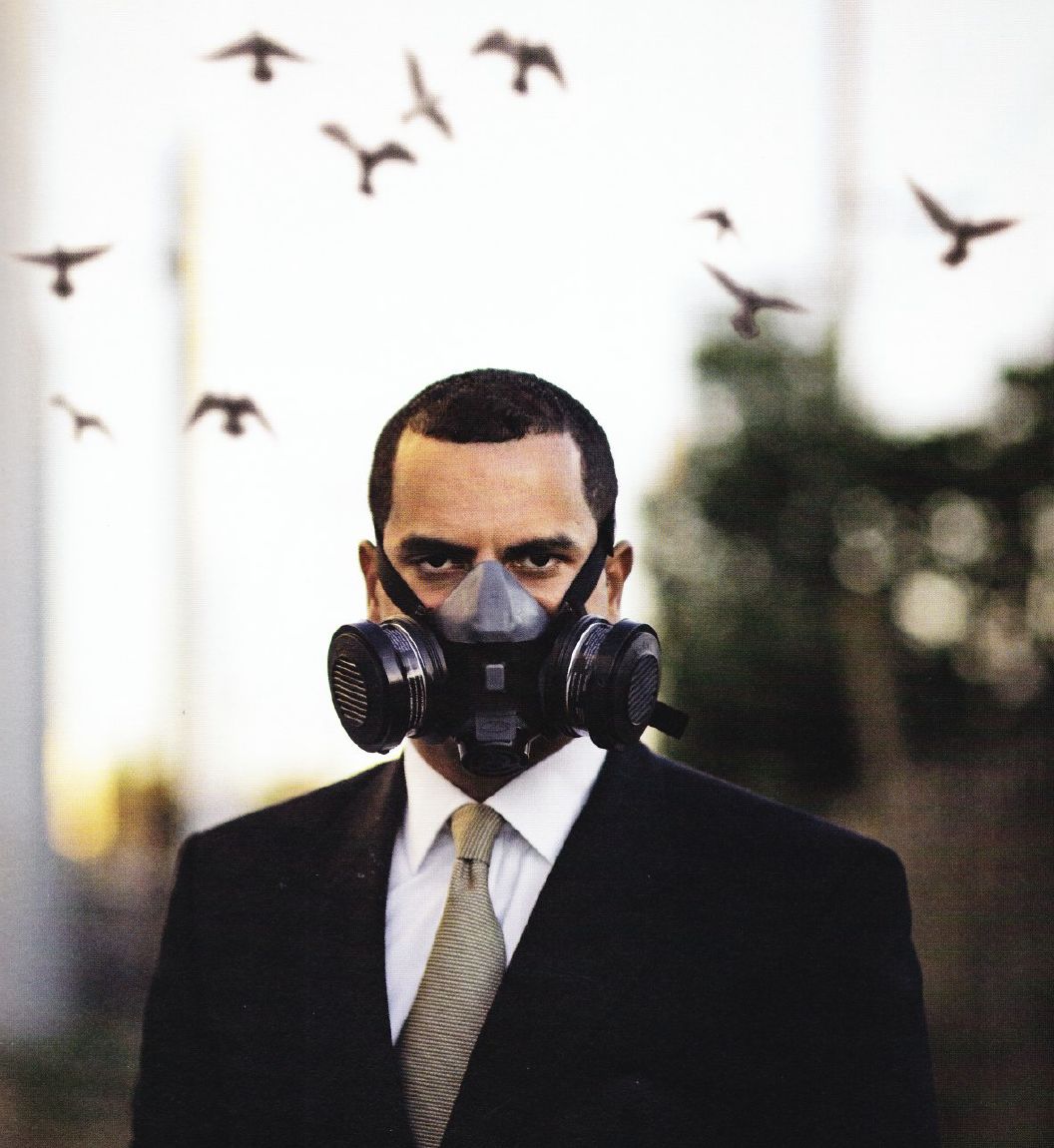
In August, Indonesia earned the dark distinction of suffering the most bird-flu fatalities in the world, 43 and counting, after a 16-year-old Indonesian boy died from avian flu two days after being admitted to the hospital. Since 2003, 232 people around the world have been struck with the virus, and 134 have died.
Because it remains difficult for the virus to migrate from birds to humans, and even more difficult to transfer from person to person, many scientists still feel a bird-flu pandemic is not imminent. Some researchers, though, are far less sanguine about the potential threat. And a few are convinced a crisis is all but upon us.
Why does a disease that can’t migrate easily to humans scare so many smart scientists? Because if it does, there’ll be hell to pay.
“Seasonal flu, the kind we see every year, causes 36,000 deaths across the country every year and hundreds of thousands of hospitalizations,” says Jo Ann Dawson M.P.H. ’88, interim director and staff physician at UCLA’s Arthur Ashe Student Health and Wellness Center, and co-chairperson of the university’s Pandemic Flu Task. “But what if we get a virus that is particularly contagious has a high attack rate and is lethal, in a population with little or no immunity to it? … This flu infecting chickens now has the potential for that kind of mutation.”
One of the front lines of a bird-flu outbreak in L.A. would be UCLA Medical Center, where David Pegues, professor of clinical medicine and an infectious diseases expert, spends his time thinking about what hospitals need to do to prepare for such an emergency. At any level — federal, state, local — “nobody is as prepared as they should be,” he warns.
It Can Happen Here
Of all the factors that make health-care professionals and researchers profoundly uneasy about this virus, whose technical name is A(H5N1), number one may be its lethality: When bird flu does infect humans, it kills half of them. Also making scientists nervous is recent research showing that the 1918 influenza pandemic, which infected 500 million people and killed 40 million to 50 million, originated as a bird flu.
“The main thing people need to know right now is we have not had any bird-flu activity in birds or people in the U.S.,” says Christine Pearson, a CDC representative. “The primary concern is people traveling to where bird flu has been found. And if they go, they should take precautions like frequently washing their hands; if they eat poultry, to make sure it is well-cooked; and to avoid live bird markets and farms.” Still, the way the disease is moving around the world is unsettling. In January, H5N1 made its malign appearance in Africa. That followed outbreaks in Asia, Indonesia, Russia, Turkey and Europe.
“Right now, avian flu is a pandemic in birds, but not in humans,” notes Scott Layne, associate professor of epidemiology at the UCLA School of Public Health. “[But] even if it comes here as bird flu, it will still overwhelm us.” Layne testified about the state’s ability to respond to a bird-flu crisis before the California Assembly’s Budget Committee on Health and Human Services in November.
What Will Happen if It Does
The Institute of Medicine, part of the National Academy of Sciences, concluded in a report released in June that the nation’s emergency health system is overburdened, underfunded, and too fragmented to communicate and cooperate effectively. It has little surge capacity to deal with a disaster (estimates put a bird-flu crisis could increase hospital capacity by 50 percent), and emergency-care staff members are not adequately trained to respond to large-scale disasters or to work with pediatric patients.
Pegues and his team are working on an emergency preparation plan that would allow a hospital like UCLA Medical Center to respond to viral epidemics, natural disasters and bioterrorism. In the event of such an emergency, all nonessential surgeries would be canceled. The hospital would make use of other places like the National Guard Armory and indoor basketball stadiums to place the overflow of patients. Health-care workers in the emergency room, intensive-care unit and on the pediatric floor would be given priority to receive a bird-flu vaccine if one exists. And patients would be screened before entering the hospital to keep people sick with bird flu separate from those who weren’t.



