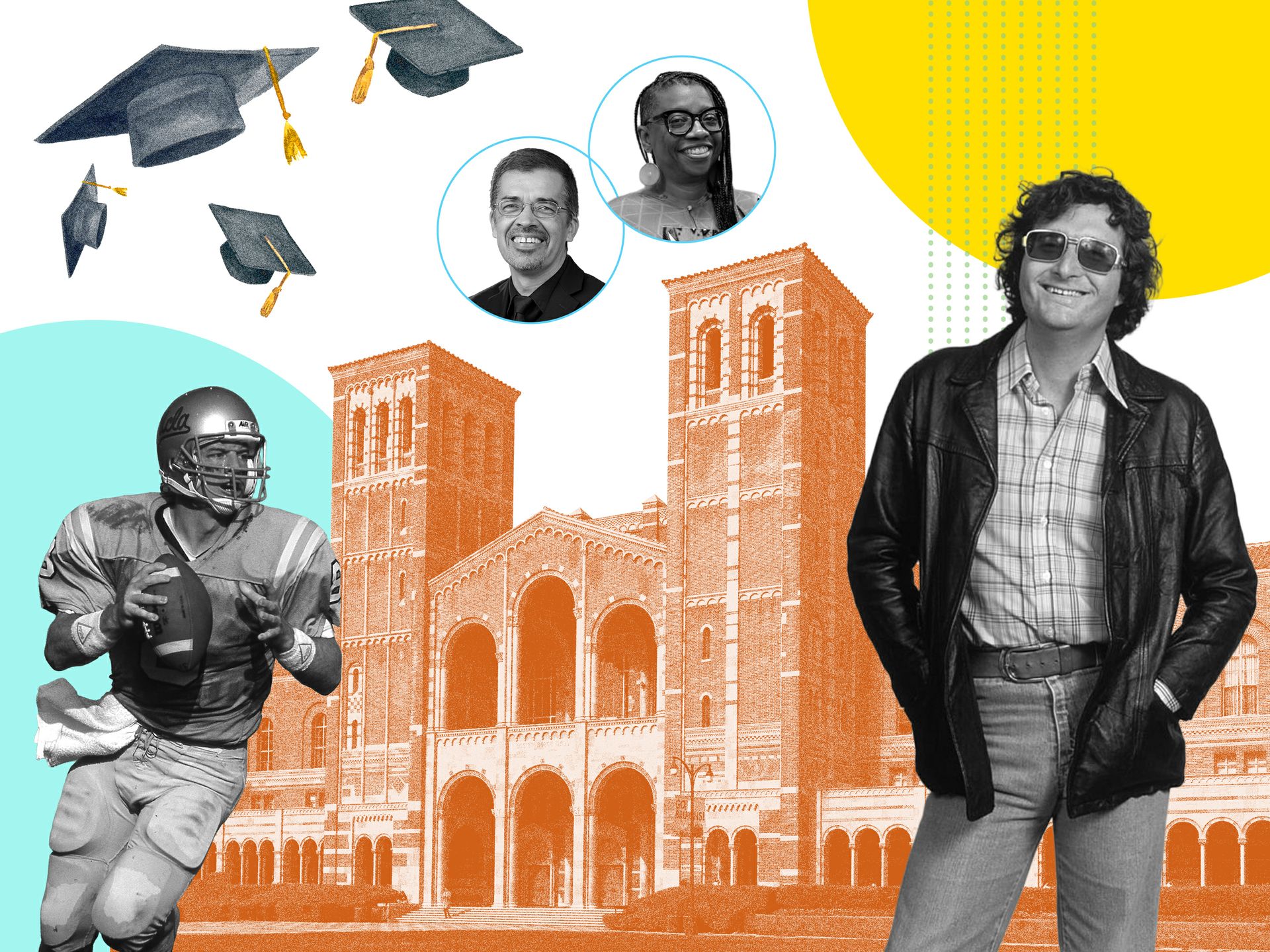
It is never too late — to graduate.
So declared musical poet Randy Newman ’21 when, in the summer of 2021, at the tender age of 77, he was finally awarded his bachelor’s degree in music from the UCLA Herb Alpert School of Music.
This was no honorary degree to recognize the Oscar-winning talent behind L.A.’s unofficial anthem, “I Love L.A.,” or his joyful scores for Toy Story and Monsters Inc., among other notable achievements. No sir. The degree was the result of Newman’s doing the work to make up the 16 credits that were still outstanding when he “stepped out” of UCLA to record his first solo album way back in 1967.
A happy ending, indeed. But not a foretold one. Across the nation, an estimated 1 million young people start on their college journeys, only to abandon them; a full quarter of undergraduates do not make it past their first year. It’s a sobering statistic that undermines the American dream of social mobility and the potential future a college education can unlock.
Thankfully, UCLA has a very high retention rate: Between 86% and 92% of four-year undergraduates do attain their degrees here. But the fundamental question remains: Why do some drop out? And what does it take to bring them back home?
Listening to the Lost
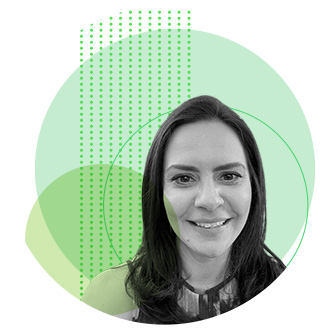
Denise Pacheco M.A. ’04 Ph.D. ’11 is the senior director of UCLA Alumni’s Diversity Programs and Initiatives. She helps shape UCLA’s policies for students who have “stepped away” and now want to return to finish their studies. She says that American universities were not set up to deal with today’s diverse pool of students but are now playing catch-up. Nowhere is that contemporary mix of students more evident than at UCLA, where in fall 2025, 26% of UCLA’s incoming first-years were first-generation students. That doesn’t include other groups who may also need specific support, such as students who are also parents, or students who were formerly incarcerated.
“Sometimes all it takes is a conversation to bring Bruins back,” Pacheco says. She tells the story of a neighbor in Alhambra who had stepped away from UCLA to raise her siblings. In her 40s, she wanted to return to finish her degree but lacked the confidence. How could college fit into her hectic life? She got an unexpected path forward during COVID, when she was able to resume classes remotely and avoid a 90-minute commute. And she found out that her life experience counted toward some credit in her sociology classes. She completed her degree in 2022.
“We need to listen to people like her,” says Pacheco, “and work out what they need.”
Such stories of returning Bruins are rich, but they’re hardly new. UCLA has been reaching out to those who had been called “the lost” since the 1940s — the 200 Japanese American Bruins were forced into internment camps during World War II. Although UCLA has not awarded honorary degrees since 1972, a special exception was made for these mistreated Bruins. In May 2010, dozens of them — now in their 80s and 90s — or their family members and representatives gathered at Schoenberg Hall to, dressed in cap and gown, finally experience the joy of graduation.
Another war — Vietnam — caused UCLA history and geography major John Fong ’68 to miss his own graduation ceremony when he was drafted into the Navy. In 2025, he got to hear his name finally read out at commencement. “It was too bad I was not able to walk across the stage to receive my paper,” says Fong, now 80. “But it was wonderful watching it on TV.”
But while hundreds return every year to finally complete their studies, the Randy Newmans still remain outliers: Fewer than 1% of those 64 and over who dropped out end up completing their degrees. Many more would come back if the system could accommodate them, a vital element of Chancellor Julio Frenk’s vision of UCLA for Life.
To that end, the UC Degree Completion Program is developing “second chance” strategies, which include a pilot program involving 800 former UC students from across the state who dropped out in good academic standing. It all starts with a phone call: Those contacted are asked about the issues that prevented them from finishing — from child care and transportation to financial aid — to see what the hurdles are and determine how to remove them. UC Provost Katherine S. Newman calls the program one of the most important at the University of California. “It’s a major lever for changing the landscape of equity,” she says.
He Loves (UC)LA
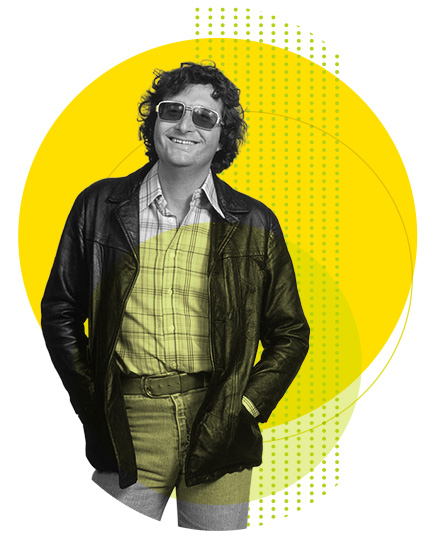
So just why did Randall Stuart Newman come back to UCLA after five decades away? And how do you teach music to someone with Newman’s life experience and record of achievement in the music field? Those who know Newman well are no strangers to his habit of making light of his undergraduate years. “I was disorganized. When I would go to UCLA if I could not find a parking spot, I would drive by,” he once declared.
“He took the refreshed coursework seriously,” says Robert Fink, professor of musicology and chair of the school’s music industry program. The coursework Newman was missing in the 1960s was no longer offered, which meant an innovative approach was required to help him finish his degree. The solution: independent studies that Newman could complete at home during the COVID-19 lockdowns.
“It was all based within the official guidelines for his capstone,” Fink says. “We questioned him about his own career, songwriting approaches and his views on the music industry for 90 minutes. It was streamed live, and a lot of people felt it worked on his own terms. And he passed!”
Newman comes from a musical clan whose members have more than 80(!) Oscar nominations among them. His uncle Alfred Newman took home nine Academy Awards alone for the scores of classics such as Wuthering Heights, How Green Was My Valley and The Hunchback of Notre Dame. Newman’s cousin Thomas wrote the soundtracks for The Shawshank Redemption, Skyfall and Avatar: The Way of Water. Other Newmans work as orchestra conductors and music arrangers. It’s a family business.
They all share a deep respect for higher learning. In Newman’s case, two Academy Awards and seven Grammys were nice. But do they really compare to a degree from UCLA?
Making Good Trouble
For some, stepping away from the pursuit of a degree is nothing short of a moral imperative.
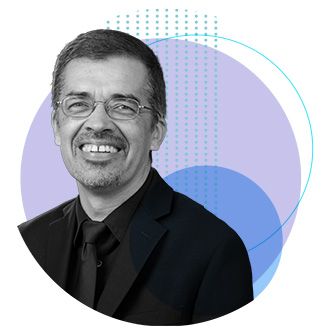
In the mid-1980s, Sacramento-born Álvaro Huerta ’03, M.A. ’06 was two years into his studies at UCLA, on track to graduate with a degree in mathematics. But then the campus roiled with protests, climaxing in a seven-day hunger strike against a state clampdown on financial support for undocumented students. Huerta felt he needed to do more for the poor and racially victimized community he knew so well. Putting activism first, he dropped out.
For the next 13 years, he went on to make what he calls “good trouble,” speaking out against and fighting racial injustice in Los Angeles. He stood up for Latino gardeners when the city threatened to jail them for using leaf blowers; he helped defeat plans to build a toxin-spewing power plant in South Gate that would have never been considered for a wealthier area. He was proud of his work. But it gnawed at him that he was often overlooked for promotions at nonprofits because he didn’t have a degree.
“Even in the revolution, the higher educated will get a better view,” he jokes wryly.
The final straw, he says, was losing a job to a Bruin graduate. By then, in the late 1990s, he had a young family of his own. His Bruin wife, Antonia Montes ’91, urged him to overcome any feelings of awkwardness and discomfort and return to UCLA. “I was a very different person than that 17-year-old know-it-all,” he recalls. “I had taught myself to read and write to university level, and I knew how things worked at college — something other students take for granted, but that my mom, who cleaned houses all her life, could not help me with.”
Huerta says the first key was finding out that you could, in fact, come back to campus to finish. In 1987, instead of abruptly quitting like some of his peers, he had filed an “incomplete” so he could be readmitted without applying from scratch. “Fill in the paperwork,” he urges anyone who may be facing the tough call to pause their degree. “UCLA wants you to finish your studies.”
The second key was to find someone who understood his background and lived experience. “Like many, I was mentored by Juan Gómez-Quiñones [’62, M.A. ’64, Ph.D. ’72] in history, and later Leo Estrada in urban planning,” Huerta says. “They helped many people navigate not just with their studies — they could be very stern — but also life in higher education, and with cultural empathy.”
Huerta graduated with a B.A. in history in 2003 and a master’s in urban planning in 2006. After that, there was no stopping him. He went on to UC Berkeley for his Ph.D. in city and regional planning, then taught classes about the intersection of religious and community organizing values at Harvard Divinity School. He is now a professor of urban planning and ethnic studies at California State Polytechnic University, Pomona.
“My roots are deep at UCLA,” he says. Those roots include not only his own degrees and his professional roles on campus, but also his wife’s economics degree and the degree his brother, the lauded portraitist Salomón Huerta M.F.A. ’98, received from UCLA in 1998.
Huerta is now a visiting scholar at the Chicano Studies Research Center. Last year, UCLA Alumni Affairs recognized him with the Bruin Excellence in Civic Engagement Award for his work as a teacher and community influencer. It has been a long journey for the former hunger striker. But, he says, he’s glad he listened to his wife — and came home to UCLA.
The Comeback Kids
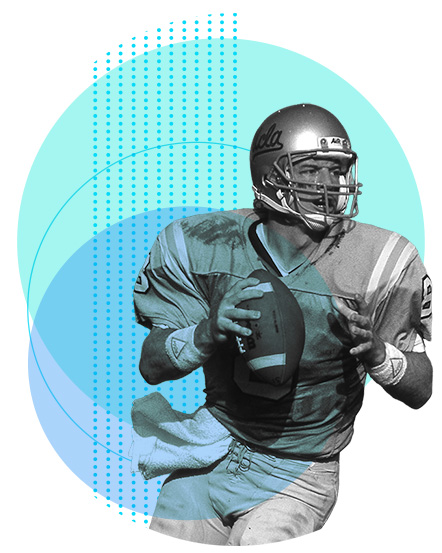
UCLA athletes have often been lured away from Westwood for the promise of a starry career in the major leagues. But professional sports is a brutal arena, where your career might be over by the age of 35. For many Bruins, the home fires never stop burning — which eventually leads them back to finish their studies.
One of the most famed “comeback kids” is Troy Aikman ’08, UCLA’s star quarterback of the late 1980s, whose college stats include 5,298 yards passing, 41 touchdowns and a victory in the Cotton Bowl. He was selected first in the 1989 draft by the Dallas Cowboys; he was the team’s quarterback for 12 seasons, winning three Super Bowls and notching a Hall of Fame career.
Aikman returned to UCLA to be inducted into the College Football Hall of Fame in 2006. Shortly afterward, one of his former coaches, Bobby Field, phoned him to remind him he was only two classes away from finishing his degree. You could do it remotely, Field said. Think about it.
“Every year I thought about coming back and completing, and then, gosh, another year would pass by,” Aikman told the Los Angeles Times. “But Bob made it happen. It was so worth it — it was an amazing feeling when I completed the last test and knew I was done. It was a really great feeling.”
Aikman received his bachelor’s degree in sociology at the UCLA graduation ceremony in 2009, his family applauding enthusiastically. At the time, he said, he felt a little old mixing with an exuberant bunch of 22-year-old fellow graduates — “but I’m really glad I did it … going through graduation and earning my degree, as late as it may have come, was really the highlight of my UCLA experience.”
This isn’t just a story rooted in athletics, either. Willis White J.D. ’12 deferred law school to join the cast of In The Heights, Lin-Manuel Miranda’s breakthrough Broadway musical that opened in 2008. But as a first-gen student, White felt compelled to finish his law degree. At the 2012 UCLA School of Law graduation ceremony, not only did he receive his degree, but he also opened the day with a powerful rendition of the national anthem that reduced many in the audience to tears (it remains a hit on YouTube today).
Lessons Learned
Coming back to UCLA after months, or even years, away can be as momentous and emotional as the first day as a first-year. But in true Bruin spirit, UCLA has people holding out a welcoming hand to anyone who comes back. A recent “EmPower Hour” seminar organized by UCLA Alumni focused on outreach to potential returnees and their families.
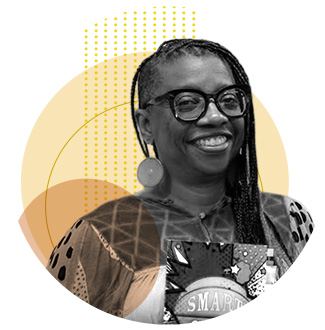
The remarks were poignant and powerful. Vivian Salazar ’89, associate director of the UCLA Academic Advancement Program, talked about having welcomed students back for 30 years; La’Tonya Rease-Miles M.A. ’99, Ph.D ’04, whose 2025 memoir Smart Girl dissected her experience as a first-gen student, spoke about her own path as a transfer student and the nuances of what first-gen students go through.
The group acknowledged that a key to success for returning Bruins was understanding what they termed the “hidden curriculum”: the rules and expectations that shape the academic journey, especially for those coming back to finish. UCLA, they said, now has more systems, more levers to pull, to help a student before a drip of pressure becomes a crushing waterfall and sends them off campus. But, says Salazar, “It is most important to know why you want to come back. Find that clarity, and you will find the path.”
For any Bruins looking to return and finish their degrees, the group’s collective advice is straightforward: Find the department you want to enter. Contact it through the UCLA Message Center. Ask questions. Work out the financial stuff, and take advantage of assistance the UC offers eligible returnees. If you left in good standing, you can come back — the hurdles aren’t as big as you might think they are. All you have to bring is that desire, that belief that this time you know what you really want, and you have the determination to get it.
The journey back is not always linear or easy: Some struggle with embarrassment or a fear of taking on new financial challenges. But for many, it can be a sweet return.
Anthony Padilla ’20, who took some time away from UCLA to tend to his mental health, was amazed when he came back. “It was a beautiful moment,” he says. “They looked at my paperwork, and they said, ‘Welcome back — we have a chair waiting for you.’”
Read more from UCLA Magazine’s Spring 2026 issue.