College is for other people — rich people. People who know exactly what they want to be when they grow up. People in the movies, maybe.
At least that’s what San Diego native Julie Pelaez thought.
College just drains your money, people said. Even if you graduate, that no longer guarantees a good job. No one in her family had ever gone to college; her father hadn’t even completed high school. So as her high school friends excitedly talked about what colleges they were hoping to get into, what scholarships they were applying for, what careers they were going to pursue, Pelaez just opted out.
“Everyone would always ask me about college and I would just say, ‘I’m not going to go,’” she remembers. “It was too much money, I didn’t know what I wanted to do with my life, and it just wasn’t for me.”
Pelaez and her family aren’t alone in questioning the institution, especially with a rising national backlash.
While higher education coming under fire is nothing new — criticism extends all the way back to the time of Socrates — American colleges and universities are weathering unprecedented storms, namely the vituperative tenor and devastating impacts of attacks led by the federal government. Funding cuts, litigation and politicized vitriol have damaged the reputations, and potentially even futures, of landmark institutions like UCLA and Harvard.
Compounding these high-level concerns is a deeper erosion of public trust in higher education. This has partially been fueled by the fact that college costs have risen significantly over the past two decades — according to U.S. News and World Report, tuition and fees at private national universities have increased 32%, while public universities have seen increases of 29% (for in-state students) and 24% (out of state).
So perhaps it’s not surprising that people across the political spectrum have been wondering about the future of higher education and asking themselves a huge question: Is college still worth it?
"A pathway toward something"
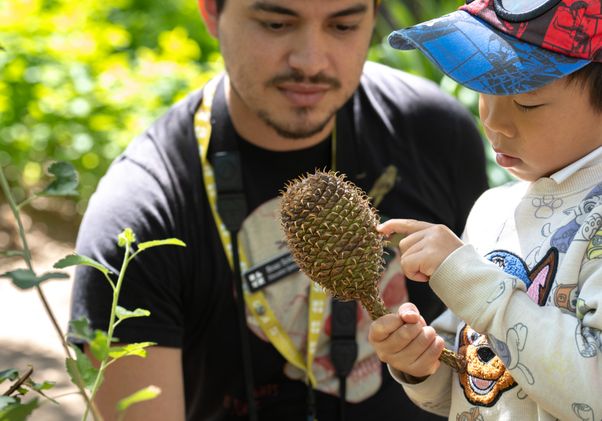
“If I hadn’t gone to college,” says Germar Gonzalez ’22, the first in his family to attend, “I definitely wouldn’t be on my path.” After earning his B.S. from UCLA in ecology, behavior and evolution, with a minor in Latin American studies, he went on to earn a master’s degree from the Yale School of Environment; he plans to pursue a Ph.D. as well. Now a conservation program specialist at the San Diego Zoo Wildlife Alliance, Gonzalez says he loves his work and is living his dream — a dream sparked when he was growing up in Corona and his grandmother told him stories about the rainforest wildlife in her native Peru.
Gonzalez credits UCLA with giving him the tools he needed to discover and travel his path: a community of lifelong friends, the chance to conduct research as an undergraduate, a variety of courses to explore multiple interests, the structure to find mentors and move forward.
It didn’t come easily. While his parents, both immigrants (his dad from Mexico and his mom from Peru), urged him to go to college, they lacked any firsthand knowledge of the process or ability to provide anything other than encouragement. He got there, though, thanks to his own ingenuity and the financial aid and support systems in place at UCLA, including the generosity of a lifelong L.A. public school teacher.
Gonzalez believes in the value of a university education so strongly that he makes it a point to remain part of his hometown community, speaking to high school students — especially fellow first-generation, low-income Latinx students — about why they should consider college, no matter how impossible it might seem.
“If there's any lesson I've taken from all this, is that it's definitely hard, but it’s also definitely possible despite all the barriers that still exist,” he says. “At the end of the day, I feel it's my responsibility to help inspire kids like me who were in that space, wondering, ‘What do I do? How do I help my family? How do I get out of poverty?’”
Research shows that higher education can be a powerful engine of social and economic mobility. According to the Association of Public and Land Grant Universities, in comparison to their counterparts who only have a high school diploma, college graduates with a bachelor’s degree are half as likely to be unemployed and will typically earn 86% more, ultimately outpacing the others by $1.2 million in median lifetime earnings. In the UC system, low-income and first-generation students graduate on average at nearly the same rate as their peers, on average, with a majority going on to earn more than their parents within four years of graduation. Most see their take-home pay double within 10 years.
Even to this day, with his impressive resume and credentials, Gonzalez is sometimes awed nearly to the point of silence as he contemplates the literal and figurative distance he’s traveled. “It's definitely emotional when I think about it, I worked really, really hard to get to where I am now,” he says. “College is important, because it’s a pathway toward something.”

What we talk about when we talk about a college education
“College is definitely worth it,” says Jennie Brand, UCLA professor of sociology and co-director of the UCLA Center for Social Statistics. “There’s mountains of evidence that suggest that college has not just a huge economic payoff, but extends to so many aspects of the life course.”
She would know. Brand is the author of Overcoming the Odds: The Benefits of Completing College for Unlikely Graduates, a 2023 book that uses Bureau of Labor Statistics data and real-life vignettes to compare the life outcomes of college graduates with statistically similar peers who are not. Among the benefits of a college degree: increased income, higher rates of marriage, better health, greater civic and political engagement and lower rates of single parenthood. In the book, Brand laments that the U.S. “underinvests in enrolling students in four-year colleges and making sure they graduate.”
One of the biggest mistakes people make when they discuss the issue, she says, is their relentless focus on the short term: the entry-level job someone holds immediately after graduating, or the amount of a graduate’s student loan debt. She says you have to envision what the entire picture of someone’s life will look like if they go to college versus their not earning that degree. That’s a more complex story to tell. And it’s one we should all care about, even if you didn’t go to college or have kids who do.
“Over the last few decades, so much of the calculus about college and costs really falls on the individual, and that's missing the point that this is a public good,” she says. “We should all care to have an educated society, because this is what America was founded upon. It matters for all of us to invest in higher education for our country’s socioeconomic position in the world, our technological development, and our overall health and well-being.
“Ultimately,” she continues, “college is a collective investment, because all these things end up being affected by education. Across the whole population, we are each going to pay for it, one way or another. I think it's better to pay for them now by investing in and supporting education than by investing down the road in social assistance or additional health care.”
It will take work to help that message fully sink in, especially in our currently hypercharged political environment. But there are promising glimmers that it’s being heard. A Gallup poll last July showed that the number of Americans who say they have “little to no confidence” in higher education had actually decreased by 9% since the year before. The poll marked the first increase in confidence following a decade of decline, with 42% saying they had “a great deal” or “quite a lot” of confidence in higher ed — an increase of 6% over two years. This upward trend held true for Democrats (61%), independents (41%) and Republicans (26%) alike.
Still, that current 42% high vote of confidence is far below where Gallup found Americans in 2015, when the figure was 57%. There’s a lot of work left to do.
________________________________________________
Is college a scam?
A question that would have been unthinkable to ask not so long ago is now regularly proffered on blogs, in cable TV commentary and on social media.
“I regret going to college,” Charlie Chang ’14 said in a July 5, 2022, YouTube video that crested at more than 470,000 views. “I’m actually pretty ‘butt-hurt’ that college was a waste of time and money for me.”
In that video — “I Asked UCLA Students if College is a Scam” — Chang returned to campus to interview current students to ask why they’re attending college, what they hope to do in the future and how they’re paying for their education. Belying the tone of the clickbait-y title, the ensuing conversations showcase an endearing vulnerability and optimism by all involved; while some speakers may be a little more naïve than others, they’re all sincere and surprisingly wise in their own ways — including Chang himself.
His parents both graduated from college in their native China and then attended graduate school in the U.S.; they had always emphasized that their son should follow suit by graduating from college with a science degree. Feeling pressured to follow their expectations, Chang earned his bachelor’s in psychobiology with the intention of going to medical school, even though he knew his heart wasn’t in it. Then he hit a breaking point. He decided to pivot and is now a serial entrepreneur, running a media company with a slew of self-described “educational YouTube channels” — and a healthy 1.4 million subscribers.
“I wish that I had discovered my love of entrepreneurship earlier and explored it. I wish I had taken networking more seriously,” he says today. “If I hadn’t gone to college, I think I’d probably be somewhere similar to where I am now — and maybe even have gotten here faster.” But, he admits, “I really can’t discount the personal growth I had in college.”
Both in the video and almost four years later, Chang points out that college can be worth it for students who are interested in traditional career paths that require higher education — and also for students who don’t know what they want to do, as long as they are fully aware of both the short- and long-term financial costs and make the most of every opportunity.
Where Chang sees the biggest need for a new lens on the question of whether to attend college is making sure students get a better sense of their full range of options sooner so they’ll feel more empowered. Deciding not to go to college, he says, might actually be best for some. Yet, perhaps the influencer doth protest too much: With the wisdom of 20/20 hindsight, Chang takes a different stance today on his own complicated feelings about higher education.
“I’m proud I went to UCLA. Now I would definitely not say I regret it, but I do wish I had spent it better,” he says, adding that he takes responsibility for two of the major factors in his dissatisfaction: prioritizing a romantic relationship over networking, and doggedly following the academic path his parents preferred despite knowing it wasn’t what he wanted. “There’s a lot you can get out of college, but you have to really put in the effort and get out of your comfort zone.”
Chang continues to mine college-related questions and concerns for online clout in a space where emotion and spectacle almost always trump fact — a point none of us should lose sight of with questions like these. “For social media, you can’t make a video with a nuanced title or concept, because that’s not going to work,” he says.
It’s interesting to note that Chang’s original video — his first-ever “man on the street”-style interview — hit YouTube three weeks before the late Charlie Kirk (who left community college after only one semester) published his 2022 book The College Scam: How America’s Universities Are Bankrupting and Brainwashing Away the Future of America’s Youth. The book’s message, aimed especially at young men, has only gained momentum in the wake of Kirk’s murder. Still, a 2024 report prepared by the conservative think tank American Enterprise Institute cautions that blanket ideological opposition to higher education by the right wing is self-defeating and dangerous. Describing the benefits a college has for individuals, their families and communities, the report calls for “a more student-centered approach” to what happens after high school.
“It makes me really happy that my journey to college has become [my parents’] too. I will never regret going.” —Julie Pelaez, third-year anthropology major at UCLA
Doing valuable work
“I don’t view college as transactional,” says Rebecca Blustein ’99, Ph.D. ’07. “Obviously, people have to work and need to eat, but I don’t think that the reason you learn things is only to get a job at the end.” It’s a belief she lives every day as the associate director of the UCLA Center for Scholarships & Scholar Enrichment, which this year celebrates its 30th anniversary — as the center puts it — "helping students graduate with less or no debt.”
Blustein’s specialty is working closely with students applying for nationally competitive scholarships and fellowships, and her hands-on mentorship can last for years. Last fall, she wrote letters of recommendation for students she first worked with in their early undergraduate days who are now completing medical and graduate school.
The highly driven students she works with don’t always have the time to reflect on their college experience and how it connects to what they want to do with their lives, so Blustein sees these applications as an opportunity for them to take that breath, to see the big picture. After all, she reminds them, achievement isn’t the only marker of success.
“College is a time to expand your horizons intellectually. Especially at a campus like UCLA, there are things you can learn and do that you just wouldn’t have the opportunity to do if you didn’t go to college,” she says. “I’ve had a number of students, too, who have created impressive community-impact organizations that they’ve developed into nonprofits in different countries. It’s inspiring to me to see how the access they gained through UCLA is paid forward by helping other people down the line.”
Blustein’s own Bruin journey followed a similar path. After earning a highly prestigious scholarship from the U.S.–Ireland Alliance as an undergraduate and using it to get her master’s degree in Ireland, she returned to UCLA to get her doctorate in comparative literature.
“I was never really weighing the commercial value of my education; I focused on Old Irish, so I got a lot of jokes about how my degree was definitely not useful,” she says. “But it was, and it is.”
In fact, working as a UCLA student with the then-head of the UCLA College Honors Program, Jennifer Wilson, to compete for these national scholarships herself, Blustein became so inspired by Wilson’s thoughtful example that she realized she wanted to go into the same field. “Receiving the U.S.–Ireland Alliance Scholarship didn’t just fund my graduate studies in Ireland, it brought me into a community I’m still part of all these years later,” she says. “So working as UCLA’s fellowship advisor is a full-circle moment for me. I deeply believe in public education and feel like I’m doing valuable work.”
With further economic and technological sea changes a certainty for all, Blustein adds, it’s shortsighted to think that certain professional skills will remain unchanged, too. What will never change, however, is the need for people to have critical thinking, communication and other skills like empathy, flexibility and curiosity. These very human “soft skills,” which college provides ideal opportunities to hone, are projected to be core for workers by 2030, according to the World Economic Forum’s Future of Jobs Report 2025.

California Dreaming
How the Golden State leads the way in higher ed
- The UC system is the second-largest employer in the state, with almost 280,000 employees and 67,000 retirees across California
- UC’s fiscal impact includes $82 billion in overall economic activity
- Half a million jobs in California — or 1 in every 45 — are supported by UC activities; UC and its people generate nearly $12 billion annually in federal, state and local tax revenue
- 69% of UC graduates have no student debt
- Powering nearly 1.7 million jobs and contributing $173 billion to the state economy in fiscal year 2023–24, California’s community colleges account for approximately 5% of California’s total gross state product
- The activities of these colleges and their students support nearly 1.7 million jobs — in other words, 1 out of every 15 jobs in the state
- Among workers in California, those who have an associate degree from community college earn $11,300 more each year, or just under $486,000 over a working lifetime, compared to those with high school diplomas only
- The increased earnings of California community colleges alumni and the businesses they work for amount to $156.5 billion
Paying it forward
The Big Bang Theory sitcom co-creator Chuck Lorre never graduated from college. That didn’t stop him from becoming the most successful television creative in history, with a net worth of more than $600 million. So why has he made it a point to support higher education so generously, including giving more than $30 million to UCLA to directly benefit STEM students with financial need?
He supplies three reasons:
- Although he dropped out of SUNY Potsdam, he recognizes the inherent worth of higher education, as he told members of that community when he made a $1 million dollar thank-you contribution in 2024: “There’s a great educational opportunity here, and although I didn’t take it, I hope you all take it.”
- As the alma mater of The Big Bang Theory star and neuroscience graduate Mayim Bialik ’00, Ph.D. ’07 and academic home to series science consultant Professor David Saltzberg, UCLA has long been a focal point for Lorre as an important public education institution where his scholarship recipients would be close to home. The fact that his sitcom about scientists would inspire generations of young people to enter STEM is one of his proudest accomplishments.
- And, of course, students like Tracy Nguyen. Nguyen, a first-generation college student whose parents immigrated from Vietnam, is an aspiring doctor and one of UCLA’s Big Bang Theory Scholars, as well as president of its student group.
“I was in shock when I’d heard I received it — I wondered if it was even real when I opened the email,” she says with a laugh. “This scholarship is the biggest reason why I’m even able to pursue higher education.”
Holding two jobs while in high school, Nguyen received encouragement from her parents to go to college, but that was about it. She had to be able to figure out how to do it. “My parents are very traditional in the sense that their goal has always been for me to become a doctor, but they don’t understand the steps to get there, from the application process to college to taking the MCAT,” she says. “They’ve always been very supportive, but it’s also hard for them to communicate how proud they are. They do it in other ways, like cutting fruit or washing my clothes. I know what it means to them that I’m doing this.”
Her scholarship has allowed her to have more time to gain additional research experience. And thanks to the unique wraparound structure of Lorre’s vision, she’s eligible to apply for The Big Bang Theory Graduate Fellowship, which offers up to $25,000 per year for as many as five years for UCLA graduates of the scholarship program who continue their education within the UC system.
Before Nguyen applies to medical school, she’s applying to master of public health programs at UCLA and UC Irvine. Ultimately, she wants to make a difference as a doctor; currently, as the external vice president of the student group Vietnamese Community Health at UCLA, she’s spending 20 hours a week hosting community health fairs and helping with other medical outreach and education. That’s included multiple TV interviews in Vietnamese and, as of November, her first-ever interview in Spanish.
As she thinks ahead to graduation in just a few months, Nguyen can hardly believe how far she’s come.
“It means more than I can say to graduate; tears will be shed. I never thought I would actually make it to college,” she says. As overwhelming as it has been at times, she says, her time at UCLA has given her the tools, mentors and space to really think through where she wants to go in life — and make it happen.
“Higher education has helped me move one step closer to achieving my dreams, and my parents’ — even if for a while I wasn’t sure whose dreams they were,” she says. “But everything I’ve done here at UCLA has helped make it clear to me that what I really want for myself is to become a doctor and to help people.”
It’s up to each of us
These are all inspiring stories and very powerful examples of what a college education can do. But are they worth the cost? Given everything, is college really, truly worth it?
Ask Julie Pelaez and her father. Things changed for the family when she met an ambassador from a local community college and realized that, rather than an inaccessible ivory tower, higher education is a room with many doors — not a rarefied ending, but a multifaceted beginning.
“So we talked about it, my dad and I, and the more we talked, it seemed like there was a path for me there after all,” she says.
Becoming the first in her family to pursue higher education, Pelaez went on to graduate from community college, and thanks to support from UCLA’s Center for Community College Partnerships, she transferred to UCLA. She’s now a third-year anthropology major and plans to become a paleoanthropologist one day.
Beyond giving her academic and professional direction, she adds, college has allowed her to blossom as a person, to join clubs and live on her own, to build networks and broaden her horizons.
“My dad just asked me the other day, ‘What would you say to your younger self who didn’t think she could do any of this but is now going to one of the top schools in the country?’” Pelaez says. “And I said I would tell myself that college was something I didn’t know I needed to find myself until I actually went.”
It’s had the same effect on her family. Pelaez tears up when she mentions how her grandmother immigrated from Mexico to give her family a better life. Although neither she nor Pelaez’ father got to attend college themselves, they are so proud of Julie’s success that they tell everyone they know that she is attending UCLA. They have even started regularly reading up on anthropology to ask her questions about the field and to offer her advice on directions she could take in her future career, ensuring that their world continues to expand alongside hers.
“It makes me really happy that my journey to college has become theirs too,” Pelaez says. “I will never regret going.”
Stories like Pelaez’ play out every day, across UCLA and the UC and California Community College systems and beyond.
“Great universities bridge divides,” UCLA chancellor Julio Frenk said in his inauguration address last June. “They connect generations through education; disciplines through research and scholarship; geographies through global collaboration; eras through knowledge preservation; identities through inclusion; and communities through service.”
College changes lives, both individually and at a societal level. Whether or not you ever set foot on a college campus, you benefit from the expertise sharpened, research furthered and advancements made possible by institutions of higher learning.
The completion of a four-year degree is linked to countless positive outcomes, including lower rates of unemployment, substantially higher lifetime earnings and better financial well-being overall. But it’s about more than the data numbers: A college education helps connect students to the entire human tradition across time, and it provides them with tools that can help them make sense of the world. It allows them to follow their own curiosity to explore in an informed and empowered way.
Whatever your degree is in, and whether or not it directly correlates with your professional role after school, the social, emotional and intellectual growth opportunities college provides are unmatched.
While there will always be a need for improvement at every level — true of any of the institutions that power our country and the world — the answer to the question of “Is college worth it?”, no matter your political beliefs or level of education, was, is and always will be: Yes.
Read more from UCLA Magazine’s Winter 2026 issue.