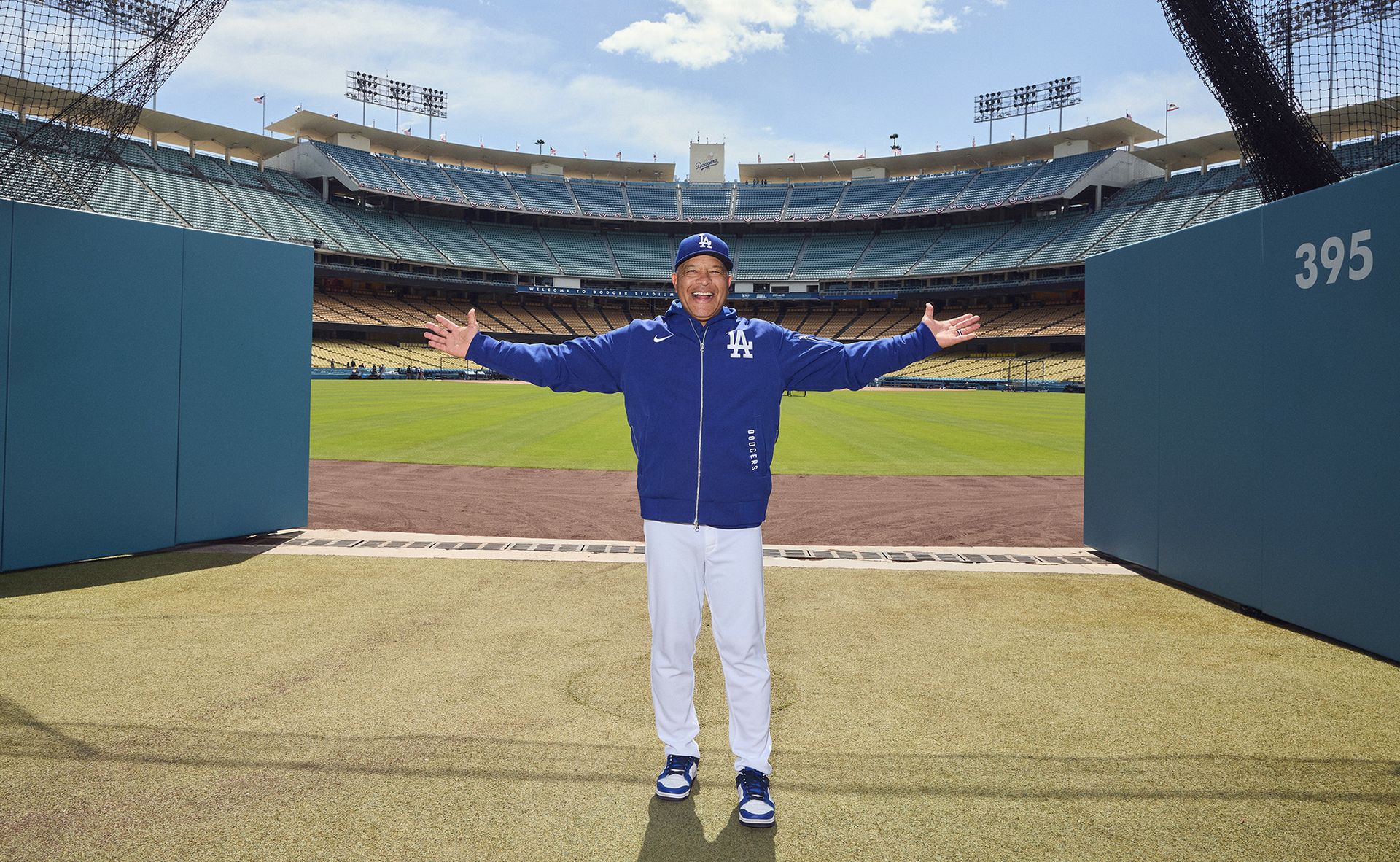
When Dave Roberts ’95 was hired by the Dodgers before the 2016 season, he became the first Black manager and the first Asian manager in the more-than-a-century-old franchise’s history. “Jackie Robinson. Hideo Nomo. Sandy Koufax. We are a groundbreaking organization breaking barriers,” Roberts says. “And so, it just is fitting that I’m a biracial man.”
Now, these last two years, Roberts — born in Naha, Japan, to a Black father serving in the Marines and a mother from Okinawa — has watched as the Dodgers have become the unofficial MLB team of his country of birth. “It’s been fun for me to have a front-row seat as we get Shohei Ohtani, Yoshinobu Yamamoto and Roki Sasaki, and really try to take over Asia and paint it blue,” he says, adding that the Dodgers spare no expense to make their Japanese stars feel at home here. “We have sushi chefs come into town before games twice a week.” His mom is especially proud: She’s constantly hearing from her family back home how her son is a fixture on Japanese TV.
On March 18, the Dodgers opened the 2025 season with a win against the Chicago Cubs in a packed Tokyo Dome — as Dodgers catcher Will Smith put it, “Basically, a home game, with all the Dodger fans there.” A few weeks earlier, I met Roberts in Glendale, Arizona, in a small office at Camelback Ranch, the Dodgers’ spring training facility. The 53-year-old sits before a dry-erase board with his gray Air Force 1s tucked beneath a crowded wooden desk. With his stocky build packed into a blue long-sleeve shirt beneath a Dodger Blue top and baseball pants, Roberts looks like he could still play. Only the bit of gray along his temples betrays that the former speedster has now spent as many years coaching as he did in the outfield.
Roberts’ swipe of second base during the improbable 2004 Boston Red Sox World Series run was so iconic that it’s known simply as “The Steal.” The cleats he wore that night already live in Cooperstown, New York. Now, after winning his second World Series as Dodgers manager last season, Roberts will, in all likelihood, see his own bronze bust in the Baseball Hall of Fame when he retires.
“It’s starting to sink in, but it’s still mind-blowing,” he says. I mention a quote Eric Karros ’93 gave to this magazine when Roberts was first hired: “Walter Alston and Tommy Lasorda, those are the guys who stand out when you talk about [Dodger managers], and maybe Dave Roberts can be that next guy.” Roberts, who studied history at UCLA, smiles and shakes his head at the comparison. “I don’t really take a lot of time to think about [those] things, because I live in the moment and look forward, but when you bring this up, it is just crazy.”
A Superteam With an Underdog Mentality
After knocking off the New York Yankees, whose manager Aaron Boone played for the USC Trojans when Roberts was a Bruin (“We weren’t friends,” Roberts remarked to MLB.com during the 2024 World Series), the Dodgers entered the 2025 season as the overwhelming favorites to win the World Series — again. They have a loaded roster that costs the team’s owners more than $500 million combined in salaries and luxury tax; their lineup is anchored by the biggest star in the game, reigning (and likely to repeat) MVP Ohtani. Roberts has skillfully led his team back to the Series; they are now poised just four victories away from achieving their ultimate goal.
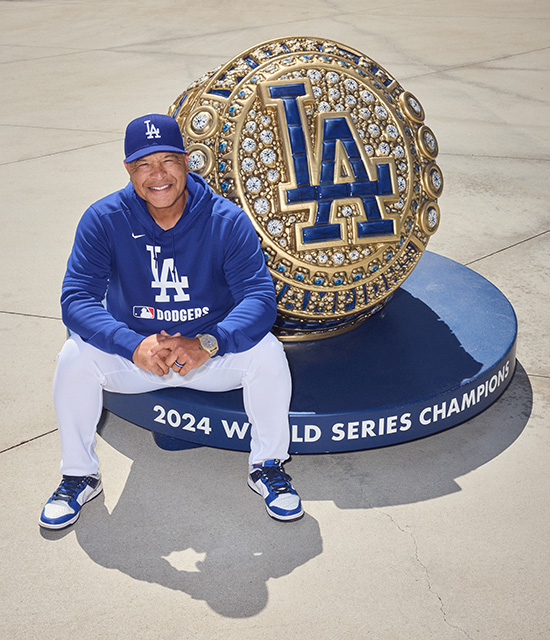
Roberts spent his early years in Dodger blue on the hot seat, but his second championship means he has the rarest thing in pro sports: job security. On March 10, the Dodgers announced that they had signed him to a four-year, $32.4 million extension. Roberts assures me he won’t be managing for another decade, but the still-young skipper has every opportunity to add even more sparkly rings to his collection before he retires. But how do you convince a superteam to keep chasing perfection?
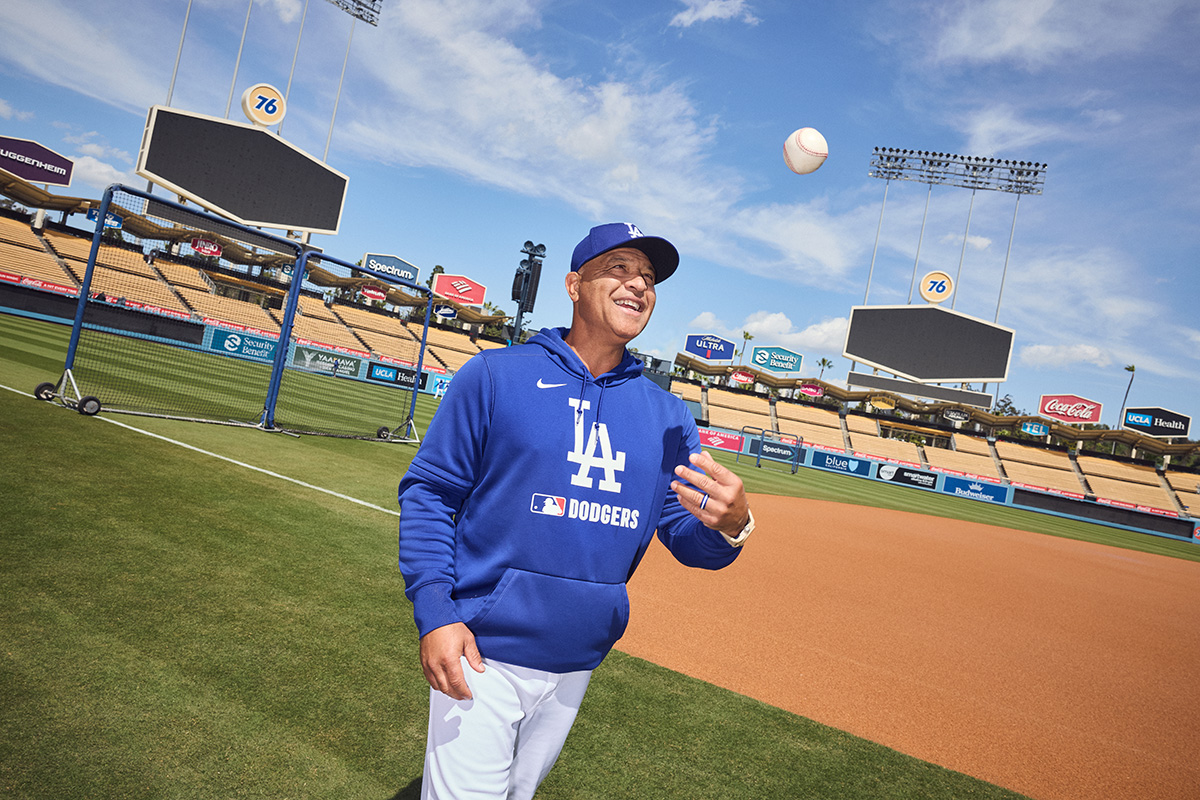
“I’ve always been an underdog. I was a recruited walk-on. I signed a professional contract for $1,000. I was always the extra outfielder. I spent five years in the minor leagues. I was an underdog to get this job,” Roberts says. “I instill that chip that I still have in them. When you watch our team play, there’s still an edge to us.”
Roberts moved around throughout his childhood before arriving in San Diego for his high school years. He was a three-sport star, eventually accepting an offer to play quarterback at the Air Force Academy. “I’m senior class president and giving my speech on graduation day, knowing in the back of my mind I did not want to play football,” he says. Finally, he got up the nerve to share his concerns with his father. “He basically was like, ‘Hey, man, if you don’t want to go to the Air Force, don’t do it for me.’”
So Roberts asked his baseball coach Butch Smith for help. “Alright, let’s just go up and down the coast and try,” he remembers Smith saying. “I’m going to bang down doors.” Smith met with UCLA coach Gary Adams ’62, M.S. ’64 and sang Roberts’ praises. Adams didn’t have any scholarships left, but said Roberts could come play for him as a recruited walk-on. Roberts told the Air Force he wasn’t joining and headed to Westwood.
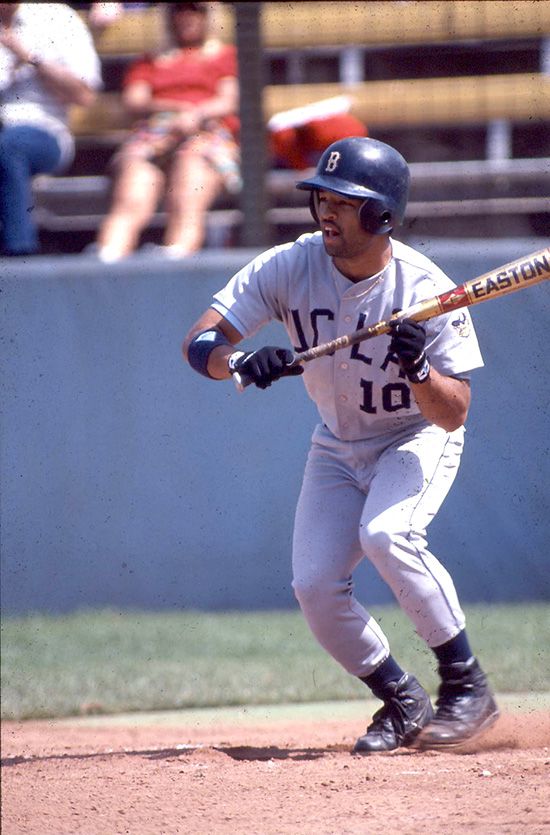
“I just said, ‘I’ll bet on myself.’ I said, ‘The floor is, I’m gonna get a UCLA degree,’” Roberts remembers. It was 1991, and while he was no longer the Big Man on Campus, he knew if he competed, he’d leave his mark. “My first year, I made the team and got nine plate appearances. But then the last three years I was there, I started every single game.”
Staying Loose
In 1992, Adam Melhuse — who would go on to play eight seasons in the Majors — transferred to UCLA from Santa Clara University. “Here’s Dave Roberts, smaller in stature, but the guy was built like a fire hydrant,” Melhuse recalls. “All I heard about was what a football player he was, and all of those stories were true. It was a little intimidating, honestly.” But right away, Melhuse felt welcomed by Roberts. He’s seen his former teammate hold onto that special ability to connect with everyone in the room, no matter the size. To this day, Roberts never forgets a name.
Just last year, Melhuse and Roberts played the UCLA Baseball Alumni Golf Tournament at Strawberry Farms. Melhuse watched, in awe, as Roberts was stopped every 100 feet, engaging with each fan as if they were an old friend. It’s what’s allowed him to keep a clubhouse full of superstars from across the globe loose and happy.
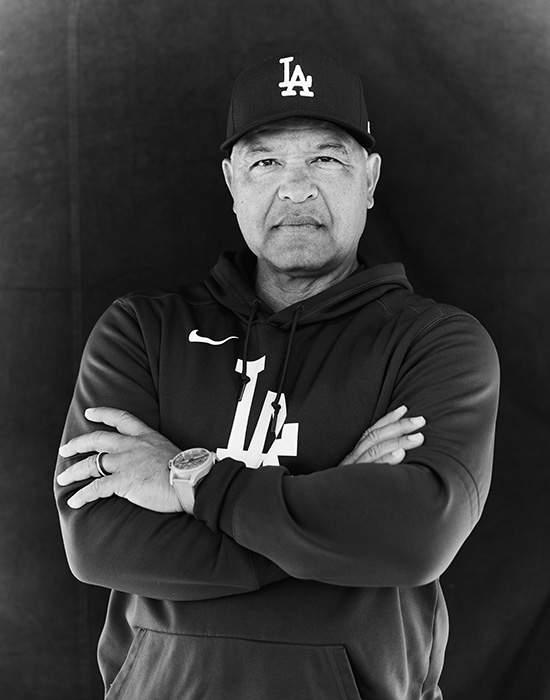
Melhuse, now a coach with the Arizona Diamondbacks organization, tells me he’s been thinking a lot about how to be a better leader. His strategy? Try to channel a bit of Dave Roberts. “There are guys I don’t have much commonality with, and it’s sometimes hard for me to connect. He’s so good at that,” he says. “Learning how to keep everyone connected and involved and feeling that, from a baseball standpoint, they’re wanted and needed is kind of what it’s all about.”
I ask Roberts, raised in a military family in the era when a firebrand like Indiana basketball coach Bobby Knight was held as the pinnacle of coaching excellence, about his own theory of leadership. “I view my leadership style as relentlessly positive, very caring, and consistent,” he says. “But I’ve learned that to be a great leader in today’s world, you really have to manage your ego, because players all need to be managed differently. You’re managing superstars who make a lot of money in a world where there’s a lot of self-promotion, and you have to appreciate that, but still make them perform.”
Rather than Knight, Roberts keeps a UCLA coaching legend as his guiding star. “Not to say that I would ever be this man, but the way John Wooden managed people, he did a great job. Ultimately, his players wanted to succeed because they didn’t want to disappoint him. And I think that I’ve got that with my players, because they know I care about them.”
Roberts’ first major league coaching gig was as an assistant coach for the San Diego Padres. It was 2010, and he had been diagnosed with Hodgkin’s lymphoma that March. Will Venable, then a speedy outfielder in his third year, remembers being struck right away by “the Dave Roberts energy.”
“He was sick and was going through chemo. He was losing hair, but the dude was showing up to the ballpark with a huge smile on his face,” Venable tells me. “The first time I saw him was when he was probably at his worst, right? And still, he was just an unbelievably positive dude. So, yeah, that was my intro to Doc.”
This offseason, Venable was hired as manager of the Chicago White Sox. He’s had phone calls with Roberts — whom he considers a mentor — to strategize on how to avoid missteps and manage the many moving parts of running an MLB team. But, more than anything, Venable has just been remembering the lessons he’s learned from watching his former coach move through a dugout and through the world. “Dave builds these relationships because he’s just naturally himself. But then he’s able to have really direct conversations because of his relationships,” Venable says. “He naturally has this ability to connect with people, and it just opens up channels of communication.”
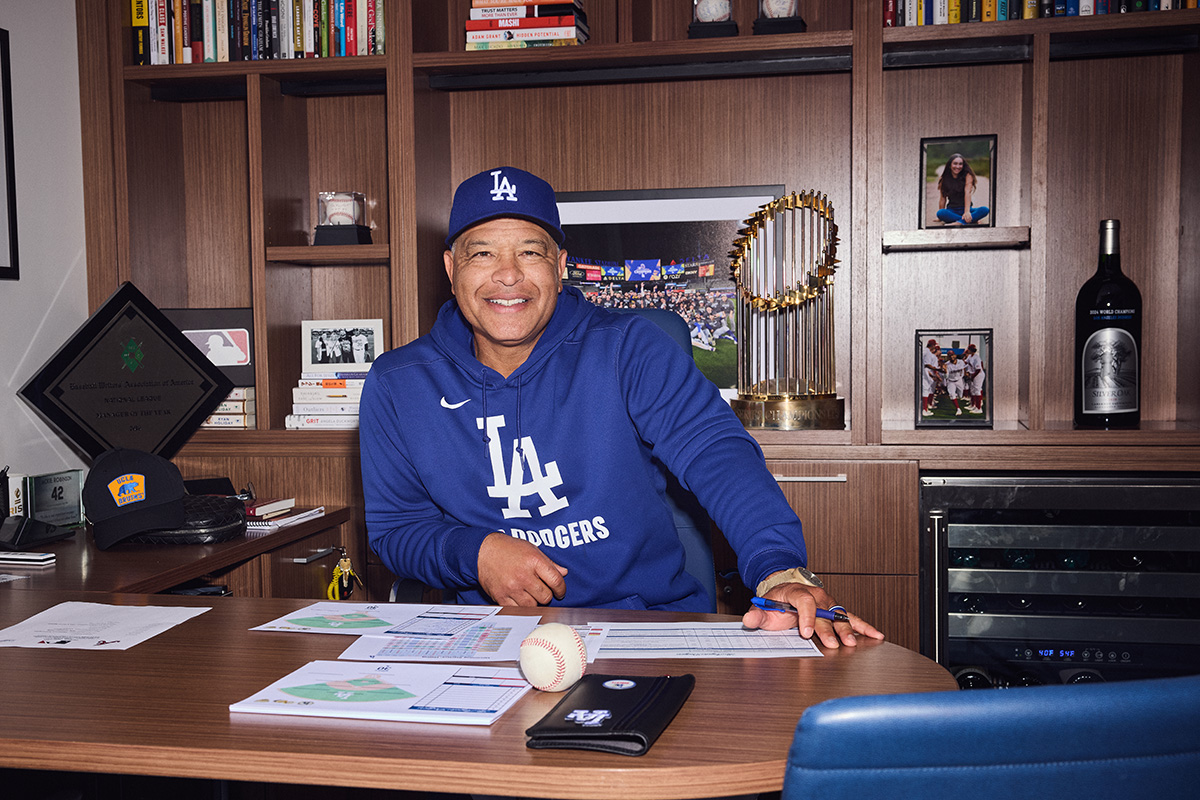
“The Best Job in the World”
I ask Roberts what drew him to study history at UCLA. He admits it was partly that it was an easier major than math or any of the sciences. But he also says he savored the opportunity to dive deep into the stories of legendary leaders. He loved reading about Winston Churchill and Alexander the Great. And though no one would ever explain a Dave Roberts clubhouse this way, he always felt himself drawn to Sparta. “[Studying history] gave me latitude to study different time periods, different parts of the world,” he says. “I’ve always been somewhat of a leader, and I sometimes pull from the stuff that I’ve learned.”
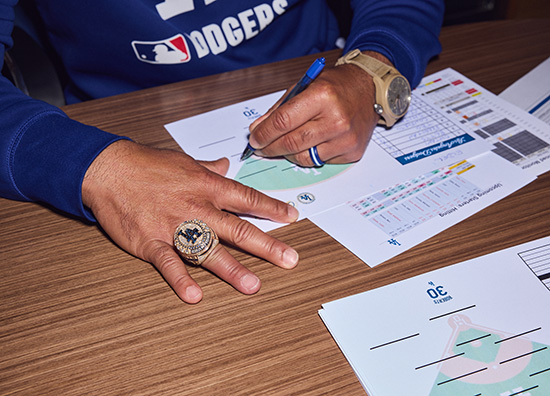
Becoming a part of Dodgers history has been especially surreal for the history buff. Roberts tells me he always used “Jackie Robinson” as his alias at hotels on the road. It was more than just a cover; he says it served as a reminder of how he should be moving through the world. “I went to UCLA. I played at Jackie Robinson Stadium. I know the family,” he says. “I just felt compelled to keep that fire burning.” Now Roberts gets to wear the same uniform Robinson did when he broke baseball’s color barrier in 1947.
Melhuse, for one, can’t believe how far his college teammate has come. He says Roberts’ speed was always off-the-charts, but it was his swing, his arm and his size that made his career an outlier. “In today’s game, with all the analytic stuff, he might not even get a second look,” Melhuse says. But there was something about Roberts that separated him, a quality that didn’t show up on a stat sheet. “He just wasn't going to be denied. I mean, you can start and stop with that. He was just going to find a way. And he did.”
Roberts spent a decade playing baseball; he had the career millions of kids dream of. But when I ask him if managing the Dodgers is as great as he expected it to be, he can’t help but break into a grin. “Better! Better!” he says. “There are a lot of great jobs in the world. But being a Southern California guy who went to UCLA, I’d argue, for me, there’s no better job in the world to have than manager of the Dodgers.”
He smiles wider now, leans back in his chair. “There truly isn’t.”
Read more from UCLA Magazine’s Fall 2025 issue.