Art, wrote the AIDS activist and critic Douglas Crimp, has the power to save lives. But to recognize, foster and support this power, “We will have to abandon the power idealistic conception of art. We don’t need a cultural renaissance; we need cultural practices actively participating in the struggle against AIDS.”
Enter David Gere, an associate professor of dance studies in UCLA’s Department of World Arts and Cultures (WAC). For Gere, Crimp’s words, written in 1987, clearly define the purpose of his own work. He is not interested in entertaining art, in flowery art, in purely aesthetic art. His goal is art with a powerful, fundamental purpose — to inform, to educate and, most importantly in this time of AIDS, to prevent.
“What I am trying to do in my work is to cut down to the bone,” he says. “In the beginning of the AIDS epidemic, many artists felt that the best thing they could do was to show a dance, sell some tickets, make some money and give it to an AIDS organization. But that wasn’t enough, not then and not now.”
It is Gere’s hope that artists, whether visual or performance, will abandon the notion of themselves merely as fund-raisers and instead come to see themselves as true activists who focus their efforts not on trying to transcend AIDS, but on bringing an end to the epidemic around the world.
Gere’s awareness of art as a powerful weapon in the global war on AIDS began in the 1980s when he lived in San Francisco and wrote as an arts critic for such papers as the Oakland Tribune, the San Francisco Chronicle, the Los Angeles Times and The New York Times. “I saw what was happening with dances that were being produced during that period that played a role in slowing and controlling the epidemic in the U.S.,” he says. “And I began to think that those same tactics that were effective here in the United States could be used elsewhere, in places like India, for example. Some things don’t translate well across cultural boundaries, but some do, and from my viewpoint, the scroll painter in Calcutta is a close cousin to Bill T. Jones making dance in the United States.”
For six months this past year, Gere lived in India. Supported by a Fulbright grant and a $50,000 Global Impact Research Grant from the UCLA International Institute, he spent time with artists whose work deals directly with HIV/AIDS awareness, education and prevention. The trip culminated in July with Make Art/Stop AIDS, a four-day workshop in Kolkata (the city formerly known as Calcutta), followed by a daylong program in New Delhi that brought together a diverse international group of 65 artists and activists. Participants included an artist who features doctors and nurses instead of the usual mythical figures in her songs and “pats,” traditional scroll paintings; a puppeteer who humorously uses the exploits of a lascivious king to discuss condom use; street-theater groups who educate through skits and songs; a poet who adds AIDS-prevention lyrics to folk tunes hummed by village women; and a science teacher who created a shrine to an invented deity, AIDS-Amma, with educational messages on the icon.
In a country like India, where 43 percent of the adult population is illiterate and, according to the most conservative estimates of the World Health Organization and other international agencies, 4.5 million people are believed to be infected with HIV (a number that is second only to South Africa), utilizing theater, song and the folk arts may well be the best hope for raising awareness and getting a handle on the crisis.
“Art is the perfect way to get a message across to anyone, from the most educated person to the most illiterate,” says Gere. “You don’t need a lot of education to watch a puppet play or see a dance. Things that happen non-verbally can be very powerful. Artists are masters of communication. There’s power in performance.”
Power indeed.
Gere recalls observing a show performed at dusk in a village in the area of Chennai (formerly Madras) by a theater group called Nalamdana — a Tamil word meaning “Are you well?” “The performance was about a young couple, a bit like an American sitcom, with some broad humor and a lot of fun,” he says. “People are laughing right away, but as the play progresses, the humor turns more serious when it is discovered the wife, who is pregnant, is HIV positive.” Shock and distress soon take over when the wife is blamed for being unfaithful. Eventually, however, a doctor explains that she contracted HIV through a blood transfusion.
“Then comes the information — what should she do? What medicines should she take? Should she breast-feed?” Watching the audience during the play, Gere says, “I could see the depth of connection the artists are making. Faces that had been joyful turned very serious. Their delight turned to intense focus. It was an amazing experience to watch.”
Afterwards, audience members are invited to ask questions, and those who do are praised and given prizes for having the courage to speak up. Even when the show is done and the stage dismantled, Nalamdana is not through. “The cast members go door-to-door in the villages talking to people, educating them. The fulsomeness of the approach is what’s so extraordinary,” Gere says.
Make Art/Stop AIDS created “a successful ripple all over India,” says Nandita Palchoudhuri, a curator-designer of Indian folk art in Kolkata and a participant in the Make Art/Stop AIDS conference. Palchoudhuri, who uses ancient storytelling techniques to communicate HIV information in Bengali rural areas, says the conference provided not only information on how to effectively use art to educate but it inspired the artists and “renewed flagging spirits.”
Gere agrees with that assessment. He recalls one particularly revelatory moment that seemed to galvanize participants. During the first day of the conference, Gere recounts, some of the artists wondered why there were no HIV-positive people in attendance.
“I said, ‘But they are here,’” Gere recalls. “That was part of the point, to show that people infected with HIV come in all shapes and sizes, that they look like your neighbor, that the disease shows no discrimination.”
A bit later, one of the participants ran back to his room and grabbed a T-shirt on which was printed: “HIV Positive.” He shared with the group how wearing the shirt helped to dispel some of the stigma surrounding HIV in the town in South Africa where he lives.
The story electrified the group. Soon everyone, from artists to activists to the American consul general and Gere’s two adopted children were marching down the streets of Kolkata wearing T-shirts proclaiming “HIV Positive” in bold black and red letters.
“We got a lovely reaction. People asked questions, including where to be tested. “They shook our hands,” Gere marvels. “It was another turning point for the HIV positives in the group, to learn that risk can be taken and the effects can be positive; to learn that humanity is shared. It is incredibly life-changing to be in the midst of that, to learn how it feels to be supported that way.”
Gere’s work is exactly the type of innovative research that UCLA’s International Institute is designed to support, says Geoffrey Garrett, vice provost and dean of the institute. This research “will influence how things are taught in the classroom as well as policy debates in the United States and other countries,” he says. “David’s Make Art/Stop AIDS project perfectly fits the bill. He brings immense energy, incredible commitment, and unfailing good humor and grace to everything he touches. In David’s case the cliché is true; he really is making the world a better place.”
Throughout his life, Gere has found his worlds colliding in serendipitous ways. But to understand his path, it’s easiest to start with his roots. He grew up in North Syracuse, N.Y., the fourth of five children. His parents loved to sing and dance and all five Gere children — his older brother is actor Richard Gere — participated.
“I’ve been dancing my whole life,” says Gere. “My parents were social dancers. They’d take us to local restaurants, and we’d dance to everything. We all had a love of the arts, and everyone pursued art in some way.”
As a teen, he wanted to be a musician and majored in piano performance at Oberlin College. “I took piano very seriously until junior year, when I got tired of sitting in the studio with 100 other pianists, all better than me.” Gere switched majors and graduated with a degree in religion.
But before leaving school, he enrolled in a modern dance class and fell in love with the joy of movement. He studied ballet in Edinburgh during his senior year abroad, and after graduation he moved to New York.
While taking dance composition classes at the Erick Hawkins Studio, Gere gravitated towards more complicated rhythmic dances. His teacher, Lucia Dlugoszewski, encouraged him to study Indian dance and culture. While pondering this idea, Gere received postcards from a friend who was teaching in Madurai, India. She told him of an opening at the neighboring American College, and “the next thing I knew, I was learning Tamil and heading off to India.”
During his two-and-a-half years at The American College Gere carved out a role as an arts presenter, reviving the film society, Tamil choir, a theater group and other programs. He also taught ethical studies, a combination of ethics and religion. “It was definitely a formative experience,” he says. “If not for that experience, I wouldn’t be so interested in India.”
In 1985, Gere moved to San Francisco and began writing about the arts. At a time when most dance criticism focused on European and American dance, Gere again gravitated to other forms, and as co-chair of the International Dance Critics Association he pushed for more coverage of non-Euro-American dance in newspapers and journals.
“David has a great appreciation for the cross-cultural aspects of dance,” says Elizabeth Zimmer, dance writer and editor at The Village Voice. Zimmer and Gere co-chaired a Los Angeles conference that coincided with the L.A. Arts Festival and featured many ethnic performances. It was a perfect duet for Gere.
“He was always interested in diversity,” Zimmer adds. “He wanted to train (dance) critics to deal with diverse materials and cultures; to fight against the New York–centric attitude. In another life, he might have been a minister. He’s a soother and a community builder.”
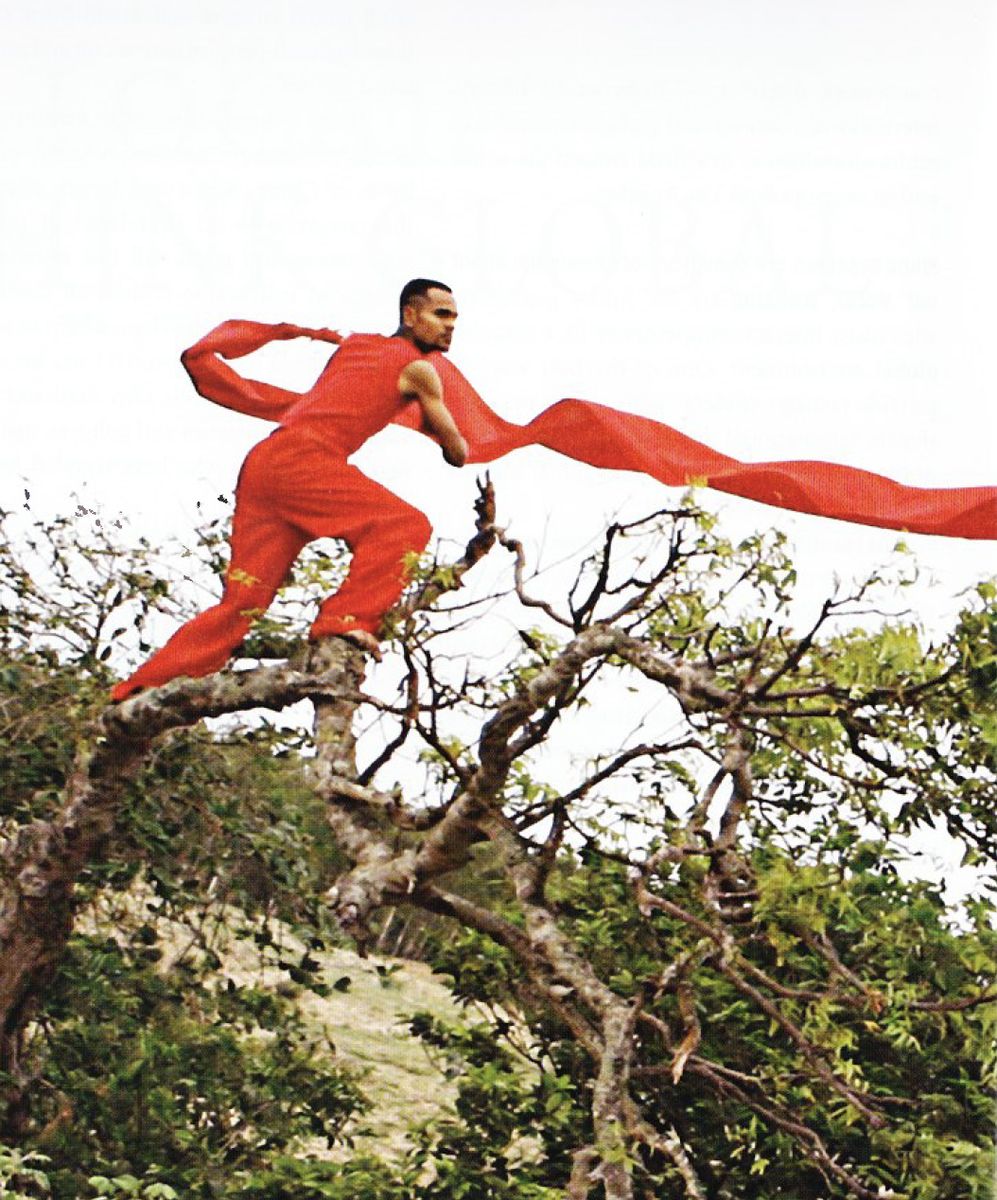
Even today, Gere pushes the definition of dance to include not only action that occurs in the traditional stage setting, but also street performances, where even protests become choreography. He addresses these themes in his book How to Make Dances in an Epidemic: Tracking Choreography in the Age of AIDS (University of Wisconsin Press, 2004).
Gere earned an M.A. in music from the University of Hawaii and then a Ph.D. in dance history and theory at UC Riverside. He first came to UCLA in 1993, invited by WAC founder Judy Mitoma ’70, M.A. ’75 to give a talk about Meredith Monk, a New York–based choreographer and the subject of Gere’s master’s thesis. The following year Mitoma invited him back as a visiting assistant professor. Academia, he found, was his calling.
“It was fun and exciting to be with a strong core of people focusing on dance,” he explains. And at a large university, there were many opportunities for cross-pollinating disciplines.
“David is a gifted and generous teacher,” says Chris Waterman, dean of the School of the Arts and Architecture. Gere, he says, easily blends art with scholarship and contemporary cultural issues. “He likes to find ways to get students to take theoretical knowledge and put it into practice.”
Gere has also been skillful at “connecting the diffuse pieces of the university, placing the arts at the center of the equation,” Waterman continues. “That’s the real power of this idea [of Make Art/Stop AIDS]. He enjoys crossing boundaries.”
Gere’s activism crystallized in San Francisco, “when the AIDS epidemic was ramping up, and people I knew and loved were dying.” He volunteered to help with the Names Project, which at the time featured nearly 2,000 quilt panels inscribed with the names of those who died of AIDS. He went to Washington, D.C., where the quilt was laid out on the National Mall. Gere helped develop the concept of having celebrities read the names of the dead.
When he first came to UCLA, he thought of putting AIDS activism behind him. After all, there is only so much death one can handle. But later, learning of India’s HIV epidemic, “I realized that my two worlds were colliding.”
In the United States, the first storm of anti-AIDS activism came from the artistic community because that was the group most notably affected and most vocal about the issue. But in India, he says, a different population was affected, starting with sex workers and heterosexual truck drivers, who then brought the virus home. For a variety of reasons, including government inaction and because many of those affected are uneducated and in rural areas, he says, prevention and treatment information was not getting out. Artists, he thought, could help remedy that.“I wondered, ‘Can some of the lessons learned by the artists here be applied there?’”
So he returned to India and created Make Art/Stop AIDS, which he recently brought to UCLA in conjunction with UCLA’s Year of the Arts and World AIDS Day. UCLA festivities included an old-fashioned teach-in on Dec. 1, with a diverse international roster of speakers, followed two days later with a daylong version of Make Art/Stop AIDS, again joining artists, scholars and activists. Funding came from the UC Humanities Research Institute, the International Institute, the UCLA AIDS Institute and the Ronald W. Burkle Center for International Relations.
Besides teaching and writing, Gere has long been involved in other arts movements. He co-directed an audience-enrichment activity at the Jacob’s Pillow Dance Festival in Massachusetts. He has been co-director of the Talking Dance Project, a California organization dedicated to bridging the gap among artists, critics and audience members, and he organizes a related series, Artist Alphabets (in conjunction with UCLA Live) that helps students learn more about “the artists who help us learn how to live our lives.”
“The Talking Dance Project set me on the road to playing a role I often play, as a mediator, someone who helps others understand what is going on in the art form. I used to love going to the lobby after a [dance] performance and hearing people discuss what they had just seen. I wanted to capture that feeling, to have a place where people could talk about what they had just seen, to develop exciting conversations about our art form.”
Also dear to his heart is the Estate Project for Artists With AIDS, which was started in 1991 by a New York advocacy group to help visual artists protect their work after they died. The concept grew to include music and dance, and Gere helped survey dance works, aided by UCLA graduate student Peter Carpenter M.F.A. ’03. The Estate Project eventually included not only staged dance, but also other types of choreographed events, such as the early ACT UP campaigns, which used street theater to promote AIDS awareness and to make a political statement.
According to Deborah Jowitt, dance writer for The Village Voice, it’s only been within the last two decades that dance has been looked at in a scholarly way, and Gere has been doing his share to foster that scholarship.
In 1998, Gere was invited to be a fellow of the University of California Humanities Research Institute as a participant in the Interdisciplinary Queer Studies Group, and in 2000 he was Sage Cowles Visiting Scholar at the University of Minnesota Dance Program. He has also written extensively about dance. He co-edited Looking Out: Perspectives on Dance and Criticism in a Multicultural World (Schirmer, 1995) and Taken By Surprise: A Dance Improvisation Reader (Wesleyan University Press, 2003). His essays have appeared in Loss Within Loss: Artists in the Age of AIDS (Living Out) and Dancing Desires: Choreographing Sexualities On and Off the Stage (both University of Wisconsin Press, 2001).
Gere’s latest book, How to Make Dances, has brought “a fresh perspective to the issue of dance and AIDS,” adds Jowitt, also an author and former dancer. “The way he juggles the narrative strategies is quite brilliant. He doesn’t swathe it too heavily in theory or erode it in personal rhetoric. His experience as a critic allows him to provide eloquent, lucid descriptions.”
Besides his writing, speaking, teaching and preaching, one of Gere’s most cherished roles is as father to his two children, Isadora, 4, and Christopher, 5, whom he adopted with his partner of 10 years, Peter Carley, a psychotherapist. Even fatherhood was serendipitous, Gere says. The day after he and Peter discussed the possibility of raising a child together, “we learned of a birth mother.”
Although both David and brother Richard have strong ties to India, they usually work independently. “Luckily, it’s a big country,” David quips. But during the Make Art project Richard attended some of David’s meetings with artists and government officials. “I’ve always been a little coy about Richard being my brother,” David says. “But in India, our work converged, and it was exciting having him there. He has a brilliant way of listening and then pulling together threads of ideas.”
There is another quote about the nature of art that in its way — perhaps a bit more flowery than he would like — helps to define Gere’s viewpoint. Written by the French philosopher and novelist Rémy de Gourmont at the turn of the 20th century, it states: “Art includes everything that stimulates the desire to live. … Born of the sensibility, it sows and creates it in its turn. It is the flower of life and, as seed, it gives back life.”
So, has Gere sown enough seeds to make a difference? He is almost too modest to answer. Instead, he tells a story about a clinic at Tambaram, near Chennai. It reportedly is the largest HIV clinic in India, where Gere says hundreds of people gather each day waiting for chits to allow them to see a doctor. Here, he says, he can see the seeds of his work beginning to bear fruit a mere six months after the Make Art conference.
Gere told a doctor there about his ideas of using artists to help educate the patients. “I assumed he would have no interest, but when I told him about the earlier experiences I had, he lit up.” A street theater group, the doctor said, could educate the waiting crowd and prepare them for the clinic experiences. And since family members usually stay with the patient during the two weeks or so it takes to regulate the medicine regimen, entertainers could interact with and educate the family members.
A few days later, the hospital signed a contract with Nalamdana. The speed with which this came together is practically unheard of in India, Gere says. “I’m completely thrilled about this. Thrilled about the potential for that hospital and for the potential it has for other hospitals.”
Now, Gere says, “the network [for educating people] exists, and that’s positive.” But still, he downplays his role. “I’m like the host who makes a party. I just put people together.”
And like any good mediator and bridge-builder, all he really wants is “to continue to help host the party so the conversations continue.”
And plant a few more seeds.