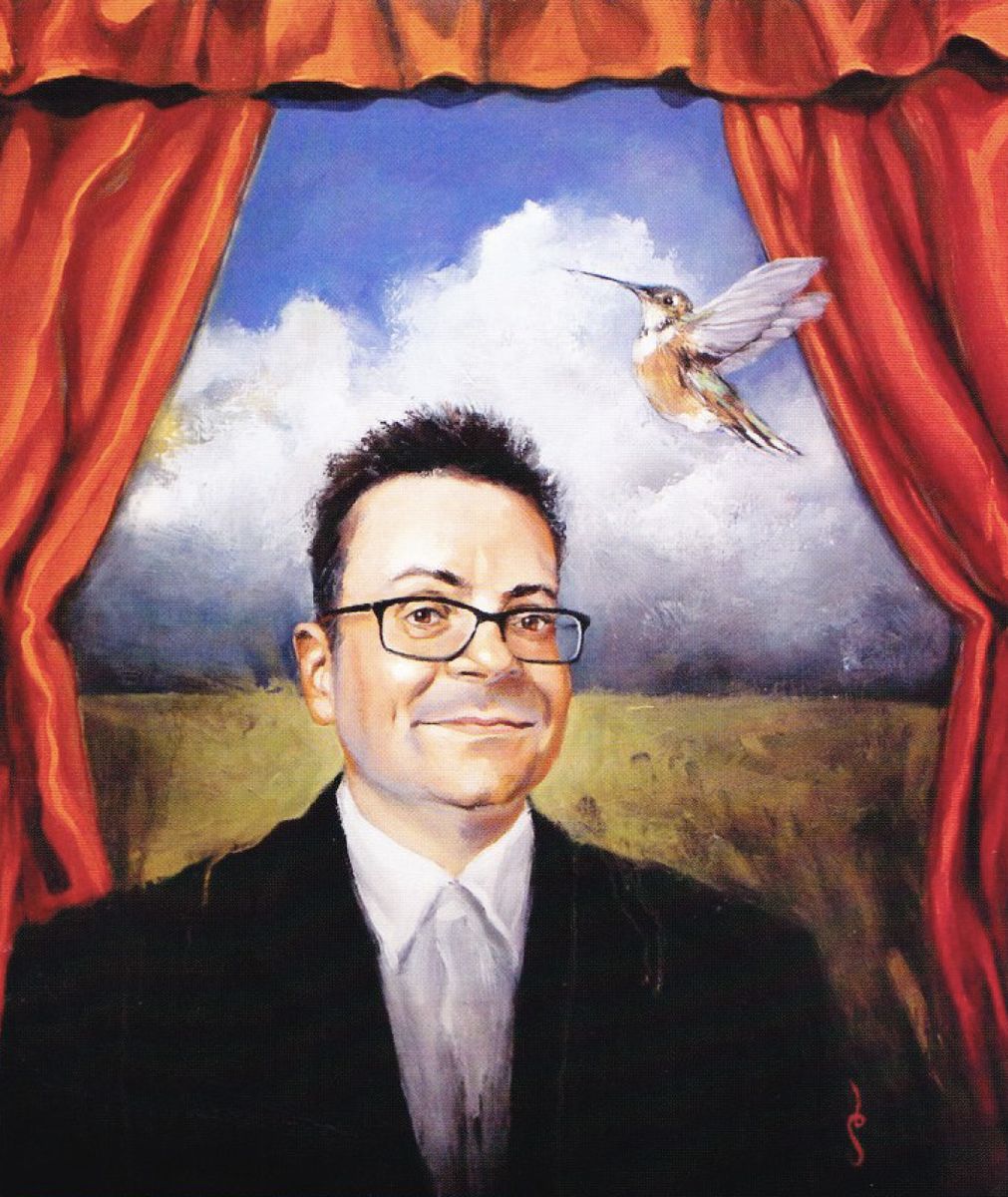
Since David Sefton moved from London to Westwood three years ago to become director of UCLA’s public performing-arts program, he has transformed what was a fairly mainstream schedule into a wild E-ticket ride. Under his guidance, UCLA Live has taken audiences on a tour of some of the most radical, experimental, enthralling and, some might say, bizarre performances offered on any stage in the country. The 40-year-old Liverpudlian and former head of contemporary culture at Royal Festival Hall has — with an exacting eye for quality and eclectic tastes that lean toward the iconoclastic, the bold, the mystifying and downright weird — taken center stage with his fearless programming picks for UCLA Live, while at the same time offering the best from the world of classical music and dance.
Extolled by arts writers on both coasts as a fresh force that has awakened Los Angeles to a new sensibility about theater, music and dance, Sefton has introduced audiences to works never before seen on the West Coast or the United States, mixing classical and traditional with edgy, contemporary works that reflect the aesthetics of the street. In his first full season, 2002–’03, he broke new ground by launching the adventurously hip International Theatre Festival, bringing to campus large-scale, world-class, experimental theater with such works as Woyzeck, a fully staged production by modern theater’s “Leonardo da Vinci,” Robert Wilson, and two visually stunning plays by the revolutionary Societas Raffaello Sanzio from Italy.
“I see UCLA as becoming a major stop on the international festival circuit. That’s my ambition,” says Sefton, who spent June and July frequent-flying from Mexico City to London, Madrid and Moscow to take in 45 different shows — only one of which he thinks may be good enough to come here. With his antennae always pinging for the next best production and his global contacts keeping him wired, he was off in August to a Zurich festival to see performances from Israel, Australia and Belgium.
Lest you think this a dream job, Sefton notes: “Roughly 90-plus percent of what I see is rubbish. I see it so no one here has to. I’m the quality-control threshold.”
The theater festival was just part of Sefton’s debut season that offered 86 different artists and groups that included Yo-Yo Ma, Brian Wilson of the Beach Boys, the Bach Collegium Japan, Elvis Costello, the world-renowned Kronos Quartet, the Merce Cunningham Dance Company, hip-hop pioneers, Rennie Harris Puremovement, contortionists and roller-skating violinists.
That season, he says, “was my mission statement.” This season, he is strengthening the mix with such offerings as Berlin’s Volksbühne, Mikhail Baryshnikov, Randy Newman, Emmylou Harris, Michael Moore, Itzhak Perlman and Shakespeare’s Globe Theatre, straight from its sold-out run of Twelfth Night in London. In his drive to bring the most innovative and exciting works here, he will take on a creative role. From the L.A. club scene will emerge White Trash Wins Lotto, a scathing musical satire of sex, drugs and rock ’n’ roll, which Sefton is producing with Los Angeles composer/writer Andy Prieboy, former Wall of Voodoo vocalist.
“When people say, ‘You’re just picking things that you like’ — well, yeaaah, pretty much,” Sefton snorts. “That’s the job, really. I get to exercise my own prejudices, tastes and discriminations. That’s what I’m here for. But it’s important to me that we bring in not just the radical and experimental, but the truly fabulous.” The Globe’s Twelfth Night, for example, “was one of the best things I saw last year. I also plan on bringing in Chekhov and Ibsen someday, works not just by the greats, but great productions of those works.”
All this has produced a persistent buzz about UCLA’s emergence as a venue for experimental, pioneering work. “The talk was all about this guy on the West Coast,” says Joseph Melillo, executive producer of the Brooklyn Academy of Music, who just returned from the south of France. “David has transformed the presenting program at UCLA monumentally. And I don’t speak in superlatives very often. The university’s search committee wanted to put UCLA on the map as a cultural epicenter, and they’ve done that by hiring David.”
Melillo calls Sefton “a man of vision” and “a calculated risk-taker.”
“He knows what works. He’s not cavalier about his artistic choices — they’re well-reasoned,” Melillo says. “All of these opportunities existed before, but they just never got to the West Coast because L.A. did not have anyone to make these kinds of commitments programmatically. There needed to be a gatekeeper to open that door. And David arrived with a beautiful set of keys.”
But Sefton himself was unsure about what would happen once he unlocked that door. “You have no idea how quickly it will catch on, or whether it will catch on at all,” he says in retrospect. Given a mandate by UCLA to take the performing arts in a radical new direction, he knew that change would be traumatic. So he has not abandoned UCLA’s strong traditions, such as its great dance program and classical-music series. And not all of the theater festival is, in fact, radical and contemporary.
If patrons can get past the provocative photograph on page 3 of the hefty UCLA Live season brochure that touts the U.S. premiere of Jewess Tattooess, they will find more classical music than ever before, “and, generally, of a higher standard,” says Sefton.
As initial nervousness about his arrival dissipated (“I think it’s clear now,” Sefton told the Los Angeles Times wryly, “that I’m not going to burn down Royce Hall and build a rock stadium”), audiences began snapping up tickets. In his first season last year, ticket sales hit 93,000, an increase of approximately 14,500 from the previous year. This year, with subscription sales going strong, UCLA Live is projecting sales will reach 99,000. With added shows for the spring segment, attendance should top 100,000.
“I’m staggered,” Sefton says, “at how genuinely engaged, adventurous and uncynical the audience is.”
Not only has Sefton brought new and innovative talent to UCLA Live, he has increased engagement among funding sources. Royce Center Circle, UCLA Live’s primary donor group, has, for example, brought in more than $1.05 million in gifts over the past two years. UCLA Live has also received increased support from major arts funders; for the first time, it received funding last year from Altria, Inc., the Rockefeller Foundation MAP program and The Annenberg Foundation.
“David came in with a very fresh vision,” says Olga Garay, program director for the arts at the Doris Duke Charitable Foundation, one of the organizations that provide funding to UCLA Live. “His dedication to commissioning new work, to looking at multidisciplinary art forms and to weaving into his program a rock ’n’ roll sensibility captured not only the imagination of the hiring committee that brought him to UCLA, but of Los Angeles as a whole,” she says.
Sefton knows how far he has come.
“When you’ve got big companies coming to you to say they want to be on your program because they’ve seen who’s already been there,” he says, “you know there’s a new reputation and tradition being created here at UCLA.”



