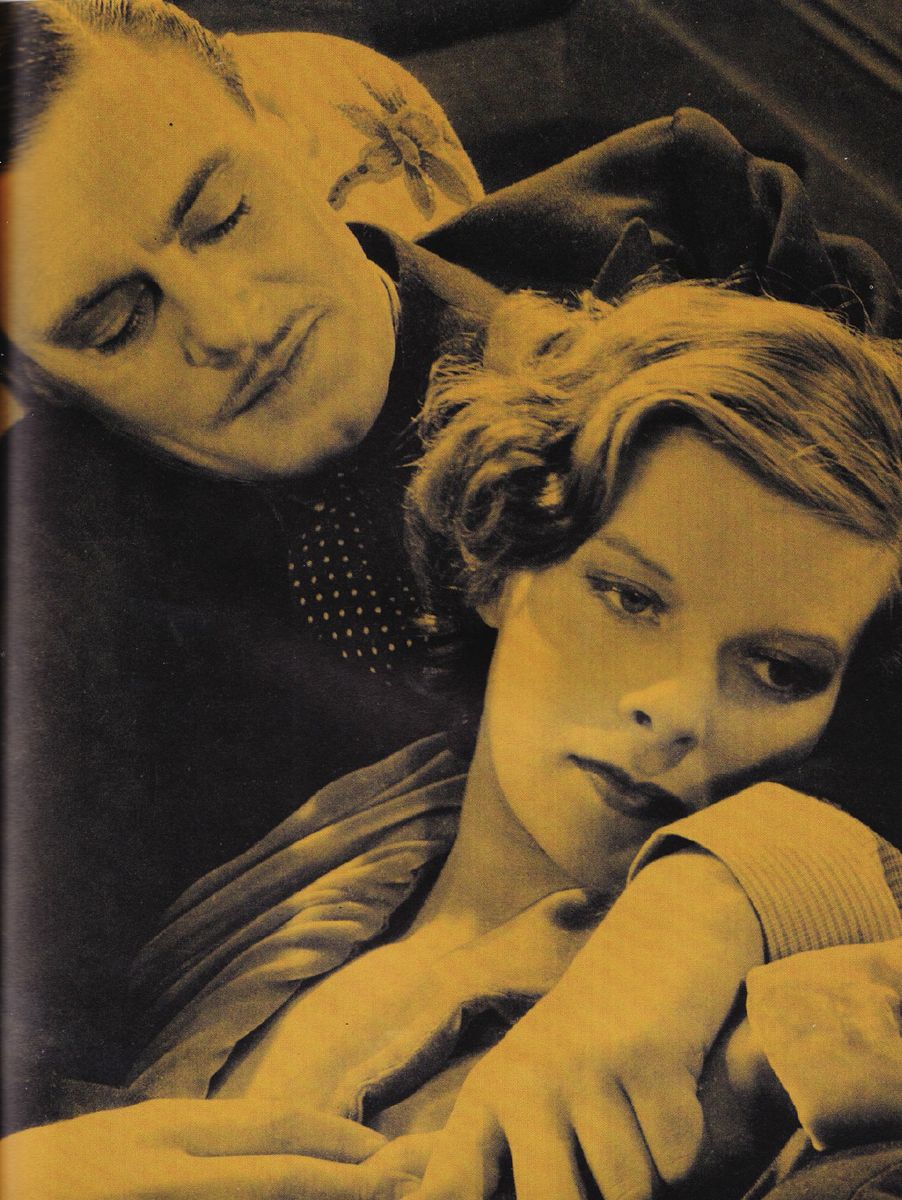
Welcome to moviegoing UCLA-style. No popcorn, no sodas, but nobody’s complaining. It’s all about the film. Thanks to the miraculous work of the UCLA Film & Television Archive.
A treasure trove to many, under-the-radar to most
Curtis Hanson, the archive’s honorary chairman and Oscar-winning screenwriter (1997’s L.A. Confidential) finds it remarkable and very frustrating that even alums who’ve lived within walking distance of the campus for 20 years “didn’t know that movies were shown there that were open to the public.”
This quasi-obscurity is undeserved and not for lack of effort, enthusiasm or accomplishment on the part of the archive’s staff of 63. Working with a modest budget, less than half of which comes from the state, “we do a lot with very little,” notes Timothy Kittleson, the archive director.
Screening 400 films a year
The archive exposes public audiences to a stunningly rich array of work in venues like the James Bridges Theater on campus and elsewhere: naughty pre-Code films; inventive work from Iranian filmmakers; and obscure gems from Belgium to Bangladesh. Long before Hollywood took notice, the archive screened works of Jane Campion, Pedro Almodovar and Wong Kar-Wai.
The archive’s preservationists rescue classics as well as little-known films that might otherwise succumb to the ravages of time. Legong: Dance of the Virgins (1935), one of the feature films made in two-color Technicolor, was an orphan. UCLA’s efforts resulted in a surprise mini-hit when the film made the New York Times and Amazon.com lists of 2004 top DVD releases.
The Festival of Preservation: A cast of thousands
Every other summer, thousands of filmophiles flock to see the university’s best preservation work. Among the festival’s biggest fans is L.A. Times film critic Kenneth Turan, who says none of the hundreds of film events he attends a year excites him like this one. He agrees with former archive director (1975–99) Robert Rosen — now dean of the School of Theater, Film and Television — that the archive has done much to make preserved and restored films “sexy and desirable” to ordinary moviegoers.
When Rosen first talked about staging a festival of preservation, people thought the name would be a real turn-off. But Rosen persisted: “No. The notion of seeing the best-preserved image of a film will be one of the reasons that people come to see the film.” He was right. Today “studios are releasing films in the restored version because they know the film will have a new life.”
The hardest working man in Show Business
Of all its fans and friends in Hollywood, Curtis Hanson is surely one of the most active. As honorary chairman for seven years now, the 60-year-old writer-director first rolled up his sleeves here to create the titles for his Oscar-winning film noir, L.A. Confidential, and continues the heavy lifting on its behalf, even if it means stealing time from his own projects.
Hanson’s love affair with classic cinema dates from his years growing up in L.A., when he haunted revival houses like the Silent Movie Theatre on Fairfax Avenue. Later, as an ambitious young journalist, he photographed and interviewed many of Hollywood’s old-master filmmakers for Cinema Magazine. The meetings included a bedside interview with an ailing John Ford and a beer-soaked gab session with writer Dalton Trumbo.
The clutter in Hanson’s office suggests someone who is comfortable with chaos but nonetheless found time to host the archive’s two-and-a-half-week series honoring Don Siegel, his mentor, friend and one-time collaborator. The coup of the sold-out Siegel series was persuading another of the late Siegel’s Dirty Harry collaborators, Clint Eastwood, to attend.
The discussion was informative and entertaining, perhaps surprisingly so. “Because Clint can be sort of the opposite of loquacious,” Hanson says, smiling. As it happened, Eastwood “so enjoyed not talking about himself, but talking about this filmmaker that he admired, that he was fabulous,” says Hanson.
“The Movie That Inspired Me,” a Hanson brainstorm
Since 1999, Hanson has hosted an archive event that takes a fresh look at the movies by pairing film artists with a discussion of the film that had a seminal influence on them. (Diane Keaton chose Stagecoach. Who knew?)
Hanson actually attended archive film showings as far back as the 1970s when he was a screenwriter breaking into directorial work. But it was only when he started L.A. Confidential in the mid-1990s that he came to appreciate the archive’s research facilities.
So many titles, so little time
With 250,000 motion picture and television titles, the archive holds more media materials than any institution in the country, except the Library of Congress. Most are viewable by the public on request so long as the purpose is research, say for a book, article or feature film. “The idea is for the collection to live and breathe and not be locked away in vaults,” explains Mark Quigley M.F.A. ’00, coordinator of the Archive Research and Study Center. No one — not a Spielberg or a Scorsese — may check out materials. But on the second floor of the library are 40 individual viewing stations with comfortable, cushioned chairs and padded headphones.
Of the archive’s vast holdings, one of the most popular is the remarkable Hearst Movietone News Collection, which pre-TV was the way moviegoers watched the news. Spanning the period from 1915 to 1975, it is one of the most important historical resources of 20th-century history.
But the most sought-after titles at the archive are its remarkable collection of small-screen history: the archive’s television collection. In any given year, students, scholars, journalists, authors and filmmakers will look at thousands of hours of programming housed in the archive’s television collection. “Television is history,” explains UC Santa Cruz professor L.S. Kim — dopey sitcoms included.
Preservationist Bob Gitt, the “conscience of his profession”
For many years, the archive’s restoration work focused on Hollywood classics like The Big Sleep and Cleopatra. Frank Capra’s Lost Horizon might have been lost forever were it not for the efforts of preservation officer Bob Gitt. Gitt’s coda was “to return a film to the closest approximation possible of the author’s original work — uneven production mistakes notwithstanding.” (Of a Robert Flaherty film that he restored, Gitt is said to have remarked, “It looks better than it did when it was released, but it’s not my fault.”)
Taking stock, replacing stock, rising stock
Given the decaying condition of old film stocks and prints, the work of preservationists like Gitt is often a race against the clock. To replace the highly flammable composition of the earliest films and vinegaring effects of others, preservationists have turned to a new polyester stock that they work on in a newly acquired facility on Seward Street in Hollywood.
The Indies: Ready for their close-up
Lately, preservationists are turning their attention to the works of early independent filmmakers. Longtime archive preservationist Ross Lipman managed to create a faithful, 35 mm rendition of John Cassavetes’ Shadows from two 16 mm rolls of film with flaking emulsion.
Previews of coming attractions
With its reputation as one of the world’s great moving-image archives firmly established, the archive now faces a future at once exciting and challenging. The Billy Wilder Theater — now under construction at the Hammer Museum on Wilshire Boulevard — will replace the James Bridges Theater as the main venue for screening and promises “the finest projection facilities in L.A. outside the studios.”
Meanwhile, back at East Melnitz, archive director Kittleson and his staff are pondering the digital future. How do you harness digital technology to make the archive’s collection easily accessible for everyone to study and enjoy — how can you bring the visual history of World War II to a grade schooler in East L.A. or a film student through the Hearst Movietone Collection, for example — while protecting the interests of copyright holders?
“Currently, UCLA offers the widest public access of any film archive I know of,” concludes Kittleson, “and new digital technologies challenge us to continue pushing the envelope. These are very exciting times.”



