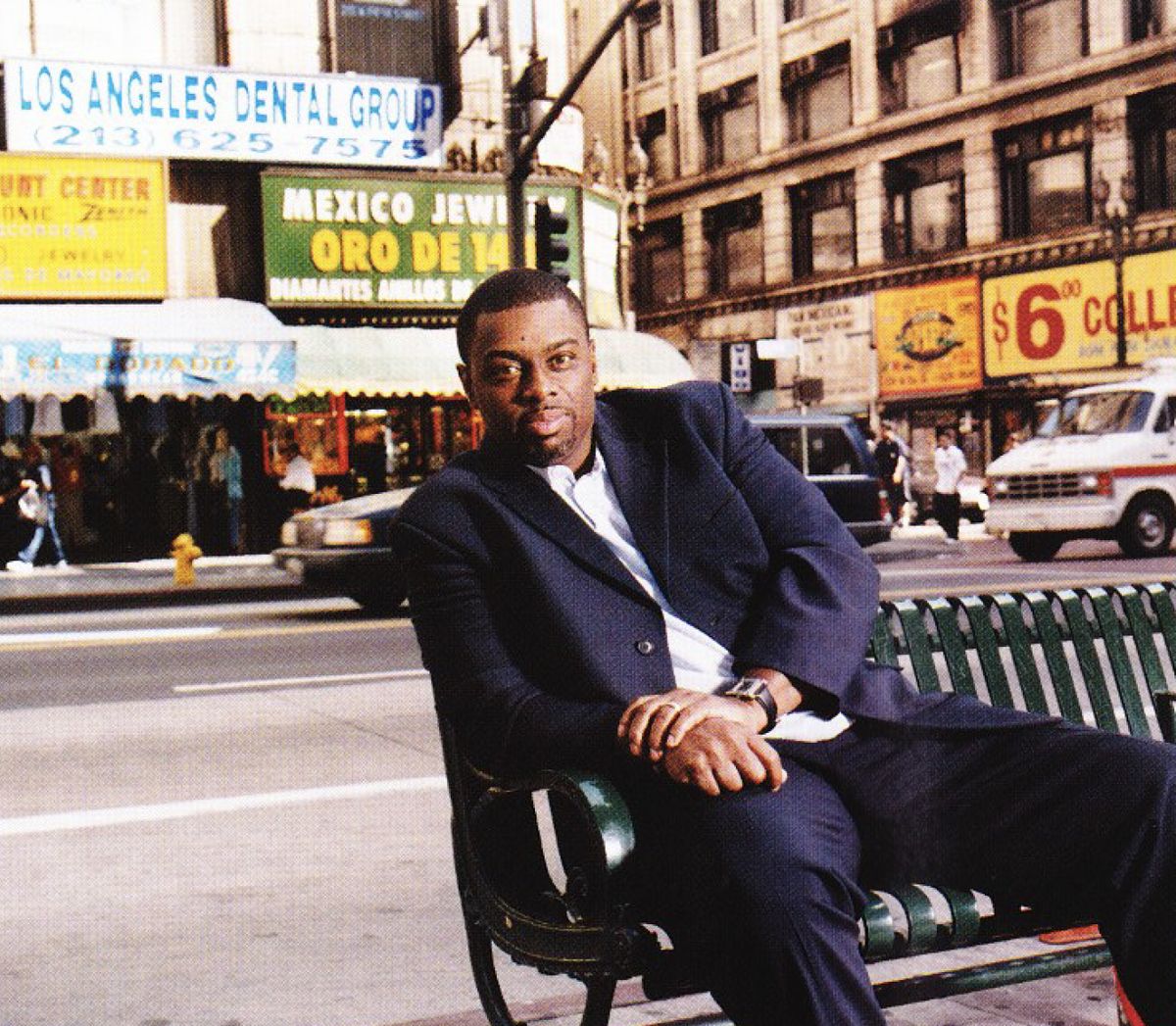
These days, Franklin Gilliam is living life on the fly.
As UCLA’s new associate vice chancellor for community partnerships, he is spearheading the university’s UCLA in LA initiative to strengthen ties between the campus and the community and to enhance the quality of residents’ lives. One day, he’s welcoming Los Angeles public school students to UCLA where they are getting help in math and science, another he is talking to the command staff of the Los Angeles Police Department about UCLA’s commitment to work with the LAPD on the importance of mass communications in building strong relationships between the department and the broader Los Angeles community. Over the past few weeks, he has conferred with members of the Los Angeles school board and with community and religious leaders — people close to the heartbeat of the city, such as Monica Lozano, president and chief operating officer of La Opinión and a University of California regent; John Bryant, chairman and CEO of Operation Hope; and Stewart Kwoh ’70, J.D. ’74, president and executive director of the Asian Pacific American Legal Center.
His task is enormous. Throughout UCLA’s history, the university has been knitted into the city’s fabric, working to resolve pressing issues and problems. Today, thousands of UCLA students, faculty and staff participate in some 200 campus programs that serve the community in far-reaching ways. But until Gilliam’s appointment, there was no central person to coordinate this massive effort that focuses the university’s vast resources, manpower and expertise on critical community issues such as health care, child and family wellness and the arts.
Gilliam, a professor of political science, is an expert in race relations, racial and ethnic politics, African-American studies and the influence of mass communications in society. A faculty member since 1986 and director of UCLA’s Center for Communications and Community, which he will continue to lead, Gilliam has worked with grassroots and nonprofit organizations, journalists and policymakers to build alliances to strengthen community development.
Gilliam spoke with UCLA Magazine Associate Editor Cynthia Lee.
UCLA has always been involved in community service. What is the need to expand the university’s efforts now?
We’re a great university. We could continue exactly as we’re doing and stay in our comfort zone. But at the end of the day, we have to ask ourselves: If we’re a world-class university, what can we be the best in the world at? Think of the handful of top public universities — Berkeley, Michigan, the University of Texas. Among those schools in our league, we are the only one located in a major American city. So we are uniquely positioned to make a defining statement about the role of a major public university operating in an urban landscape. We can be the best in the world at that. We can define it.
How did the UCLA in LA initiative evolve?
It is one of the chancellor’s three major initiatives — areas in genetics, information technology and community engagement. Under former Executive Vice Chancellor Rory Hume, a dialogue began between the university and a wide range of community leaders, asking them what they expected from a public university and what UCLA could offer them through a partnership. The campus has consulted broadly with external groups and faculty, students and staff to help shape the parameters of the initiative. We needed to identify our particular strengths and to begin to see where synergy exists or could exist. The creation of this position is another phase, an expanded and more focused phase, in that process to build stronger ties.
But outreach is not new to the university.
I keep hearing the word outreach, but I don’t believe it’s an accurate description of what we are doing. We have to do more than reach out; our relationship with the community is much more symbiotic and interactive. I prefer terms like partnership and engagement. We are working at the intersection of where the campus and community touch each other. We’ve been engaged around the greater L.A. area in health care, the arts, education, public policy, engineering. The challenge now is to harness that dynamic, to give it meaning and substance, to find ways to nurture and extend existing relationships and to identify and develop new ones.
What are some of the best examples of this kind of synergy?
The Hope Street Family Center in downtown Los Angeles is a wonderful model that focuses on helping to establish and promote connections between quality early development and a child’s ability to reach his or her potential in school and life. It is a place for families to obtain critical support services — early-childhood education, parenting skills, literacy education, enrichment programs for their children, community building and job training. We have UCLA staff and students there. We have faculty there doing research.
There are many other places where this synergy exists. For example, UCLA urologist Mark Litwin M.P.H. ’93 is running a three-year program, funded with $50 million from the state, to provide free high-quality prostate-cancer treatment to more than 200 under- and uninsured men living below the federal poverty line throughout California. They receive care in their own communities from specialists contracted by UCLA; nurse case managers who act as patient advocates counsel them. Programs like these build real relationships with communities and make a profound difference in people’s lives.
Where will you seek community partners?
Clearly, we can’t be all things to all people. The chancellor has identified three broad areas where we will focus our efforts: with children, youth and families; in health and medicine; and the arts. These are all areas where the campus already has specific strengths.
Where we feel we can make a significant difference, we will bring our faculty, staff and students to the community and partner with community-based organizations, service agencies, faith-based organizations, corporations. We will partner with them to host community forums on important issues of the day. We’re hoping to have a community-fellows program to upgrade the communication skills of people in the community, as well as a postdoctoral-fellows program to train a new generation of thinkers focusing on the greater Los Angeles area. We will be actively going after grants with one hand, and we will be giving out community grants with the other. And there will be ample giving opportunities for friends and alumni of UCLA.
Will UCLA students benefit from these partnerships?
Whenever I talk with an organizer of a program that takes UCLA students out into the community, they say the students return transformed. This is their opportunity to get off the campus and experience the real world, and to see for themselves the challenges we face as a society. They will also see that they can make a difference. Their experience fundamentally alters the way they view their educational experience at UCLA.
What do you like best about your new job?
That it’s a blank slate — no one here has done this before. By that I mean we don’t want to follow convention; we don’t want to think about limits or traditions that dictate what we can or cannot do.
Cultural critics say that we don’t have those kinds of codifications in Los Angeles. People can move a little more freely here. In the spirit of that kind of frontier ethos, that’s where we want to be. We want to be able to think in new and innovative ways. We want to be able to get ahead of trends. We want to be able to reimagine how universities relate to their communities.



