“There is a shortage of college counselors at our school. College counselors help you plan your future and make it a reality. But here, there’s only one college counselor for the whole school. That’s not enough to give students individual attention and advice. And sometimes I wonder why? Don’t they think we want to go to college? Don’t they think we have dreams, too?” — Maria, 11th grader, Los Angeles
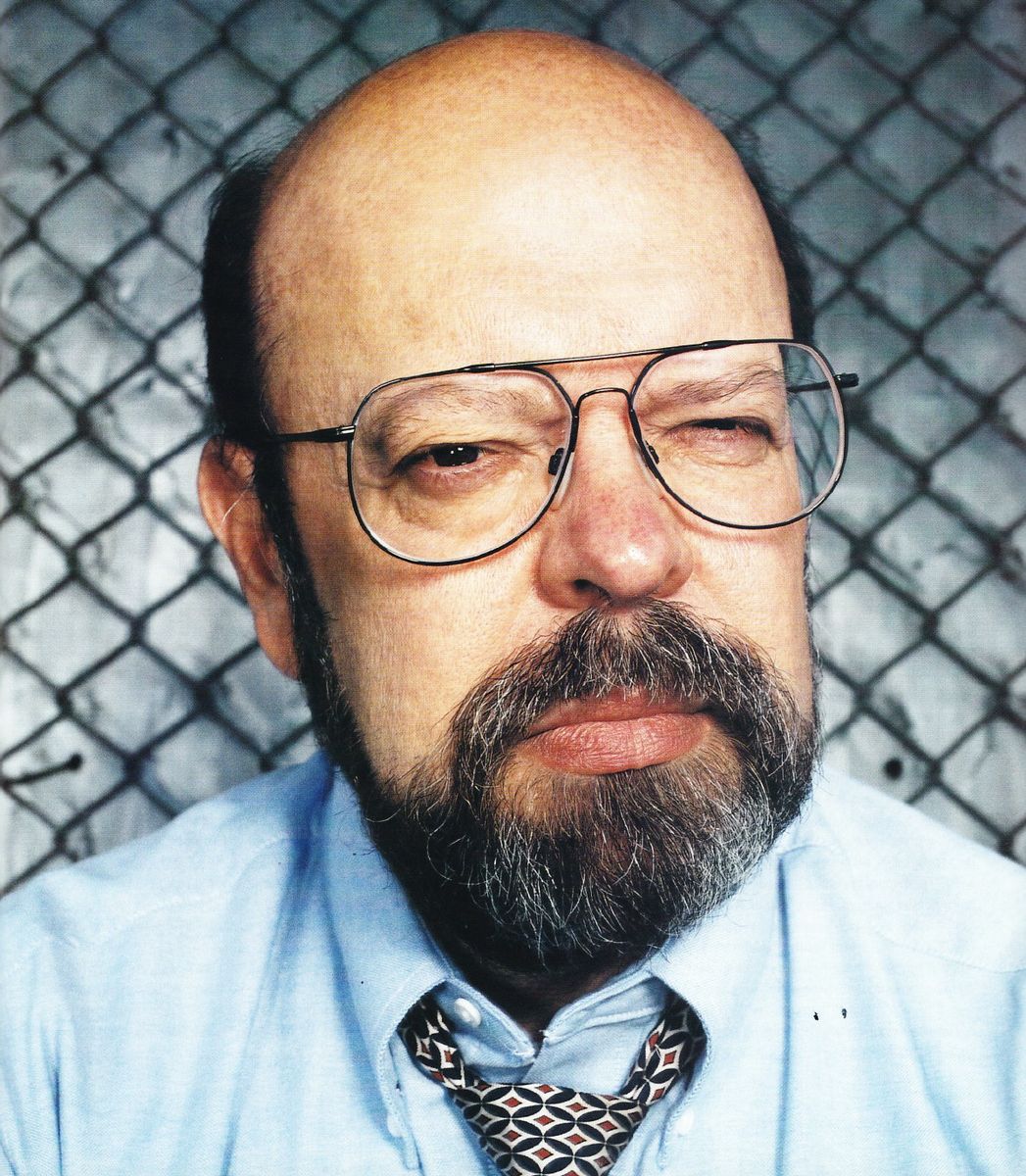
Gary Blasi ponders the question: What is the worst thing you found? It’s a hard one to answer for the UCLA law school professor. There were so many terrible conditions he and his students uncovered on their foray into the Golden State’s public schools: the Santa Rosa school that was so cold in winter, children had to wear mittens to take notes; ninth graders at a Los Angeles school who had no textbooks; the huge numbers of uncredentialed teachers throughout the state; rats scurrying across classroom floors in some schools.
Sitting in the quiet living room of his rustic home in Los Feliz, Blasi finally answers. “There is a regulation that says schools have to have adequate heat and air conditioning, but if you look through all of California law, it only applies to traffic schools. If a kid is in a classroom that’s 104 degrees, there is no regulation on the books that says that’s wrong.”
He shakes his head in disgust. Blasi teaches Law 406, Public Policy Advocacy, a clinical seminar in which second- and third-year students, together with public-interest law firms, tackle real cases. The idea is to train students in the dogged legwork of lawyering, but also to engage their sense of justice and to drive public policy. This year’s project — Blasi and 12 students spent five months documenting conditions in California public schools — has done just that. The result of their remarkable effort — a report published in May titled “Who Is Accountable to Our Schoolchildren?” — is a stinging indictment of the squalor and bureaucratic indifference they found. Bolstered by more than 100 interviews with parents, students and teachers, the groundbreaking study unmasks a pattern of neglect and decline primarily in poor and minority schools. And yet, by no means is the problem confined there.
As Blasi writes in the report, “We did not expect to find appalling conditions in schools across the state, in small towns and rural areas as well as in big, urban areas. We did not expect to find students across the state trying to learn in what can only be described as slum conditions.” But that precisely is what they did find.
Perhaps even more disturbing is this: While children are being pressured to meet rigorous academic standards or risk failure, the schools they attend often meet only the barest of standards themselves. There is no regulation, for example, that every child must have a textbook for his or her own use. Yet there is such a provision for barbers and cosmetologists during their training.
Even when there are standards, there is no system to enforce them. All that exists, Blasi asserts, is a sprawling, unresponsive bureaucracy. “What we found was a patchwork of rules and regulations, a patchwork comprised almost entirely of holes,” the report says. “As a matter of California Constitutional law, it is clear that it is state officials who are ultimately accountable for public education. But in the daily life of our schools, there is another answer to the question of who is ultimately accountable: no one.”
The study has had stunning reverberations, drawing national media attention. The unprecedented investigation has also been fodder for a class-action lawsuit, Williams v. State of California, believed to be the most sweeping of its kind. Brought on behalf of 23,000 parents and students, the landmark suit charges that California is violating its constitutional guarantee of an equal public education and demands that the state provide students with the basic necessities of an education. It also demands that a real system of enforcement be put in place.
“Their report is really the most comprehensive examination of the failure of the State of California to be accountable for the abysmal state of public schools,” says Mark Rosenbaum, legal director of the American Civil Liberties Union of Southern California, which, along with other civil rights groups, filed the suit. “I can’t imagine a judge reading that report and not concluding that something ought to be done immediately.”
Blasi is amazed at the response the study has triggered, the tapping of some raw public nerve. “In fact,” he says, “I wondered whether it would get any attention at all.”
“Some of my teachers do not even try to teach. We frequently are shown Hollywood movies during our regular class. I have seen A Nightmare on Elm Street, Scream and lots of other movies.” — Jesse, 8th grader, Los Angeles
At first glance, Gary Blasi doesn’t seem like a firebrand. With his Zen-like manner and casual shirt and sandals, the bearded professor looks more like a humanities scholar than a law school type. But a quick run through his background reveals a life of service to the disenfranchised.
Start with graduate school: Blasi dropped out of Harvard because he didn’t want to be an academic. After moving to L.A., he hooked up with six others who decided to earn their law degrees the “old-fashioned, Abe Lincoln way,” apprenticing themselves to attorneys. Blasi landed in a community-law office in Echo Park, rising from paralegal to partner, representing mainly low-income tenants.
In 1978, he took a job with the Legal Aid Foundation of Los Angeles because, as he says, “they would pay me to do what I really loved doing, which was using the law to help poor folks improve their circumstances.” At Legal Aid, Blasi created an eviction-defense center and a housing-law unit and litigated the first tort cases against slumlords. But with the deepening recession in the 1980s, his focus soon turned to the plight of the homeless.
A skilled organizer, Blasi helped to forge a coalition of six public-interest law firms, including the ACLU, that became known as The Homeless Litigation Team. One of the team’s major victories was a multimillion-dollar class-action suit to reform the welfare system and to remove obstacles that impeded the homeless from receiving help. At the same time, Blasi was becoming politically active as president of the New York–based National Coalition for the Homeless. When Whoopi Goldberg, Billy Crystal and Robin Williams launched the homeless charity Comic Relief, Blasi served as a founding board member.
After settling the lawsuit, he felt it was time to move on, to gain perspective and see where else he might be needed. In 1991, the veteran litigator arrived at UCLA.
“He’s a terrific human being as well as a teacher,” says Syd Whalley M.N. ’80, a self-described politically active nurse who worked on the school report. “He treats students as equals. He looks at complex social problems and doesn’t claim to have answers. It’s a different kind of lawyering than other traditional law classes.”
Adds law student Vanessa Alvarado: “He’s really dedicated to us. He gives us a lot of direction, but he also gives us a lot of wisdom. He’s so knowledgeable because he’s had so much experience.”
Blasi latched on to the school-conditions project after an ACLU attorney called him about some clients whose kids attended a Northern California school without heat. Did Blasi know anything about heat regulations governing schools? Blasi didn’t but immediately was intrigued by the idea. “I’ve never worked in public education, but because of the topic and the quality of the people working on it, I thought this would be a good project for my class.”
One of Blasi’s sayings — he has several he regularly imparts in class — is “Ninety percent of good public policy is getting the facts.” Another is “Someone needs to take the role of chief worrier in a case.” With those in mind, Blasi’s students went to work. Breaking into teams, they scoured public documents and pored over state regulations. They dissected the state’s Health and Safety Code. They learned how to file Freedom of Information Act requests. They searched the California Constitution for language on education to determine the state’s role and they read every newspaper article on the problem they could find. Along the way, they raised questions: Who inspects schools to be sure they have working plumbing? How often are they inspected? Who is responsible for seeing that schools have air conditioning and heat? What are the regulations on providing kids with textbooks?
The hardest part was finding people within the schools willing to talk. “Advocacy is about stories,” says Blasi. “It’s not about statistics. So the students interviewed a lot of junior high school and high school students, and developed the narratives that are a large part of the case.”
Whalley unearthed a gold mine of information through the California School Nurse Organization, a group known for its social activism. During their February convention in L.A., the president announced the UCLA project while Whalley and other students put fliers on the nurses’ chairs. That effort produced more than 100 responses. “They were very happy to talk to us because I think they felt frustrated,” says Whalley. “They could not get things done.”
Working inside the school health system gave the nurses a unique perspective and air of authority. They identified significant problems: decrepit old portables with mold and mildew that provoked asthma attacks; newer bungalows built with toxic materials that gave teachers and students frequent headaches or respiratory problems; children who refused to use the bathrooms because they were so filthy and had to wait until they got home.
Before enrolling in law school, Vanessa Alvarado taught kindergarten in a poor minority school in East Palo Alto. She knew the landscape and, as a bilingual Latina and a member of Blasi’s research team, was able to gain the trust of some Latina mothers whose children attended a slum-like San Pedro middle school. “It struck a chord for me that, in spite of the fact they did not have the documents to be in this country, they would take the risk to make their presence known because they knew what was best for their children,” she says. “They came to this country so their children would have a better education.”
When Gary Blasi thinks about the work he and his students did, he remembers the day in May when the ACLU held a press conference to announce the Williams lawsuit. Blasi, who has attended many press conferences, had never seen so many cameras. That morning, nearly 20 children, ranging from 11 to 17, spoke. “These kids went up one by one and talked about what obstacles they confronted in trying to get an education and how it wasn’t fair,” he says.
“It’s really the stories of these kids that will move public policy. That’s what I like about the case — it really adopts a kid’s-eye view of the world.” Thus far, the response from education officials to the report has been mute. Unless a settlement is reached, it is likely the case will drag on for years, as have similar education suits in other states.
No matter. Gary Blasi is proud of the report.
“I am proud of the hearts and minds of our students and the quality of their work,” he says. “I feel gratitude for having a job that allows me to do such work with such people. I am outraged at the possibilities we are denying to so many thousands of kids.
“And,” he concludes, “I have hope that these problems can be turned around with the concerted efforts of all kinds of people of good will.”