Steve Mamber pulls over a chair and fires up a laptop computer in the abandoned editing space in Melnitz Hall that passes for his Center for Hidden Camera Research. A few moments later, visions from unseen electronic eyes flicker in grainy images across the screen. Three women, gaily oblivious to the fact they are being surreptitiously taped by their employer, puff away in the ladies’ room in obvious violation of the company’s strict smoking ban. At an apartment within earshot of LAX, a nanny cheerfully goes about her daily routine of caring for a young child while a camera concealed somewhere in the living room records her uneventful movements along with the nonstop rumbles from the nearby airport. Cameras mounted in trees and on light poles intended to deter drug dealing in a Beverly Hills park capture footage of a businessman handing an envelope filled with cash to a hit man he has contracted to kill his wife.
Mamber’s interest in surveillance imagery is purely cinematic. He views what he calls “hidden camera” as a democratized form of cinema vérité that captures slices of life as it unfolds in real time. In other areas of inquiry, some ethicists, sociologists and other examiners of the life populi are wary of the potential for misuse of hidden cameras, by anybody.
“We are slowly, step by step, in an incremental and decentralized way, nudging ourselves into a place where everything we do will be recorded and known. If we are like birds being stared at by birdwatchers, then we change our behavior accordingly,” predicts Jerry Kang, UCLA professor of law. “So the possibility for personal experimentation, for creativity, for dissent politics — all of those things, I think, are threatened as we move step by step into essentially a nonstop surveillance state.”
One of the reasons there isn’t more of an outcry about government watching may be that we all love to watch. According to a study by the Pew Internet & American Life Project, 1 out of 6 American adult Internet users have gone online to view another person or a place via a Webcam. On any given day, about 2 million Internet users are checking out remote places or people by using Webcams.
Moreover, we all have the technology to watch. Tiny, concealable cameras — the kind you can hide inside that Winnie-the-Pooh toy, or in a clock or a smoke detector — are easy to find (Google “hidden camera” and you’ll be presented with thousands of online retail outlets) and cheap to buy, some starting at $35 or $40. Mamber reports getting a “surprising” amount of e-mail from people looking for consumer help on buying equipment and people who think they’ve been victimized by hidden cameras.
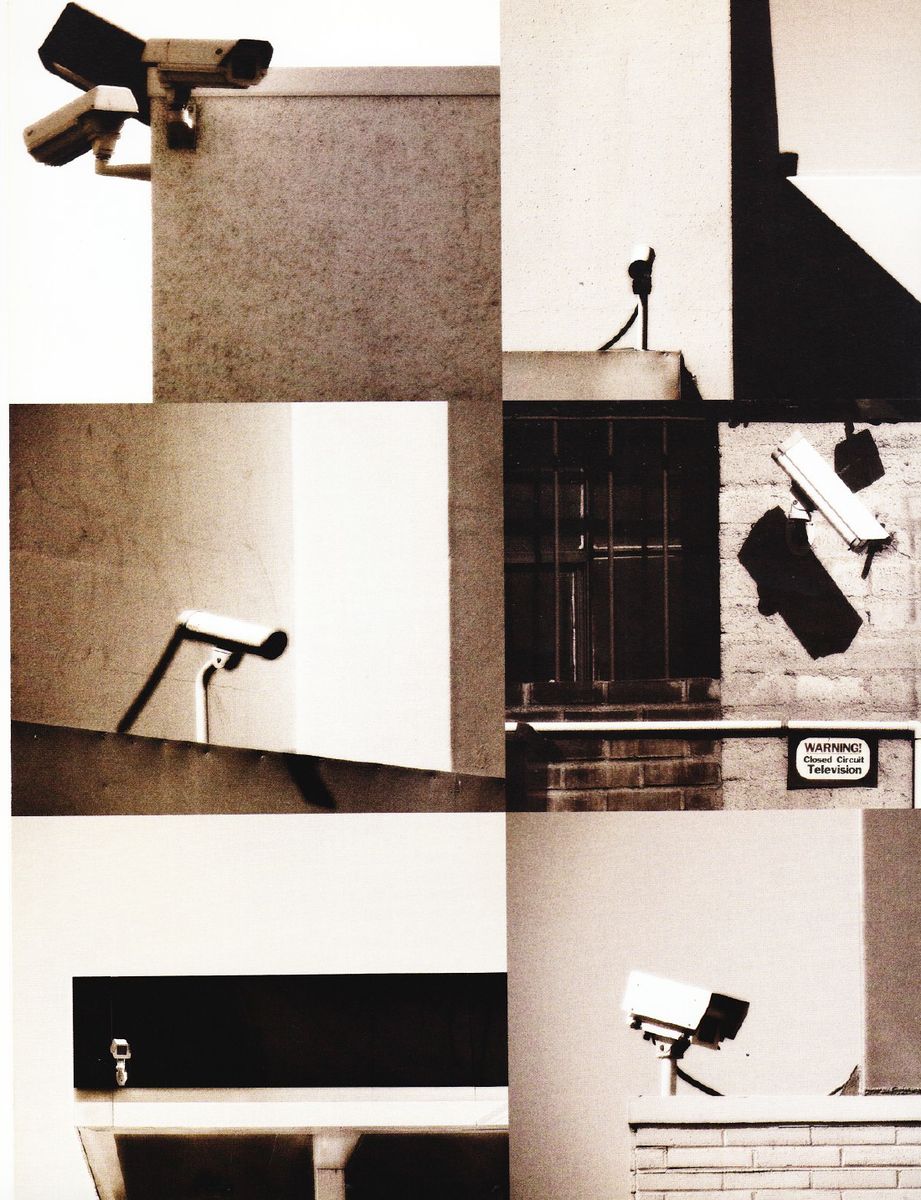
Not surprisingly, law enforcement rigorously defends hidden cameras, albeit with the expected caveats about not going too far. (Many police departments post signs in areas where cameras are located to notify people that they could be monitored, and businesses, likewise, often post notices that their premises are under camera surveillance.)
“The fewer cops we have, the smarter we have to be about how we monitor crime and maintain security,” says Los Angeles Police Department Captain Jodi Wakefield ’93. “The technology helps us with the lack of resources we have. With the cameras we can monitor perhaps 40 intersections at a time, with two officers in the control room. That enables patrol officers on the street to concentrate on other areas.”
UCLA Law Professor Eugene Volokh ’83, J.D. ’92 says that cameras on a public street are nothing more than extensions of the eyes of the police. “If police want to plant a hidden camera in your home, that’s a search, and it requires a warrant. On the other hand, if they want to put a camera on a lamppost, they are entitled to do that, just as they are entitled to put an officer — including a plainclothes officer — on a street corner [and] it’s a lot cheaper to put up lots of cameras than it is to hire lots of police officers.”
This is not a trend that warms the hearts of civil libertarians. The use of hidden cameras, asserts Nicole Ozer, policy director of technology and civil liberties for the ACLU of Northern California, “undermines civil liberties. The cameras are multiplying, and there are no enforceable guidelines for how they are to be used and to prevent rampant abuse, and there is no end in sight for how many cameras ultimately will be put up.”
There is nothing legally wrong with taking pictures of someone in a public space. The U.S. Supreme Court ruled nearly 40 years ago in Katz v. United States, and reaffirmed in many subsequent cases, that individuals have no reasonable expectation of privacy when they are in public, thus taking pictures of someone walking on the street or necking in a park — or selling crack cocaine, or striking a child — does not violate any constitutional protections. Nor is privacy violated if you are seen cavorting within the confines of your own backyard from, say, the window of an adjacent high-rise or by a police helicopter or even a passing satellite with a high-resolution surveillance camera that can read the serial number on a dollar bill.
There are some laws on the books that govern the use of hidden cameras. Thirteen states (California among them) expressly prohibit the installation or use of hidden cameras in private places without the permission of the people being photographed or observed. Several other states have laws that prohibit the use of hidden cameras in only certain circumstances, such as in locker rooms or restrooms, or for the purpose of viewing a person in a state of partial or full undress. At the federal level, the Video Voyeurism Prevention Act of 2004 makes it a federal offense to knowingly photograph a naked or partially clad person on federal property with a camera phone or other hidden recording device.
But we’re OK with it, remember? So there is no urgency, let alone public outcry, to rework existing laws or write new ones. At a bare minimum, suggests Sen. Bowen, “lawmakers have a responsibility to debate government surveillance issues publicly, ask questions, and look at how surveillance affects people’s civil liberties and personal privacy. If we don’t talk about it publicly and start asking questions, we’ll never get to the answers.”