The man known on the street as Fats sits splay-legged on a metal folding chair set up in the middle of a bleak sidewalk a block off Santa Monica Boulevard in Hollywood. Two buttons of his short-sleeve shirt have popped open across his ample belly, which spills over the rim of his dingy pants.
He is 43 but looks older, with close-cropped black hair, enormous arms and a broad, gregarious face. Crouching in front of him on the hard concrete, a young woman, clean and fresh and neatly dressed in shirt and slacks, is tenderly washing and massaging his huge feet as they soak in a dishpan filled with water.
As she bathes the hardened skin of Fats’ feet and legs, clipping his toenails and gently working the grime out of his puffy flesh, Ele Lozares ’03 asks him how he is doing, what is happening in his life, if there are any problems he wants to talk about. Her voice is soft and generous and invites his trust. Fats tells her he’s feeling OK, but his feet, which are cracked and swollen, hurt. He tells her what he is doing to try to manage his health, where he’s been sleeping and eating. They joke a little and laugh and fondly tease each other back and forth. There is mutual respect and genuine caring in their exchange.
Nearby on this warm August evening a small cluster of bare-chested men and women in sleeveless blouses dance in place next to a rattletrap vehicle that is blaring funk through its open doors, and a little farther down the sidewalk a woman in a tattered dress sits on the curb vigorously scrubbing her teeth with a new toothbrush. A rangy young man steps onto a scale, looks down at the number and shakes his head. “I’ve lost 15 pounds,” he says woefully, admitting a few moments later that he’s been binging — “tweaking” — on speed for the past month.
On a table outside the open rear doors of a white and blue van is a small rack of brochures about HIV, hepatitis, herpes and breast self-examination. Next to the literature is a clear plastic container filled with condoms. An assortment of clothing is stacked on another table, along with paper cups and a gallon container of juice. Scattered up and down the sidewalk are a dozen or more men and women — a mix of young and old, black, white and Latino, some in wheelchairs, some on crutches, all homeless denizens of the streets of Hollywood and the surrounding area — socializing or having their own intimate conversations with Bruin students like Lozares who volunteer every Wednesday night with the UCLA Mobile Clinic Project.
“This ain’t an act,” says Fats of the student volunteers, looking up and down the sidewalk at the activity going on around him. “I don’t think they have a school that can teach this sort of thing. Being out here with us, it’s just something these young people have in their hearts.”
The student-organized and student-run UCLA Mobile Clinic Project took root at Sycamore Avenue and Romaine Street — a semi-industrial block 7 miles east of Westwood and about a mile and a half southwest of the legendary Hollywood Walk of Fame — three years ago this October. Established by a small group of medical and public-health students working in collaboration with the Greater West Hollywood Food Coalition, which has been serving free meals to the homeless at this corner nightly for more than 12 years, it has evolved to include a large component of undergraduates from the UCLA College. The undergrads — some of them premed students, some interested in social-service careers and others simply wanting to help — are critical not just to the clinic’s day-to-day operation, but also to its long-term sustainability, organizers say.
“It has been this wonderful linear development and has gotten to a point that none of us could have envisioned at the beginning,” says Ted Landreth, a former CBS News executive-turned-documentary filmmaker and a founder of the food coalition.
“It is such an inspiring, such a wonderfully reinforcing thing to have them working shoulder-to-shoulder with us on this lonely street corner every week, these bright, young, absolutely dedicated, serious and effective students doing the people’s business better than any public-health facility anywhere for miles around. They turn nobody away, they are welcoming, they are humane. The horror of so much public medicine is that it is none of those things.”
Its mission, as stated on the clinic’s Web site, is straightforward: “To improve the health outcomes and quality of life for homeless and low-income individuals in the Hollywood and West Hollywood areas through direct medical and health-care services; health-promotion and disease-prevention activities; social support and case-management services; and referral to medical and social resources in the community.” A current goal is to expand aid to include more frequent dental and legal services.
The clinic receives logistical support from the university and has faculty advisers — Michael Prelip M.P.H. ’85, a professor of community health in the School of Public Health, and Denise Garvey M.D. ’94, a physician at the UCLA Brentwood Medical Group. With an operating budget of about $10,000, mostly from grants and some student fund-raising, it is a lean operation. Undergraduates who volunteer for the clinic take a four-unit service-learning course — one that combines academic content with active participation in an organized service that meets community needs. The class, “Introductions to Interventions for At-Risk Populations,” teaches them about issues of homelessness, about drug and alcohol dependency, mental illness and despair, and the skills they’ll have to have on the street to help address the needs of this neglected population.
As an element of service learning, the clinic amply demonstrates UCLA’s commitment to provide students with these kinds of real-world experiences. Each year between 1,500 and 2,000 undergraduates participate in similar programs through 15 to 20 different academic departments at UCLA, says Kathy O’Byrne, executive director of the Center for Experiential Education and Service Learning, which is part of Honors and Undergraduate Programs in the College.
Among all those programs, the clinic is somewhat unique because it draws together three distinct campus cultures — undergraduates, medical students and graduate students in public health — and puts them in an environment in which they must work in concert with each other.
“What goes on in these classes involves students in entirely new ways. They are no longer passive recipients of information,” O’Byrne says. “They are engaged and involved in their own learning in a way that just reading a book or writing a paper doesn’t.”
Students participating with the clinic readily concur with O’Byrne’s assessment of the merits of such programs.
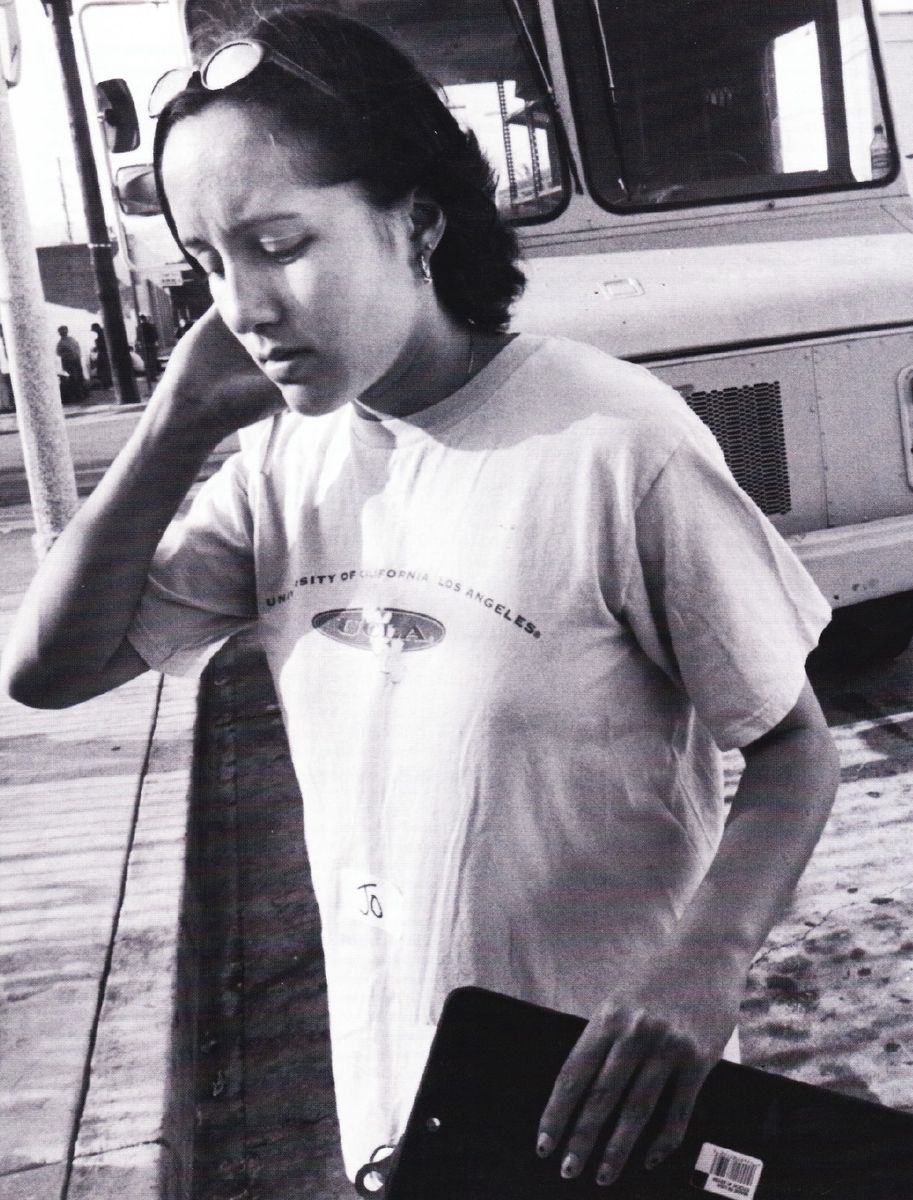
“I love having scholarly discussions about literature and neuroscience, and it’s great to learn about topics like mental illness and things like that, but you can’t fully understand it unless you see it in real life,” says Jo Marie Tran Janco, a senior neuroscience and English major who has been volunteering with the clinic since January 2001 and is now one of the coordinators. “You just don’t have a full understanding of how complex these issues are and how difficult it is to enter into someone else’s alternate reality unless you have actually talked to someone who is mentally ill.
“It is the same with homelessness,” she continues. “There’s a big difference between learning about homelessness in a classroom and seeing it and interacting with it. What we are doing with the clinic is not only directly helping the people we come in contact with, it is practical for those of us who want to go into medicine or public health or social service.”
Every Wednesday evening throughout the year about 16 students and a supervising physician arrive at the corner, unloading tables, chairs, cots, plastic boxes of client records, medical supplies and metal poles and tarps for makeshift examining rooms from the back of a van that they lease from UCLA Transportation Services. The location may be far from the glamour center of Hollywood both in place and spirit, but it is Hollywood nonetheless; the clinic sets up outside a business that manufactures film lights and across the street from an Art Deco fortress built in the ’20s by Howard Hughes as a film lab (the precursor to Technicolor was developed there) and now is a climate-controlled warehouse for storage of movie, television, video and audio stock.
For the next four hours, the students will care for 20 or more homeless clients, men and women — and sometimes adolescents and children — who are shunned daily by most everyone else who passes them on the street. But there is no rejection here. Instead, there is nonjudgmental acceptance. Rather than being repelled as so many people are by their dirty skin, shabby clothes and sometimes foul smell, students like Lozares — who was homeless herself for many years, shooting speed and living on the streets of San Francisco before cleaning up and returning to school to earn, at the age of 33, a B.S. degree from UCLA and a chance to go on to med school — treat their clients with dignity and respect. They press whisper-close to talk, putting their hands on an arm, a leg, a shoulder, speaking comforting words, asking questions about their health, their lives, their friends, their families whom they may not have seen in many years — going so far, in some instances, to help them reunite with faraway loved ones.
The fact that the clinic is always here, at the same spot every Wednesday evening — “If we ask them to show up, we better be damn sure we are here for them,” one student says — has earned it the rare trust of the street population and is essential to its success, and a large number of the same faces return week after week. It is evident that for many, the few hours they spend with these young students is as much about being acknowledged and offered a compassionate, attentive ear and kind words as it is about having their physical health needs met.
“I think the most therapeutic thing for our clients is that they have the chance to build relationships with people,” says Tran Janco, who this past May received UCLA’s Charles E. Young Humanitarian Award — the highest honor given to students by the university for community service — for organizing a drive to put together and distribute winter-survival kits for the homeless, each consisting of a blanket, poncho, hat, gloves and two pairs of socks. “We are out here every week, and though a few hours a week is not very much, we try to provide a safe place where they can come to obtain help, get treatment and have someone willing to talk with them about whatever is going on in their lives and about their aspirations and their frustrations.
“It’s not so much about our being able to really empathize with their experience, because most of us can’t; we haven’t gone through anything like what they are dealing with,” Tran Janco says. It indeed is a world away from her own experience growing up and attending private schools in an affluent Orange County, Calif., community.
“When you grow up with privilege, there is a moral responsibility to give something back, to try to help other people who are less fortunate,” Tran Janco says. “What is happening here is about a level of caring, about the willingness to listen and to accept them and to say, ‘Maybe I can’t understand fully what you are going through, but why don’t you tell me about it? Why don’t you let me know? Help me to understand a little bit better.’ So many people living on the street just really want that opportunity to have someone listen to them and to care about what they say.”
Paul, dressed in red swim trunks and a blue T-shirt, his white sneakers carefully set next to his chair, is quick to agree. “Their positive energy feels really good, and they really care about the people down here. Their being here, it helps a lot. Where else are you going to go to get this kind of help? Nowhere.”
He has been coming to the clinic for about two years and regularly receives hygiene kits with vitamins, toothpaste, shampoo, soap and other personal-care supplies. (The clinic distributes about 50 kits each week.) This evening, Tran Janco is tending to his injured right foot. “You’re going to have to try to stop running into walls and letting large women step on your toes,” she teases him. Then she asks, “Are you going to your meetings? No more falling off the wagon?” No, Paul says, smiling, no more falling off the wagon. “Now I’ve got everything going in my life the way I want it to be. I want to have a girlfriend, just a nice, decent girl — that’s not asking too much — and to be able to give her nice things.” That’s good, Tran Janco responds. “Like we’ve talked about before, keep working on getting yourself together.”
The medical care the students dispense is basic. There’s only so much that can be done working with limited supplies and waning light on a desolate city street corner. After clients talk to an undergraduate caseworker like Tran Janco or Lozares, they are seen by a medical student to further discuss any health problems they are having. (The attending physician on site supervises the work of the medical students, as well as examines clients.) The ailments they most often confront are colds and the flu, muscle pain, sores, cuts and bruises, respiratory ills, foot fungus, high blood pressure and diabetes.
The doctors-in-training listen attentively to each person’s complaint, ask probing questions, take careful notes in the record charts kept on each registered client. They lance fingers to check blood-sugar levels. They dispense what medications they can — Tylenol for aches and pains, Sudafed or Nyquil for a cold, beta blockers for hypertension, antibiotics or skin creams for infections, inhalers for asthma. When a concern is too serious to handle on the street, the students refer clients to hospitals or more comprehensive health-care clinics, sometimes giving them bus tokens to get there, and then hope that they’ll actually go. (Often, they don’t.) Continuity of care is important, even here, and if the client is back in the next week or so, the students will be certain to ask whether he or she followed through to seek help. On occasion, if someone is seriously ill, the students will call a taxi and have him taken directly to an emergency room for immediate treatment.
It is too much to suggest that the efforts of these UCLA students can make everything better for the residents of Hollywood’s streets, and at times the sadness they witness is overwhelming.
“Sometimes you feel very helpless,” Lozares says. “There are people who need so much, and they want for us to be able to treat them right then and there to make things better, and there’s nothing we are able to do.”
Then there are the successes, proof that sometimes a simple act of caring is enough to help people up, even to save their life.
Tiny believes that caring saved his.
“I know for sure if it hadn’t been for Walt I’d be dead right now,” he says. “By almighty God, I firmly believe that. Walt stood by me the whole time.”
Walt is Walter Coppenrath III, a fourth-year UCLA medical student who has been involved with the clinic since the beginning. He first met Tiny one night when the homeless man came to the corner to get a meal from the food coalition van and stopped by the clinic.
Tiny — the name is a misnomer; at an inch over 7 feet tall and weighing 480 pounds, Tiny is as close to a giant as anyone is ever likely to see — had been using speed for about 25 years and was having serious medical problems. A diabetic, his left leg had ghastly ulcerating sores that wouldn’t heal. “It was stinking, and I asked them if they had any gauze so I could wrap it up. Well, Walter looked at me and he says, ‘If I got you in a hospital, would you go?’”
Tiny had been in and out of hospitals numerous times, but he agreed to go, and Coppenrath took him, sitting with him in the emergency room for hours until he was seen and admitted. After several days, Tiny was sent to a convalescent hospital, but he got into a row with one of the nurses and took off — “I’m big and bullheaded, and I got pissed off and cussed her out,” he says — returning to the streets and shooting drugs. Coppenrath found him a couple of weeks later sprawled in a park, unable to get up on his own. The wound on his leg, fully a foot and a half long, was horrible, and the smell, Coppenrath recalls, “was beyond decay. It was death.” Again, the young man helped to get Tiny admitted to a hospital, but again Tiny split.
Once more, Coppenrath went looking for him, finding him broken down on a bus bench near Hollywood and Vine. “Walt,” Tiny said to him, “I’m an old fool. I’m too damn sick to be out here on the street. I don’t want this anymore. Can you help me?”
Today, two and a half years later, Tiny is 54 and proudly clean, living in a skilled-nursing board-and-care facility near downtown Los Angeles, and he regularly is invited to speak about his life on the streets to students who are preparing for their volunteer work with the clinic.
Why, Coppenrath is asked, was a young medical student with a harried schedule and lots more going on in his life, determined to offer so much of himself to someone as stubbornly self-destructive as Tiny?
“I realized that sometimes clinical doesn’t always mean putting someone in a hospital,” Coppenrath says. “Sometimes it means just sitting on a bus bench listening and waiting for the moment when someone is ready for change.”



