Editor’s note: This is an article from the Summer 1999 issue of UCLA Magazine.
In a gray cement room that resembles a large prison cell, the artifacts of a family’s life sit in plain view on a windowsill. There, laid out on a clean cloth, are a baby bottle, rubber nipples, a pair of nail scissors, cups, forks, baby shampoo, toothpaste, a bottle of Oil of Olay. That, a few clothes and a color photograph of a handsome couple in their 20s are all that’s left.
There is no sink here. No toilet. The windows have bars, the flooring is cardboard. Ten people live in this airless, high-ceilinged cell, sleeping on metal cots jammed edge to edge. They may move to another location tomorrow. Or they may not. But for now, and in the foreseeable future, they are not going home. For these refugees driven from their homeland — Kosovo — across the rugged charcoal mountains to the north, existence has become a day-to-day affair. They have been forced to settle here with the few meager belongings they could save, in a grim, two-story former veterinary clinic in the Albanian city of Shkoder, near the border with Montenegro. In a few days or weeks, perhaps they will move on, maybe to a tent on the outskirts of the capital, Tirana. Or maybe not.
To this dreary place on a bright May morning have come Belinda Chan, a petite 31-year-old physician with a kind smile, and Susan Mortensen M.N. ’87, an outgoing 47-year-old nurse practitioner and clinical director of nursing, both from UCLA Medical Center. They are members of a UCLA medical team that has joined with International Medical Corps (IMC) — a worldwide medical relief organization — to help provide medical care to the 700,000 Kosovar refugees in Albania. For a month now, IMC has been sending teams twice a week to Shkoder and 30 other destinations throughout this desperately poor land. Chan and Mortensen, along with a dozen colleagues, are among the first Westwood contingent to arrive. Another group will follow the next week.
This humanitarian effort was initiated by David Langness, UCLA’s director of health sciences communications, shortly after NATO’s air war against Yugoslavia began on March 24 and the horrifying tales of ethnic cleansing by Serbian military in Kosovo began trickling in. “I think, for me, the greatest sin is neutrality in the face of a moral crisis, and this is a moral crisis here,” says Langness.
More than 90 doctors and nurses responded when Langness sent an e-mail proposing a relief mission to Albania. After receiving a list from the U.N. High Commissioner of Refugees of the needs of the refugees, 26 medical professionals were selected and organized into two teams of 13. Three days before the first group — Team A — departs on May 20, everyone meets in a Center for the Health Sciences lecture hall to introduce themselves and talk about why they want to go “see the world as a little cell,” says Sheryl Ross, a home-health nurse. “I don’t see it with political borders. We only become the person we’re meant to be when we step outside our own needs. By us going, the rest of the world will know that a small effort makes a difference.”
“This is something I have wanted to do for a long time,” says Mortensen. “I knew instantly that I wanted to go. I’ve been in Rwanda and Zaire as a traveler, but I always tried to go to all the clinics and hospitals I could. I kept wanting to help. It was like a miracle that this opportunity occurred. I want to work very hard to make a difference.” Says Ashley Christiani, a resident in family practice at Santa Monica/UCLA Hospital, “I want to be there as a human and show other humans that no one should be allowed to suffer on their own.” Her voice choking with emotion, she continues: “It’s nice that countries all over the world are helping in the effort, that love is pouring into that country. At the same time there is such an evil force. I do feel like an emissary for my family, my friends and my colleagues. Emissaries. And witnesses.”
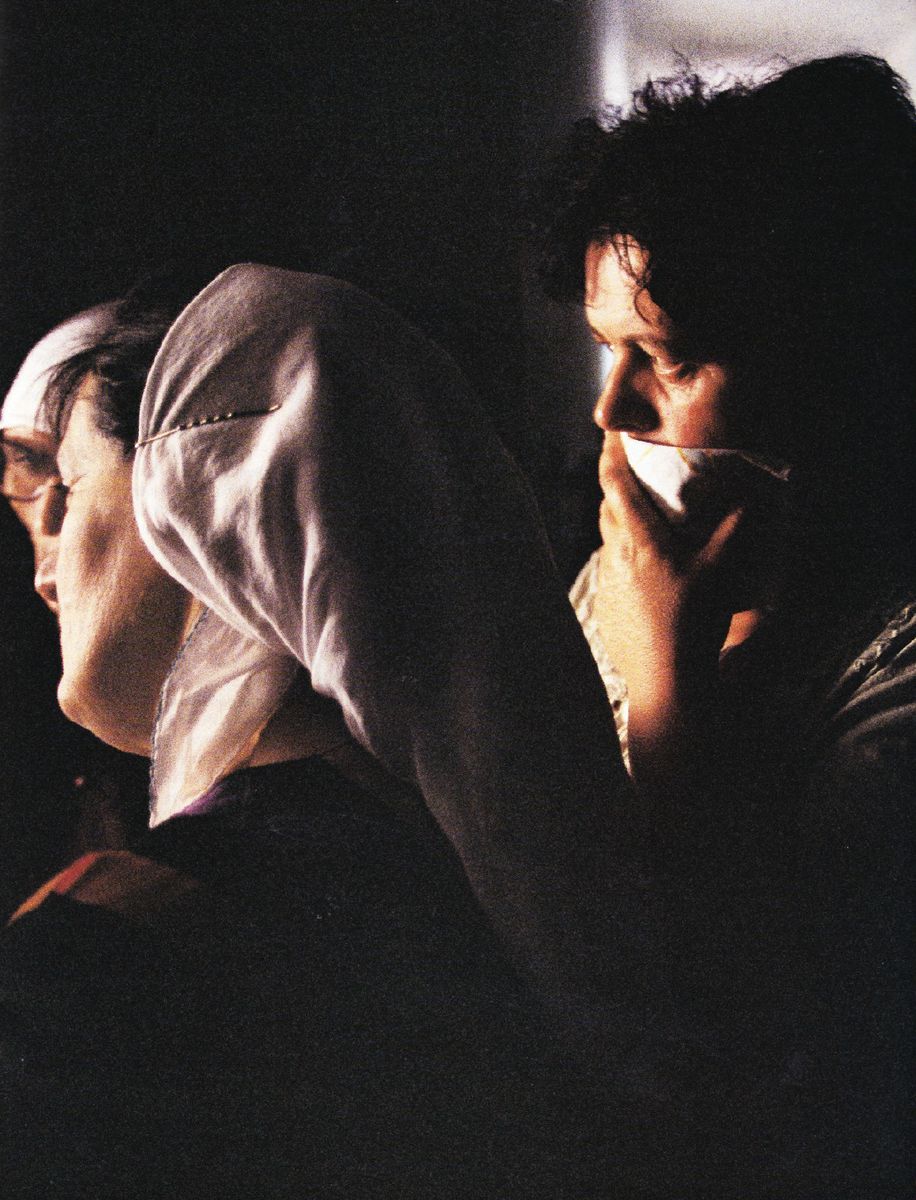
In the dank, former veterinary hospital at Shkoder, patients crowd into the narrow entrance to the “clinic,” waiting to be seen by the medical team. They are suffering from myriad illnesses. The adults have dry, persistent coughs; the old country men and women have high blood pressure aggravated by the enormity of what they’ve endured. There are mothers with urinary tract infections and complaints of odd pains. The children have sore throats, diarrhea, nightmares. The babies have fevers and blistering skin rashes. There are injuries from guns and grenades. And those who have no obvious symptoms or injuries are sick with grief, worry and fear. Within minutes, the line spills into the damp, dimly lit hallway. “It amazes me the way they just line up at the door,” says Mortensen, as she unpacks boxes of medical supplies and a bag of balloons, bubbles, candy and toys that she has brought for the children. A round, old woman in a white kerchief and billowy trousers known as Shallvare shuffles into the room. Tears streak her leathery face. She sinks down in the cot next to Chan. Dressed in green scrubs and a white IMC T-shirt, with a fanny pack around her waist that says UCLA Healthcare, Chan has a stethoscope slung around her neck and her glasses pushed up on her head. As she listens, Chan’s colleague and partner for the week, a sweet-natured 32-year-old male Kosovar physician named Ekrem, translates. The woman has three sons in the Kosovo Liberation Army, the K.L.A., and she has no idea where they are or whether they are dead or alive. Another son — severely disabled when the bombing started, with a shattered spinal cord — is in Germany. Hers is not an unusual saga; Chan and Mortensen will hear many similar stories. Her face still, Chan pats the old woman’s knee. Ekrem hugs her, and the woman babbles something in Albanian. His mouth widens into a big grin. She says, “I have one son like you, big and strong.”
As the week goes on, the UCLA doctors and nurses notice a striking, and disturbing, phenomenon among the refugees they treat: the absence of men in their 20s and 30s. A woman with missing teeth in a worn sweater sits down next to Ekrem. She is holding a small boy in a blue turtleneck and pants with suspenders. The boy is coughing. Chan listens to the boy’s chest, then Ekrem tries to peer inside the child’s mouth with a light. He clings to his mother, crying. Ekrem laughs, then holds the boy’s face in his hands, kissing him. Chan makes a silly face at the child; then, spotting a pair of surgical gloves, blows one up like a balloon and hands it to him. The boy has diarrhea and has been vomiting, so Ekrem orders something for dehydration. Nearby, Mortensen kneels on the floor by a cot where a pretty blonde girl, about 8, sits. Her hair is neatly brushed and held back with clips. She’s wearing a blue T-shirt with the word “Surf” on it. She’s red, flushed and has a fever of 102. The girl’s aunt, a tall, nicely groomed woman in her 30s with long, curly brown hair, has brought her because the mother has a baby and couldn’t come. After examining the child’s throat, Mortensen and Ekrem conclude she has tonsillitis and prescribe antibiotics and Tylenol — a diagnosis they’ll make several times as the day wears on. As they work, Chan and Mortensen ask their Albanian and Kosovar colleagues questions. Is there enough to eat for the refugees? Do they ever ask patients about birth control? Is there a lot of diabetes in Kosovo? Are the hospitals in Kosovo better than in Albania?
Today, the medical team works six hours straight without a break, seeing 80 people. When patients come in, Ekrem notes their symptoms and jots down their ages, names and villages. All the information is collected and recorded on a sheet at the end of the day. The doctors are at a huge disadvantage because the refugees have no medical records. They have no idea of a patient’s medical history, possible chronic illnesses, allergies to certain drugs or how long they’ve had a certain ailment. Often the doctors and nurses focus solely on the immediate symptoms and give what they can. Medicines are in short supply. Women with depression get Valium, the drug of choice in the camps, as do men with high anxiety. Children get multivitamins and Tylenol. For Chan and Mortensen, it’s one of many frustrations they have to accept working in a vastly different medical culture. “There are so many things we could be missing,” laments Mortensen. “When a child goes to the doctor in the U.S., he gets checked for signs of development. You assess how well he’s eating and growing. None of that is being done here.”
An old man in a conical Muslim cap, heavy trousers, with the thick, gray mustache worn by many ethnic Albanian men sits quietly on a cot, waiting to see the Albanian doctor working with the team, Agron, an easygoing 26-year-old dressed in tight, black jeans and a white T-shirt. Nestled on the elderly man’s lap, in a pair of overalls with hearts and bunnies on them, is a 2-year-old boy. The man is the boy’s grandfather, his only relative in the camp. As they sit, the old man gently strokes the toddler’s head and holds him close. Tears fill the corners of his eyes. The mother is missing, maybe dead — no one seems to know. The father lives in Slovenia. Mortensen, kneeling on the floor, smiles warmly at the grandfather and tells Agron in a kind, loud voice, “You tell him that Grandpa needs to take good care of himself.”
The language barrier is the greatest obstacle for the UCLA teams. In one team, the Albanian physician doesn’t speak any English. Although Ekrem speaks English fairly well, Agron is just learning and much of what he says is confusing or has to be dissected. Complicating matters, the good-natured physician is far less educated and clinically experienced than either Chan or Mortensen. The kindness of the Kosovar refugees is overwhelming. Every day, the UCLA doctors and nurses are swamped with gifts and with symbols of hope. At the veterinary clinic, the well-dressed woman with the long, brown, wavy hair — the aunt of the girl with tonsillitis — suddenly materializes holding a silver serving tray with four pretty demitasse cups with Turkish coffee for the doctors. In an immaculate room where a family of 15 are living, a father insists that Mortensen accept a bouquet of wildflowers arranged in a can on a table. In another room, a 2-week-old baby lies snugly wrapped in a beautiful old cradle. Born on the road to the Albanian border town of Kukes, the tiny girl’s name is Liberty. A Kosovar nurse working with Chan, a 22-year-old named Vjollca, tries to give the UCLA doctor her lipstick, one of the few personal articles she has left. Time and again the UCLA teams are overcome by the grace and dignity of the refugees, even the little ones. When Chan hands a 6-year-old with tonsillitis a piece of wrapped candy, he, in turn, hands it to his younger brother. “It’s so nice,” says Chan. “He just did that automatically.” The boys’ family has been in the Shkoder camp for two months. They fled from their village, Isnig, by tractor when Serbian police gave them 15 minutes to get out and then began burning their homes. One of the four children was injured by a grenade. On the way to the border, their tractor broke down and they had to walk the rest of the way to Kukes in the rain. Their passage to Shkoder was purchased for 300 German deutsche marks.
“They seem like a very strong people,” observes Mortensen. Even the children are resilient. A sweet girl of 13 in an orange sweatshirt who’s been hanging around the tent sits down on the cot next to Ekrem. Her name is Lieta. She has rosy cheeks and her blonde hair is twisted in a ponytail. She is fine, but Lieta’s mother is not. Twenty-seven of her relatives have been killed and there are still two daughters in Kosovo. Their home was burned a year ago by Serbian paramilitary police; after a month in another village, that town was attacked and burned and the woman had to pay 350 deutsche marks to a policeman to spare the life of her youngest son. The family escaped to Kukes by tractor, then walked to Shkoder. Lieta came to the medical tent because she wanted the doctors to see her mother, who has stomach pains and is depressed.
Inside the olive drab army tent, with its bright yellow, Indian bedspread lining, Chan and Mortensen are solemn, quiet. It is now 6 p.m. Sitting on cots, they are exhausted. Mortensen, especially, seems overtaxed. “It just seemed like we were skimming the surface all day,” she says, wiping her wet eyes. Outside, thunderclouds soar over the dark mountains and a rainbow arches across the wide blue sky. “I’m whipped.” As they drive to a small hotel on the outskirts of Shkoder, along the bumpy, dusty, two-lane road, their IMC driver, Zenny, asks Chan how her first day went. “I think it’s very sad talking to them,” she says of the refugees. “A lot of what they’re coming in for is stress. Whether it’s walking all the way here or having somebody die. And we can only do so much. These people don’t have medicines; they’re running out. The care here is very fragmented; there’s nothing central. Everyone’s being treated differently. We saw people being treated for things that maybe they didn’t have.”
“Everyone has a story,” Ekrem tells Mortensen late one afternoon. Ekrem is a refugee, too. He was training to be a gynecologist in Pristina, the capital of Kosovo, when Serbian forces stormed the city in late March. His house was burned, and with it his most prized possession, his medical library. Ekrem now lives with several people in a small, one-bathroom apartment in Tirana. There are several Kosovar doctors and nurses working with IMC who were just weeks away from finishing their medical training when the Serbs accelerated their campaign of ethnic cleansing, forcing them to abandon everything and flee. One Kosovar nurse is extremely bitter and complains openly about her hatred of Tirana, how much prettier and more civilized it was in Kosovo.
Many things are hard for the UCLA doctors and nurses to accept. Medicine in Albania is a grim reflection of the country’s battered economy. There’s no way to do a blood test in the camps. No way to give an X-ray unless the patient is referred to a hospital, which are scarce and already overburdened. A person could have a serious heart condition, as opposed to severe anxiety, and it would be almost impossible to tell. Few of the Albanian or Kosovar physicians wear gloves or don masks. Sanitary conditions in the camps and community centers range from merely tolerable to truly wretched. The situation with drugs is not much better. Medicines go largely unrefrigerated because, for the most part, refrigerators don’t exist. Many of the drugs the Kosovar and Albanian doctors use are no longer utilized in the U.S. Up until a month ago, IMC didn’t even have aspirin.
Conditions in the refugee camps and community centers, on the other hand, are for the most part decent and reflect a semblance of order. Some have schools, mosques and large working kitchens. Many of the smaller refugee settlements are actually located in places that are quite scenic and beautiful — a hotel along the Adriatic coast; an old, rustic-looking school adjacent to a cow pasture. But others are nightmarish: a seven-story, abandoned tobacco factory off a dirt road strewn with trash.
Most of the UCLA teams have good working relationships with their Kosovar and Albanian peers. But their experience also is infected by the region’s intense politics. There is the Kosovar nurse who rages against her plight and openly disdains the dirty, noisy atmosphere of Tirana. Suspicion between Kosovar refugees and their Albanian hosts stretches back hundreds of years. Kosovars have had a higher standard of living and traditionally have been better educated than their Albanian cousins. Now, with NATO continuing to provide money and aid to the Kosovar refugees, resentment is high.
“Some Albanians feel the Kosovars are getting more attention than the Albanians,” says a young Albanian physician named Merita, who works on one of IMC’s mobile medical teams in Tirana. “All of a sudden, these doctors are flying in to take care of them. The Albanian people up there don’t get so much attention. I think they resent the Kosovars.”
Nowhere is this tension more evident than in the untamed border town of Kukes, a beautiful northern village with steep, snowcapped mountains. Kukes is home to 100,000 Kosovar refugees and is the main border crossing into Albania.
One day, Martin Chenevert, a 39-year-old E.R. physician at Santa Monica/UCLA Hospital, hops on a helicopter to fly up to Kukes with an O.R. nurse from San Diego named Karen. Over three days, they will work at three IMC sites serving refugees. While they are there, mayhem reigns. One night a group of Albanian nurses at Kukes Hospital riots when the director of IMC refuses to hand over some recently donated clothes. They steal linens, medical supplies, drugs — virtually everything that isn’t nailed down — while the local police do nothing.
Reports of Albanian men kidnapping young Kosovo women off the streets abound. At the United Arab Emirates refugee camp, there are reports that many of the Kosovar nurses have been raped. The week Chenevert is in Kukes, an Australian doctor working for IMC sets off a firestorm in the highly politicized medical community when he’s quoted on the front page of Stars and Stripes, the U.S. military newspaper, blasting Albanian health-care workers as incompetent and lazy.
During Chenevert’s stay in Kukes, the Serbs also released 300 Kosovar men from prison who had been tortured. “They were starving. They’d driven them to about 10 kilometers from the border, then told them, “You just get out and walk the rest of the way.” They made one guy run through two lines of soldiers, like a gauntlet, and they hit him with their rifles. “It was a constant rush,” says Chenevert, a small man with freckles and a ponytail, of his time in Kukes. “I’ve never experienced anything like this. There’s a feeling with relief work of being right at the center of history. There are the camps, and also all the NGOs [nongovernmental agencies] everywhere. Everywhere you go, there are people from other countries doing the same thing you are. They’re all good people. You feel you’re seeing world events. You see refugees. The more you know them, the more you see them as your peers.”
On the day before Chan and Mortensen fly home to Los Angeles, they visit a castle in the picturesque town of Kruje with Ekrem and Agron. They also treat nearly 100 refugees in a psychiatric hospital, among them a 2-week-old baby, Sheepa, whose mother had just died of a stroke. Then, in a ceremony much like those taking place among the other UCLA teams and their Kosovar and Albanian colleagues, they give Agron and Ekrem gifts. Because Ekrem lost his beloved medical library, they give him a selection of small reference books. They give Vjollja, their sweet-natured Kosovar nurse, all their clothes, tennis shoes, even their makeup, perfumes, creams and scrubs.
On the hot Saturday morning when the teams gather at IMC’s office in Tirana to say their final good-byes, Chan hands Ekrem a box. Inside is her stethoscope and some other valuable medical equipment. He smiles one of his big, warm smiles and glances away. Mortensen struggles not to cry. All around, some 30 people from America, Kosovo and Albania are hugging, laughing, crying. They have not expected to fall in love on this journey, but many of them have. “Today for me was the best part of the whole trip,” says E.R. nurse Kathy O’Kelley, at a farewell dinner in Tirina the night before the team leaves for Los Angeles. O’Kelley and her UCLA teammates Sharon Williams Ignaro M.D. ’96 spent their last day with their Albanian colleagues playing soccer with a group of refugee children, drawing hearts on their hands in lipstick, listening to them recite poetry.
“There are so many emotions, so many things,” says Ignarro, a family-practice resident, at a farewell dinner for the team on Friday night. “We’re going to be talking about this for months,” says O’Kelley. “In regard to the war, I would just tell everyone not to forget about these beautiful people.” Several members of the team vow to come back. “In a heartbeat,” says Mortensen. “There’s just so much to be done. For me, this is fate. This is an answer to my prayer.”