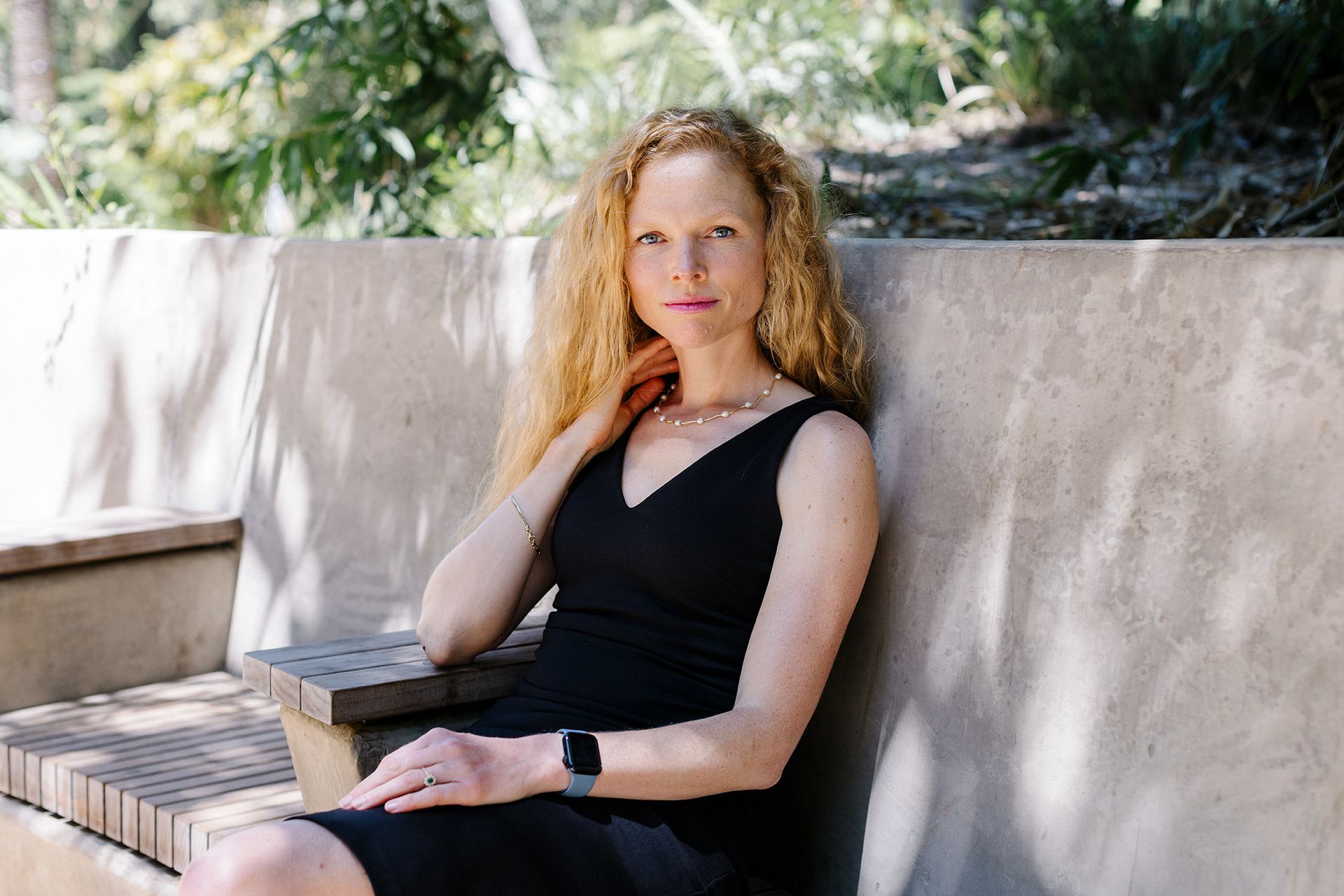
Jana Gallus is not your average economist: She’s devoted her career to studying not money, but the absence of it. She was raised in a small German city near Frankfurt by an insurance salesman father and a schoolteacher mother; to this day, Gallus’ father asks if she gets paid to present her research at places like Stanford University. She answers, comically aghast, “No, it’s even better! They give me their attention.”
That gets straight to the heart of what may motivate employees on a deeper level than, say, a one-time bonus payment, and it’s at the heart of Gallus’ own work. Early in her career, she focused on purely symbolic recognition — that is, exactly the sort of nonmonetary incentives she studies today. An associate professor at the UCLA Anderson School of Management since 2016, the 38-year-old is interested in the intersection of strategy, innovation and behavioral economics — an approach that has drawn the attention of major organizations like Wikipedia, NASA and the American Red Cross, not to mention tech firms, hospitals, schools and universities. In other words, Gallus conducts large-scale field experiments to discover what motivates us beyond money. And she does it well: Poets&Quants, a leading trade publication in the business education sector, named Gallus one of the 2024 Best “40-Under-40” M.B.A. professors in the country. As the founding director of the Center for Incentive Design, she strives to better the world by using incentives, particularly in health, housing and education.
Gallus was a postdoctoral fellow at Harvard University after earning her Ph.D. at the University of Zurich. She always wanted to explore the world. She dreamed of becoming a diplomat, of one day working as an ambassador in the United Nations, so she left her home country as soon as she could to study in France at Sciences Po Paris. There she learned about the capacity of economics to explain, among other things, human behavior.
She’s also a marathoner. During the pandemic, Gallus founded RunTheWorld to help runners regain a sense of community. She organizes marathons that take place on the same day, no matter where on the planet individual runners are participating. Energetic and engaging, she explains the power of ceremony, why organizations should conduct audits on the awards they give, and how to bribe — she would say “incentivize” — her 7-year-old triplets into working on their reading and math with Pokémon cards.
What’s the No. 1 thing people tend to get wrong about how incentives work?
Oftentimes, managers and leaders will gravitate toward this thinking that there must be something “of value” that we give, or else it won’t work. They skimp on the ceremony. There’s this nice Steve Jobs quote: “Packaging can be theater.” It’s the same for symbolic recognition. If well done, it can go a long way toward having strong positive effects. But oftentimes there’s this notion of, We’ll just add some material value, and that’s what we have as recognition. There’s much more value to be had in discretionary rewards and recognition, where the leaders were under no obligation to honor a specific individual, but they took out the time, saw this person and what they were doing, and then decided to recognize them.
That’s interesting. In those cases of discretionary recognition, is there a danger that it could end up seeming arbitrary, or that a person could be seen to be rewarded just because the boss likes them if it’s not tied to a target or an actual data point?
One hundred percent. I have my conjectures as to why there’s this gravitational pull toward confirmatory awards, but that doesn’t mean that we should completely shy away from the discretionary awards. The big recommendation is to do a recognition audit, to see where these awards go. There might be different subgroups of the workforce that always get it, and others who just don’t.
I actually have researched gender differences in the effects of rewards. There is some research that, for example, looks at scientists, and the first thing is, Oh, great — women are catching up, they are getting more awards. But then, once they dig a little bit deeper, they realized those awards are service awards that don’t count for as much as research-based awards. The systematic change that can be made is to audit your recognition system to see who is getting recognized and who is not.
What makes for a good incentive structure or design — or a bad one?
You test the effects of different incentives. I’ve had a number of cases where we partnered with different organizations, and we show that something that people thought might be a good idea to include, to add as an incentive, actually backfired, unexpectedly so. How do you find that out?
Let’s say I had data across UCLA, and I see which teams have managers that take out 30 minutes each quarter to recognize some people, and which teams don’t. I see that the teams where the manager takes out some time to recognize people outperform the others. The problem is the chicken and the egg: It’s possible that people have just been such top performers, and that’s what led managers to recognize them. Or it’s possible that the recognition could have a negative impact on productivity, and they would still outperform the others just because [they were on] the top teams.
A warning sign of an incentive system that is not well designed is when people don't even understand what they are supposed to be incentivized by. I’ve seen this happen in more cases than one might expect, where these systems become so complex — which can have benefits, because it makes it harder to game the system. But it also has drawbacks if people don’t even know how they are supposed to behave if they wanted to achieve top performance.
Is there a way to really measure how much collaboration or cooperation takes place within an organization?
This is very hard, because even just going in and starting to measure collaboration, for example, could crowd it out. As soon as management starts to say, “By the way, Jana, we’re going to measure how much time you spend helping others,” that shifts things completely. That sends very strange signals in some contexts.
However, there are some natural contexts where the data is available. Early on in my career, one that I focused on was Wikipedia, which is societally really important. It’s a global public good, and the beauty there is Wikipedia is a treasure trove of data. On Wikipedia, you observe what people produce — like the articles that they edit and so on — but you also observe how they interact with others, because everything is supposed to happen on the platform. There are no text messages between people that you wouldn’t measure, no back channels. It would be ideal to study these effects on pro-social behavior in a naturalistic context, where people don’t feel like the researchers or the firm are observing them and measuring the output.
Does the way incentives work vary across cultures? Do they have to be designed specifically for men or for women or for certain cultural groups or age groups? Or do you tend to find that effective incentive structures will work well more or less universally?
Oh, you’re touching on a very hot research area. I have a theory paper with a former graduate student and a professor of anthropology here at UCLA, Alan Fiske, and an economist at the University of Chicago Booth School of Business, where we get at some of this — about how incentives and the social relational context interact.
If I am in a market transaction, I will expect that you will use proportional incentives. Now, if I am in, let’s say, a communal sharing relationship where we consider us to be the relevant unit — we don’t want to distinguish between what you do, what I do; we are the unit and feel strongly bonded — then it would be awkward to try to motivate you to do something by promising you a proportional reward. I’m very eager to do empirical work on how these relational models interact with incentives. When the incentive fits the relational model, we find intended effects: It motivates behavior, and it also reinforces the relationship.
We have a field experiment that we did with UCLA Health. The goal there was to motivate physicians to do more preventive care; that means ordering patients to do a mammogram if it’s indicated by the national guidelines. It’s an intervention that is providing peer comparison information and then shows you the top performers. That’s recognition.
That kind of intervention has been shown to be effective in several other contexts to motivate behavior. [In this case], we did not find any detectable effect on behavior. But we found significant backfiring effects on well-being at work — it increased burnout, and it lowered job satisfaction significantly. And that’s just one piece that fits into this broader way of how I think about incentive schemes and relational models, because effectively what this incentive does is pitch people against one another. That may well work in some context where it’s all about competition, and that’s what people had expected — sales, for instance. But it really goes against faculty and physicians who are in a community.
Across countries, we still need much more solid evidence. There's definitely reason to expect that a given incentive will work in the U.S. but will backfire in another country, or even in another company culture within the U.S. But that’s still something where we need to do a lot more [research].
You’ve been praised for your innovative teaching — bringing Netflix data scientists into the classroom and doing these real-world field experiments. What are your favorite courses to teach?
I teach core business strategy, which is a required class in the M.B.A. curriculum. I’ve also just recently changed the syllabus again, to put in modern cases and AI–based cases. The other class that I’ve designed is this FEiSty class — that stands for Field Experiments in Strategy — that’s part of Anderson’s new effort to revamp the capstone experience. Now, [those capstones entail] a class that accompanies group-based projects. The first year was this past academic year, and it was a big success. My goal was for students to actually run a field experiment with a partner organization. That’s a really tall order. When I talked to colleagues, they told me I was crazy, because even for an academic, when you want to get a publication at the end of the day, it’s very hard to even find a field partner who wants to work with you.
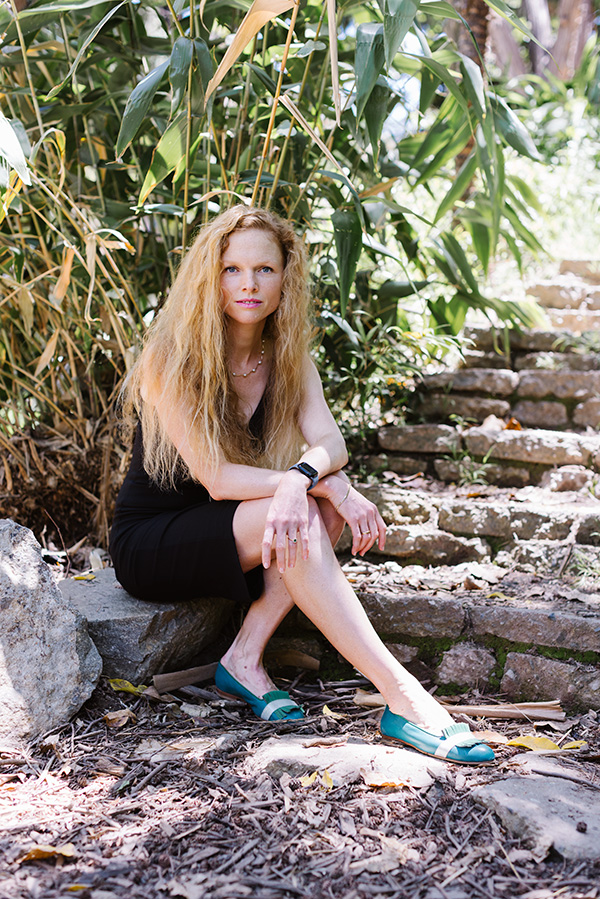
“Oftentimes, managers and leaders will gravitate toward this thinking that there must be something ‘of value’ that we give, or else it won’t work,” Gallus says. But it's a mistake. “They skimp on the ceremony.”
What I was told is you should source the client, which is what oftentimes happens — basically, tell this team [of students] who to work with. But I thought, Let me try a different model. If the students can decide these are organizations that we are excited about and then reach out, and can actually negotiate everything with that organization, it’s a tremendous learning experience. And, moreover, even for projects that don’t pan out, you’ve got an opportunity to forge contacts with people who you might tap later on.
This year, we have a team that partners with a really popular gaming studio, where they do an in-game experiment, which is actually not an easy feat. And then I have another partner, Village Well, a wonderful independent bookstore and coffee shop in Culver City. They were part of our first FEiSty cohort and did an experiment. So that’s a labor of love. It’s a lot of labor, but it’s also extremely rewarding.
You’re a mom of four. How do your professional and personal lives overlap?
Being interested in awards, it was clear to me that I needed to have three children — to have a control group with no incentive, an award group and a feedback group. But I have four now, so the experimental design has to be a bit different [laughs]. But joking aside, I have triplets who are 7 years old, and a little one who just turned 3 in April. It’s very challenging.
I had two speakers from Duolingo in my FEiSty class as well, which was amazing, and they are known for “the streak.” You have this language learning app, and if you learn on a given day, great, and then on the next day you continue, and then you build up your streak for every day that you are active. Now with my kids, I’ve been doing the same. Right now, they are very much into Pokémon, so we have four little Pokémon calendars on the wall in faculty housing here, and for every day that we practice math, reading or writing, they get a tick on the calendar. These are extrinsic incentives. For every seven days, they get two Pokémon cards for their binder.
And it’s very important that it’s not just about individual-level incentives, but also team incentives. So the layer on top of it is, if all three do their learning exercise every day, each of them gets two Pokémon cards. For a full-month streak, they get a full pack of cards. That happened yesterday; they were thrilled, but they really deserved it. And at the same time, I’m combining this with my interest in finding ways of rooting in motivation. So basically, it shouldn’t be that they start to want to learn just to get something important. That’s what motivated my whole research and focus on social incentives. So I think a lot of this is about the framing of the incentive.
It’s like a little ceremony. I say, “You have deserved this. We’re not doing this for the thing. But honestly, this has been so good. You’ve been really pulling through every day, consistently,” and so on. Basically, to reinforce the joy of learning.
Read more from UCLA Magazine’s Fall 2025 issue.