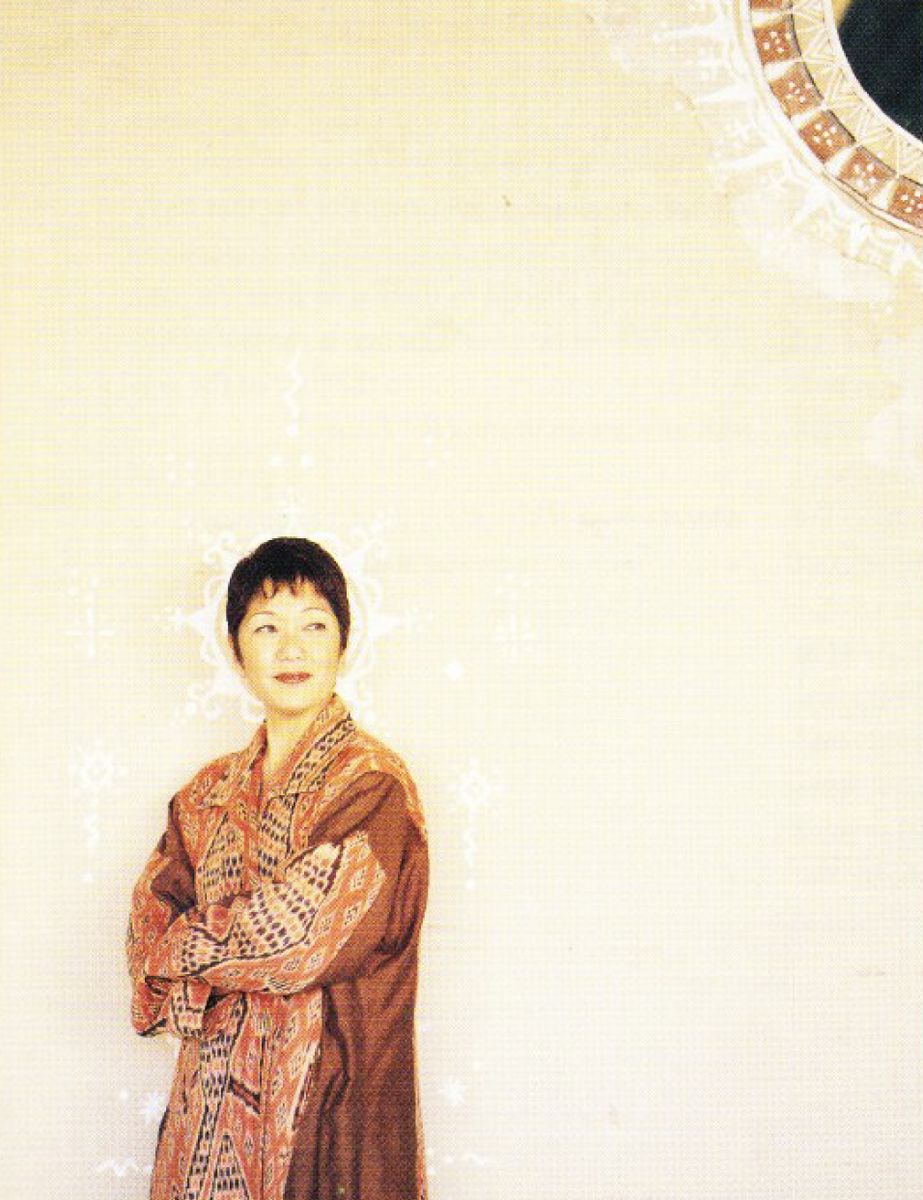
In November, Judy Mitoma ’70, M.A. ’75, director of the Center for Intercultural Performance in the Department of World Arts and Cultures, took part in a White House Conference on Culture and Diplomacy. The conference, convened by President Clinton, Hillary Clinton and U.S. Secretary of State Madeleine Albright, brought together diplomats, artists, scholars and representatives from the private and nonprofit sectors to talk about the critical role of culture in the formulation and conduct of foreign policy in this era of globalization.
Among the panelists were His Highness the Aga Khan, the 49th hereditary Imam of the Shia Imami Ismaili Muslims; Nigerian writer and Nobel Laureate Wole Soyinka; Italian Minister of Culture Giovanna Melandri; former Fulbright scholar and Poet Laureate Rita Dove; world-renowned cellist Yo-Yo Ma; and Joan Spero, president of the Doris Duke Foundation and a former State Department official. Professor Mitoma spoke with Carolyn Campbell, director of communications in the School of the Arts and Architecture.
What are the most pressing problems facing artists worldwide?
Traditional cultures around the world are in a state of crisis. Artists find themselves under enormous economic and political pressure. Part of this can be explained by political instability or the shift from government sponsorship to a market economy. So many highly trained artists, writers and philosophers find that their work falls outside these global economies. They get little support and recognition. In their search for work, regrettably, many turn to the tourist industry. Viewed as symbols of culture, their work is often presented as decorative and entertaining diversions. Most threatening of all, new generations see no viable future in working in the arts or preserving their cultural heritage. The libraries are on fire; more people need to notice.
Does the U.S., as a society, contribute to the problem?
We in the United States are taught to think of the international arts in terms of our own taste and values. Issues of taste can have enormous consequences. For example, the national dance companies of developing countries X, Y and Z might be created specifically to accommodate our American tastes. But their success in the international marketplace has a suffocating effect on regional diversity at home. Local artists are eager to imitate these famous companies and, as a consequence, there is a codification of style, a rigidly set repertoire and a negative effect on creativity and artistic development in those countries.
What can be done to help?
While we have no control over the destiny of traditional culture around the world, we can build better two-way streets and find ways to break down the isolation that exists between us. We are in a position to be good, altruistic partners. International tours should not be limited to the taste of the touring circuit. An interesting and difficult challenge is to powerfully present to the American public those art forms that speak more directly about the unique values of a culture and therefore require more work to understand. A first step in trying to address this problem might be to build better presentation strategies. An evening at the theater, as it is presented today, does not necessarily lead to greater understanding or appreciation. Programs should not be seen simply as entertainment; they should be designed to include information about the people, their history, the context of their living conditions. We must stop measuring success simply by audience attendance, reviews in the press or the length of an ovation. We should look to the more important goal of understanding the deeper significance of these art forms.
One thing we can do is to reevaluate the transaction that occurs when artists tour in America. International artists know little about union protections regarding schedules and rest days. As a result, they work to the point of exhaustion. We must remember that these companies are comprised of promising youth and leading senior artists. They come wanting to share their culture with America. They also come wanting to know more about America.
Yet, they never go to a museum and they seldom see other concerts. They are seldom invited into an American home. Touring programs should be planned as educational field trips for our international guests. Lectures, demonstrations, discussions and concerts should be planned for them. Without much effort, we can put programs in place that ensure that companies return home with more than T-shirts and souvenirs or, even worse, a distorted view of America.
What role can educational institutions play in this process?
There are very few universities in America that adequately prepare artists, culture workers and academics for the work that was discussed at the conference. As we struggle to fulfill the promise of multicultural education, we must also invest in the study of world arts and cultures. To this end, UCLA has established the first Department of World Arts and Cultures [WAC] in this country. We seek to educate both American and international students in a program that places equal value on Western and non-Western, traditional and contemporary, high and popular arts, theory and practice.
International students bring with them cultural traditions that are respected by the department and their student peers. Our job as faculty is to give them tools that can be strategically applied to their home context. We do not ask them to imitate our values, aesthetics and techniques. Over the years our graduates have become leaders in their countries. From their positions of influence, they continue to foster cultural exchange.
The day after the White House event, I attended a press conference by the Ford Foundation at which the largest initiative in the foundation’s history was announced — a $330-million international graduate fellowship program and complementary undergraduate initiative. I am deeply moved by this commitment of the Ford Foundation. As former Secretary of State Albright said at the conference, scholarship and fellowship support is one of the most important investments we can make. It has a guaranteed long-term benefit for all.
What other support does WAC offer?
With the support of the Ford Foundation, Asian Cultural Council and the Rockefeller Foundation, I direct the Asian Pacific Performance Exchange. Traditional and contemporary artists and writers from Asia and America come here to live and work with one another for six weeks at UCLA. Exchange begins as people teach each other, then collaborate and create together, all along the way learning about their differences and similarities. Intercultural collaborative exchange gets at the core issues of culture and has a clarifying and empowering effect for artists. Programs like this can change people’s lives and give them tools for the important work at home.
Regardless of approach — touring, education, workshops — we must do the hard work of interpreting the deep structures of culture. Only then can we find effective means of translating these lessons into responsible action and develop policy that respects cultures around the world.



