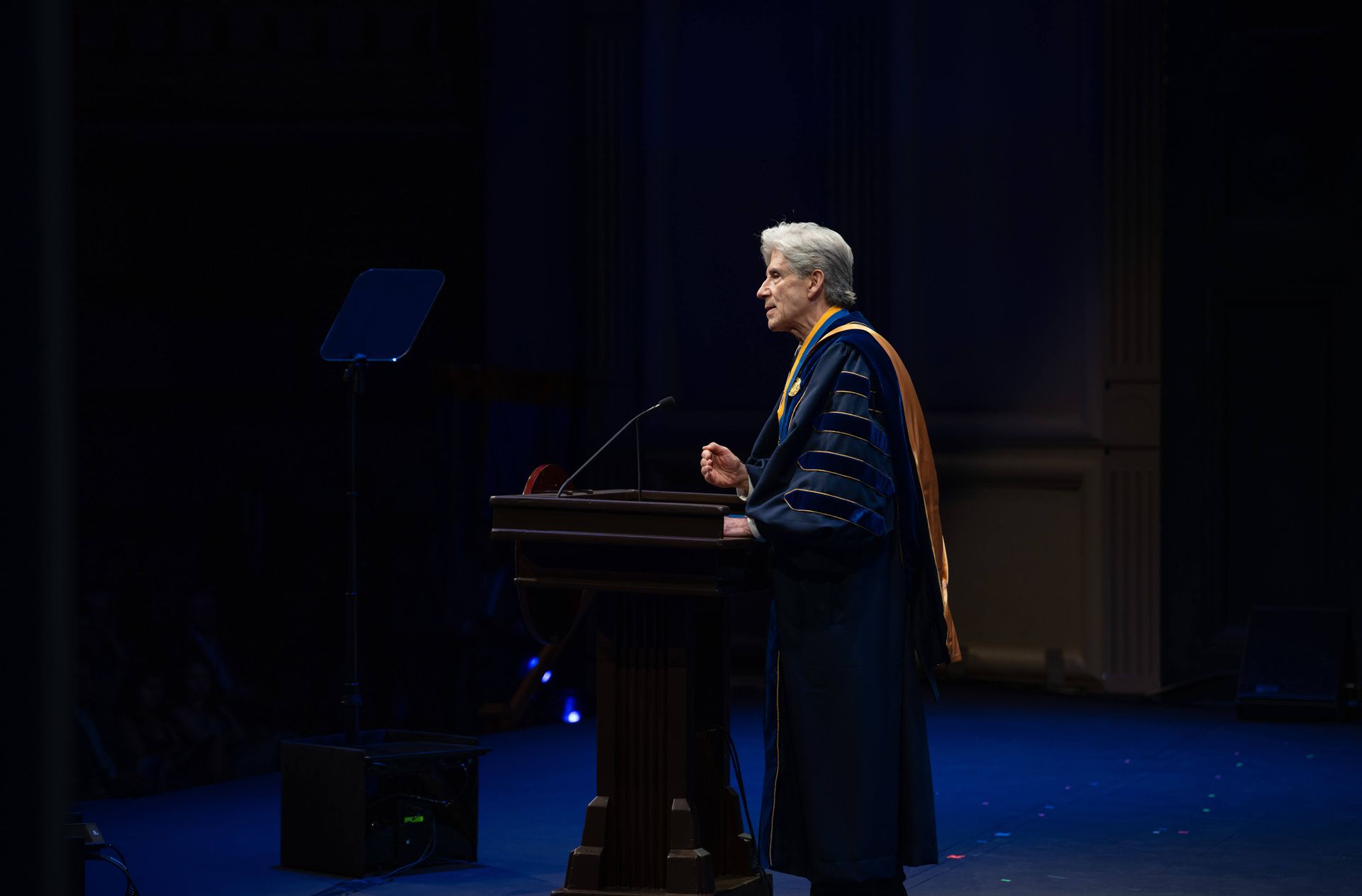
It was in many ways what one might have expected from such an occasion: full of the pomp, circumstance and solemnity befitting the occasion. But it was also joyful and celebratory. On Thursday, June 5, Julio Frenk — a distinguished leader, humanitarian and global public health expert — was formally installed as the seventh chancellor of UCLA in a ceremony marked by a clear sense of pride and purpose, as well as joyful music, stirring oratory and a keen sense of possibility.
A day earlier, as part of the inauguration week activities, Frenk introduced an academic symposium, “UCLA Connects: Bruin Talks,” in which six of the university’s most accomplished thinkers presented on their topics of expertise: medicine, human rights, physics, politics, mathematics and the arts. It was all a reminder to the world of the special history of UCLA, the virtuous passion of its faculty and its students, the values it cherishes and upholds, and the enormous, vital contributions it makes to the world.
Here we present some special, never-before-seen photos of the inauguration, on a day when UCLA history once again turned the page.
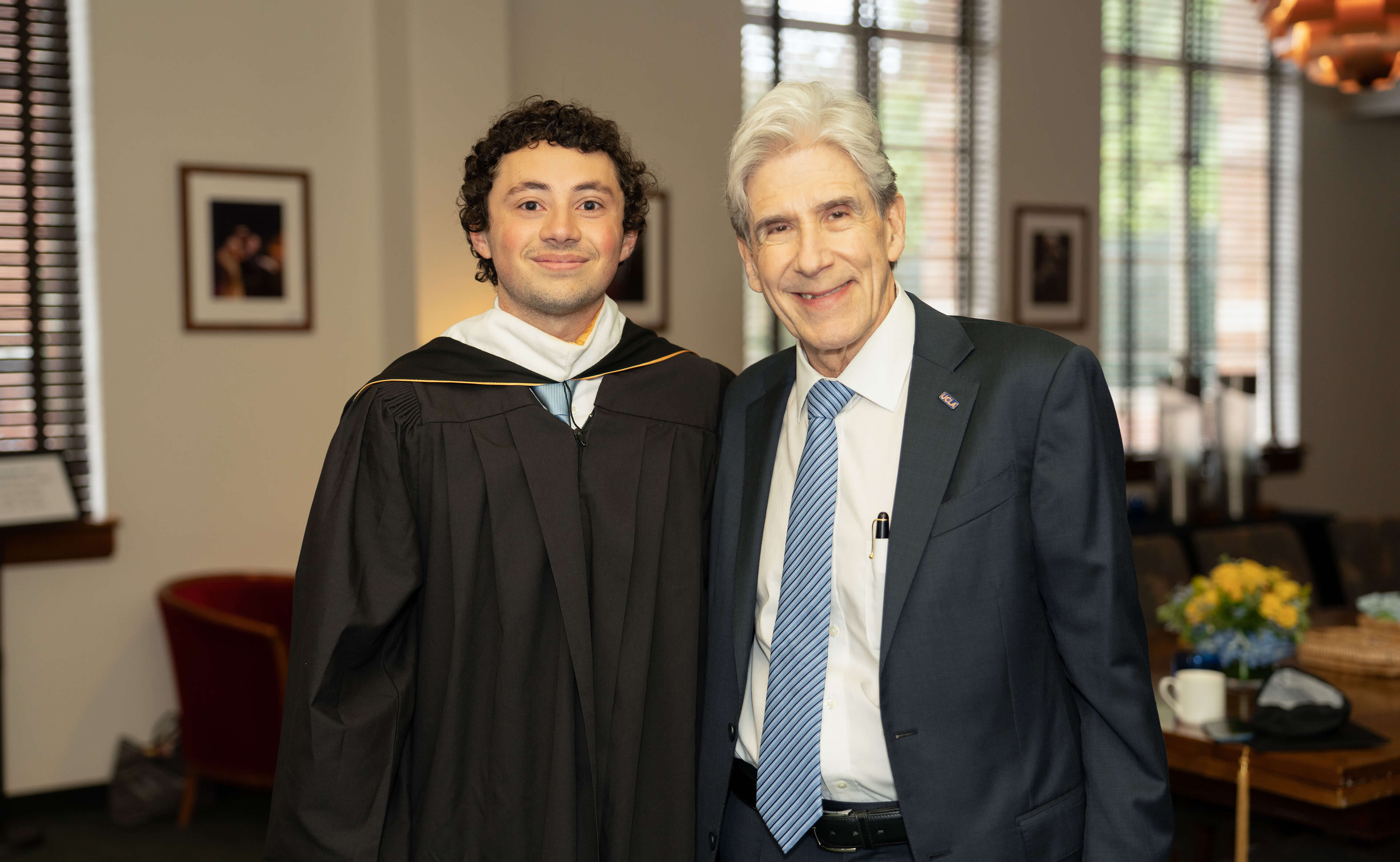
Adam Tfayli, the outgoing president of the UCLA Undergraduate Students Association (pictured here with Frenk before the ceremony), gave one of the most spirited and memorable speeches of the day. “The world feels like open water, unpredictable, shifting,” he said. “I wonder what’s next, for me, for my classmates, and for students just arriving. But somewhere along the way I forgot to look up and realize that we’re not drifting. We never were. These past months remind me that UCLA is still moving. It’s still the place where we find direction, catch our breath and learn to stay steady, even during the waves. And that’s what makes this place extraordinary. Not calm waters, but the people who show up to steer anyway.”
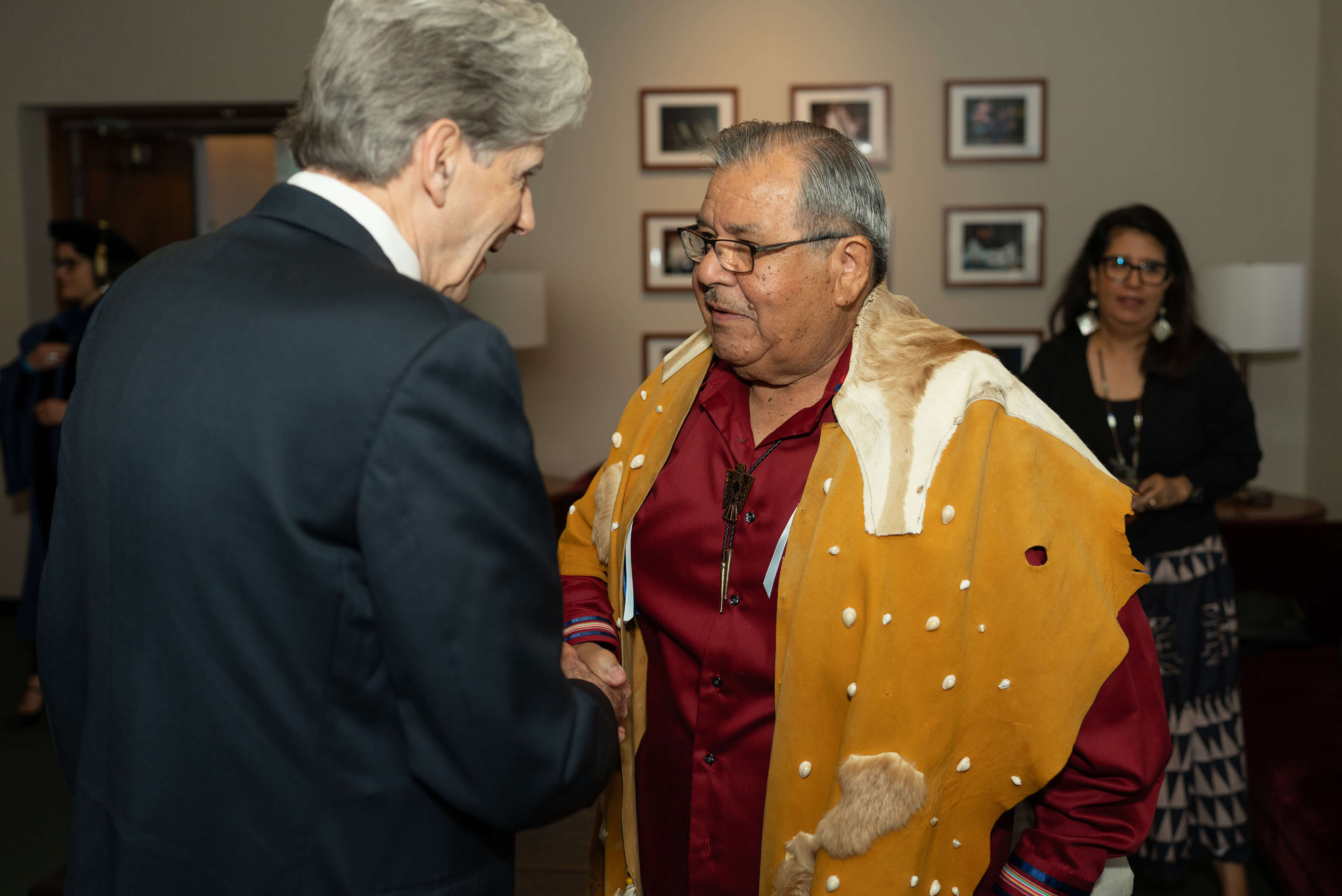
Chief Anthony Redblood Morales, chair of the Gabrielino–Tongva Tribal Council, greets Frenk in the green room right before the ceremony. In welcoming remarks, he paid homage to his ancestors, expressing gratitude to be speaking on “lands that hold wisdom of generations, lands that continue to support all who walk upon them.”
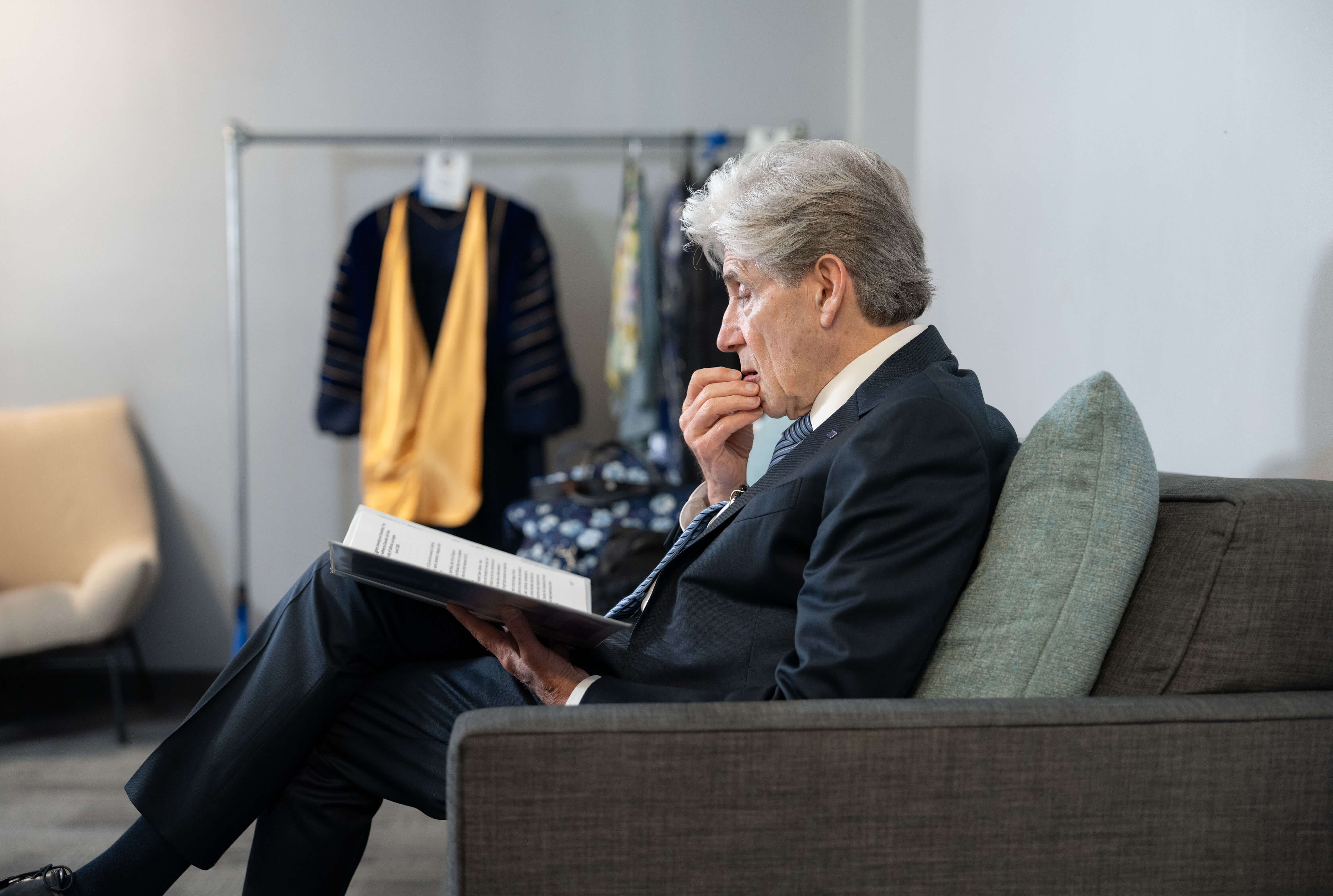
Frenk takes a final quiet moment to gather himself before donning his ceremonial robe. In an interview with UCLA Magazine last fall, he said he understood the weight his words would carry this day. “It’s an important speech,” he said, “because it is a statement of our common aspirations.”
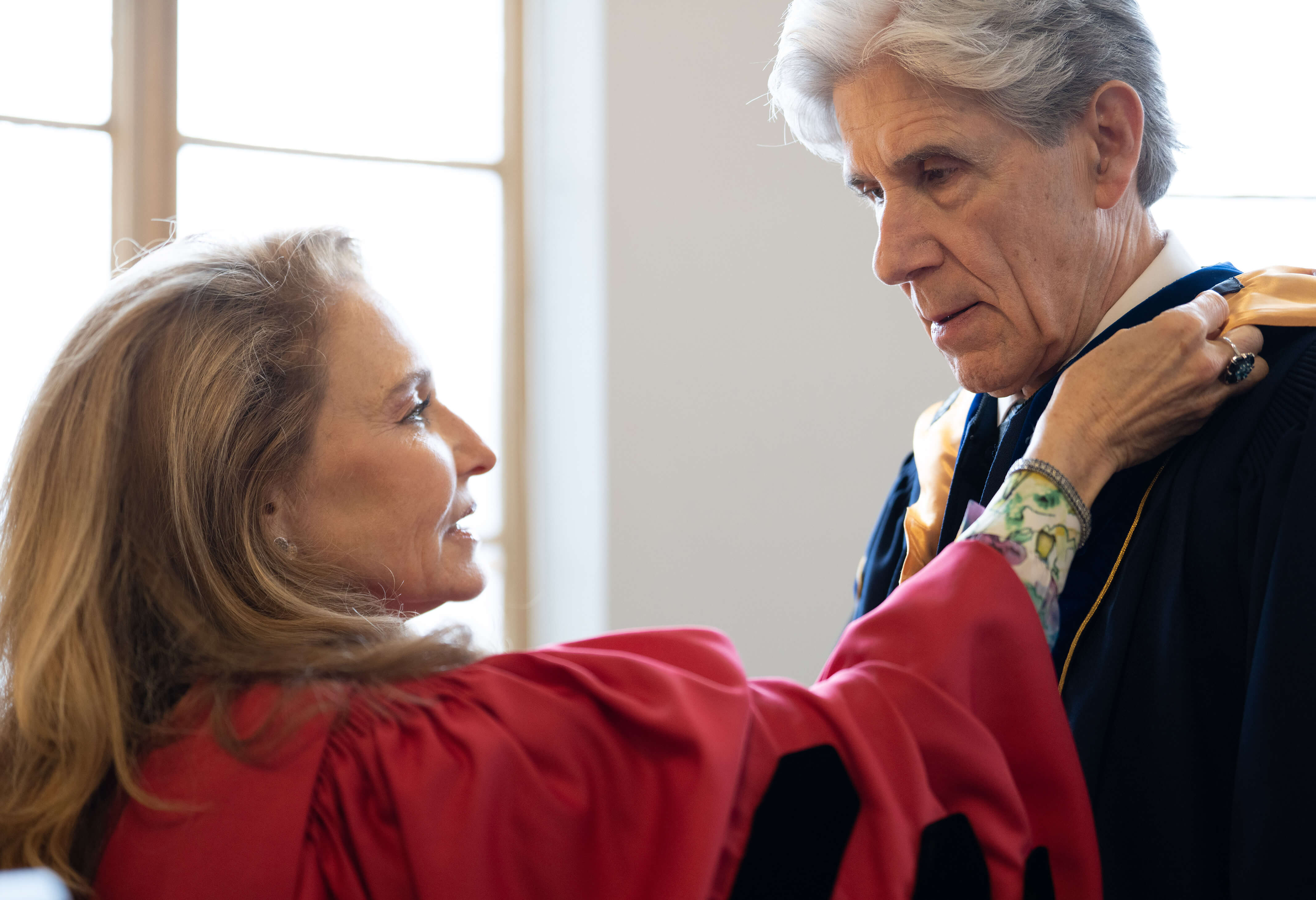
Frenk’s partner and the associate of the chancellor, Felicia Marie Knaul, shares a tender moment with Frenk just before the start of the processional into Royce Hall. “One of the things I admire most about Julio is his remarkable ability to make everyone feel seen and heard,” Knaul, herself a well-known economist and global health activist, commented in the magazine’s profile of Frenk. “People may know him as a university president, dean or health minister. But not everyone knows about the deep compassion that drives his work.” Knaul also serves as a UCLA distinguished professor of medicine and senior advisor to both the dean of the David Geffen School of Medicine and the president of UCLA Health.
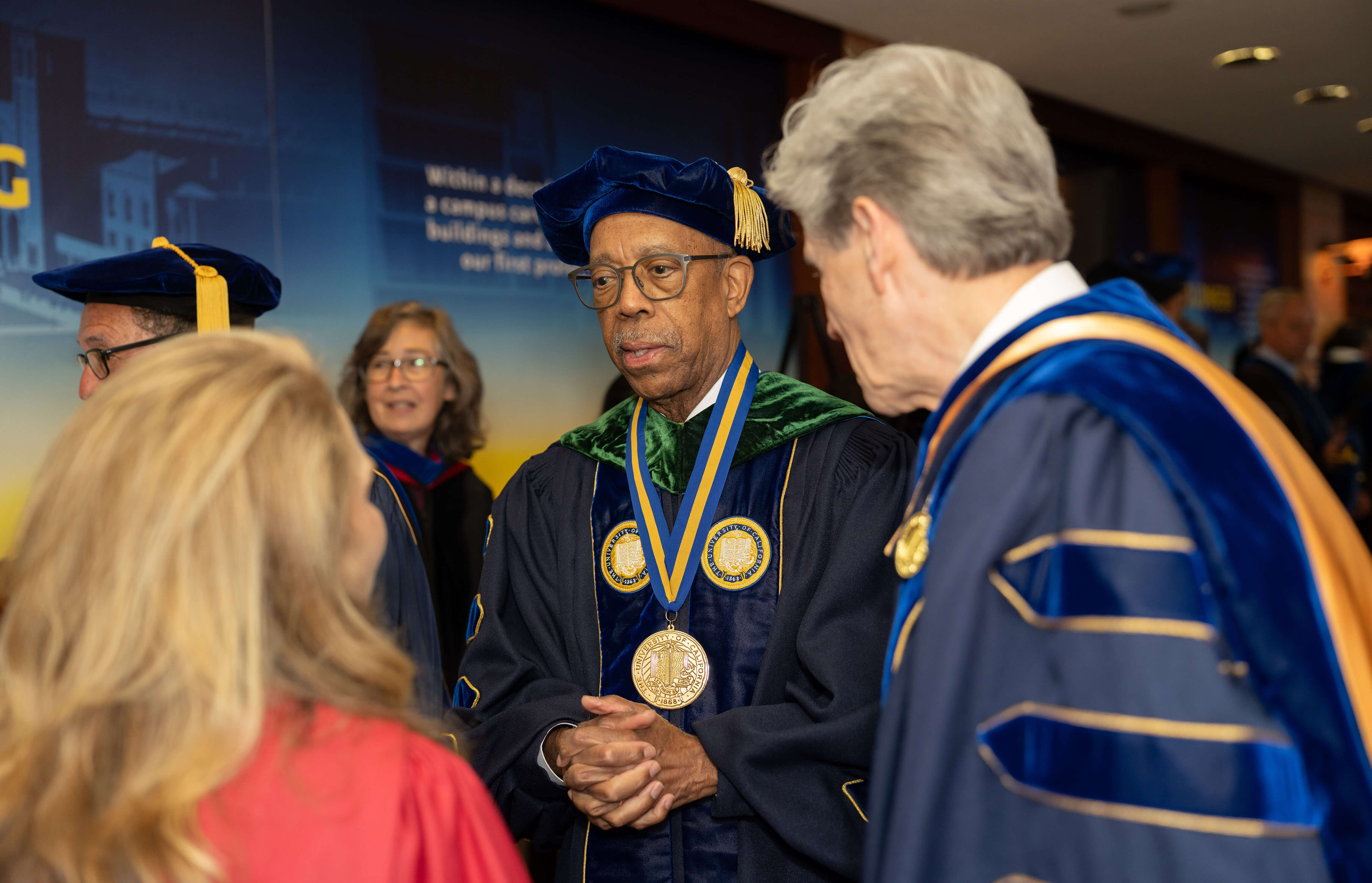
University of California President Michael V. Drake, who performed the formal ceremony installing Frenk as chancellor, speaks with Knaul and Frenk. In his remarks to the assembly, Drake shared that he was honored to be speaking just steps away from where, 60 years earlier, Martin Luther King Jr. had addressed the campus community. “Thinking about the country Martin Luther King lived in and dreamed of then and the future, we’re much closer to that future today than we were 60 years ago. I think with the installation of Chancellor Frenk,” he said, “we move even a step closer to the country that Martin Luther King dreamed of.”
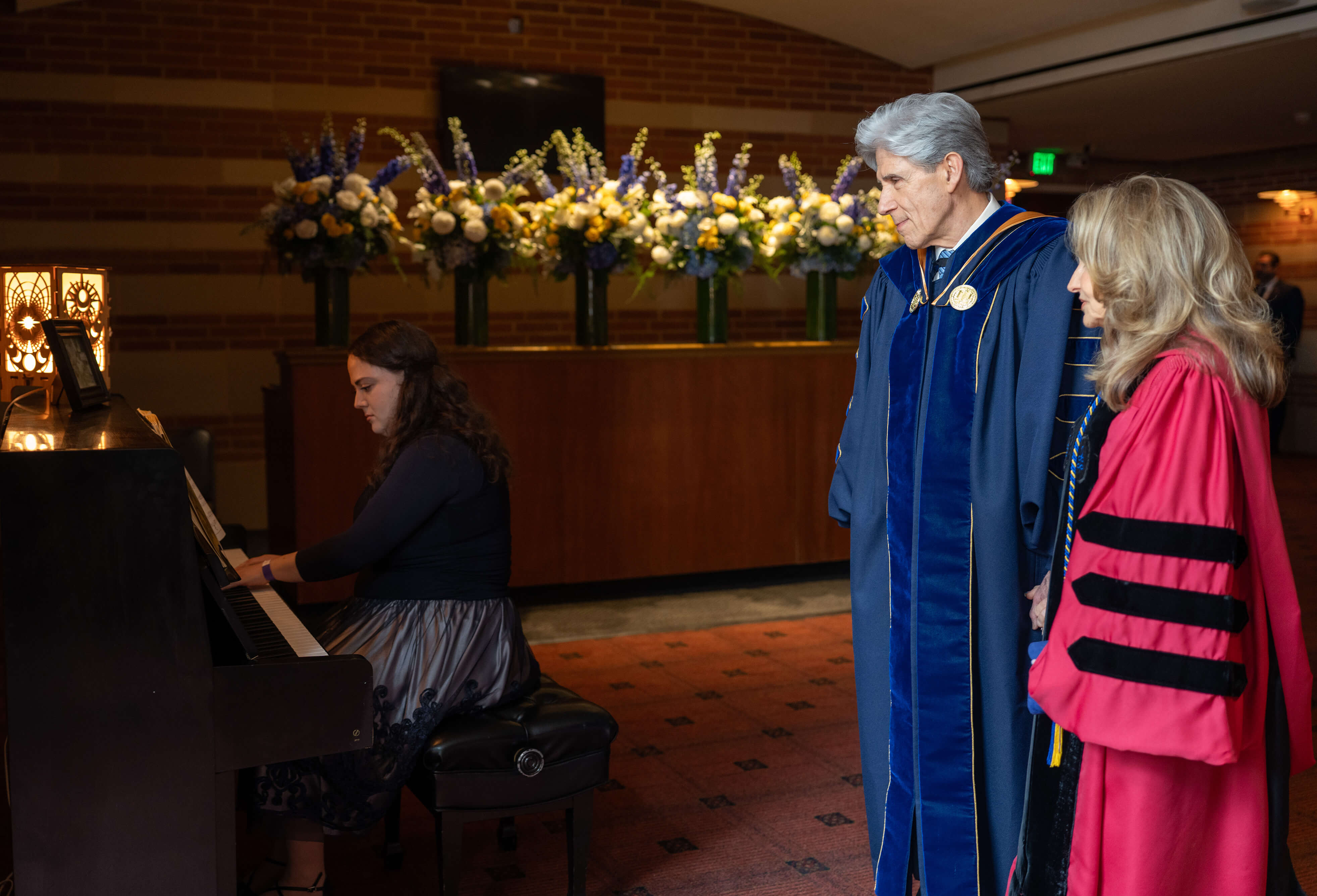
Frenk, a passionate lover of opera, and Knaul listen to the mellifluous piano playing of pianist Gabrielle Sipen. Sipen played Beethoven’s Piano Concerto No. 3, a piece of music that was resonant for the new chancellor: His mother played the piece frequently.
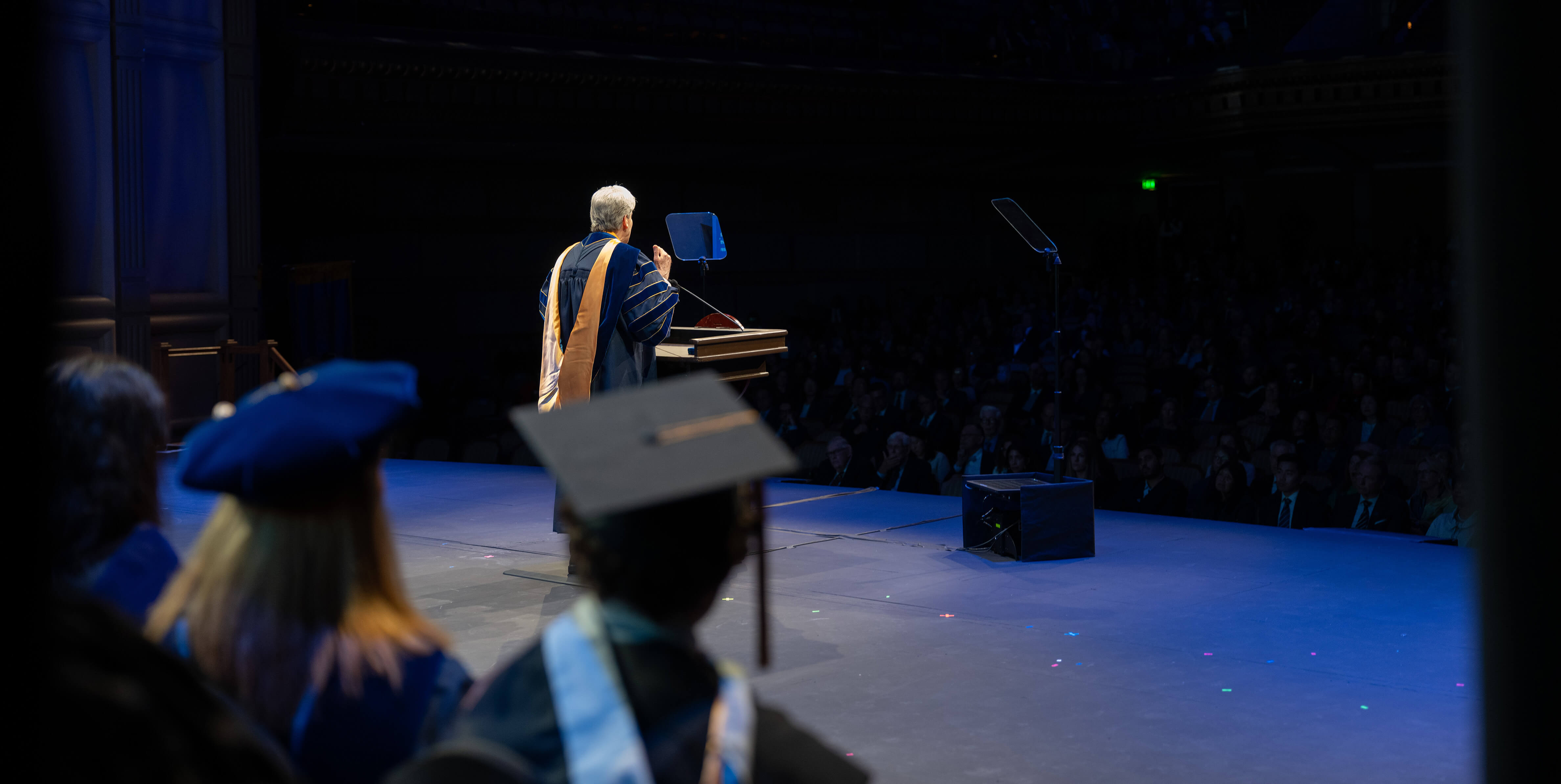
Frenk closed his address with a powerful call to action. “As UCLA has evolved from a humble beginning to vigorous building and to remarkable breaking through, its trajectory has been fueled by boldness. We are now entering a new era where such boldness will be more necessary than ever before. This is not a time to retreat.” He called on the university and those within it to stand up for the “enlightened values of higher education” and to continue to be “bold in pursuing excellence in every aspect of the way we organize ourselves to fulfill our irreplaceable mission. This is the future that we can and will build.”



