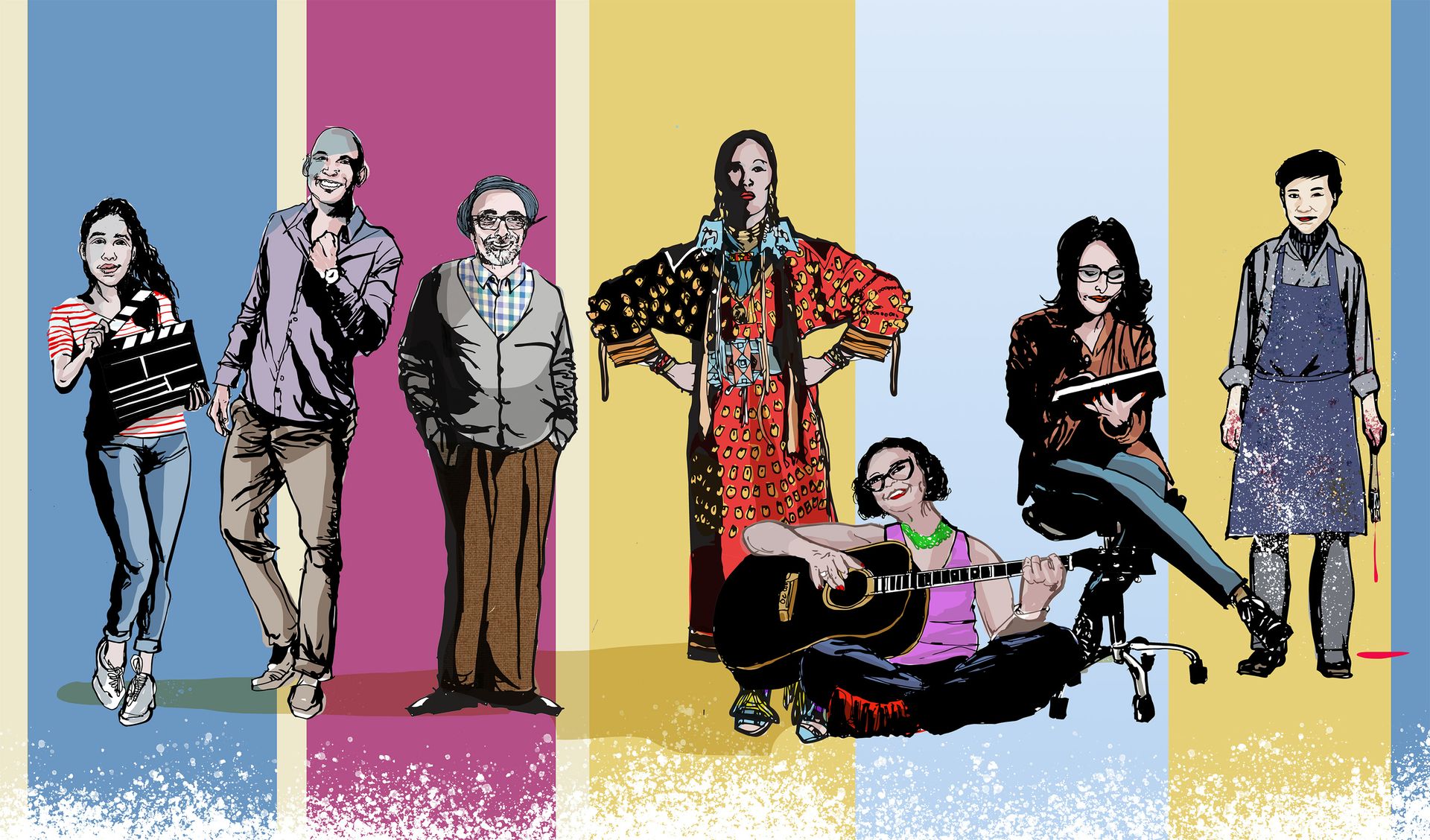
Since 1981, the John D. and Catherine T. MacArthur Foundation has granted annual fellowships to a cohort of 20 to 30 individuals who exhibit “exceptional creativity and the prospect for still more in the future.” A total of 1,175 creative individuals have been selected for this honor over the years; the first Bruin among them was botanist and conservationist Peter Raven Ph.D. ’60, chosen in 1985. Twenty-eight others who were educated at UCLA have followed, including 18 since the turn of the millennium.
Seven UCLA alum fellows have been selected in this decade alone (so far). UCLA has produced more MacArthur geniuses (we’ll get to that in a moment) since 2020 than traditional heavy-hitters like Princeton, MIT, the University of Chicago and Cornell. (We’re tied with Stanford.) Additionally, 17 members of the UCLA faculty have garnered a MacArthur grant since its inception — and 2023 saw two Bruin faculty MacArthur Fellows added to the esteemed list: E. Tendayi Achiume, who has since moved on to Stanford University, and Park Williams. You can’t apply for the grant; fellows are selected through a rigorous, multistage, largely confidential process.
The MacArthur Fellowship comes with a generous, no-strings-attached grant of $800,000 paid out quarterly over five years, along with the unofficial tag of “genius,” a term popular with journalists since the first fellows were named. (The foundation doesn’t use it.) The foundation sees the genius moniker as inexact; in its view, creativity is both more and less than genius. However, it would be hard to argue against referring to any of our spectacular Bruins by that term. “The idea of genius is that you’re alone on some mountaintop,” says historian Natalia Molina ’93, who received the award in 2020. “But really, for those of us who’ve received it, we’re in conversation with one another, directly or indirectly benefiting from each other’s work, across fields.”
Here, a roll call of true Bruin genius.
The Poet • 2024
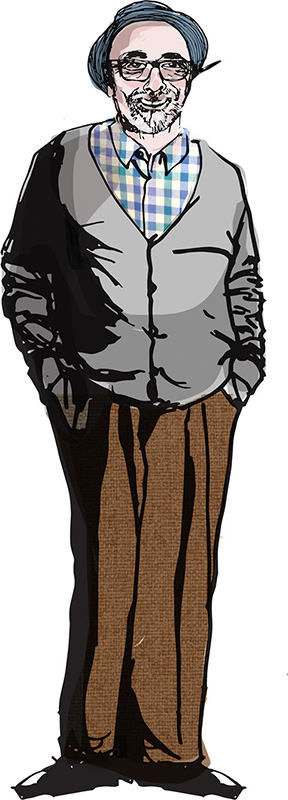
When Juan Felipe Herrera ’72 arrived on campus in 1967, he went looking for his dorm carrying a borrowed suitcase and a cardboard box. He plodded from the bus stop to a UCLA building on Wilshire Boulevard that he figured looked impressive enough to be the dorm hall and took the elevator up to the fourth floor. The soon-to-be anthropology student stepped off the elevator and looked up to find a sign emblazoned MATERNITY WARD. He shook his head and headed back down.
Eventually, he made his way up the Hill to Hedrick Hall. It was an inauspicious start to the college career of the San Diego High School graduate, who was born in a small agricultural town 11 miles east of Fresno.
Herrera is the only child of Mexican migrant farmworker parents, and his ascent to the roles of California Poet Laureate, U.S. Poet Laureate, UCLA Medal winner, National Humanities Medal recipient, Guggenheim Fellow and, as of 2024, MacArthur Fellow is nothing short of storybook. Life was itinerant and hardscrabble for the family of three. “We lived in a little trailer in Escondido,” he recalls, “that my father built out of whatever wood he could find.” That included wheels from an abandoned car. His parents picked, pitted and dried peaches in the sun to produce orejones, which refers to the resemblance of the dried fruit to ears.
Herrera came to Westwood on an Educational Opportunity Program scholarship, shortly before UCLA established its Chicano Studies Research Center in 1969. In his studies, he took a keen interest in the endangered Lacandón Maya community in the jungles of Chiapas, Mexico. He applied for and won a scholarship from the newly minted research center to travel south to study Indigenous art, language and ritual. The 1970 journey changed his life.
Herrera traces his gifts for poetry and storytelling back to his mother. When he was a child, the two would play word games: manipulating existing ones, making words more musical by adding syllables, creating new words. “My mother was constantly teaching me,” he says. “For me, that was the golden key — to begin to think creatively and write.” And write he did. The bilingual wordsmith’s first major work appeared in 1974, two years after graduation. He’s written nine children’s books and 19 books of poetry. Today, Herrera is a professor emeritus at both California State University Fresno and UC Riverside.
While the MacArthur award helped him financially (“You can imagine it will get you more than one tortilla,” he quips), it also kept him on his path. He has two new books of poetry on the horizon for publication later this year: Handful of Gravel, addressing the Russian occupation of Ukraine, and Flourishing Shadows, which tackles the subject of deportation.

The Storyteller • 2020
Natalia Molina ’93 is a historian who delves into questions of race, gender, citizenship, identity, belonging, assimilation and placemaking. A distinguished professor and dean’s professor of American studies and ethnicity at USC, Molina developed her practice of examining the relational forms of race at UCLA, where she double-majored in women’s studies and history. “We look at the experience of racialized groups not as these isolated experiences,” she says, “but in terms of the ways in which the structures around their lives — like laws, for example — connect them to one another.”
She says UCLA instilled in her the idea that you have to act upon what you learn. As she was nearing graduation, she witnessed the hunger strikes and protests that saved Chicana/o studies at UCLA — then threatened by budget cuts — and that eventually led to the establishment of UCLA’s department of Chicana/o and Central American studies. She remembers her classmates “were organizing, they were protesting, they were fasting. There was a sense of, you use your education as a tool for justice, and those lessons really stayed with me.” As a result, she engages in public-facing scholarship whenever possible, whether that’s writing op-eds, helping nonprofits, or telling the story of her family and the neighborhood she grew up in.
Molina’s most recent book, A Place at the Nayarit: How a Mexican Restaurant Nourished a Community, tells the story of her maternal grandmother, a restaurateur who helped feed and nurture the Mexican and Latino communities of Echo Park. The family ran the restaurant from 1951 to 1972, in a space on Sunset Boulevard now occupied by the Echo music venue (the Nayarit’s neon sign still lights up the night above the Echo’s marquee). The story is very personal for Molina. But it illuminates something about overlooked sites where marginalized people can convene freely, reclaim dignity and strengthen social bonds.
In that spirit, she continues recounting the narratives of underrepresented groups. Her upcoming book The Other Immigrant Story: Rethinking Assimilation looks at Latino immigrants as a racialized group, not as an ethnic group that will invariably assimilate into American identity and belonging. Today, as citizens are being arrested and deported regardless of how many generations their families have been in the U.S., the issue is critical. A second book currently in development explores the history of The Huntington Library, Art Museum and Botanical Gardens through the eyes of its workers. “What if we look at cultural institutions,” Molina asks, “not just through the people whose names grace the buildings?”
It’s those types of questions that show, well, genius.
The Urban Ethnographer • 2020
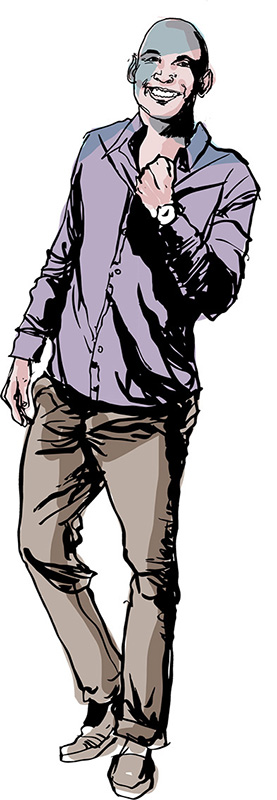
Forrest Stuart M.A. ’08, Ph.D. ’12 grew up in the ’80s and ’90s in San Bernardino, at a time when the city was the nation’s murder capital. It was also the site of the first “gang injunction,” which criminalized behaviors like congregating in certain places or wearing clothing of a certain color. It’s perhaps no surprise, then, that Stuart has spent his career investigating the roots of poverty and violence in communities and the best interventions to reverse the damage.
His road to a career as a leading academic and the director of the Stanford University Ethnography Lab was anything but straightforward. After studying politics at UC Santa Cruz, where he was exposed to the concepts that would help him explain what he’d experienced firsthand growing up, Stuart headed to American University in Washington, D.C., to study justice, law and society, in hopes of impacting policy. He eventually left, frustrated with a Beltway approach to policy that neutered his brand of Angela Davis–inspired radical thinking and stymied action he thought could enact positive change. What Stuart had been after, without ever knowing it, was sociology.
At UCLA, Stuart found “sociology that formulates its research questions in collaboration with community members and with civil society and involves them in the research process in a meaningful way.” In this model, the hope is that research findings could advance the work of those in the community. There was an explicit goal at UCLA, he says, to actually make the world better.
Stuart embedded himself in L.A.’s Skid Row, he says, because “there are more parolees and probationers in the 50 blocks of Skid Row than anywhere else, essentially, in the world.” After five years of earning the trust of community members — playing dominoes in the park, hanging out in the courtyard of a shelter or lifting weights on the sidewalk — and, as he says, “chasing cops around, videotaping unconstitutional searches and seizures,” he produced the award-winning 2016 ethnography Down, Out, & Under Arrest: Policing and Everyday Life in Skid Row.
Stuart’s ethnographic approach is not particularly fashionable in the hallowed halls of social science academia. But he says you don’t need a lot of money to produce the research — just time, patience and relationships. For Stuart, that makes the MacArthur recognition all the more special. “It’s really validated that this is important work,” he says, “and it’s opened the door for a lot more students and a lot more departments to really take this thing seriously.”
Stuart’s next book, entitled The Peacemakers, is centered on an organization called Urban Alchemy, based in San Francisco’s rough-and-tumble Tenderloin district. Urban Alchemy employs workers who are formerly incarcerated to stand sentry on corners overnight to mediate crises — mental health emergencies, behavioral crises and drug use — that usually fall to the police. The efforts, Stuart says, are leading to a drop in crime. With Peacemakers, Stuart hopes to provide “an alternative that can lead us down a better kind of pathway” to safer neighborhoods.
The Detective • 2024
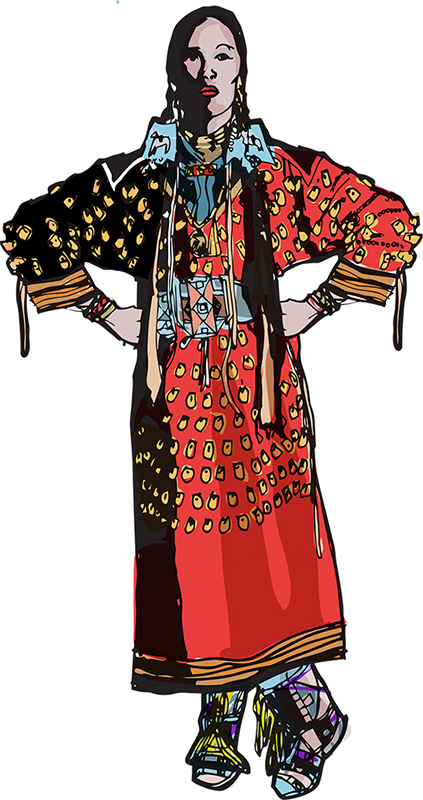
Wendy Red Star M.F.A. ’06 grew up on the Crow Indian Reservation in southeastern Montana. The child of a Crow father and a white mother, Wendy struggled in school due to her dyslexia, and she longed simply to ride horses. But her mother, a nurse, kept pushing education. Upon graduation from Montana State University, Red Star had a simple plan: apply to the top sculpture programs in the country, and then just continue riding horses when she inevitably failed to get in. But her talent shone through, and both UCLA and Yale came calling. In the end, she chose Westwood. Grad school, she says, “was the best educational time of my life.”
The M.F.A. program housed all of its grad students in one building, which exposed Red Star to other disciplines, such as photography. Renowned sculptor Nancy Rubins took the young Indigenous artist under her wing, selecting her to participate in a group exhibition at the Cartier Foundation in Paris. “I remember the opening,” Red Star recalls. “They had a rooftop level where they were having a dance party. The Eiffel Tower’s lights were blinking in the background. And I said, ‘I think this is it for me — I don’t think it can get any better. This is what can happen if you're an artist?! No one told me about this.’”
Her art has blossomed since. A particularly impactful 2021 work, on permanent display at Omaha’s Joslyn Art Museum, is titled The Indian Congress. It consists of cutouts of portraits from the historical 1898 Indian Congress, an unprecedented convening of more than 30 Native American tribes during Nebraska’s Trans-Mississippi Exposition. “I just thought that was amazing, because the Native people were stand-ins for the past,” she says. “But what people weren't expecting was an exchange of information between different tribes.” Through the work, Red Star re-creates what it might have felt like to be the famed Crow scout White Swan, sitting among hundreds of other Native delegation members.
Red Star has been aware of the MacArthur Fellowship since grade school, when educator Janine Pease–Windy Boy received the recognition in 1994. “She started the community college on our reservation; that changed the community,” Red Star says. Montana has now produced five MacArthur winners, three of them Native women. Blackfeet Nation banker Elouise Cobell, who worked to restore billions in funds the U.S. government held in trust for Native American peoples, won the prize in 1997. “Those two women are so epic,” exclaims Red Star with astonishment. “What they did is really monumental. It’s so amazing to be in that company.”
The Artivista • 2022
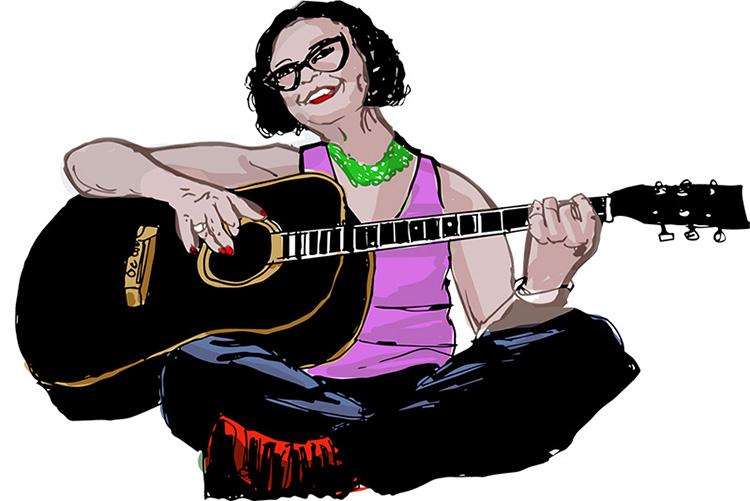
Martha Gonzalez ’99 is an associate professor and chair of the Intercollegiate Department of Chicanx/Latinx Studies at Scripps College, as well as a Grammy Award–winning member of the protean East L.A. ensemble of Chicano rock innovators called Quetzal. Vocalist, musician, artivista — this term, Gonzalez says, has more meaning than just calling herself an artist-activist; it announces her identity as someone who works in music, education and community-based social justice organizations all at once.
Following high school (and a botched attempt at entering the Navy), Gonzalez ended up at community college, figuring she’d become a dental hygienist. But akin to Al Pacino in The Godfather: Part III, music found a way to keep pulling her back in, she says. She ended up winning a role as one of the “classroom kids” in 1993’s Sister Act 2: Back in the Habit. Music had Gonzalez back in its clutches.
A cousin attending UCLA began extolling the virtues of the school’s ethnomusicology program: “You’ll love it! And you don’t even have to know how to read music.” Gonzalez applied — and got in. But she felt like a fish out of water. She dropped out after only a year.
That’s when she met her future bandmate — and future husband — Quetzal Flores, at which point she began to think about returning to continue her education. She hopped back into the ethnomusicology program at UCLA in 1997 and completed her degree in 1999. The band Quetzal’s album Imaginaries, charged with the band’s collectivist political passion, won a Grammy in 2013 for Best Latin Rock, Urban or Alternative Album. The Los Angeles Times called it a characteristically ambitious “foray into cumbia, neo-’80s-style R&B, Cuban charanga and Brazilian pandeiro and the lilting son jarocho of Mexico’s Veracruz state.”
Today, Gonzalez is excited about a family album she is recording with Flores and their child. The set aims to capture the essence of their family culture — which is to spontaneously jam in the living room. She’s also eager to hear what her child is learning: Sandino Gonzalez-Flores is attending UCLA as part of the same ethnomusicology program their mother graduated from, in the same Herb Alpert School of Music where Gonzalez returned to deliver the commencement address in 2023. Not bad for a former dropout.
“I kind of landed in the department just by accident, but it was the right place for me,” Gonzalez reflects. “It really changed my music practice and how I conceive of music in my life. I’m happy that they [Sandino] chose this field, and I can see why they take joy in it. It's a very comfortable place for them, but also challenging enough … they like it!” What more could a mother ask for?
The Alchemist • 2025
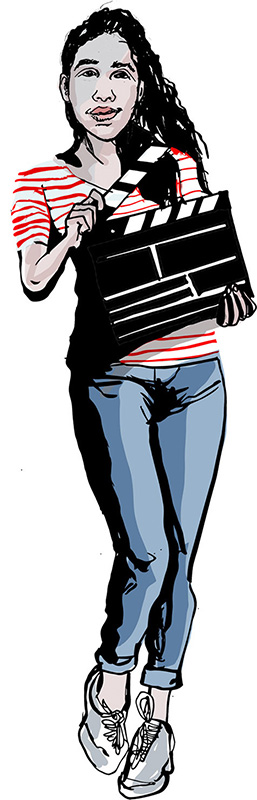
Garrett Bradley M.F.A. ’12 is a helluva filmmaker. Thoughtful, purposeful, lyrical. But she is also an artist whose video presentations have been exhibited at the Museum of Contemporary Art, Los Angeles; New York’s Museum of Modern Art; the New Orleans Museum of Art; the Dallas Museum of Art; and, of course, the Hammer at UCLA. Bradley has directed an Oscar-nominated documentary (Time, her 2020 debut feature) and the three emotionally resonant shorts, Alone, America and Safe. In 2020, she became the first Black woman to win Best Director in the Sundance Film Festival’s U.S. Documentary competition.
She began her undergrad journey at Smith College as an art major, but ended up with a bachelor’s in comparative Hindu and Judaic philosophy. Filmmaking was the natural next step to blend her interests; she’s called filmmaking an “alchemy,” with disparate elements combining to produce something new altogether.
Born in New York to abstract painter parents, Bradley came to UCLA film school with a very specific goal: “To get my hands on equipment and to work collaboratively with other people to make films.” While at UCLA, she worked on Below Dreams (2014), which follows three storylines unfolding across New Orleans and New York. As second-unit director, she collaborated with fellow Bruin Ava DuVernay on When They See Us (2019), based on the true story of the five young men falsely accused in the case of the 1989 Central Park jogger. She then went on to direct the Netflix docuseries Naomi Osaka (2021). Bradley’s films, often extensions of her real life and relationships, tend to blend documentary and narrative.
What does she feel her storytelling offers today to a society plagued by seemingly never-ending division? “Talk to people, refrain from judgment, imagine yourself as a beam of light radiating love,” she says. “Our nature is to imitate, and that's why anything we put out into the world should take that into account. That's our power and the power of the things we create.”
The Reanimator • 2025
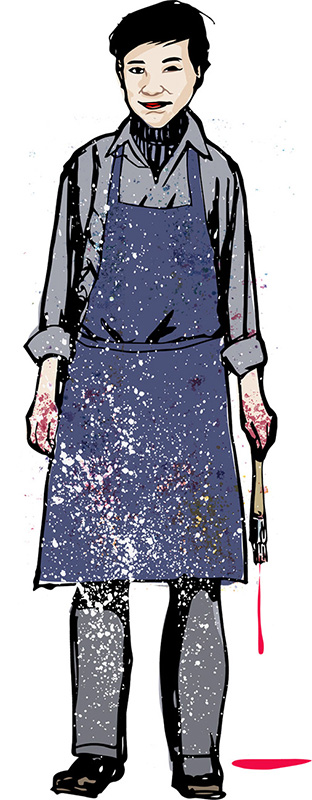
“I’ve always liked making art,” says Gala Porras-Kim ’07, M.A. ’12. That is, to put it mildly, an understatement. One of the newest members of the UCLA MacArthur club, she was selected for the fellowship last year based on her research-based, interdisciplinary artmaking practice. A double Bruin, Porras-Kim earned a bachelor’s in art and a master’s in Latin American studies on the same campus where she grew up: As a child, she’d lived in graduate student housing on Sepulveda Boulevard while her mother pursued her doctorate at UCLA. She vividly remembers exploring the tomes housed at the Charles E. Young Research Library, starting at the age of 12.
Porras-Kim has found a way to combine her love for making art and her passion for history. Her work examines how cultural institutions organize and classify the objects in their collections, and how those objects are produced, perceived and preserved. Once an object is dubbed “a historical object” or a work of art, it ceases, supposedly, to fulfill its original function. Not so, argues Porras-Kim, artfully demonstrating how cultural objects can live multiple lives.
Born in Bogotá to a Colombian father and a South Korean mother, both historians, Porras-Kim, it could be said, has led many different lives at UCLA. Her decision to return to Westwood for her own education was driven by two factors: excellence (“The art program is one of the best,” she says) and proximity. She came to the visual arts because, to her, they represented the broadest field that might incorporate her interests: conservation, museum studies, and of course, history. Her work eventually led her back home to UCLA: She has presented work at the Hammer Museum’s Made in L.A. biennial in 2016 and at the Fowler Museum in 2023, with The weight of a patina of time. “When I had my exhibitions there, it was very organic,” says Porras-Kim, who serves as a visiting critic in sculpture at the Yale School of Art, “as I was very familiar with the Hammer and Fowler since I was a kid.”
After earning her M.F.A. at CalArts, she returned to UCLA for her master’s in Latin American studies. That degree laid important groundwork, giving her a path to structure her research into her artistic subjects. Her work has been all around the globe and back, showing at the Los Angeles County Museum of Art; National Museum of Modern and Contemporary Art, Seoul; Singapore Biennale; and New York’s Whitney Museum of American Art, to name just a few.
Porras-Kim says she’s now looking for ways to restructure her time so she can spend more of it in nature. That might be difficult with upcoming exhibitions in Italy, Germany and Mexico. But genius is, as ever, in high demand.
Read more from UCLA Magazine’s Spring 2026 issue.