As the very center of worldwide celebrity culture, Southern California is often dismissed as a place devoted more to image than substance. But, for all the attention we give to the stars of athletic arenas and movie screens, there is another galaxy in the local firmament, composed of people who really are changing the universe as we know it in fundamental ways.
Three of these are UCLA scientists who have received the Nobel Prize, two of them on the chemistry faculty in the College of Letters and Science and one in the School of Medicine. These are not people with press agents, retinues or the other trappings that often go with global acclaim. But neither are they the protected denizens of dark laboratories, who shrink from outside exposure. All, in fact, are elegant and worldly gentlemen, gracious and open, willing to suffer an interviewer gladly, despite the immense gulf of knowledge, understanding and discipline that separates them.
The extraordinary scientific achievements that earned them the world’s most prestigious award are as different from one another as their fields of study: chemistry, organic chemistry and medicine. But their individua stories reveal interesting and important similarities.
All three prizes were rewarded for new insights that have deepened human understanding of how life works and increased the prospects for individual health, not to mention survival of the species. All three researchers persevered in their work despite the skepticism of established scientific communities, which at first ignored, or even denigrated, their ideas.
Although they were at different stages of their careers when they achieved laureate status, all three have been profoundly affected. They all discuss their work and its impact with a combination of intense pride and personal modesty. And, if there’s anything for the lay person to learn directly from their success, it may be that all three — regardless of age — are practitioners, as well as advocates, of vigorous physical exercise.
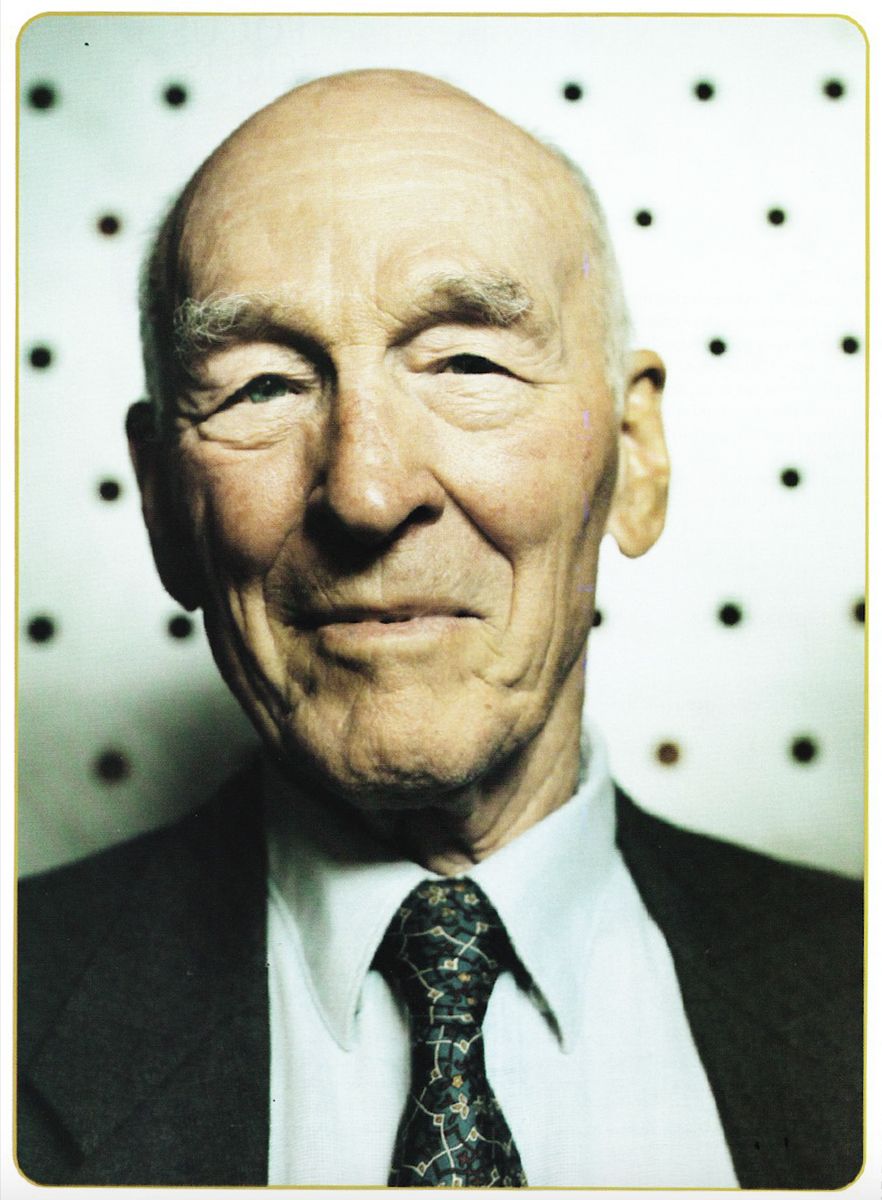
PAUL BOYER
For Paul Boyer, the 1997 Nobel Prize for Chemistry was “an unexpected pleasure.” It had been 20 years since he formulated a hypothesis to describe what he calls “the most prominent chemical reaction in the whole world.” It is the process by which molecules produce ATP (adenosine triphosphate), thereby transmuting light, air, water and food into the energy required for both plant and animal life.
Boyer had been greeted with disbelief when he theorized that the previously mysterious process is the work of a “beautiful little machine” that operates within enzymes on the molecular level. His proposed resolution of a major unsolved problem in biochemistry threatened to “change the paradigm,” Boyer remembers, and “the leading journal” in his field — The Journal of Biological Chemistry — declined to publish his work.
Since then, the tiny machine, which Boyer calls an “internal rotation mechanism,” has been photographed in action. But at the time he proposed it, Boyer’s hypothesis was so original that a methodology to either confirm or disprove it had not been invented. With his work still clouded by uncertainty, Boyer decided that his career was over. In 1989 he closed his laboratory at UCLA and retired to the streams and mountains of Wyoming, where, at the age of 80, he still fishes, hikes and plays both golf and tennis.
A few years later, Boyer experienced “one of the warmest moments of my life” when he learned that British biochemist John Walker had worked out the methodology required to demonstrate whether Boyer had been right or wrong. By that time, Boyer had been gone from UCLA for so long that the departmental secretary didn’t know where to send Walker’s manuscript. But obscurity wasn’t a problem for long.
Using Walker’s methodology, one of Boyer’s former graduate students “did some elegant chemical work to demonstrate that the molecular rotation actually occurred.” Boyer’s hypothesis, finally, had been proven correct. For work that so enriched understanding of the life process itself, he and Walker were jointly awarded the Nobel prize in 1997.
It was, Boyer says, the “capstone” of his career. Although it did not lead to further work on his part, he observes that the secretaries at UCLA now know where to find him. He has forgiven the “leading journal” that rejected his work. In retrospect, he says the Nobel Prize was “the last thing I had in mind when I happened to pick a problem with such an unusual solution,” and he credits his choice to pure luck. The other major factor that got him the Prize, he says, was “longevity: I outlived all my competitors.”
For others, longevity may be one of the benefits of Boyer’s research. He has enhanced understanding of the kind of damage caused at the molecular level by disease and aging. One potential application of his work is to prevent that damage from happening to the cells of human beings.
And the prize itself will help to bring about that, and other benefits as well. Boyer says “one of the services of the Nobel Foundation” is to call attention to basic science so that the importance of new fields can be recognized. “It’s a pleasure to my former students; it gives them a boost. It makes people who’ve hired them think they’re better because they worked with a Nobel Prize winner.”
In fact, the research groups developed at UCLA and other American institutions are, for Boyer, an “important return on investment that is hardly ever recognized by the public” that pays for them. There is “a tremendous apprentice teaching system, a relationship between professors, graduate students and postdoctoral fellows” that provides “the most effective tool that society could develop” for encouraging basic science and all its beneficial consequences.
LOUIS IGNARRO
For Louis Ignarro, the Nobel Prize was not the capstone of a career, but the beginning of something new. It has opened opportunities “to expand and further my research” and for traveling to “tell my story” about new therapies Ignarro hopes eventually will help to reduce mortality.
His work, Ignarro says, has helped to “keep me younger,” which is fitting enough for the man whose research indirectly led to the development of Viagra. A former speed skater and race-car driver, Ignarro runs, plays tennis and prides himself on the “brutal exercise” he says he needs to balance the meticulous lab work, grant writing and other activities of high-level science that would otherwise “drive you crazy.”
Coincidentally, Ignarro was travelling in Italy in 1998 when he learned he had won the Nobel Prize in Physiology or Medicine. By that time, enough friends had told him to expect the honor that he’d allowed himself to think it might happen. But he, like Boyer, had encountered professional skepticism about his theories concerning nitric oxide.
At first, major professional journals refused to publish his contention that a substance that is basic to nitroglycerin and part of the chemistry of smog is also crucial to the life process. But over the years, others repeated his work and confirmed his discovery that nitric oxide is a neurotransmitter that is, says Ignarro, “perhaps the most widespread signaling molecule that allows a variety of different cell types to communicate with one another.”
Viagra is only the first and most immediate therapeutic application, but it is hardly a trivial one, since impotency affects some 9 percent of the world’s human males. Ignarro is proud of the pile of letters he has accumulated from grateful spouses.
But, important as that may be, Ignarro believes his work eventually will help prevent the vascular complications of diabetes, and his ultimate goal is advancing his work to the point of “actually cutting back on deaths due to cardiovascular disease.” He hopes the prestige, and the accompanying financial clout, from the Nobel Prize will help him to accelerate progress in that direction.
Already, he has found that “the dean and chancellor and others here at UCLA certainly have developed a little bit more respect for me, which is a good thing.” Friends look at him differently, too and, in the competitive sports Ignarro still enjoys, “they let me win.”
His wife, Sharon Ignarro M.D. ’96, is a resident at UCLA, where she teaches family medicine. When they married, two and a half years ago, “she thought she was marrying a nice, quiet professor. She’s a bit shy, and I think the first thing she thought after the Nobel Prize was announced was, ‘Oh, my lord, now I have to go meet all these new people.’ But she’s really enjoyed this, and the Nobel Prize has opened up some avenues for her. She gets treated with respect here as a physician, and she’s had opportunities to practice family medicine in different ways.”
What hasn’t changed is Ignarro’s commitment to teaching. He is the winner of 11 consecutive Golden Apples, the award UCLA medical students give to the year’s best teacher. “Most people either focus on research or focus on teaching,” Ignarro says. “I work very hard to focus on both.”
During the academic year, he arrives at work at 4 o’clock in the morning, works on his lecture ’til 8, delivers the lecture and then spends another four hours preparing for the next one. “I am very busy, but I do not do it at the expense of my research.”
And, says the Nobel laureate, the Golden Apple is “a great reward.”
DONALD CRAM
For Donald Cram, earning the Nobel Prize was an “evolutionary” process, parallel to the development of UCLA itself into a world-class institution staffed with winners of the world’s most conspicuous honors. Cram likes to point out that he and UCLA “grew up together,” both having been born in the same year, 1919.
He was on the faculty for 25 years before he even thought of himself as a potential Nobel Prize winner, but the possibility occurred to him when an older researcher, whose work he had been building on, became a Nobel laureate.
By that time, Cram — and UCLA — had matured to the point where they had mastered the requirements of basic scientific research, including the writing of the grant and patent — applications so crucial to sustaining such work financially. By the time the Nobel was granted — for chemistry in 1987 — Cram had created an entirely new category of science. “Host-Guest Organic Chemistry” was named by Cram for his discovery of “molecular recognition,” which explains, he says, “practically all biological phenomena.” Compounds are formed because one object of a given shape “recognizes” and fits with another to form a common surface, “like a right hand shaking a right hand.”
Cram’s discovery meant that organic compounds actually could be designed for specific purposes. “The ability of an aspirin to seek out a source of pain and block it is an example.” Thirteen or 14 million new compounds now have been designed for various uses, and Cram says the potential number is infinite. Cram was 68 years old when he received his Nobel Prize, and “it rescued me from retirement.” As a laureate, he was granted dispensation from the mandatory retirement age of 70 and continued his research for another 10 years. “I did my best work after I got the Nobel Prize,” he says, and “it was an awful lot of fun. I felt a joy just to get up in the morning; I couldn’t wait to get to work. That’s pretty good when you’re over 70. My greatest satisfaction was demonstrating that the Nobel Prize wasn’t a fluke.”
Cram’s formula for success derives from childhood, when he developed the habit of motivating himself by setting personal challenges and announcing goals that others doubted he could achieve. Even after he won his Nobel, he says, “I did something most people wouldn’t be foolish enough to do. I went all over the world, giving a talk on what I was going to do and how it was going to turn out.
“When you think that only about 20 percent of what you try actually matures, you can see I was going out on a very long limb.” But the risk “upped the ante from a personal point of view and I used it to drive myself.” His formula worked well enough that, although he hasn’t won them, Cram has since been nominated for Nobel Prizes in two fields other than organic chemistry.
To this day, Cram is still physically active, but “too impatient for golf.” He skis and plays tennis although, at age 80, he restricts himself to doubles.
So approachable are Boyer, Ignarro and Cram that an interviewer forgets to be intimidated. But the magnitude of their achievements requires a closing comment commensurate with their stature. In another context, Abraham Lincoln once said that, “towering genius disdains a beaten path. It scorns to tread in the footsteps of any predecessor, no matter how illustrious. It thirsts and burns for distinction, and if possible, it will have it.”
Here are three Bruins who “have it.”