As UCLA prepares to celebrate its preeminence in the visual, performing and media arts with the launch this fall of the Year of the Arts, it is a good time to reflect and ask: What role do the arts play at a great public research university?
The arts are a powerful vehicle for communication, a way to express visions that are beyond the capacity of words and a medium for cultural enlightenment. One could go even further and argue that knowledge of the arts is an indispensable foundation for enlightened citizenship in our increasingly complicated world. The responses of artists to the still-horrifying events of 9/11 are but one reminder of the essential role that the arts play in exploring the emotional dimensions of experience, in shaping public discourse about critical issues and in formulating visions of the future, both for artists and their audiences. From this perspective, the arts are as necessary as the humanities, medicine and sciences to the mission of a great public university.
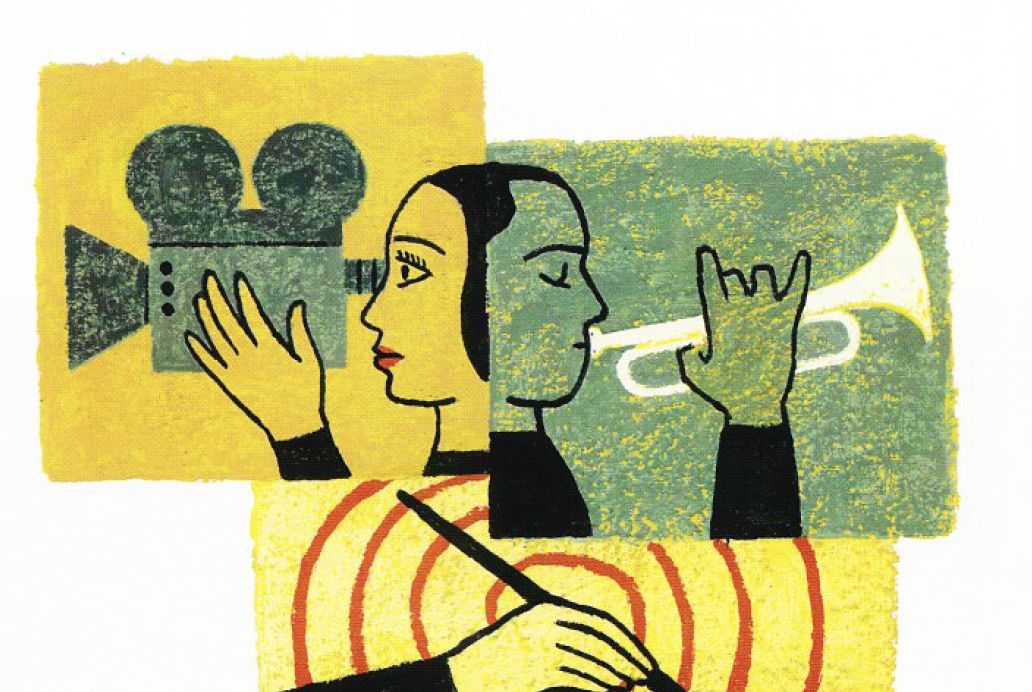
What may be less obvious is the role of art-making as a form of research. As in the sciences and other disciplines, those of us in the arts not only disseminate new methodologies and forms of knowledge, we help to create them. By definition, the process of creating a work of art — a painting, a dance, a musical composition, an architectural design, a theater piece or film — is from its inception a research project. Students are asked to formulate an original response to a unique field of inquiry and to “publish” their results not only in the form of research papers, but also through the mediums of performance and exhibition. In addition, the examples of outstanding arts practice available to students at UCLA through our museums and performing-arts program help to create a unique laboratory for the next generation of cultural innovators.
The arts are a medium of intellectual and ethical inquiry, a way of investigating the ever-changing world, of exploring the meaning of memory and tradition, and of charting the inner, subjective surfaces of human experience. Just as the medical sciences are devoted to extending and improving the quality of life, the arts help us to understand the essential reasons for that life, the deeper values, visions and commitments that sustain our will to survive. The study of the arts by its very nature challenges the boundary between theory and practice — between knowing about and knowing how.
One way to maximize the advantages of having strong arts programs within a research university is something that I call project-based education. It is an approach that takes as its starting point neither the established academic disciplines nor the various genres of art. Rather, one takes an aesthetic or intellectual problem, a question or conundrum, the exploration of which inevitably encourages us to traverse the frontiers that divide the disciplines and separate theoretical knowledge from creative practice. This is, after all, where the word university comes from — the notion of a holistic, aggregate universe of knowledge. Three examples of innovative interdisciplinary projects will illustrate this point.
Let’s begin with an intercultural performance piece called Ah Q!, a project incubated in the Department of World Arts and Cultures (WAC) that involved artists from China and the United States and collaboration with faculty in the Department of East Asian Languages and Cultures in the UCLA College. The piece, based on a popular Chinese story, first took shape as part of the Asian-Pacific Performance Exchange, a Ford Foundation-supported program that brought artists from Asia and the United States together for six weeks under the guidance of WAC Professor and Director of the Center for Intercultural Performance Judy Mitoma ’70, M.A. ’75. Ah Q! grew out of the interaction between Victoria Marks, a member of WAC’s choreography faculty, and visiting artist Xu Ying, a renowned Chinese opera director and actor. The piece itself is based on The True Story of Ah Q, a short story published in the early 1920s.
The character of Ah Q is an Everyman in the worst sense of the word. He is stubborn, deceitful, self-important and vain. The story as reinterpreted by Marks and Xu Ying is a dialog across cultural boundaries about the tendency of human beings, and by extension entire communities or nations, to overemphasize their own importance and in the end to become self-centered, even xenophobic. The process of shaping and producing the work was complemented by courses on Chinese opera, dance, music and literature taught by guest artists and by faculty in East Asian Studies. The Ah Q! artistic team also took part in public events that connected them to Los Angeles’ Asian and Asian-American communities. A second cast, made up exclusively of students, performed their own version of Ah Q! as part of the department’s Repertory Tour Ensemble course, taking the work out to local public schools.
For me, Ah Q! illustrates not only the value of interdisciplinary collaboration among artists of varying cultural backgrounds, and between the arts and humanities, but also the value of the arts as a research methodology in international studies and as a creative framework for establishing collaboration across national boundaries.
A different sort of interdisciplinary project is represented by NANO, which in September concluded a nine-month-long exhibition at the Los Angeles County Museum of Art’s LACMALab. UCLA professors Victoria Vesna of Design | Media Arts, Jim Gimzewski of chemistry and Katherine Hayles of English teamed up with graduate and undergraduate students to create an interactive exhibition that immerses visitors in a media-arts experience of the convergence of computing, molecular biology and nanoscience. In the exhibition the science of the nanoworld — a level of organization of the universe impossible to experience directly with our present technology — has been interpreted by artists and designers to convey a visceral and intuitive understanding that is difficult, if not impossible, to express by more conventional means.
The various components of the exhibition are designed to involve the visitor in the radical shifts of scale and sensory mode that characterize nanoscience. Participants are invited to enter a giant cell and to interact with molecules. A reactive floor that mimics the structure of graphite changes form and creates “gravity waves” as visitors move across it. Quotations from novelists and scientists appear throughout the exhibition, offering insight into how nanoscience is being imagined by different creative minds. NANO is a compelling example of potential synergies between the arts and the physical sciences.
And third is the L.A. NOW project. This project, led by Professor of Architecture and Urban Design Thom Mayne, focuses on downtown Los Angeles. The first in a series of “wall-less classroom” initiatives, it fosters fresh thinking about current architectural design, art and cultural issues of public concern.
Among the most influential urban architects, Mayne initiated this project to share his professional experience with students and to bring their combined intelligence to bear on real public concerns. It developed into a collaboration between UCLA and several other schools — the Art Center College of Design in Pasadena, the California Institute of the Arts in Valencia and the Southern California Institute of Architecture in Los Angeles — and is a model of how a city’s native resources can benefit the community at large. The exhibitions mounted by the L.A. NOW team have been published in two volumes, the first an imaginative and beautifully designed survey of the physical, ecological and social character of our sprawling metropolis, and the second a compelling presentation of seven proposals for re-envisioning downtown Los Angeles.
It is evident from these examples that the true value of the arts and of art-making in the university context flows from the fact that our programs combine the traditional strengths of the academy, where students learn about the arts, and the conservatory, where students learn how to make art, to design, to choreograph, to compose. We agree with the pragmatic philosopher John Dewey that the division between theory and practice — or mind and body, if you will — has not had an entirely positive effect on our educational system or even our civilization. Although some persist in seeing the arts as an exalted but essentially impractical aspect of civilization — icing on the cake, as it were — I would argue that training in the arts can have the most pragmatic consequences.
The February 2004 issue of the Harvard Business Review featured a story titled “The M.F.A. Is the New M.B.A.,” which reported on the increasing competitiveness in corporate hiring of M.F.A.s versus traditional business-school graduates. The author, Daniel Pinks, writes that “the demand for artistic aptitude is surging” in the business world: “Getting admitted to Harvard Business School is a cinch. At least that’s what several hundred people must have thought last year after they applied to the graduate program of the UCLA Department of Art — and didn’t get in. While Harvard’s M.B.A. program admitted about 10 percent of its applicants, UCLA’s fine-arts graduate [programs] admitted only 3 percent. Why? An arts degree is now perhaps the hottest credential in the world of business. Corporate recruiters have begun visiting the top arts grad schools … in search of talent.”
At UCLA, students of the arts are challenged to find solutions, to take personal responsibility for their work and to bring the evanescent products of the creative imagination into the world with artistic discipline and technical mastery. The things we teach at UCLArts, and the way we teach them — a synergy between the intense focus of the arts conservatory and the open intellectual horizons of the liberal-arts university — produce individuals who are good at seeing what’s around the bend and at seeking practical solutions to complex problems. Perhaps even more importantly, our young artists are able to view things that other people are inclined to take for granted as inherently questionable. That’s what artists do, after all; they pick up the box, shake it and rearrange the pieces. They are always asking, “Why that way?” An approach to the arts in higher education that links knowledge and practice, that concerns itself with the deep questions that run through and connect established bodies of knowledge, and that impels us to look at the world with new eyes, to listen with new ears and to question our own assumptions can have profound value both within and far beyond the boundaries of the university.