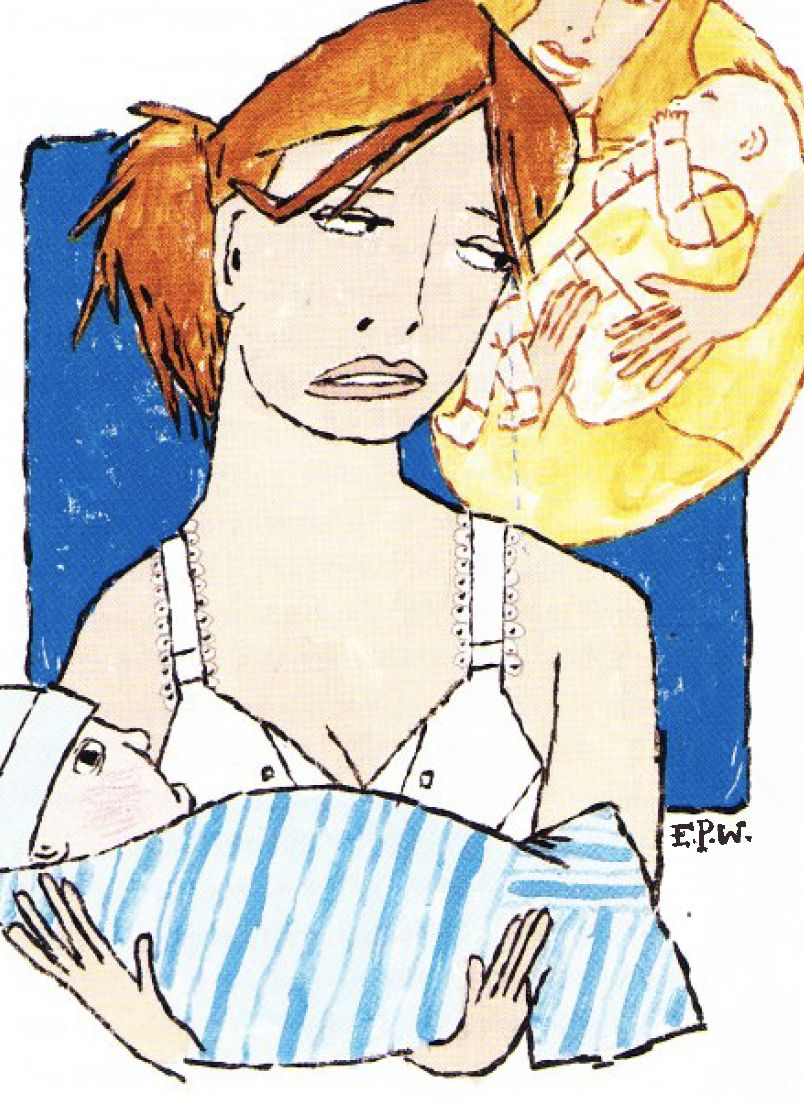
As an expectant mother, I knew the birth of my first child would bring boundless challenges along with boundless joys. I did not, however, anticipate that by the time my son turned a month old, I would believe that having a baby was the biggest mistake of my life. Yet soon after giving birth, I grew increasingly anxious and despondent, and felt little connection to my child.
While I didn’t realize it at the time, my negative feelings weren’t confined to the baby; I had stopped laughing, stopped being affectionate and lost all desire to participate in the activities I normally enjoyed.
I was suffering from postpartum depression (PPD), a physical illness affecting about 10 percent of women following childbirth. A type of clinical depression, PPD is much more severe than the baby blues, a sometimes-tearful two-week period experienced by many new moms. Women with PPD feel sad, anxious and hopeless, often suffering difficulty sleeping, appetite changes, anxiety and feelings of guilt and inadequacy. Some have thoughts of suicide. Without intervention, PPD can last months or even years.
Fortunately, with treatment, most women who suffer from PPD will feel like themselves again within two months. However, because expectant mothers seldom receive information about PPD, those who experience symptoms often feel too ashamed or guilty to seek help. Doctors who are unfamiliar with the condition misdiagnose others.
Scientists don’t know the cause of postpartum depression, but they suspect it results from a dramatic drop in estrogen, which peaks at 200 to 300 times its normal rate during pregnancy and then plummets to its pre-pregnancy level within the first two days after childbirth.
“The postpartum period is the most psychiatrically vulnerable time in a woman’s life,” says UCLA’s Vivien K. Burt, associate professor of clinical psychiatry. In 1993, Burt founded the Women’s Life Center at UCLA’s Neuropsychiatric Institute and Hospital, a program specially designed to address mood and anxiety disorders as they relate to women.
The Women’s Life Center focuses on mental-health treatment during the special phases of a woman’s life, such as conception, pregnancy and menopause. At the time of its creation, only one similar facility existed in the United States. Since then, Burt and her colleagues have advised a number of universities that have opened such centers, including Emory University in Atlanta, Ga., UC San Diego and UC San Francisco.
“A woman suffering from postpartum depression needs to understand that it’s a treatable illness and it doesn’t mean that she’s a bad mother or one who can’t bond with her child,” says Burt. Treatment can include antidepressant medication, individual counseling or group counseling. Most experts agree that women do best with both medication and counseling.
Angela Farrell, an adjunct lecturer in the Division of Psychiatry, facilitates UCLA’s support group for those with depression during pregnancy or postpartum. “It’s important to take social and environmental factors into account along with biology. The interplay between them plays a part in just about all psychiatric diagnoses,” she says.
Certain factors can make a woman more vulnerable to developing PPD. These include a previous history of depression, as well as social stresses such as an absent or unsupportive partner, financial problems or a recent loss.
Although the role of personality remains unclear, Burt and Farrell have noticed certain traits that seem to be shared by women who suffer from PPD. “They tend to be hard on themselves and look for their own deficiencies when things don’t go well,” says Burt. Or, as Farrell describes it, “They’re A students who feel like they’re getting a C.”
Mary Wilson, a Los Angeles-area mother of two, sought help from the Women’s Life Center after experiencing a panic attack five days after the birth of her second child. “Up to then, everything had been perfect,” she says. Her doctor told her to get some sleep and that she’d feel better in three months. Instead, Wilson’s condition worsened, until she was consumed with such thoughts as “What did I do? I can’t handle this” and “I don’t want him.”
A friend told her about UCLA’s program, but she hesitated for several months because she was afraid to be evaluated by a psychiatrist and also believed that antidepressants were overused in our society. When the bad thoughts continued, Wilson finally relented. Her treatment included an antidepressant as well as participation in the support group.
Although it took a few months for doctors to determine the right dose of medication, Wilson gradually began to recover. “When I started feeling some joy back in my life, then I knew it was working,” she says. “I began to feel like my old self again.”
Women who need antidepressants but still want to breast-feed may worry about the effects of the medication on their infants. This and similar issues are being examined at the UCLA Pregnancy and Postpartum Mood Disorders Program, which, in conjunction with the Women’s Life Center, helps women facing emotional problems associated with childbearing. The program encompasses several research studies, including one looking at the level of medication present in babies whose mothers took antidepressants during pregnancy, while breast-feeding, or both.
Victoria Hendrick M.D. ’90, assistant professor of psychiatry and director of the Mood Disorders Program, is exploring not only the amount of antidepressant medication that gets into babies’ systems, but its consequences, if any. The five-year study, which began in 1997, has so far shown only extremely low levels, with no adverse effects. The research includes testing the mental and motor development of the babies when they reach 18 months old as a way of detecting longer-term effects. So far, test scores have been the same as those for babies who weren’t exposed to antidepressant medications. Hendrick hopes to extend the study another five years to monitor the children for an even longer period. She is still accepting study participants.
Other studies at the Mood Disorders Program are looking at the prevalence of depression in pregnancy, the effects of stress during pregnancy and the benefits of estrogen in treating PPD.
In my case, I chose to breast-feed my son while taking antidepressants, so I’m relieved by the research confirming the safety of that decision. It’s been close to a year since I first sought treatment at UCLA, and I look back on that bleak time with a combination of wonder and disbelief. I truly feel like I’ve been given my life back. Best of all, PPD no longer dampens my love for my son, Steven. Now almost 14 months old, he is a source of constant delight.
I wish I had been educated about PPD when I was pregnant so I would have known to seek help sooner. Expectant parents must be made aware that PPD is more common — and more easily treated — than they might have imagined.