What is the relationship between art and science? It’s a provocative question — and UCLA has played a major part in answering it.
PST ART: Art & Science Collide, the latest iteration of the Getty’s expansive initiative, kicked off in fall 2024. Art lovers across Los Angeles and elsewhere in Southern California were invited on a journey through space and time, going deep into the past and whirling into the future, asking new questions of one another, of art and artists, of science and scientists.
The institution receiving the most grants for PST ART 2024, UCLA was awarded more than $2 million to conduct research and to present and commission work as part of the nation’s largest art event. The result was seven projects spanning three major museum exhibitions, a showcase of ecoacoustic artistic practices, live performances, a sci-fi series that shone a light on storytellers from 21 countries and an eclectic downtown gallery show. Dozens of UCLA faculty and alumni were among the more than 800 artists represented across 70 museums and cultural institutions.
Six of the UCLA-specific projects were created and presented through public programs and research centers within UCLA’s School of the Arts and Architecture — including the Hammer Museum at UCLA, the Fowler Museum at UCLA, UCLA’s Center for the Art of Performance (CAP UCLA), the Art|Sci Center and the Conditional Studio. UCLA’s Film & Television Archive partnered with the UCLA School of Theater, Film and Television’s cinema and media studies program for another PST ART presentation.
Through PST ART, we are asked to deepen our relationship with art itself. To consider that maybe art is science and vice versa. To broaden our ability to relate to — and, hopefully, to work harder to protect — this good Earth from which everything we’ve ever known, or touched, or loved has sprung and to which it will return.
While many PST ART 2024 exhibitions wind to a close this month, several UCLA projects will extend well into the year. There is still so much to explore.
THE HAMMER MUSEUM AT UCLA
Breath(e): Toward Climate and Social Justice
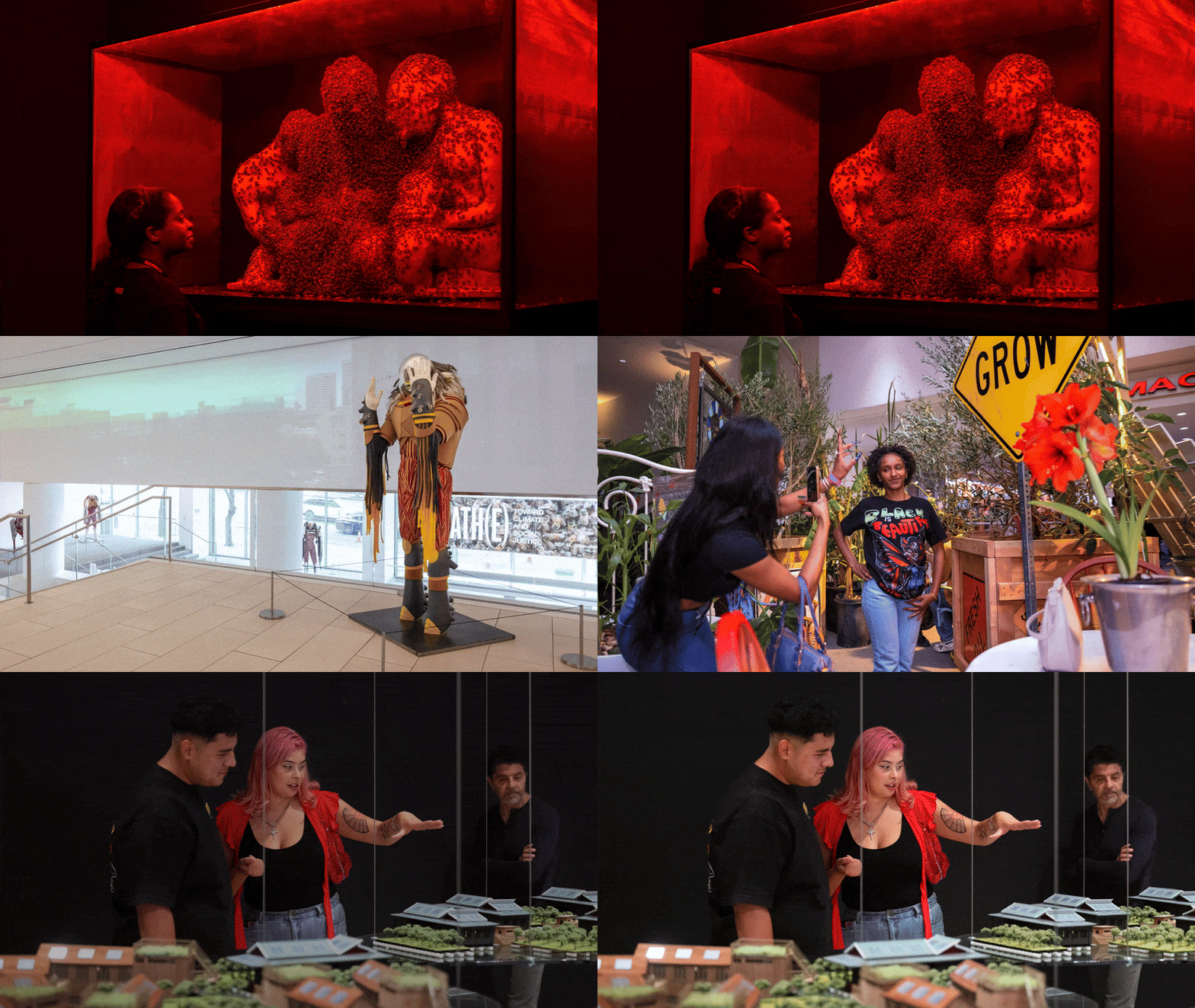
The Hammer Museum was home to one of the flagship exhibitions of PST ART 2024, titled Breath(e): Toward Climate and Social Justice, which showcased 100 works from 25 artists. Prominently featured were environmental art practices that specifically address the climate crisis and anthropogenic disasters, while articulating the inescapable intersection of those things with issues of equity and social justice. Living things permeated the Hammer, from a “gangsta garden” grown by South L.A. food activist Ron Finley to an evocative sculpture of humans holding one another built in part by a colony of bees.
Multimedia and mixed-media works throughout the galleries served as meditations on living beings from around the world. Some bore sober witness to communities most in peril in the age of climate disaster. Other objects reflected themes of Indigenous futurism. Among these were the enigmatic figures of Sovereign, which were commissioned by the Hammer from Cannupa Hanska Luger and greeted museum visitors with their otherworldly presence in the lobby throughout the fall.
THE FOWLER MUSEUM AT UCLA
Sangre de Nopal/Blood of the Nopal: Tanya Aguiñiga & Porfirio Gutiérrez (through Jan. 12)
Fire Kinship: Southern California Native Ecology and Art (opens soon)
Two Fowler Museum PST ART exhibitions center the concept of Indigenous scientific innovation.
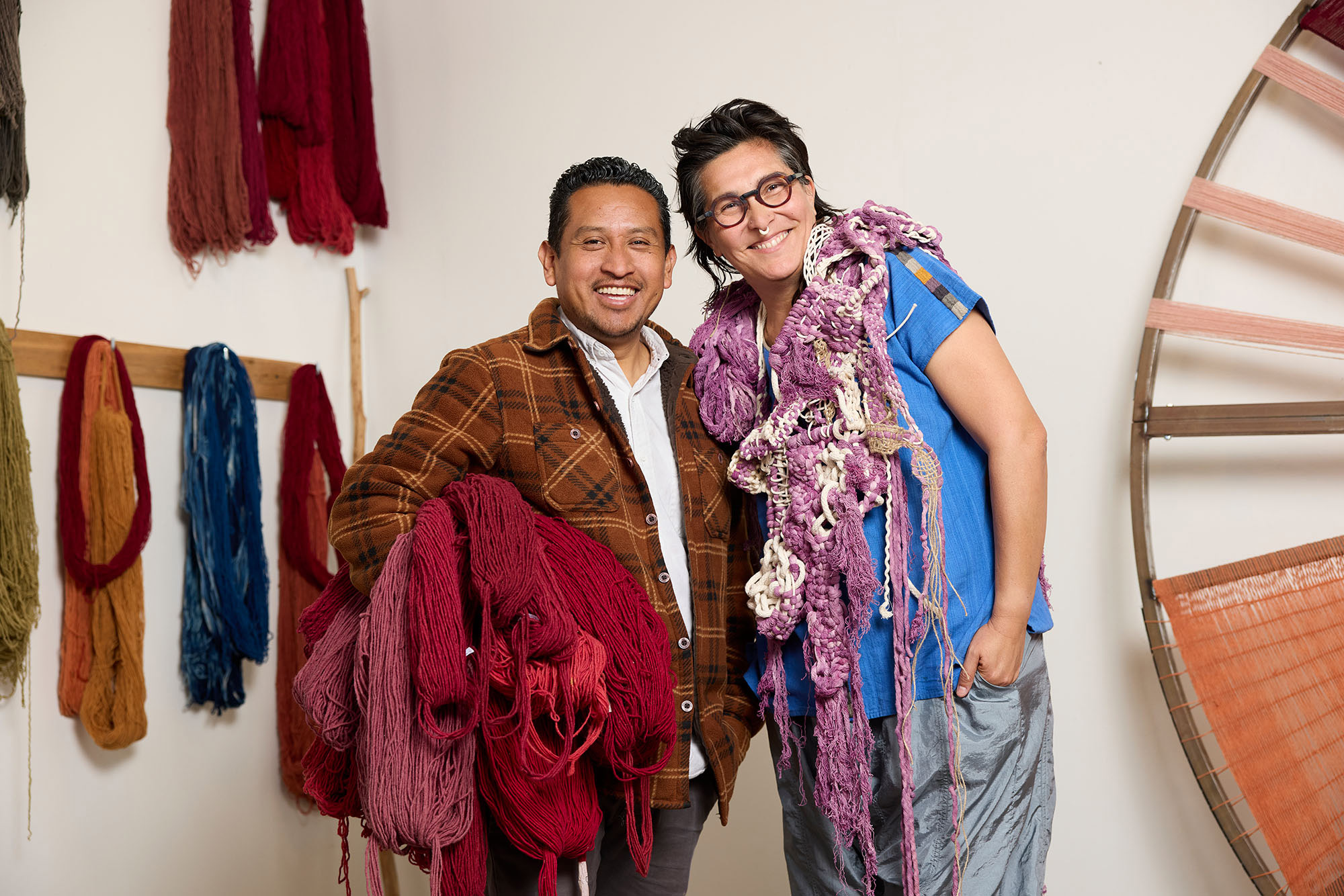
Sangre de Nopal/Blood of the Nopal: Tanya Aguiñiga & Porfirio Gutiérrez brought two Los Angeles–based textile artists — both Indigenous to North America — in direct conversation with each other’s practice. More specifically, their collaboration seeks to throw a spotlight on the ecological and botanical scientific knowledge of the Zapotec peoples, which stretches back thousands of years. The exhibition was focused on the ways in which Indigenous artists in North America once bred, hybridized and used a certain kind of beetle — the cochineal — which populates prickly pear (nopal) and creates different shades of red dye for textiles.
Fire Kinship is a work of community spirit and life, drawing expertise from artists and members of multiple California native communities to reflect on the importance of humans creating, living and supporting the land. By way of a series of loaned objects such as baskets, ollas, rabbit sticks, bark skirts and newly commissioned work from contemporary artists, the Fowler will serve as a living history of the expertise of the Tongva, Cahuilla, Luiseño, and Kumeyaay communities, past and present.
UCLA FILM & TELEVISION ARCHIVE
Science Fiction Against the Margins
Curators and staff at UCLA’s Film & Television Archive are frequent and accomplished time travelers. In every present moment, they work toward preserving and restoring moving images from the past so that future audiences will be able to enjoy and experience a variety of storytellers and storytelling devices. Archive director May Hong HaDuong M.A. ’06 calls preservation “the most generative form of time travel.”
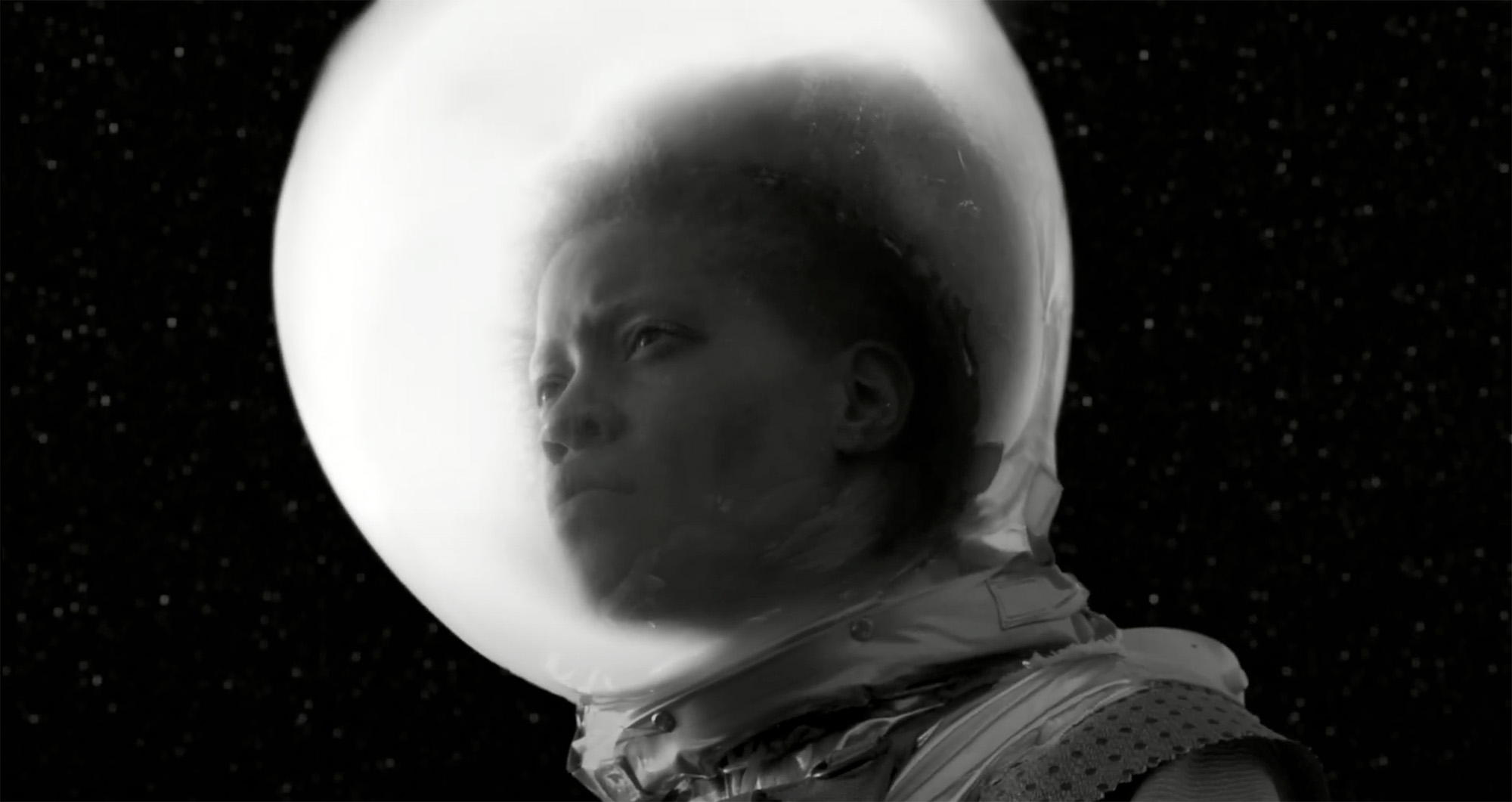
For the PST ART series Science Fiction Against the Margins, archive curators knew they wanted to reach far beyond the confines of high-gloss Hollywood sci-fi. Over the span of four years, they collected a variety of works representing artists from 21 countries. This 12-week series included 40 productions — from feature films to TV episodes to experimental shorts — tackling themes of apocalypse, tech decay and our ongoing fascination with the moon. “The brilliant storytelling shared in the series is a reminder that another world is not only possible,” HaDuong says, “it is necessary.”
UCLA ART|SCI CENTER
Atmosphere of Sound: Sonic Art in Times of Climate Disruption
A series of sonic art exhibitions under the PST ART project Atmosphere of Sound, presented by the Art|Sci Center, is the result of several years of research and investigation into the world of ecoacoustic artmaking. Curators Victoria Vesna, UCLA faculty in the design media arts department, and Anuradha Vikram were eager to engage human bodies through vibration and exploratory learning as a means of achieving deeper empathy with the environment and with other species.
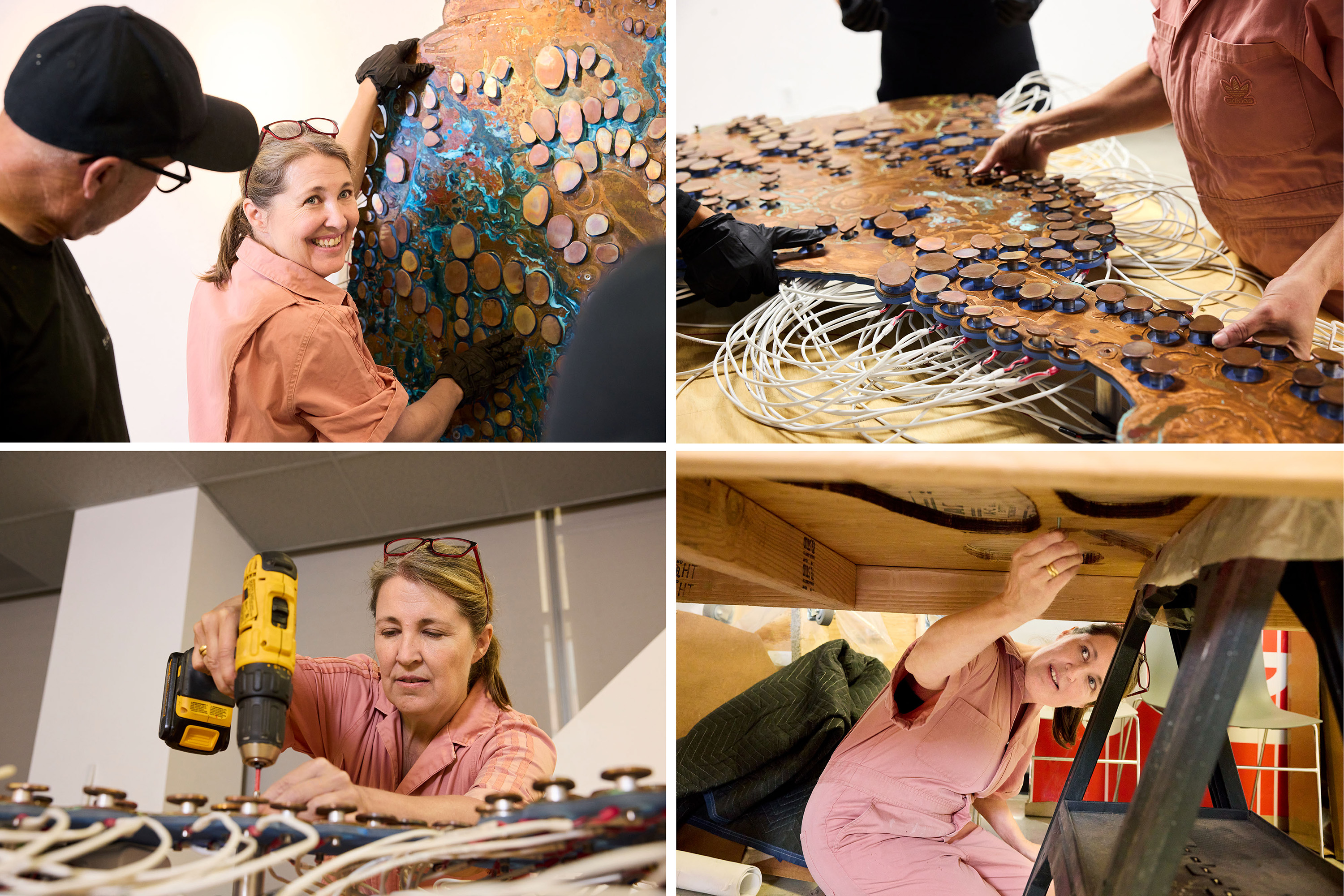
One of the most evocative representations of that goal is The Sensitives, an interactive piece by UCLA alum Katie Grinnan M.F.A. ’99, which was on view from October to November at the CNSI Gallery on campus (watch this video to see The Sensitives in action). Grinnan was inspired by the ways in which an octopus inhabits the world, with its chameleonlike nature allowing it to hide from predators, literally change its RNA. Four more Atmosphere of Sound exhibitions will be held on campus through May, including Memory Garden, a work by UCLA alum Iman Person M.F.A. ’22, which opens Feb. 14.
UCLA ARTS CONDITIONAL STUDIO
Conscious Tether: Art and the Internet in Los Angeles
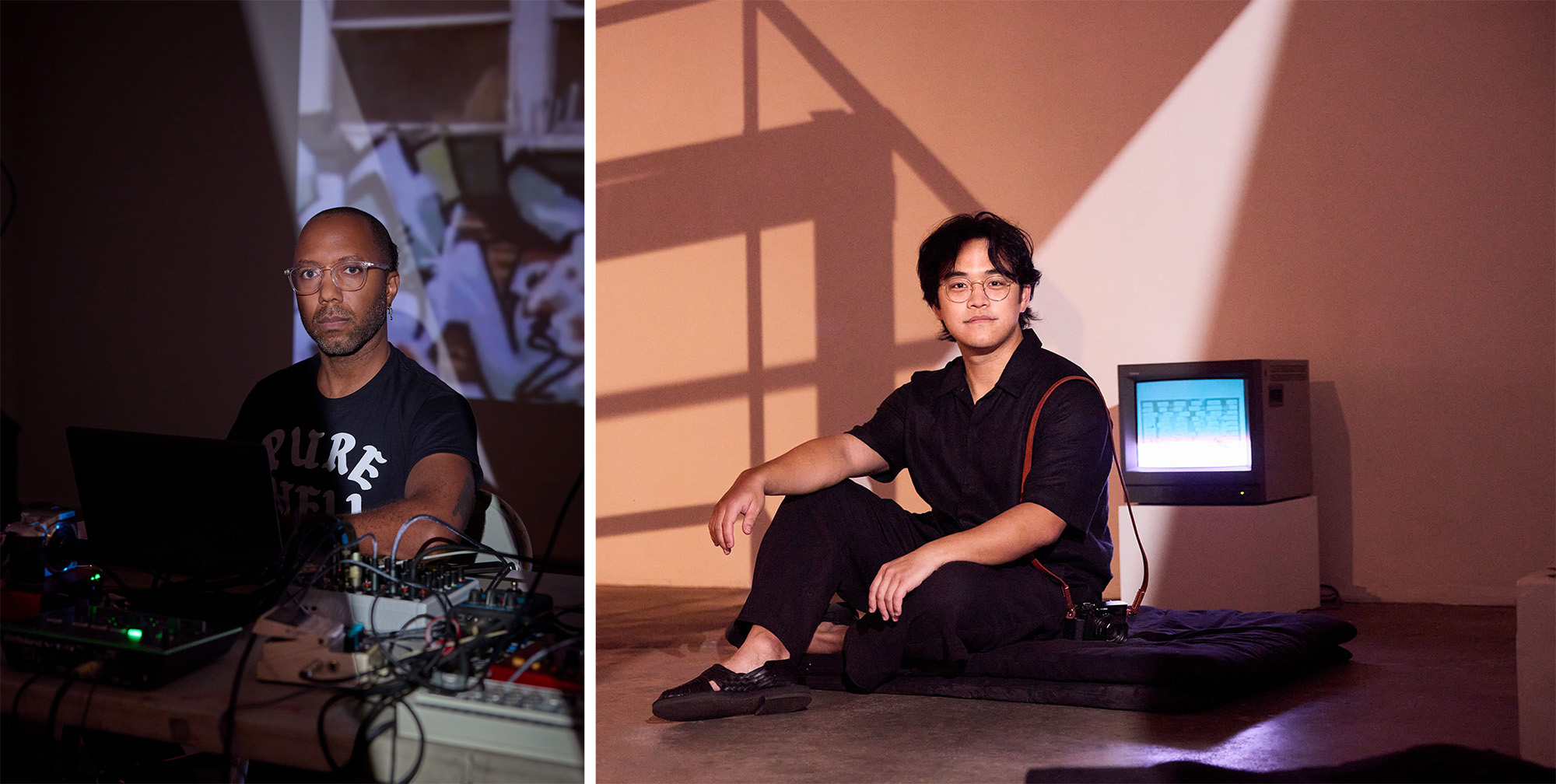
For this eclectic three-week exhibition held at the Human Resources Gallery in downtown L.A., curators invited a collective of artists — including several UCLA alums and faculty — to explore the global force of the internet and the ways it continues to shape our reality and culture. Most of the works were tactile and sensory.
Devin Kenny M.F.A. ’13’s mini-documentary and complementary sound-activated interactive experience examined the role ciphers play in our lives, from our entertainment tastes to our political thinking. Tyler Yin ’18 invited viewers to take a shift at a low-tech vintage computer display, clicking on a seemingly random collection of words to unlock a cryptic query and consider the unseen labor that goes into software design.
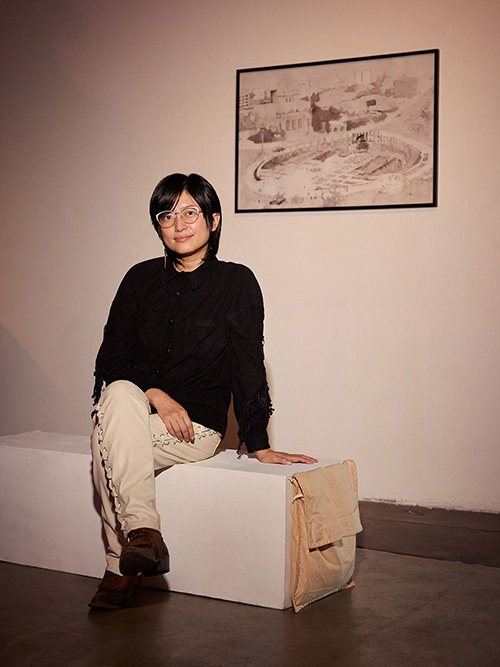
Xin Xin M.F.A. ’16 was inspired by the 2003 toppling of Sadam Hussein’s statue in Baghdad’s Firdos Square and the ways in which video of the occurrence flooded the news and the internet, perpetuating a false narrative that the moment came about in a large, organic crowd of Iraqi citizens (in reality, it was a couple hundred U.S. military personnel and Western journalists). A single photograph online shows the full scope of the square that day; Xin’s piece, made from ink and thermochromatic paper, conjures a blurry re-creation considering that broader view. Viewers could touch the paper and through the warmth of their hands become complicit in remaking the scene again and again.
Meanwhile privacy activist group LA Cryptoparty offered a whimsical computer made of white cardboard alongside an office tray full of handwritten pamphlets with instructions on how to create a false identity and disappear from the internet entirely.
CAP UCLA
Three performance collaborations with PST ART exhibitions
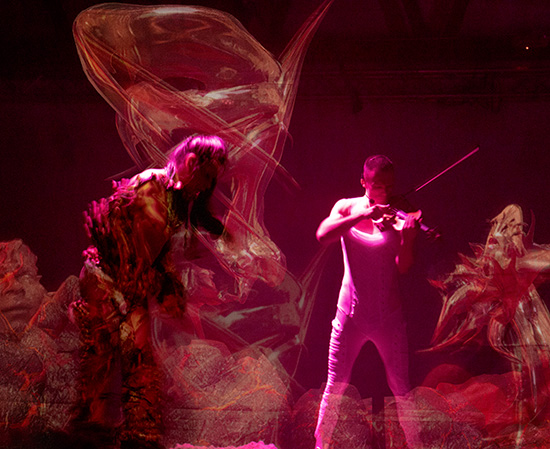
UCLA’s Center for the Art of Performance fully embraced the collaborative nature of PST ART with three co-presentations. A celebratory evening at the United Theater on Broadway in downtown L.A. featured experimental performances by UCLA alum painter, performer and installation artist rafa esparza ’11, MUXX collective and others. Movement, performance, virtual reality and 3D video came to life as part of Live Night: Cruising Bodies, Spirits, and Machines, presented in collaboration with REDCAT’s PST ART exhibition All Watched Over by Machines of Loving Grace, which rethinks artificial intelligence through Indigenous, brown and queer perspectives.
Another performance at the UCLA Nimoy Theater highlighted sonic artists from the PST ART exhibition Energy Fields: Vibrations of the Pacific, presented by Fulcrum Arts and Chapman University. CAP UCLA invites more ecoacoustic artists to the Nimoy stage in partnership with the UCLA Art|Sci Center Atmosphere of Sound project on March 15.
If that all sounds like a lot, it is and it was, which is as it should be for the nation’s largest art event. See you all again in 2030.
Read more from UCLA Magazine’s Winter 2025 issue.




