The world is getting smaller every day, a fact that seems to instill a sense of acute anxiety in anyone who has given much thought to the spread of infectious diseases, whether naturally or through the malevolent means of bioterrorism or biowarfare.
In the dawn of the 21st century, everything and everywhere seems to be a plane flight away. This includes hemorrhagic fevers from the rain forests, the latest round of influenza from China or drug-resistant strains of tuberculosis, courtesy of the prison system of the former Soviet Union. Add to this the bacteria or viral agents of choice for biological munitions or terrorist acts — anthrax, for instance, or Lassa fever or any number of microscopic killers, less publicized but equally deadly — and the ease with which our world can suddenly be sown with havoc and death is truly terrifying.
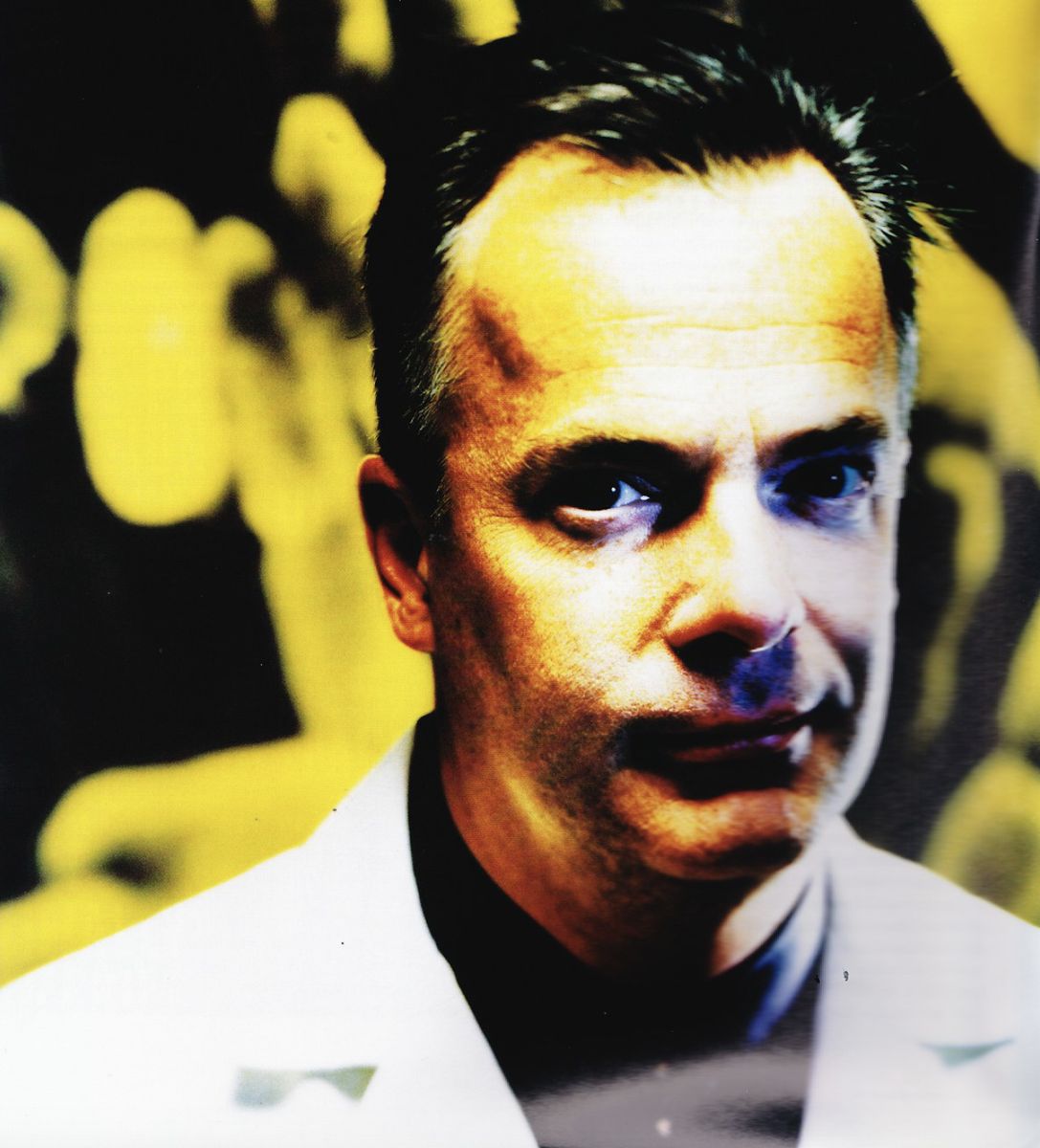
To Scott Layne, an associate professor of epidemiology at the UCLA School of Public Health, these scenarios are the stuff of everyday life. They seem to flow effortlessly from his memory, an endless playback of apocalyptic visions, complete with numbers and factoids about lethality fractions and dispersal rates: the number of spores of anthrax, for instance, needed to generate an infectious cloud should you happen to step on them; the optimal weather conditions for delivering a biomunition to maximize havoc. Layne will give you a rundown on the world’s top-10 infectious diseases or the top-10 most-likely agents for bioterrorist attack with the same ease and vigor that movie buffs will run down their favorite sci-fi films or record buffs their all-time, top-10 “flip sides.” Ask him if he considers himself an expert in these fields and he will first describe himself as a “rank dilettante” and later correct himself to suggest that he knows as much about them as anyone of his generation, although considerably less than those individuals who actually worked in the biomunitions laboratories of the U.S. and the former Soviet Union.
That such labs are necessary seems to be unquestionable. Nancy Cox, for instance, who is chief of the influenza branch at the Centers for Disease Control and Prevention, describes Layne’s proposal as “the way of the future, no doubt about it.” Bill Patrick, former chief of “product development” for the U.S. biomunitions program, responded to a question about whether such labs were necessary with a pithy “My God, yes!” He went on to explain that the present options for successfully dealing with an act of bioterrorism or biowarfare are “essentially zero.” According to Patrick, who recently lectured at Layne’s course on bioterrorism at the School of Public Health, such automated laboratories would not only provide a mechanism for quickly analyzing the hundreds of thousands of samples that would be collected during such an attack — to characterize the agent or agents and map how widely they had been dispersed — but also a potentially powerful means of deterrence to prevent any nations or terrorist groups from thinking they could get away with such an attack.
Sitting in a café in Santa Monica on a glorious spring afternoon, Layne looks less like a man obsessed with nightmarish visions than an academic version of Nathan Lane, with a tan that comes from thrice-weekly mountain biking jaunts in the Santa Monica mountains. Layne, who is now 45, is describing the unforeseen path he took to end up the resident expert at UCLA in biological apocalypse. He studied medicine at Case Western Reserve but opted out of his internship after three months at UC San Francisco because, he says, the conditions were “not very humane for budding physicians.” From there, he meandered. He finished his internship in psychiatry and then moved on to Los Alamos, working on nonlinear dynamics and laser spectroscopy, of all things. That led to two years at Stanford studying applied physics before returning to Los Alamos in the late 1980s to help model the mathematics of AIDS epidemics. The AIDS work was supposed to be a summer stint, but infectious diseases became his career.
In 1992, Layne returned to UCLA to finally finish his internship and residency and, two years later, joined the faculty in epidemiology while simultaneously starting a fellowship in infectious diseases. Based on his formal training, he now considers himself not so much a public-health expert or epidemiologist, but more “an experimentalist who knows a little bit of theory and a little bit of engineering.”
It was his AIDS research that got him thinking about the need for automated laboratories. Simple genetics, he explains, suggests that among the 30 million to 50 million humans infected with the HIV virus, there might be as many as a billion different variations of the viral genome. Researchers have little or no idea about how those variations are related, how infectious they are, how they diverge from each other or even how different variations manifest themselves as disease — in other words, little idea about what Layne calls “the big picture” and no technological means to gather the data to decipher that picture. “And now we’re hoping to develop a vaccine,” Layne says, “and there’s no guarantee that a vaccine for one strain will be portable to other strains. We have very, very little organized information on any of this.”
So Layne took to studying automated means to analyze thousands of viral samples, which brought him to the literature on automated laboratories and robotics and that led him to Tony Beugelsdijk, who was not only an editor of the Journal of Laboratory Robotics but ran the robotics program at Los Alamos and had been building automated and robotic laboratories for a decade. Along the way, Beugelsdijk had built robots to handle radioactive material and automated labs to do chromosome mapping for the human-genome project and environmental sampling for characterizing toxic-waste dumps. In 1995, Layne called Beugelsdijk cold. “I called him up,” Layne says, “and I said I found out about him by reading about automation and robotics in these various journals, and here’s what my problem is, and did he want to keep talking?” And talk they did. (Beugelsdijk says this is one of the more noteworthy aspects of Layne’s character: “He will cold-call anyone,” he says, “and he’s comfortable doing it, whether it’s senators, Nobel laureates or the presidents of corporations.”)
At the time, Beugelsdijk and his robotics group had been the driving force behind the creation of what are known as standardized laboratory modules. Each of these modules would perform a particular task in a laboratory and any combination could be put together into a fully automated laboratory. Beugelsdijk calls it the laboratory equivalent of “plug-and-play.” Layne likes to call it “LegoLab.” Each of these automated labs could do the work of hundreds of human technicians and, through e-mail and the Internet, could be utilized by diverse researchers, working anywhere in the world. “You can send off 1,000 samples,” says Layne, “and then instruct the lab to do the necessary tests. You don’t have to know the details of how the lab works. You only have to know what tests to perform and what scientific questions you need to ask.”
Ask Layne how such labs would be used and he reels off scenarios. For influenza, for instance, researchers around the world could collect hundreds of thousands of samples, have them characterized in the lab quickly and put together a database of trillions of bits of information that would give flu researchers the big picture they so desperately need. “In the short term,” he says, “more information means better vaccines. In the long term, you can ask questions about how the flu viruses evolve with time; you can predict whether they’ll be virulent; why some viruses jump from animals to humans and how the viruses move from region to region. You can start doing things we just can’t do now.”
For tuberculosis, automated labs would allow the tracking of tens of thousands of cases of multidrug-resistant TB worldwide and would specify the proper treatment when new cases arise. “With a system you can test individuals and identify quickly whether they have multidrug-resistant TB or not, and treat them appropriately,” Layne says.
For bioterrorism and biowarfare, the labs allow for the quick analysis of the enormous number of samples that will be taken during an attack — identifying the agents, specifying the treatments, telling authorities what regions are contaminated, or which city blocks, or even which homes are safe and which aren’t. “If this were done for bioterrorism,” he explains, “the logical place for such a lab would be at FBI facilities outside of Washington, and that lab could service the whole country. You could also have a lab in a C5 transport, which would make it literally only hours away from anywhere in the country.”
As a deterrent, says Layne, such a laboratory would give the authorities the opportunity to collect samples of potential biomunitions from nations throughout the world — whether by overt or covert means — and create a database of the molecular fingerprints of all these potential agents. “Now we could go back to people doing these things,” he says, “and we say, ‘We have your molecular fingerprints. We’re not going to tell you what fingerprints we’ve got or how we got them, but we want you to know if those agents show up in any wrong place or are sold on the black market, your safety or your freedom cannot be ensured. If those agents ever show up on U.S. territory in the wrong place, we can’t assure you’ll wake up the next morning.’ That’s a form of deterrence, and it may be the only form of deterrence we can have.”
For the past three years, Layne and Beugelsdijk have been working to generate a sufficient critical mass of interest to turn the automated laboratories into a reality. In September 1998, the two researchers published an article in Nature Biotechnology explaining the automated-laboratory concept and its potential for infectious-disease research and beating the bioterrorist. In an accompanying editorial, the Nature editors called the idea “an attempt at creating a coordinated plan for dealing with big problems — like biological warfare — that require big biological solutions” and suggested that it’s time for the biotechnology industry, the medical community and the various governments to get on the bandwagon. The editorial characterized the existing U.S. government plans as the “equivalent of having the citizenry rush to their basements and throw their arms up over their heads during a nuclear war,” and the Layne and Beugelsdijk proposal as the kind of plan that has “at least a chance of being effective.”
In April 1999, Layne, Beugelsdijk and C. Kumar Patel, then vice chancellor for research at UCLA, hosted a two-day workshop at the National Academy of Sciences in Washington, D.C., titled “Automation in Threat Reduction and Infectious Disease Research: Needs and New Directions.” A book on the meeting will be published this year by the National Academy Press. Layne has also been given permission by UCLA to approach foundations for the $20 million to $30 million in funding required to build one laboratory, ideally for influenza, as a proof of principle — put together the modules, design the software and the database — and then start the design on more laboratories.
“What we really need are dual-use labs that can deal with natural outbreaks and mitigate malicious acts,” says Layne. “We’ll never know if lightning will strike, and a lot of people now say it’s not a matter of if, but when. The conclusion I’ve come to is the same as most experts in this field: By the time there is a bioterrorist event in this country, it’s too late to prepare for it. We will need to act fast to save lives. These labs will give us the ability to do that.”