As the podcaster who has, more than once, referred to herself as “Coffin Girl,” UCLA professor Kara Cooney is passionate about sharing her often controversial take on ancient Mediterranean cultures and burial rites. Energetically throwing herself into every corner of social media, she’s determined to both educate and entertain.
Sadly, since her earliest social posts two decades ago, the UCLA professor of Egyptian art and architecture at the UCLA Cotsen Institute of Archaeology has grown bored, frustrated or disappointed by pretty much every platform going. Cooney, like many serious communicators, has become tired of the big site algorithms that work against those not screaming for attention, as well as concerned about how many online sites just disappear: Bloomberg estimates that URL links to 38% of all internet sites working in 2013 have now vanished. Cooney wants some words to endure as long as the pharaohs.
So the professor is pivoting to new worlds — and she’s far from alone. As millions of online consumers have shifted their attention from legacy media sites such as The New York Times, X or Reddit toward the splashier visual worlds of Instagram, a whole new arena has emerged for thoughtful, engaging commentary and deeper reportage.
Cooney, for one, has never been so jazzed for the future of social media. She sees intellectual salvation in the rising tide of subscription-funded newsletters on sites such as Ghost, Kit or the currently dominant player in this new marketplace of ideas, Substack.
“2025 will be a transformative year. We will build new meeting places for grown-up conversation,” she says. “And those will be very different from the old ad-based, algorithm-dictated spaces.”
Like the rest of the internet, the new sites present something of a mixed bag. Some content is challenging and informative, some warm and whimsical — and some righteously rageful or downright disturbing.
It should come as no surprise that such a new frontier would include a healthy dose of intellectual UCLA DNA. Bruin Substackers include a legendary athlete and a contemporary football powerhouse, psychologists and artists. All are unified by a determination to speak directly to a select, rather than mass, audience that values unfiltered (albeit occasionally in need of editing) authenticity.
The demand is clearly there. While traditional media stagnates, Substack’s audience has been growing by 13% a year. Founded in San Francisco in 2017, Substack now boasts more than 17,000 writers and 3 million paying subscribers. The writers own their material and can take it elsewhere if they get a better hosting offer. A handful are earning millions of dollars through direct reader subscriptions while paying 10% “rent” to Substack.
But it’s not just about the money. Creators feel they are punching above their weight with a richer, more civilized connection not available anywhere else. Here are 10 Bruins who are surfing this new wave of online connection.
The Egyptologist’s New World
In January 2025, Kara Cooney started employing a third co-producer on her Substack site, “Ancient/Now.” It’s a mark of confidence in her Substack mission, which combines a newsletter, a podcast, links to other sites and, for subscribers, a two-way video “meet and greet” called Ancient Office Hours.
This colorful mix of lively writing and archived chats, combined with some rigorous coursework, is an exhilarating, funny and occasionally strange journey into ancient cultures that feel both alien and familiar. The 3,000-strong audience, building on a core of devoted boomers who have followed Cooney through many online reincarnations, engage without rage — “They have helped me work through some big ideas,” she says.
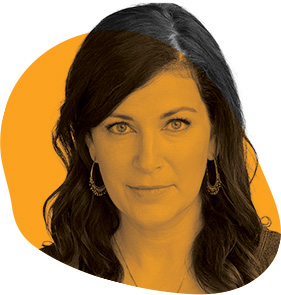
Critics dubbed Cooney “The Hot Egyptologist” after her Discovery Channel documentary series Out of Egypt debuted in 2009. It’s a sobriquet she laughs off, while adding that her Substack is a way of “maturing out” of such silliness.
“Working in TV demands compromise, and books are so overly edited they lose humanity in the pursuit of perfection, but on the site I can let rip spontaneously,” she says. “I can take on topics such as the parallels between Ramses II and Donald Trump, for instance — something that irritates some historians who argue we can only identify with people from, maybe, 500 years back. This sense of modern exceptionalism is absurd.”
Cooney still counts more than 300,000 followers on Facebook, but she says that since COVID, its algorithm has prioritized more advertising-friendly posters. On Substack, where she’s been busy for two years, she says the content is “a real conversation between people who care.”
She continues, “Yes, there are neo-Nazis and anti-vaxxers on Substack, but that is humanity for you. I would not advise against using an iPhone just because horrible people also use it. Today, Substack is first draft. As AI smooths out the creases in the world, such authenticity will become the most valuable coin of the realm.”
Getting in the Game
It may be no surprise that Kareem Abdul-Jabbar ’69 — famed Bruin center, Lakers legend, actor, social activist and author of 17 books and numerous TV scripts — is currently the most widely-read Bruin on Substack, with more than 160,000 subscribers. What keeps basketball fans (and others) coming back, he hopes, is the breadth of the writing on “KAR33M.”
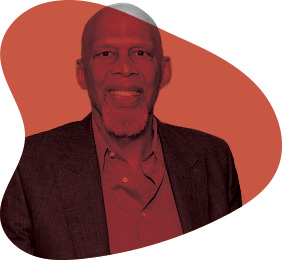
Abdul-Jabbar writes like the elder statesmen he is. In a packed weekly download, Abdul-Jabbar challenges stale racial debates, holds politicians to old-fashioned values such as honesty, and slips in the occasional streaming recommendation (notably Black Doves, a U.K. spy romp starring Keira Knightley, though, curiously, not Winning Time, HBO’s Lakers drama), all augmented with happy pooch videos, courtside commentary and even cooking tips. And you can absorb it all, as he says on the site, for the price of a weekly hamburger, money that goes to pay his fact-checker — a rarity on the internet.
For those wanting to dig deeper into Bruin athletics proper, good news abounds: Athletics is the single most inspirational source of Bruin activities across the entire newsletter sphere.
“We all still love the Four Letters, years after we graduated” says Joe Piechowski ’94, who since 2020 has been the primary editorial force behind “The Mighty Bruin” Substack newsletter.
“We are not accredited with UCLA,” he clarifies, “so we cover all the sports, from football to water polo, as UCLA fans, paying for our own season tickets and sharing the joys and dark days — like the Chip Kelly years.” (“We warned people,” he says with a chuckle.)
Piechowski — who last year won a seat on Ventura County’s school board by seven votes out of 76,100 cast — remains a steadfast booster of public education. He feels the athletic program is UCLA’s “shining light” and that its players deserve more attention than they receive in legacy media.
“Our writers are free to say what they feel. They can get surreal and silly,” he says, pointing to a debate about whether the football team should move from the Rose Bowl to SoFi Stadium. “We can be critical without being mean.”
Chase Griffin ’21, M.Ed. ’23, M.L.S. ’24 is a two-time winner of the National NIL (Name, Image and Likeness) Athlete of the Year Award and currently a quarterback at UCLA. The prime messages on his Substack, “The Athletes Bureau,” is the same one he took to Washington when he addressed Congress on student-athlete compensation in July 2024.
The message is clear and direct: Give the college sports NIL market — which has been growing since a 2021 Supreme Court decision liberalized it — the freedom to mature without heavy-handed regulation.

Griffin, who is scheduled to finish up at UCLA this summer, says he is interested in the business of sports, in protecting players’ rights and in “making sure they leave UCLA and other colleges armed with the right skills for a long and healthy career.”
He continues, “At a time when private equity is interested in investing in young athletes, at a time when some are starting to earn $55,000 to $80,000 a year from brands [Griffin himself has at least 40 such deals], we want to share our journeys and community experience in newsletters, podcasts and video.
“It is a business-oriented site, so it’s never going to be mass market,” he says, “but subscribers include include not only athletes, but also journalists and business managers taking the temperature of college sports. And if they hear our demands to ensure financial health and wellness, we are offering a very special service.”
Poking Holes in the Story (Actually, Stories)
For many writers, the need to put words down is an itch: Publication is the final relief, and if Substack weren’t around, they’d probably do it for free. (Many still do.) For David Pinsof M.A. ’15, Ph.D. ’18, a scientist at UCLA’s Social Media Lab and a researcher in the UCLA Department of Psychology, setting up the provocatively named Substack “Everything Is Bullshit” was a cognitive necessity.
“I had been sending emails to myself, arguing with myself about why so many widely accepted truths we tell ourselves were utterly wrong,” he says, “and I needed an outlet to relieve the pressure.”
Aside from his UCLA bona fides, Pinsof may be best known as one of the creators of Cards Against Humanity, the edgy, at times vulgar card game in which players fill in blanks with deliberately offensive answers. (Match Game it is not.) His Substack’s stated mission statement is to “poke holes in the stories we tell ourselves.”
When the Substack launched, during COVID, Pinsof was showered with thanks from people around the world, most of them in the United States, Spain and Australia. Those who wrote also felt alone facing the “hollow self-deceptive stories we tell ourselves” and were eager to strip away the social fabrications and learn more about themselves. His audience, Pinsof says, is “a global gathering of Darwinist cynics.”
On the site, he reveals why he avoids getting into arguments on the net. Critics say they shout to win hearts and minds, but as a behavioral psychologist, he believes that many people are not so much interested in facts or persuasion as they are in defending their tribe and their social status, and that they’re lying about their hidden need to be nasty to others to soothe themselves.
Pinsof throws out other provocations, arguing that “the aim of maximizing happiness in public policy is doomed.” So that’s Thomas Jefferson’s constitutional aspiration put in its place.
Two years ago, Pinsof laid down a “rule of three,” which became an internet meme: “1. We don’t really know why we do things. 2. We really don’t know why others do things. 3. Most of what we say implies we do — we are just guessing, oblivious to the biases and unconscious forces guiding us.” In other words, we are all filling ourselves with BS all the time. But maybe, he says, just recognizing this is a step toward gaining an advanced self-knowledge, so we can deal both with our dark sides and with other people more honestly and empathetically.
“But what do I know?” Pinsof says, fittingly. “I’m still a creative at Cards Against Humanity, which literally sold bull feces to thousands of customers.”
Bruins on a Mission
Many Bruin Substackers are taking to newsletters to champion causes that are largely swamped on bigger platforms.
David Jensen ’64, M.A. ’67 a former Sacramento Bee reporter who later became an aide to former California Gov. Jerry Brown, is the brains behind “The California Stem Cell Report,” which, true to its name, monitors California’s $12 billion investment in stem cell medical development. Jensen sees himself as something of a citizen-journalist here, arguing that in an era when local newspapers are shrinking, the existence of sober, serious, evenhanded newsletters can help keep both scientists and politicians honest.
In the “Report,” Jensen visits the case of a 6-year-old girl who was aided by UCLA’s “bubble baby” research, and at the same time exposes clinics that sell what he says are “dubious” stem cell treatments for painful joints. In January 2025, Jensen covered a fresh drive to accelerate therapies for rare diseases. It is dense but vital reading for those on the cutting edge of medical research.
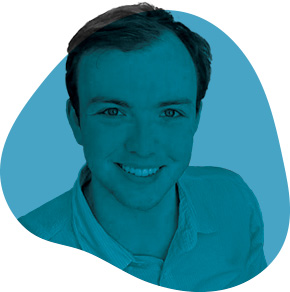
Samuel Matey M.A.G.I.S.T. ’22, who recently completed a master’s degree in advanced geospatial technologies in the UCLA Department of Geography, runs “The Weekly Anthropocene,” which offers up-to-date environmental stories from around the world. In January 2025, he looked at “cleantech” in China and the Ukraine, American wildlife road crossings and a British “vertical farm” — effectively, growing veggies on shelves — that’s producing a thousand tons of herbs and greens each day. Matey says that his subscribers are looking for succinct rundowns on the existential crisis, as well as long-form analysis expressed through digital maps.
Bruin Substackers can blend the profound and the personal. On “The Quantum Vibe,” Arpit Arora, a postdoctoral research fellow studying physics at UCLA, describes his journey from India through a myriad of visa programs and also muses on the challenges facing quantum research (with his writing aimed at smart, but not specialist, audiences). He boldly offers clear-eyed explanations for what has been called “modern magic” — quantum entanglement between two objects that may seem both connected and also miles apart — as well as the future of unthinkably powerful supercomputers. His mantra? “Stay curious.”
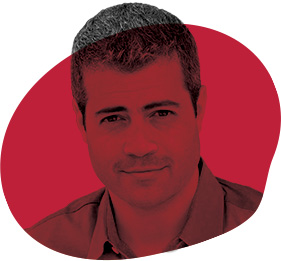
Social psychologist Matthew Lieberman launched “Matthew’s Substack” in July 2023 to address political culture. His posts can be tough-minded, declaring that students should be more informed about today’s political issues and that “professors should expect more of our students.” When the Department of Psychology professor sought to explain Donald Trump’s election in November, he fell back on a quote attributed to Napoleon: “Never ascribe to malice what can be explained by incompetence.”
More big names are looking at Substack to evangelize their messages and build their brands. Professor Daniel Swain, UCLA’s massively media-popular climate change scientist, is already on X, BlueSky, Threads, Instagram, Facebook and Mastodon, while also hosting his own Weather West video channel on YouTube.
But Swain likes the idea that he will own his own material on Substack, where fans already replicate notes from his “Office Hours” webcast anyway.
“I am balancing out how many more people I can reach, especially with my new role at the UC Agriculture and Natural Resources [unit] and how many hours I actually have in my life,” he says. “But people need good hard evidence about climate change even more today, so … ”
The ABCs
As an artist, writer and scholar, Johanna Drucker, Breslauer Professor Emerita of Bibliographical Studies in the Department of Information Studies, is known for her work on graphic design and experimental poetry. But her Substack, “JD:ABCs,” (both for the words “arts, books and culture” and the fact that Drucker is a historian of alphabets), is a far more personal endeavor. It’s a venture that at first made her slightly nervous.
“I have always kept a distance between my professional work at UCLA and other voices I find as a writer and graphic artist,” she says. “But the Substack site, where I alternate culture reviews with personal thoughts and experiences based on objects like an old Filofax or a sweater, are being read by colleagues as well as friends. I did wonder if I was revealing too much, but the response has been gratifying.”
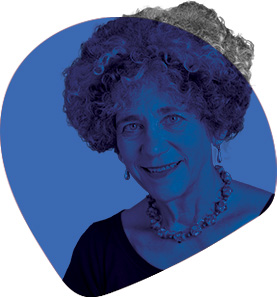
Everyone, she says (to her relief), has been positive about her twice-a-month mini-essays. The newsletter has the quixotic feel of rummaging through an old attic, capturing the delight and emotional impact of rediscovering familiar objects such as a Filofax personal organizer, a kitchen knife, a friend’s sweater or a plaster angel — and then creating watercolor images of these objects.
“It’s only 600 subscribers — tiny by internet standards — but I am not in this for the money or fame, but to share my thoughts when looking at an object like a pencil box matching with my artworks,” she says.
“Maybe one day it will all be collected into a book. But for now, it’s wonderful just sharing these short pieces, written in my best NPR voice with the hope we can make everything a little happier. Maybe this connection will be a good thing to come out of these strange times.”
Read more from UCLA Magazine’s Spring 2025 issue.