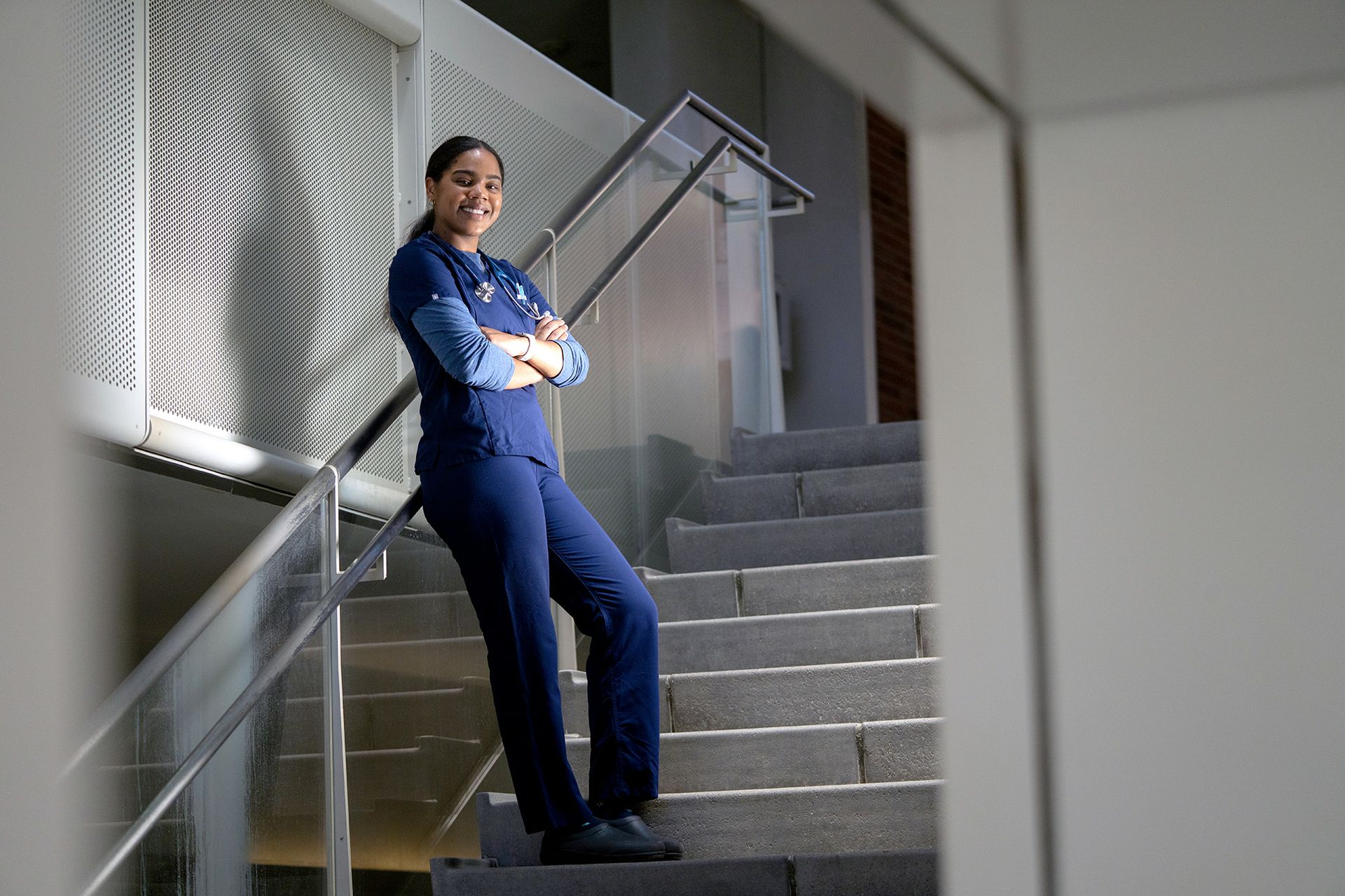
You don’t have to have seen the HBO Max drama The Pitt to know that the life of a medical trainee is intense — long, fast-paced hours filled with admitting patients, making rounds, reviewing charts and delivering hands-on, high-stakes care under the supervision of attending physicians.
For Tae-León Butler M.D. ’24, a 2024 UCLA David Geffen School of Medicine graduate now in her second year as a UCLA Health pediatric resident, this baptism by fire is demanding. For her pediatric subspecialty rotations, Butler spends 70-plus hours a week in one setting before moving to another, all while studying for rigorous board-certification exams during her “off” hours. Despite the demands, Butler says she is “having an absolute blast.”
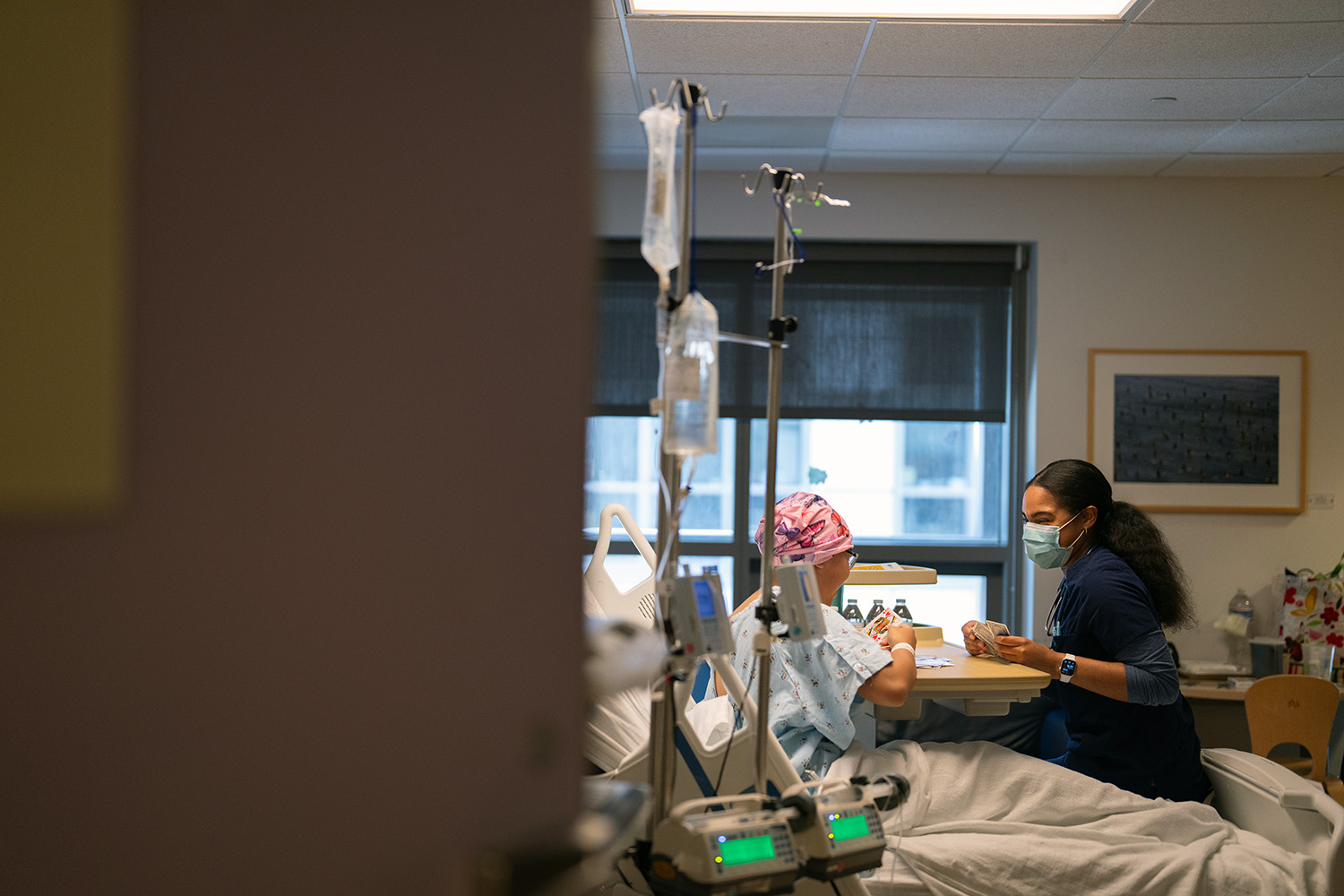
Her favorite patients are the kids with cancer. It’s a testament to her endless empathy that even when her shift is over, Butler spends extra time with them. (She once rehearsed a duet with a teen patient and performed it for the assembled health care team during rounds.) When she thinks it will help, Butler shares her personal story with these young patients and their families: She herself once struggled with the same diagnosis on this very same floor.
That all of this happened at UCLA is no accident. Mitch Butler ’94, Tae’s father, met his wife, Lisa ’93, when both were Bruins on campus in the early ’90s. Mitch — now a sports agent — was a key member of the UCLA basketball team, an experience he parlayed into an 11-year pro career, eight of them in the NBA.
But it was in the summer of 2006, when Tae was 9, that Mitch learned firsthand that UCLA had something even more important to offer.
A Deadly Diagnosis
While at Girl Scout camp that summer, Tae lost her appetite and her energy. She returned home with her neck swollen and with her gums bleeding when she brushed her teeth. Then, three days after starting fourth grade, she developed a severe limp. Her mother took her to the pediatrician, who found Tae’s white blood cell count significantly elevated. The doctor sent them to the UCLA Medical Center Emergency Department, where additional tests confirmed the diagnosis: acute myeloid leukemia (AML), a blood and bone marrow cancer.
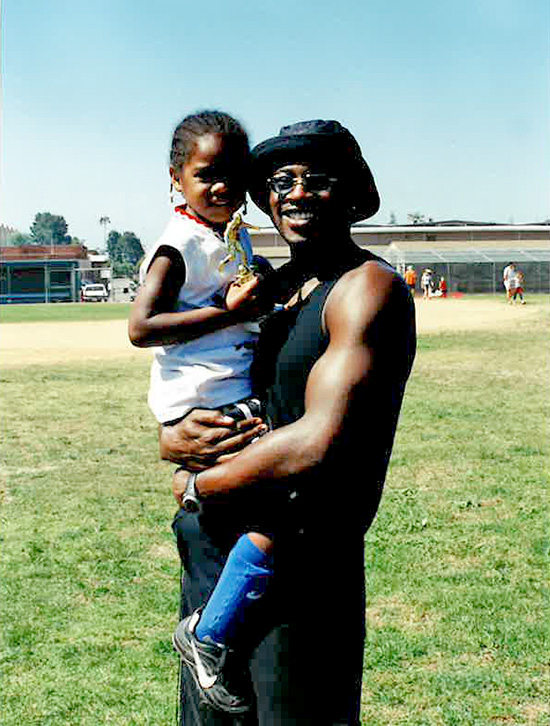
“I howled and cried for 30 minutes,” Mitch recalls of the day Lisa called him with the news. Tae remembers being wheeled out from the X-ray room to a small waiting room, where she found her mother in tears. “She stood over me and said, ‘You have cancer,’” Tae recounts. “But when I asked, ‘Am I going to die?’ she said, ‘Nope, you’re going to be fine.’ That was enough for me.”
In reality, curing AML in 2006 was no slam dunk. It had at best a 50% to 60% five-year survival rate, says Ted Moore, the UCLA pediatric hematologist/oncologist who treated Tae. “We had a very crude understanding of the many leukemia subtypes,” Moore says. “We’ve made great progress since that time, thanks to decades of research.”
Indeed, that research has transformed AML treatment. Instead of giving patients chemotherapy, which kills cells indiscriminately, physicians such as Moore now conduct molecular profiling of the cancer to inform treatment approaches that target leukemia’s triggers, with much better results and far less severe side effects. Many of the targeted therapies for leukemias and other cancers, as well as treatments that turn the patient’s immune system against cancers, can be traced directly back to UCLA labs and clinical trials. “With leukemia, we used to have to do a bone marrow transplant to cure,” Moore says. “Now, we have patients who can pop a pill a day and lead a normal life.”
Moore has been in the thick of this research over the last three decades, specifically in the area of transplant and cellular therapies. But for all of his scientific bona fides, he’s driven by more timeless virtues.
“The one constant in medicine for a millennium is the privilege we have of being able to make a difference in people’s lives — whether it’s the patients and families we walk alongside during their most difficult times,” he says, “or the people we teach and train who will one day replace us.”
“She Carried Us Through the Process”
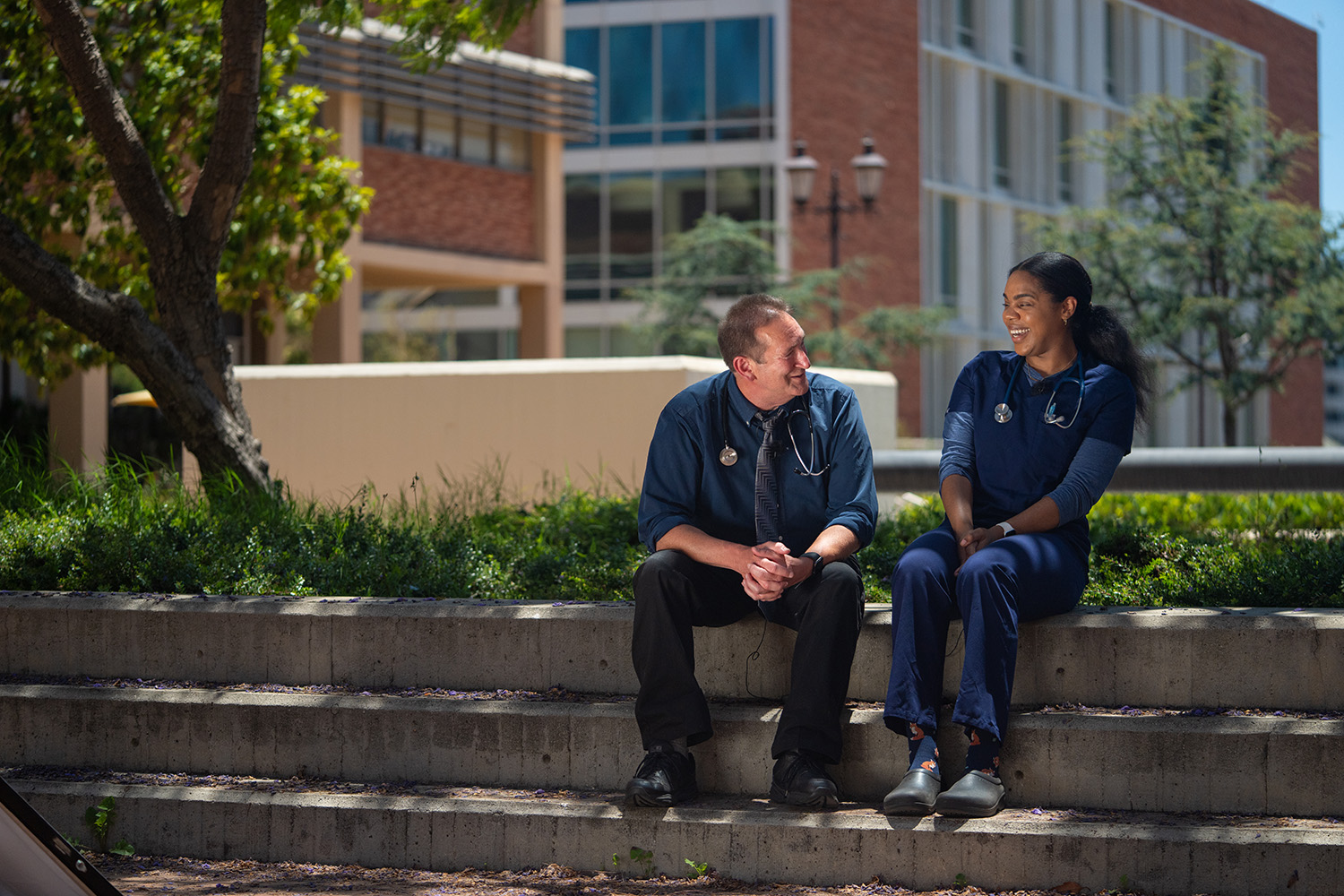
Moore walked alongside Tae and her family through five rounds of chemotherapy that had them living day to day in the UCLA Medical Center (today Ronald Reagan UCLA Medical Center) for the better part of eight months. During that time, he saw qualities in his young patient that he wanted in his own “replacement.”
The treatment at that time wiped out Tae’s immune system, leaving her isolated in the hospital room, with only her immediate family able to visit. Mitch Butler recalls engaging his daughter in the word game Boggle at a time when her chemotherapy should have slowed her brain speed; not only did she beat him regularly, but she kept a log of all the new words she learned, along with their definitions.
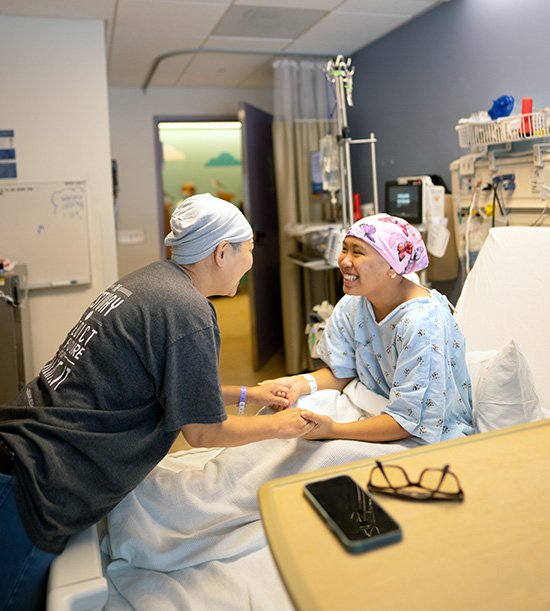
“Tae was unreal, my hero,” marvels Mitch. “She carried us through the process.”
Moore recalls being amazed at how Tae, at such a young age, seemed more concerned with ensuring her parents were tended to than with herself; he was also struck by her fierce intellectual curiosity. “I don’t know of any patient who asked me more questions about their disease — more than most parents. And her level of understanding was so deep,” he says. “I knew this was someone we would want to go into medicine one day.”
To nurture that budding interest, Moore gave Tae a medical kit, including needles to practice drawing blood from her parents. He gifted her a stethoscope, showed her how to listen to a heartbeat. “I wanted to know how everything worked, from what was in the IV bags to the mechanisms behind the leukemia,” Tae says. “I found power in the knowledge. It made it less scary.”
Thankfully, Tae made a complete recovery. And by the time Tae returned to the fourth grade, her future was set. “I would tell my friends I wanted to be a pediatric hematologist/oncologist, and they’d say, ‘What’s that?’” she says, laughing. “I just knew I was trying to be Dr. Moore when I grew up.”
The Circle of Life (Saving)
After earning her B.S. in human biology from Stanford, Tae attended the David Geffen School of Medicine at UCLA. In her final year, as part of a hospital rotation in the hematology/oncology unit, Tae arrived one day to find that the attending physician was none other than … Dr. Moore. “To see our names together on the patient list, with me not listed as the patient, was surreal,” she says.
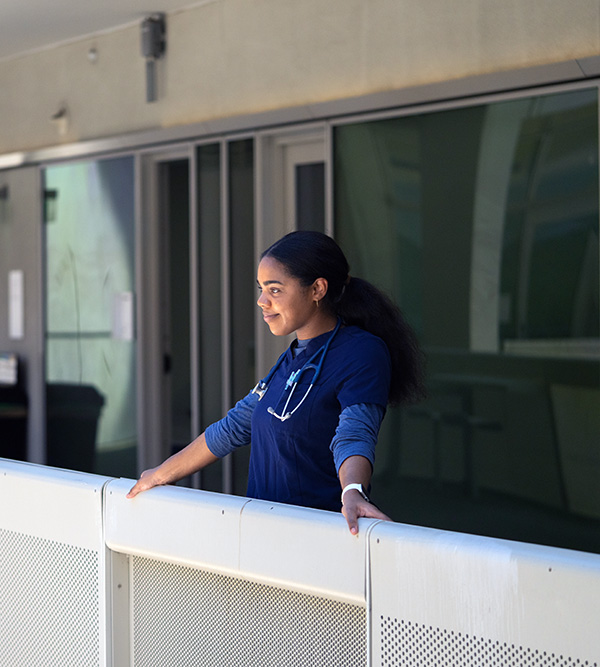
For Moore, the most gratifying moment came when Tae presented a patient case to him for the first time. “I could see at a young age she was going to be great at relating to patients, but until that moment I didn’t know what kind of overall physician she was going to be,” he says. “But that presentation she gave as a medical student was so thorough — better than what I would expect from our residents and fellows.”
Now 18 years cancer-free, Tae is halfway through her three-year pediatric residency, after which she plans to do a fellowship in pediatric hematology/oncology — potentially under the mentorship of the doctor who once helped save her own life. Acknowledging that her current schedule is “borderline crazy,” Tae is quick to add that she wakes up every day excited to report for her shift — and never minds when the long hours get a little longer.
“There’s so much power in those small moments of connection and kindness — that’s where a lot of the healing happens,” she says. “When you see that, how could I not put in the extra time?”
For his part, Moore isn’t subtle about his hopes.
“We want Tae,” he says, drawing out each word, “to stay here.”
Listen to Chancellor Julio Frenk talk about Tae’s inspiring journey:
Read more from UCLA Magazine’s Fall 2025 issue.