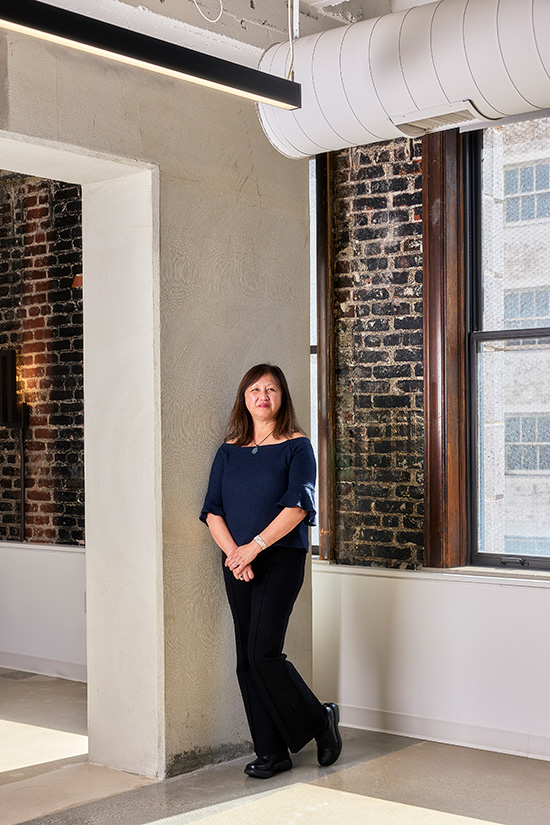
On a crisp, overcast afternoon, Taffany Lim — deputy director of the UCLA Prison Education Program, one of 31 community-focused ventures now destined to call UCLA Downtown home — moves through the program’s seventh-floor office space with poise and purpose.
After arranging a generous spread of cheeses, fresh fruit and fragrant Mediterranean-style chicken on a white marble countertop island, Lim greets guests as they arrive. Her excitement is unmistakable. Palpable.
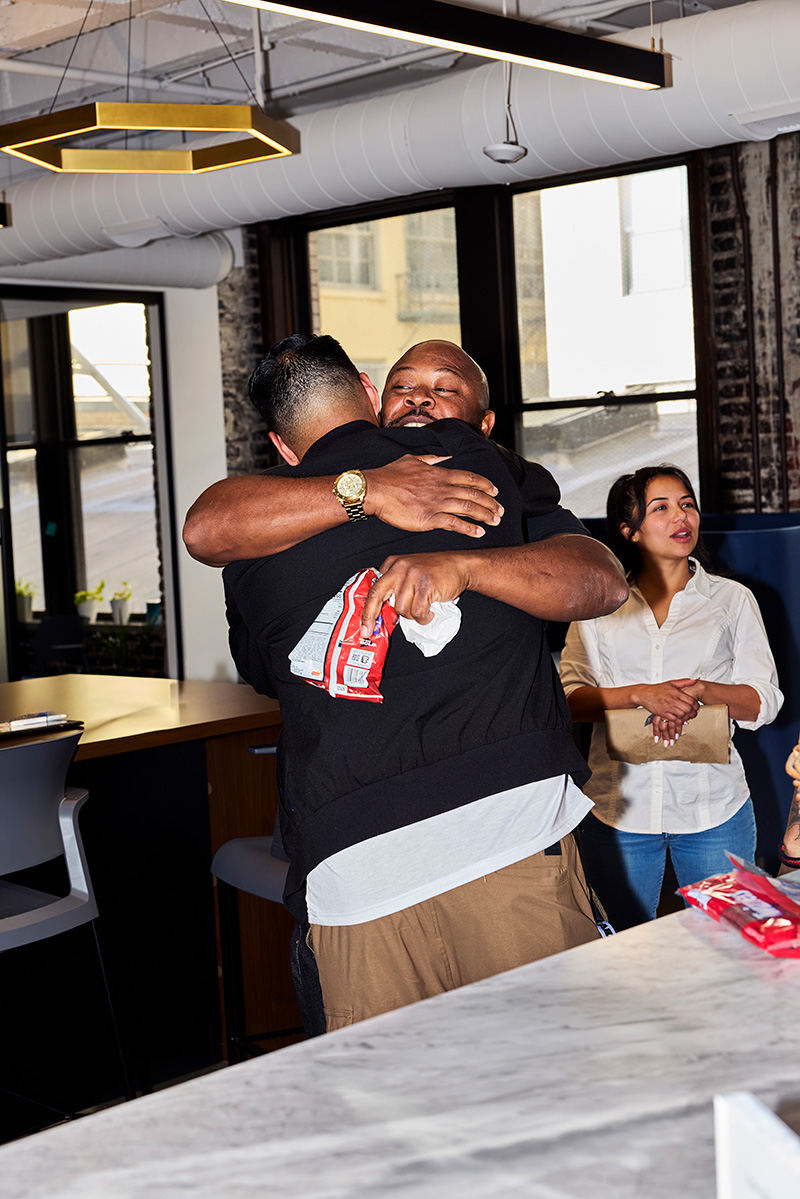
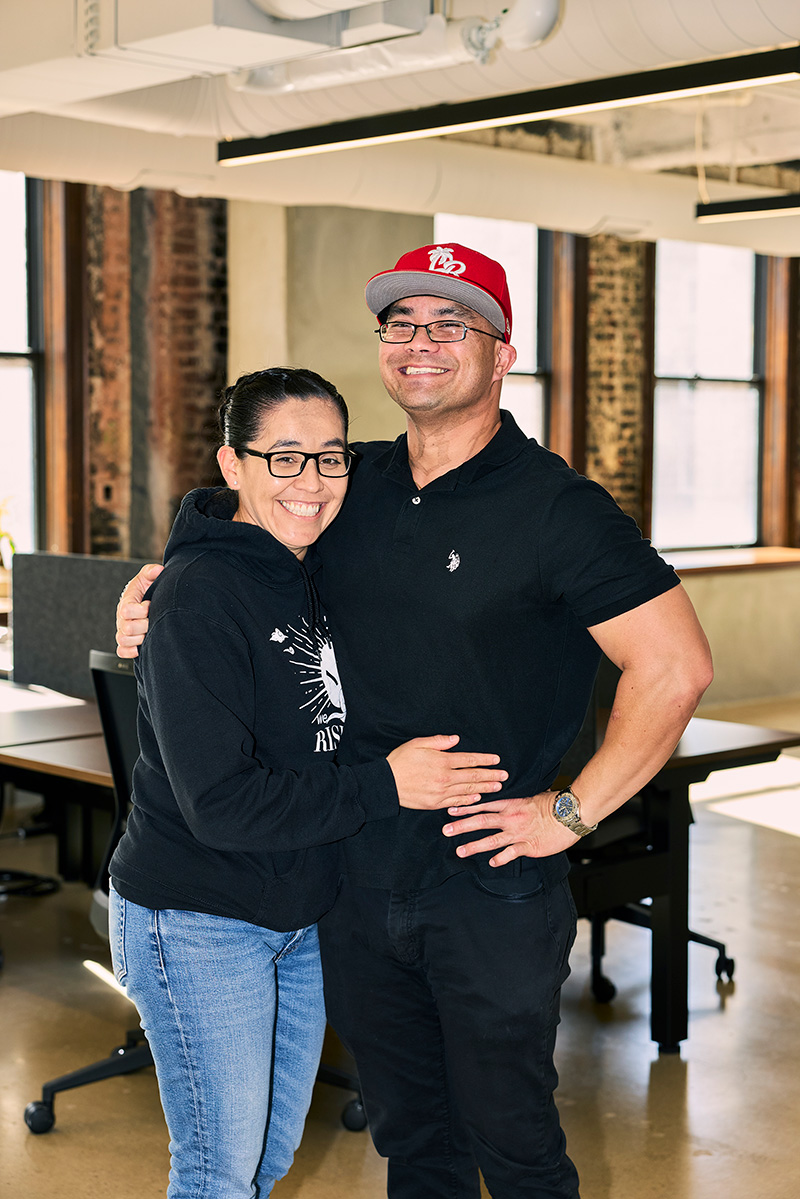
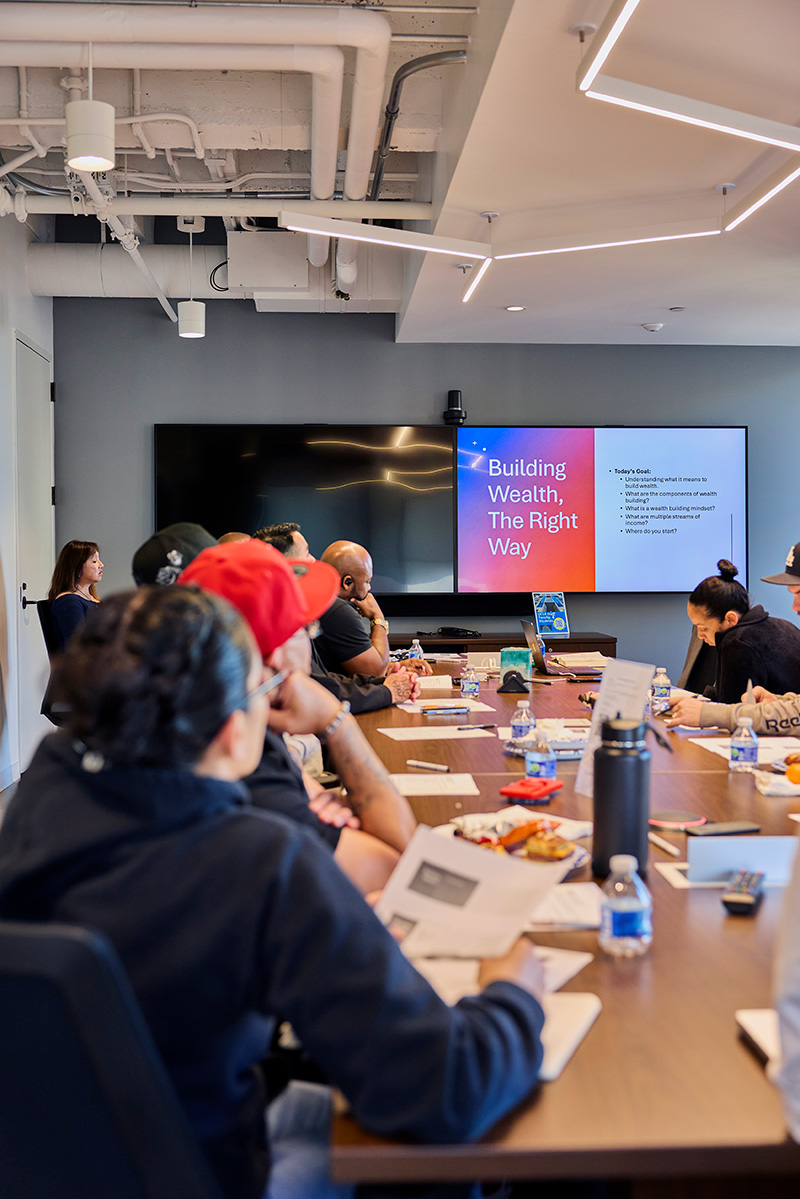
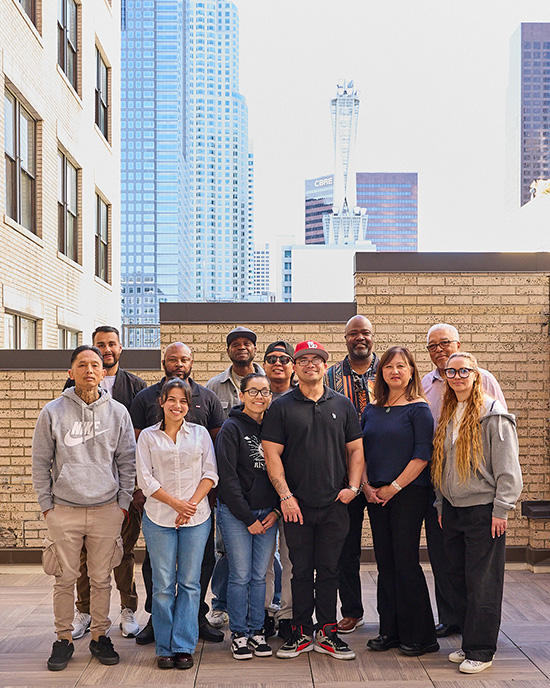
She has invited several former students to join a panel featuring three Bruin Underground Scholars, each of whom will share their path from incarceration to UCLA. The gathering’s 30 attendees include system-impacted Angelenos currently attending community colleges and universities across the L.A. Basin.
They’re excited about UCLA’s new locale in the historic heart of downtown and eager to learn how the university’s vast array of academic pathways and partnerships — including the collaboration between Bruin Underground Scholars and the UCLA Prison Education Program — can open doors to higher education and a new chapter in their lives.
“A lot of the people who came today are my life’s work. I’ve known them for many, many years,” Lim says. “How lovely to invite them downtown, to be in community together, and to explore what higher education can open for them.”
When it comes time for him to speak, one of the scholars talks about his L.A. roots, about how choosing UCLA allowed him to truly make a fresh start. When he finishes, applause fills the room.
From the back row, a man sporting a white L.A. Dodgers hat with black stitching punctuates the moment.
“Welcome home, brother,” he says. “Welcome home.”
New life for a storied landmark
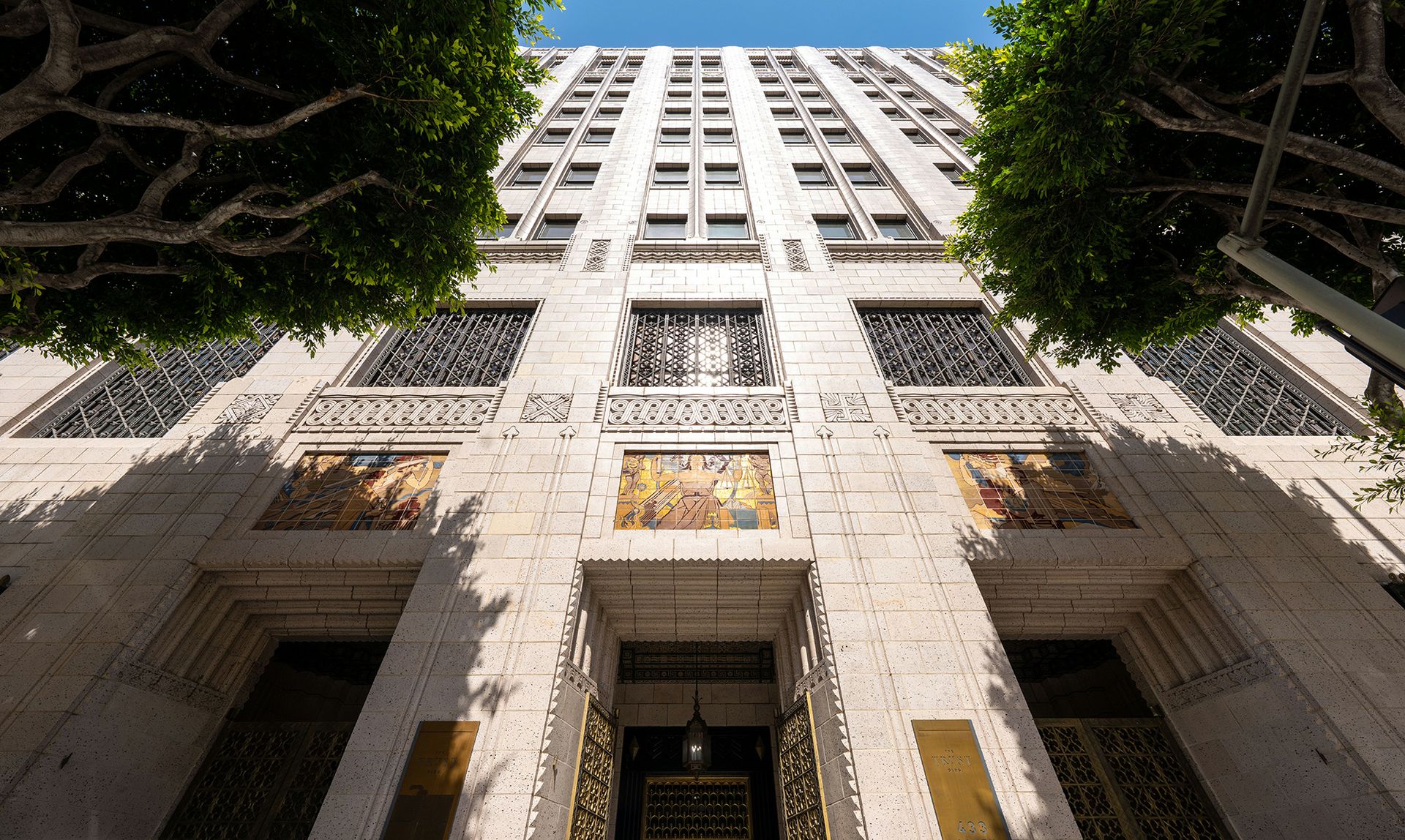
Located at 433 S. Spring Street, the Title Insurance and Trust Building — designed by the father and son architectural team behind L.A. City Hall, Parkinson & Parkinson — has long been a treasured L.A. landmark. Originally opened in 1928, just a year before Royce Hall and Powell Library, the building is an Art Deco masterpiece: Zigzag patterns climb toward the roofline, and three polychrome tile murals above the entrance depict Greco-Roman figures that symbolize trust, protection and fidelity.
In 2023, UCLA acquired the storied building, expanding student access to the university and strengthening its ties to the diverse communities that call the City of Angels home. The purchase followed the 2022 acquisition of UCLA South Bay — including Marymount California University’s 24.5-acre campus in Rancho Palos Verdes and an 11-acre residential site in San Pedro — and preceded the 2024 purchase of UCLA Research Park, a defunct Westside mall set to be reborn as a powerhouse of scientific discovery.
Now known as UCLA Downtown, this historic edifice represents an exciting new chapter for the university, with UCLA Extension — which first offered extension courses in Downtown L.A. more than a century ago — leading the way as its inaugural tenant. It’s also the hive for the Bruin Collaborative, UCLA Extension’s premier sixth-floor instructional hub, a vibrant space where its worldwide community of learners can come together for courses, workshops, community events and alumni gatherings.
Earlier on this day, a longtime UCLA Extension instructor Eleanor Schrader stood at a metallic white podium in the Collaborative, her head bent in quiet contemplation. Morning light poured through the space’s rectangular three-pane skylight windows.
The lecture she had prepared, part of an ongoing series on the Art Deco treasures of Downtown Los Angeles that began last year, centered on the nearby Los Angeles Central Library and included a walking tour. This morning, Schrader had the first slide of her presentation on the two 65-inch rolling TVs that flanked her on either side. A handful of students greeted her by her first name, openly marveling at the setting.
“When people walk through the lobby doors, up the elevator to the Bruin Collaborative,” Schrader says, “there’s a wow factor.”
Indeed, the space inspires awe. Polished concrete floors and exposed orange-red brick walls stretch outward in every direction, evoking both the building’s earlier lives and its future under UCLA’s stewardship.
Midway through the lecture to 23 attendees, Schrader prompted the audience — many of them members of the Osher Lifelong Learning Institute at UCLA — to see the building with fresh eyes as she recalled a chapter from its past, a moment of reflection made possible by teaching history inside a historic space.
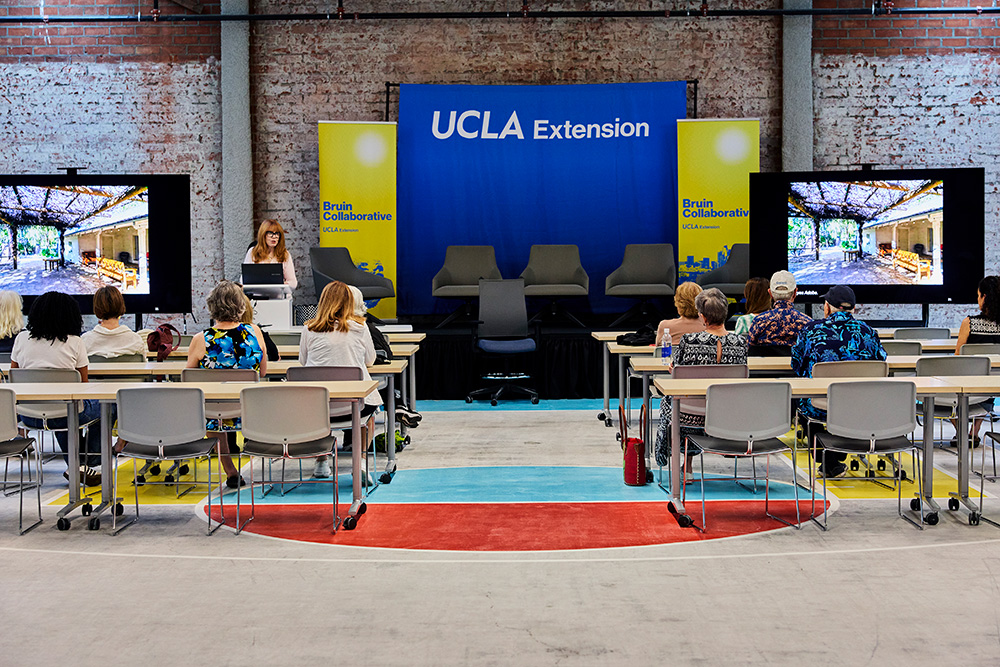
She told those assembled that after the 1986 Central Library arson fire, which damaged or destroyed more than 1 million books, 10 of the building’s 11 floors served as the library’s temporary home until 1993. That one of the spaces used is what is now the Bruin Collaborative, where the lecture was taking place, underscores how the Collaborative, the building and Los Angeles itself — like all things — are destined to evolve.
For Schrader, whose worldview is shaped by a historian’s eye, the true power of the Bruin Collaborative lies in how it invites visitors to feel the depth and complexity of Los Angeles history, both written and unwritten. “The space will change over time, but I think it’s important to preserve this building’s — and this city’s — history,” Schrader says. “It’s part of our culture as Angelenos.”
Addressing learning “in the lived realities of the city”
The grandeur of the UCLA Downtown building is undeniable. Yet, as Eric Bullard, dean of the Division of Continuing Education and UCLA Extension, sees it, the building’s future as a nexus for learning and community is what makes it truly beautiful.
“Being in downtown Los Angeles has grounded UCLA more fully in the lived realities of the city we serve,” Bullard says. “It demonstrates that continuing education is no longer peripheral to the university’s mission.”
Ultimately, UCLA Downtown embodies Chancellor Julio Frenk’s flagship initiative of UCLA for Life, which reimagines the university’s educational role as a lifelong partnership with learners. And it affirms UCLA’s century-long presence in the heart of Los Angeles. But it does something even more important: declaring a renewed commitment to meet learners where they are, accompany them as they move through life and expand UCLA’s role in the city’s civic life by bringing new energy to a legendary and beloved architectural masterpiece.
Situated at the crossroads of multiple transit lines that stretch across the Greater Los Angeles Basin — from Ventura County and the San Fernando Valley to Orange County and beyond — UCLA Downtown is primed to serve as a rendezvous for learners from every cardinal direction.
The planned 2027 extension of L.A. Metro’s D Line will further knit the site into the fabric of the region, offering a direct connection to UCLA’s This growing web of access underscores the building’s role as a place that allows Angelenos to enter, return to and remain connected with the university, as the initiative posits — for life.
Opening more doors — and educational opportunities
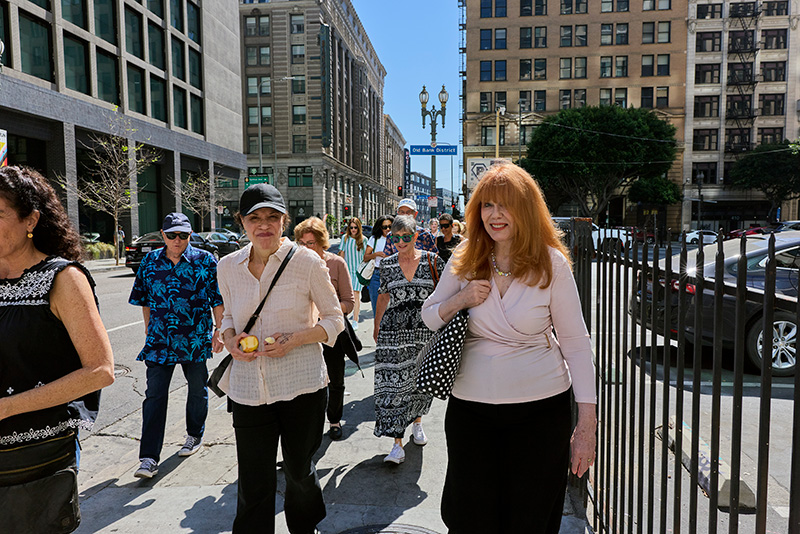
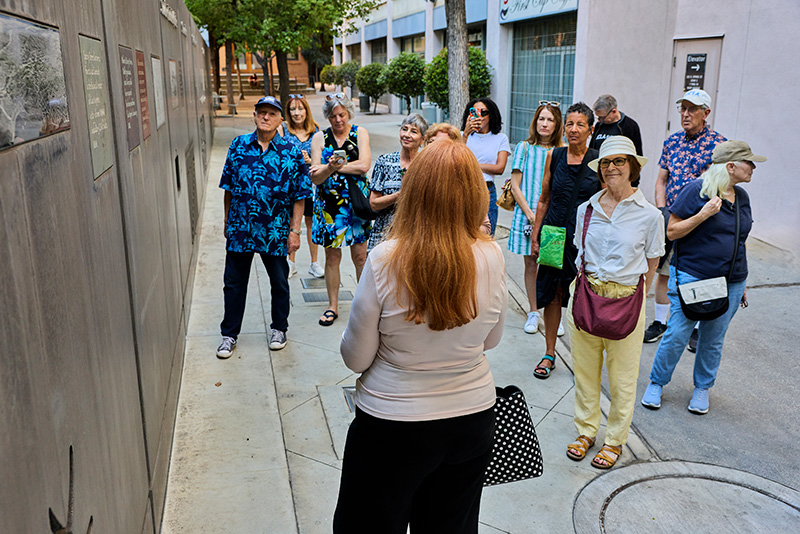
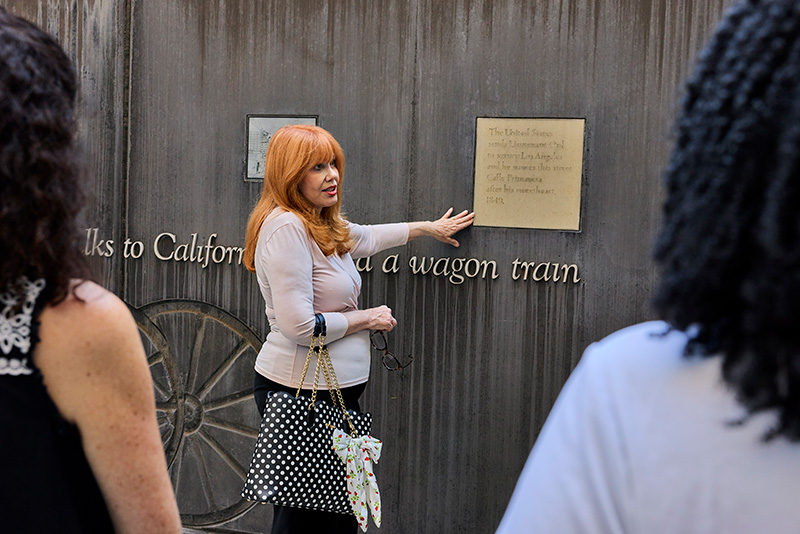
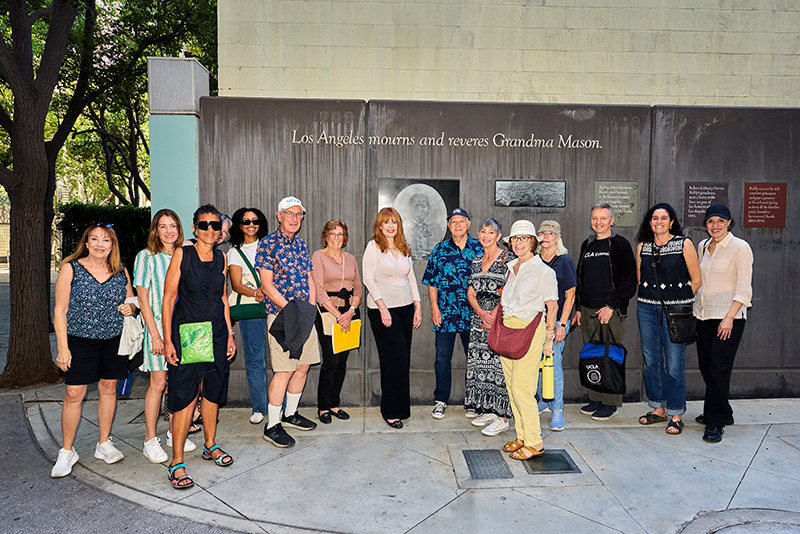
Ryuko Ozawa is a longtime employee of the City of Los Angeles who lives near UCLA Downtown. She says UCLA’s arrival in the city’s Historic Core was a welcome development. I meet her on Schrader’s walking tour, which Ozawa sees as an exciting opportunity to learn more about the vibrant past, present and future of downtown — and her own place in it as a Bruin.
The two-mile walk takes us past Pershing Square and around the Central Library perimeter to inspect its Art Deco features. The whole time, Ozawa savors the experience and how this small journey is making the city she’s lived in for decades feel suddenly larger, brighter and newly alive.
As a UCLA Extension alumna and active participant in Bruin Collaborative events, Ozawa is eager for what’s next, from Schrader’s upcoming course on the African American pioneers of Los Angeles to a daylong summit bringing together designers, artists, students and educators to reimagine the city’s creative future.
As the walking tour comes to an end and participants browse through the library’s gift store for last-minute souvenirs, Ozawa is still buzzing over the newfound view of Spring Street she was able to take in from the vantage of the Collaborative’s windows.
“There’s a sculpture by the late architect Lebbeus Woods that’s on top of the building at 425 S. Main St., right across from UCLA Downtown, that I can only see the top of when I walk past on the sidewalk,” she says. “But today, I was surprised to see the two-and-a-half-ton steel sculpture in its totality. It’s amazing how UCLA Extension has allowed me to experience my neighborhood in a new way.”
The new horizons opened by UCLA Extension’s world-class certificate programs came into sharp focus during the Collaborative’s inaugural event last October, when alumni showed how their studies had catalyzed profound reinvention.
Alumna Rosa Costanza — who traces her creative lineage back to her grandfather, a marketer who worked for the famed French oceanographer and filmmaker Jacques Cousteau — shared how her feature film writing coursework helped her transform a long‑held script idea into what would become her short film Xing.
The film screened at the 2017 Cannes Film Festival and earned multiple awards, marking a striking shift from Costanza’s earlier career in audio engineering, a path she first pursued (as a DJ) before discovering her voice as a writer and director. She even joked that the Collaborative’s space felt perfect for a DJ set, a reminder of the creative throughline that has shaped her journey.
“There’s something powerful about being able to redefine yourself,” she says. “UCLA Extension helped me do that. And by having a presence in Downtown, it’s going to give countless Angelenos an opportunity to do the same.”
Another of the alumni speakers was Dulce Gallardo. A Mexico City native, Gallardo was drawn to UCLA Extension’s sustainability certificate not only for its pioneering presence at the time, but for its teaching of how to apply foundational sustainability theories in real-world settings. One example: learning how UCLA is transforming its Westwood campus landscapes through organic, pesticide-free stewardship — managing more than 90% of its grounds sustainably — and partnering with the Gabrielino/Tongva community to restore native ecology.
Gallardo sees UCLA Extension’s presence in downtown Los Angeles as another example of the university’s leadership in sustainability, and as inspiration for her own family to consider higher education.
“To build a sustainable future, educational opportunities need to be accessible to emerging students — like my niece and nephew, who both dream to become Bruins — as well as professionals and communities,” Gallardo says. “I see it as the democratization of content.” So do many others.
“I think it’s the start,” she says, “of something generational.”
Read more from UCLA Magazine’s Spring 2026 issue.